







GUEST OPINION: Court saw through attack on stoves, science
When the Association of Home Appliance Manufacturers (AHAM) filed a federal lawsuit last year challenging Colorado’s new gas stove labeling law, it exposed a troubling pattern of how climate advocacy can morph into scientific misinformation to achieve policy goals through fear rather than facts.
At the heart of the court dispute is House Bill 25-1161, which requires retailers to affix yellow warning labels to gas stoves sold in Colorado. The labels must direct consumers to the Colorado Department of Public Health and Environment website, which lists serious health conditions — including asthma, heart disease, and even leukemia — allegedly linked to gas stove use.

There is just one problem: the overwhelming majority of scientific evidence shows no such connection exists.
So if the science does not support health warnings on gas stoves, why did Colorado pass this law? The answer lies in the legislative record, which reveals that HB25-1161 was never really about consumer health — it was about climate policy and demonizing fossil fuels. State Sen. Katie Wallace, a co-sponsor of the bill, made this explicit during committee testimony: “Gas appliances contribute to climate change and must be part of the conversation as we look to combat that existential crisis.”
This strategy did not emerge from nowhere. In 2022, the Harvard Environmental Law Review published an essay that laid out the blueprint. Rather than debating climate policy on its merits, environmental activists could sidestep that conversation by frightening consumers about their kitchen appliances. The article was refreshingly candid about this tactical shift: “The fossil gas industry has made consumer attachment to gas stoves the centerpiece of its anti-electrification messaging. To counter and overcome this strategy, building electrification advocates must tell their own story about gas stoves, and it is hard to imagine any narrative more salient than the reality of an everyday kitchen appliance that is literally poisoning our children in their own homes.”
Never mind that the science does not support the “poisoning our children” narrative. The goal was to create a compelling story that would advance decarbonization policies.
Beyond the scientific dishonesty, Colorado’s law raises serious First Amendment concerns. It forces manufacturers and retailers to speak a government-mandated message with which they fundamentally disagree — that gas stoves pose health risks when the scientific evidence does not support that claim.
The Supreme Court has been clear that the government cannot “compel a person to speak its own preferred messages.” Compelled disclosures are constitutional only when they are “purely factual and uncontroversial.” Courts have consistently held that disclosures not rooted in scientific consensus are neither purely factual nor uncontroversial.
The gas stove controversy is a case study in how political objectives can corrupt the scientific process. When activists decided that health fears were a more effective tool than climate arguments for achieving their electrification goals, they cherry-picked studies, exaggerated findings, and manufactured a crisis that does not exist. This should concern everyone, regardless of their views on climate policy. Once we accept that the government can compel speech based on politically convenient falsehoods rather than scientific consensus, we have crossed a dangerous line. Today it is gas stoves. Tomorrow it could be any product that happens to conflict with the prevailing political agenda.
Science works through rigorous testing, peer review, and building consensus over time. It does not work through advocacy groups shopping for favorable studies, media sensationalism, or government mandates that force companies to parrot misleading claims.
On Dec. 19, 2025, U.S. District Judge S. Kato Crews in a thoughtful and measured opinion, granted a preliminary injunction barring the state and its agencies from enforcing this ill-conceived law. Judge Crews found that House Bill 25-1161 “likely violates Plaintiff’s First Amendment rights” by compelling speech that is scientifically controversial and unsupported by consensus evidence.
AHAC hired Dr. Stacey Benson, Ph.D., a respected epidemiologist, and toxicologist with 20 years’ experience. She systematically dismantled the state’s claims through two detailed expert declarations. She conducted the “gold standard” analysis — an exhaustive review using the Bradford Hill Criteria, the framework epidemiologists have employed since the 1960s to assess causation. She examined three major meta-analyses and 69 individual studies encompassing 122 effect estimates across respiratory symptoms and diseases. Dr. Benson testified there is “no scientific consensus that using gas stoves for home cooking is associated with or causes any health impacts.”
Colorado enlisted Physicians for Social Responsibility Colorado as an intervenor, which retained two experts to rebut Dr. Benson. Dr. Michael Johnson opined that gas stoves create “elevated indoor pollutant concentrations,” but Judge Crews noted that Johnson did “not connect the ‘elevated indoor pollutant concentrations’ to concrete health impacts.”
Dr. Jennifer L. Peel, a professor at Colorado State University, went way beyond the science and argued there is “broad scientific consensus” that pollutants from gas cooking are “linked to adverse health effects.” But Judge Crews found, at most, this meant there was a “robust scientific debate” and therefore the required disclosure was objectively controversial and a constitutional violation.
Colorado’s gas stove law is not science-based regulation — it is activism wearing a lab coat. Judge Crews saw through it, and his preliminary injunction represents an important victory for both free speech and scientific integrity.
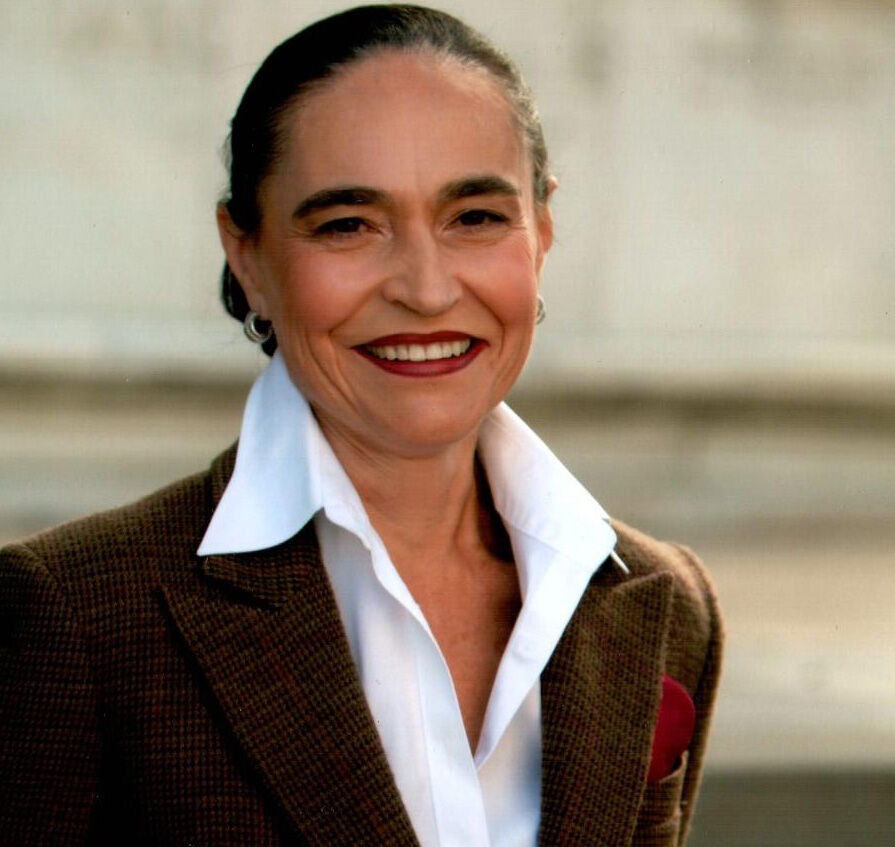
Frances A. Koncilja is a Denver attorney and former member of the Colorado Public Utilities Commission. Koncilja handles energy and regulatory matters through Koncilja Energy Law and Policy. The views expressed here are her own and do not represent the opinions of her clients.


They’re trying — again — to take away our TABOR
Kristi Burton Brown
kristi-burton-brown@denvergazette.com
Updated 3 days ago
Surprising no one, they’re back at it again. Democrats in the state legislature have announced they’ll be running a bill to place a referendum on the 2026 ballot to take away our TABOR refunds. It’s not like this hasn’t been...

Kristi Burton Brown
Reporter

French Revolution comes to Colorado Democrats | Jon Caldara
Jon Caldara
jon-caldara@denvergazette.com
Updated 3 days ago
The border skirmishes are increasing, and we could be looking at full-blown combat. The simmering civil unrest inside Colorado’s Democratic ranks is heating up, and during this legislative session it might boil over into all-out civil war. If it does,...

Jon Caldara
Reporter
Colorado oilmen may play key role in Trump’s Venezuelan oil takeover plan
Vince Bzdek
vince-bzdek@denvergazette.com
Updated 18 hours ago
When President Donald Trump summoned oil executives to the White House recently to push for major investment in Venezuela, an interesting sprinkling of smaller independent companies from Denver was invited along with the big names of American oil. One of...

Vince Bzdek
Reporter

A partisan potshot at the CU regents | Jimmy Sengenberger
Jimmy Sengenberger
jimmy-sengenberger@denvergazette.com
Updated 2 days ago
At the University of Colorado, “bipartisanship” just became a four-letter word. Six months after being appointed to CU’s Board of Regents in Dec. 2021 by Gov. Jared Polis — who touted his “business experience and passion for CU” — Ken...

Jimmy Sengenberger
Reporter

A theater of the absurd at Aurora City Hall
Michael Hancock
michael-hancock@gazette.com
Updated 3 days ago
What unfolded at Monday night’s meeting of the Aurora City Council was not governance. It was performance. Carefully staged, morally theatrical, and intellectually thin. A civic chamber meant for deliberation became a stage, and a resolution presented as public business...

Michael Hancock
Reporter
It’s time to restore the military-industrial complex | Mike Rosen
Mike Rosen
mike-rosen@denvergazette.com
Updated 3 days ago
Historian Will Durant observed that peace is an unstable equilibrium which can be preserved only by acknowledged supremacy or equal power. War is a constant of human history and human nature and always will be. That’s not cynicism or defeatism,...

Mike Rosen
Reporter
GUEST COLUMN: When Colorado schools dump unions, they excel
Aaron White
aaron@gfreedom.com
Updated 3 days ago
Last fall, the Colorado Education Association boasted that over 80% of the candidates it endorsed statewide won their races. But scratch beneath the surface of that talking point and you’ll find a very different story — one that reveals not...

Aaron White
Reporter

Address the roots of Colorado’s affordability woes
Kelly Caufield
kelly-caufield@denvergazette.com
Updated 5 days ago
Colorado is at a crossroads just in time for today’s opening of the Colorado General Assembly. Individuals and families are not choosing to move here as much as they were. Statewide net migration was 52.5% lower in 2025 than it was in 2015, when Colorado...

Kelly Caufield
Reporter
A ‘defensible ’clemency for Tina Peters? | Jimmy Sengenberger
Jimmy Sengenberger
jimmy-sengenberger@denvergazette.com
Updated 6 days ago
Former Mesa County Clerk Tina Peters is scheduled for release from prison in February 2033, after serving 8.25 years for four felonies and several months in county jail for three misdemeanors — stemming from an election security breach and identity...
Jimmy Sengenberger
Reporter

Unsolicited advice to both Republicans and Democrats | Sondermann
Eric Sondermann
eric-sondermann@denvergazette.com
Updated 5 days ago
This even-numbered year will be one of political turnover in Colorado with the governor’s chair opening up along with the other state executive offices (attorney general, state treasurer and secretary of state), all due to term limits. A U.S. Senate...

Eric Sondermann
Reporter
PREV
PREVIOUS
Colorado oilmen may play key role in Trump's Venezuelan oil takeover plan
When President Donald Trump summoned oil executives to the White House recently to push for major investment in Venezuela, an interesting sprinkling of smaller independent companies from Denver was invited along with the big names of American oil. One of those was Raisa Energy, which is based in Denver and Cairo and led by Luis […]

French Revolution comes to Colorado Democrats | Jon Caldara
The border skirmishes are increasing, and we could be looking at full-blown combat. The simmering civil unrest inside Colorado’s Democratic ranks is heating up, and during this legislative session it might boil over into all-out civil war. If it does, the media might actually have to interrupt their regularly scheduled Republican-bashing to report on it. […]