







Colorado lawmakers roll out bipartisan plan aimed at lowering home insurance risk
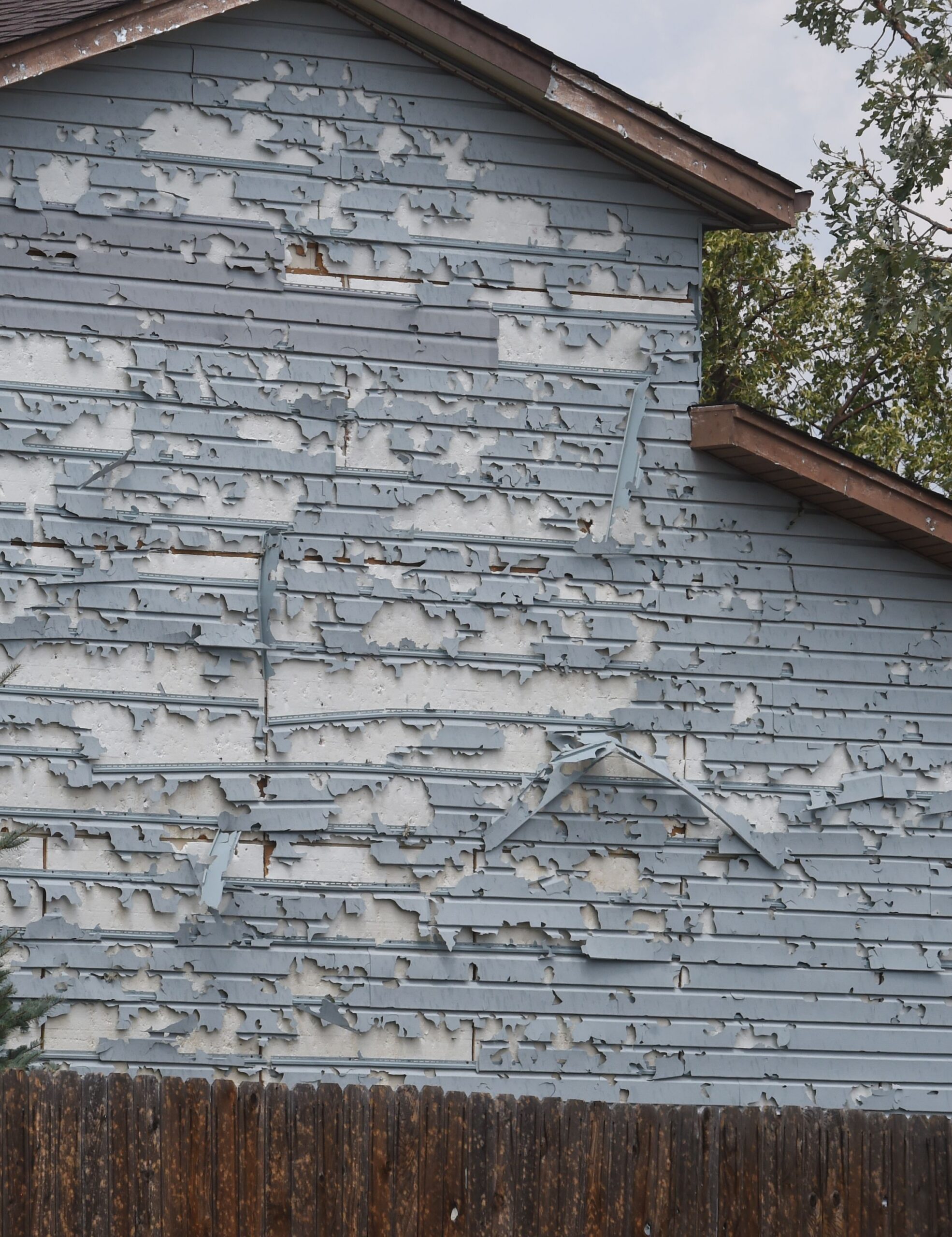
Rising homeowners’ insurance rates prompted a group of lawmakers to introduce a bill Wednesday aimed at reducing damage from hail and wildfire.
The measure would encourage homeowners and homeowner associations to take additional mitigation steps and, in turn, could allow insurers to offer lower insurance rates once those steps are completed.
Senate Bill 49 is sponsored by Sens. Marc Snyder, D-Colorado Springs and Senate Minority Leader Lisa Frizell, R-Castle Rock. It’s been assigned to the Senate Finance Committee.
Frizell told Colorado Politics that home insurance is the top worry she has been hearing from her constituents, including from people who don’t live in wildland-urban interface areas.
A wildland-urban interface is an area where structures and other human developments meet or intermingle with wildland vegetation, according to the state forest service.
“Homes, businesses and subdivisions are being built on forested lands that have historically seen regular fires,” the forest service said.
About 2.5 million people live in these territories, with a million living in areas with a high wildfire risk, the office said.
Authorities have encouraged those who live in wildland-urban interfaces to mitigate the risks by creating defensible spaces, managing vegetation, and using fire-resistant building materials.
The wildland-urban interface mitigation efforts offer lessons for urban dwellers on how to reduce risk, which underpins Senate Bill 49.
Under the bill, homeowners can receive a tax deduction for contributing to a catastrophe savings account, which can cover insurance deductibles and losses from hail, wildfire, or a catastrophic wind event, uninsured losses related to those events, and property-specific mitigation actions.
In addition, homeowners and homeowners’ associations will be able to tap into the state’s natural disaster mitigation enterprise fund. Currently, those funds were limited to counties, municipalities, school districts, and special districts that set up mitigation efforts.
The fund, established under a 2021 state law, gets its money from a fee charged to insurance companies on the number of policies that cover property, such as fire, private crop and certain farm and homeowner policies.
Frizell said the bill, if passed, would require homeowners to take greater responsibility for mitigating risk and ensuring their homes are as resilient to fire or hail as possible.
That could be replacing a roof with a hail-resistant one when it is ready to go, as well as using fire-resistant materials in the home-building process or in fencing, for example.
For homeowners’ associations, Frizell noted that higher insurance costs mean higher HOA fees.
The insurance companies want this, she added. One HOA in Douglas County saw its fees triple because of HOA insurance, she said. She added while insurers are not promising lower insurance rates, it’s been suggested, she said.
“If we can work as a state to acknowledge natural disasters more frequently and try to improve properties in a smart way, we can protect homes and the insurance companies,” she said.
Colorado Chamber of Commerce backs SB 49.
“Homeowners’ insurance rates are becoming an increasing burden on Colorado families, driving up the cost of housing and creating workforce challenges for employers. If left unaddressed, these escalating costs will continue to strain Colorado’s rising cost of living and limit future economic growth,” said chamber President and CEO Loren Furman said. “This legislative session, the Chamber is prioritizing residential resiliency across the state to reduce homeowners’ insurance rates and enhance long-term damage mitigation measures.”
Out of the top 12 costliest hailstorms in Colorado, nine have taken place since 2008, costing homeowners and insurance companies billions of dollars.
The most expensive hailstorm in the Denver metro area in 2017 clocked in at $3.3 billion in 2025 dollars.
Then there are wildfires.
Sitting atop that list is the 2021 Marshall fire, which resulted in the loss of 1,084 homes, two lives, and a cost of $2 billion.
The New York Times reported last year that property insurers have lost money in eight out of the previous 11 years.
A new report said Colorado is the seventh-least stable home insurance market in the U.S. The Lending Tree report said home insurance premiums have increased more than 100% since 2020, the largest increase in the country, and insurers’ loss ratio is at 81.6%, meaning insurers are close to paying more in claims than they collect in premiums.
In coastal states plagued by wildfires and hurricanes, property insurers are bolting. That hasn’t been common in Colorado, although one insurer, American National, dropped its homeowners insurance products here and in eight other states in 2024, citing profitability.
In Colorado, wildfires and hail are the costliest items to insurers.
In 2023, hoping to help homeowners in areas prone to these natural disasters, lawmakers passed the FAIR Plan, which provides property insurance coverage when a traditional one is unavailable.


PHOTOS: Protesters March against ICE in Denver
Stephen Swofford
stephen-swofford@denvergazette.com
Updated 6 hours ago

Stephen Swofford
Reporter
Cherry Creek school board was warned four years ago that superintendent’s marriage could be a problem
DAVID MIGOYA david.migoya@gazette.com
david.migoya@gazette.com
Updated 6 hours ago
The former president of the Cherry Creek School Board warned the panel nearly four years ago – prompted by Denver Gazette stories detailing allegations of a toxic and misogynistic work environment within the district – that employee grievances might not...


Thousands of people, students, protest against ICE in Denver
Michael Braithwaite
michael.braithwaite@gazette.com
Updated 6 hours ago
Thousands converged onto La Alma-Lincoln Park west of Downtown Denver Friday afternoon in protest of the U.S. Immigration and Customs Enforcement (ICE). The protest, one of hundreds throughout the country, took place during what was described as a “National Shutdown,”...

Michael Braithwaite
Reporter
Aurora residents, officials discuss civilian police oversight committee
Kyla Pearce
kyla-pearce@denvergazette.com
Updated 7 hours ago
About 50 people attended a roundtable session in Aurora Thursday night to discuss details about a future civilian police oversight committee for the Aurora Police Department. Attendees included Aurora residents, several Aurora City Council members, Mayor Mike Coffman, City Manager...

Kyla Pearce
Reporter
Pressure mounts after Federal Heights city manager hit with no-confidence vote
Sage Kelley
sage.kelley@denvergazette.com
Updated 7 hours ago
Questions and concerns remain in Federal Heights after first responders called on city leaders for accountability and no immediate action was taken. Two unions — Federal Heights Professional Firefighters Local 4222 and the Federal Heights Police Lodge FOP 77 —...

Sage Kelley
Reporter
Denver to review $325K settlement for deputy misconduct case
Deborah Grigsby
deborah.smith@denvergazette.com
Updated 7 hours ago
On Monday, the Denver City Council will consider a resolution authorizing a $325,000 payment settling a claim involving the Denver Sheriff’s Department. The settlement stems from a 2019 incident in which a video captured Denver Sheriff’s Deputy Jason Gentempo punching...

Deborah Grigsby
Reporter
Ahead of ICE protests, Boulder DA sends out legal rights notice
Michael Braithwaite
michael.braithwaite@gazette.com
Updated 9 hours ago
Ahead a weekend of protests against U.S. Immigration and Customs Enforcement across the metro Denver area, Boulder County officials sent out a notice advising people of their legal rights. The notice, sent by the Boulder County District Attorney’s Office Friday...
Michael Braithwaite
Reporter

Colorado School of Mines wants to prove a masters isn’t needed to work in quantum
Bernadette Berdychowski
bernadette.berdychowski@denvergazette.com
Updated 10 hours ago
A new program at the Colorado School of Mines aims to fix a major misconception in the budding quantum industry: that a master’s or doctorate degree is required to secure a job in the field. It doesn’t help when nearly...

Bernadette Berdychowski
Reporter
Will this be Denver’s year to see office vacancies fall?
Bernadette Berdychowski
bernadette.berdychowski@denvergazette.com
Updated 9 hours ago
Another major downtown Denver office sold this week at less than a quarter of its last known value. Denver Place, a two-tower complex at 999 18th St., was acquired for $47.5 million by the CP Group, Angelo Bianco, managing partner...
Bernadette Berdychowski
Reporter

A day after fatal I-70 crash, girls’ hockey team wins emotional Colorado tournament game
Carol McKinley, Special to the Denver Gazette
carol.mckinley@denvergazette.com
Updated 3 hours ago
A California girls’ hockey team has stolen the hearts of Colorado’s Front Range. Barely 24 hours after a fatal crash on Interstate 70 killed the father of one player and sent passengers to the hospital Thursday, the players decided to...

PREV
PREVIOUS

Semi truck rollover spills Coors Banquet beer on I-70
The driver of a semi truck was injured Wednesday night after a rollover in Wheat Ridge. The crash happened at about 11 p.m. Wednesday on the Highway 58 flyover to eastbound Interstate 70, according to Wheat Ridge police. The semi truck blew a tire, causing the truck to tip over, police said. The driver of […]

Golden police chief temporarily steps away from role
The same day a man was sentenced in the first on-duty death in Golden Police Department history, the police chief went on leave. Golden police announced that Chief Joe Harvey “temporarily” stepped away from the position on Jan. 21, according to a news release — the same day Stephen Geer was sentenced to 13 years […]