







Colorado legislators revisit social media guardrails for youth

Colorado legislators are making another push to regulate social media platforms, raising worries about the negative impact on youth mental and physical health, even as others argued that policies should be carefully crafted to ensure they balance protection and innovation.
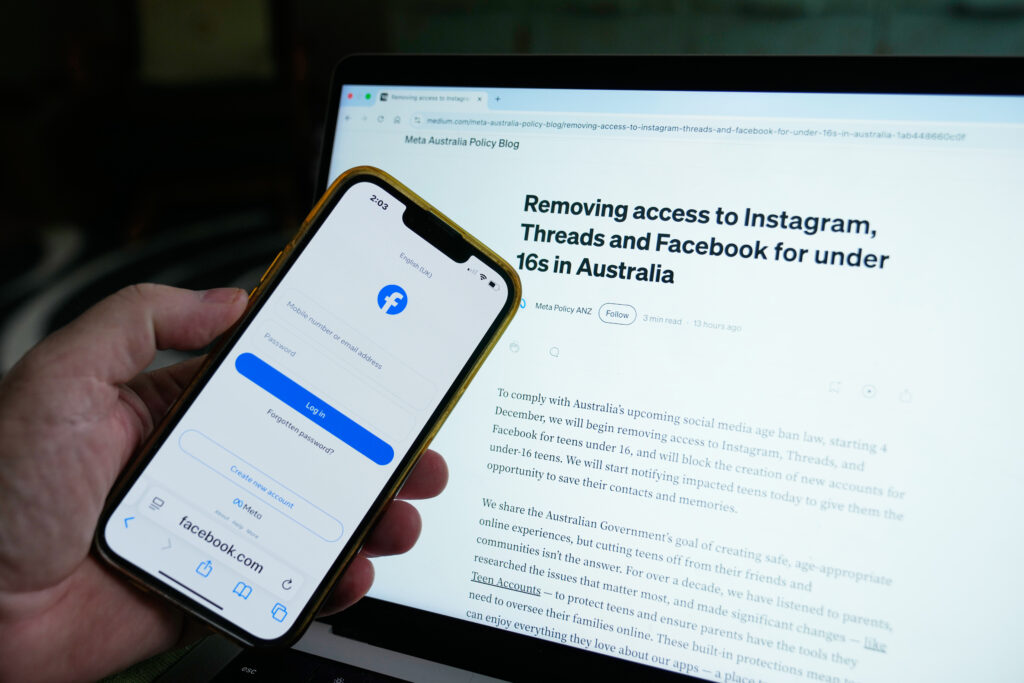
The push in Colorado is part of a growing trend in America and elsewhere. In 2024, for example, Australia became the first country in the world to impose age restrictions for social media. The country requires companies, such as TikTok, Instagram, and YouTube, to verify users’ ages to prevent children under 16 from accessing their platforms.
Since Australia passed its law, several countries, including Malaysia, Denmark, and, most recently, France, have established age restrictions for social media, while countries like the Philippines and Spain are considering similar legislation.
Proponents of age restrictions point to studies saying social media can have negative impacts on youth mental and physical health. In 2023, the U.S. Surgeon General issued an advisory warning that excessive social media use can increase rates of depression, anxiety and eating disorders in youth and teenagers.
Critics have countered that such restrictions offer a false sense of security and they are easily bypassed, while infringing on free speech and limiting minors’ ability to access information. They argued that parental guidance is ultimately more effective.
Several bills — both successful and unsuccessful — aimed at reducing social media’s negative impacts on youth have made their way through the Colorado state Capitol in recent years, including measures that would have required age verification for pornography websites and for social media platforms to publish their policies related to the sale or advertisement of illicit substances, firearms and sex trafficking.
In November, a federal judge blocked a 2024 law that, in part, requires social media platforms to issue notifications with information about the physical and mental health impacts social media can have on children when a minor user has spent a certain amount or is on an app between 10 p.m. and 6 a.m.
Last session, the Colorado General Assembly tried but ultimately failed to override legislation that would have required social media companies to remove accounts engaged in illegal activity involving children under 13.
The measure would also have required social media companies to comply with search warrants within 72 hours and to staff a phone line to inform Colorado law enforcement agencies of the status of their warrants.
While the Senate overrode the governor’s veto, sponsors in the House didn’t believe they had the votes to do the same, and the governor’s veto remained in place.
The state Senate voted, 29-6, on April, 25 to override Gov. Jared Polis’s veto of a social media bill. The 29-6 vote was five above the two-thirds majority required for an override.
It’s the first override of a Polis gubernatorial veto of a bill — or any bill from his three predecessors — since the administration of Gov. Roy Romer in 1988.
There have been other veto overrides—in 2007 and 2011—but those were directions from the General Assembly to state agencies as part of the budget m process. In at least three decades, no governor has vetoed a budget bill or even a line item in a budget measure, although they do vetoed those legislative directions occasionally.
Senate Bill 86 would compel large social media companies to remove accounts engaged in illegal activity involving children under 13.
The activities on social media that the bill seeks to rein in include illegal drug sales, illegal firearms sales, sex trafficking of minors, and sexually exploitative material involving children.
In his veto letter, Polis said Senate Bill 86 had good intentions but failed to guarantee the safety of minors or adults; eroded privacy, freedom, and innovation; could hurt vulnerable people; and potentially subject Coloradans to stifling and unwarranted scrutiny of constitutionally-protected speech.
The governor outlined several of his concerns about the bill, including that it would impose sweeping requirements that, he argued, would mean social media platforms, rather than law enforcement, would enforce state law. He said it would mandate a private company to investigate and impose governmental penalties, notably, permanently de-platforming a user even if a complaint against that user is malicious or unwarranted.
That would make social media platforms the judge and jury, incentivizing those companies to de-platform a user, Polis said.
This year, two sponsors of SB 086 — Sen. Lisa Frizell, R-Castle Rock, and Rep. Andrew Boesenecker, D-Fort Collins — have introduced a pared-down version of the bill that only includes the warrant compliance requirement. Sen. Dylan Roberts, D-Frisco, is also a sponsor.
“Warrant response is a problem, and it is a big problem, whether the social media companies will acknowledge that or not,” Frizell said. “We have lots and lots of evidence that they really can’t refute.”
According to Frizell, social media platforms are not currently being punished for failing to respond to search warrants in a timely manner.
“Whether they execute that warrant in two days, 10 days, or two months is really up to them,” she said.
For many cases involving human trafficking and the sale of illicit drugs or firearms, time is crucial, added Roberts.
Waiting for a platform to comply with a search warrant “can stop a case in its tracks,” he said. “That’s my biggest concern … is that we have victims, we have people who are being seriously injured or dying, and then law enforcement can’t get enough information to figure out who did that to them.”
All citizens are legally required to respond to search warrants, Frizell and Roberts said, and large corporations shouldn’t be exempt from that requirement.
The bill is scheduled to be heard by the Senate Judiciary Committee on Wednesday.
Age requirements
As the father of three young children, Sen. Matt Ball, D-Denver, said he knows firsthand how easy it is for kids to access content that may be inappropriate for their age group.
“They’re growing up in a world with no guardrails,” he said. “As soon as they get access to a web browser, they can get anywhere, and there’s a lot of really scary places on the internet.”
Ball is sponsoring another bill, along with Rep. Amy Paschal, D-Colorado Springs, that would mandate that operating systems require account holders to enter their birthdate when setting up a new device. That information is then converted to a signal, and app developers would receive the individual’s age bracket, not their full birthdate.
“No personal information is communicated that you could use to identify somebody; it’s just an age bracket signal,” he said.
The bill also requires developers to ask users who download their apps for their age bracket and prohibits developers from sharing age signals with third parties for any purpose not required by the bill.
Several other states, including Utah, California, and Texas, have passed similar laws.
Because other states already have age attestation requirements in place, Ball said tech companies have been relatively cooperative.


Colorado breweries win top awards in beer competition
Piper Russell
piper.russell@outtherecolorado.com
Updated 6 hours ago
The Colorado Brewers Guild has recently announced the winners of the annual Colorado Brewers Cup, which “showcases the exceptional quality of craft beer in Colorado.” Glenwood Canyon Brewing won small brewery of the year, which includes brewers with under 675...

Piper Russell
Reporter

Suspect arrested in hit-and-run that killed teen
Kyla Pearce
kyla-pearce@denvergazette.com
Updated 5 hours ago
Thornton police arrested a suspect in a hit-and-run crash that killed a 14-year-old boy late Saturday night, police said Sunday afternoon. The crash happened just before 9:45 p.m. Saturday near the intersection of Thornton Parkway and Huron Street, just west...

Kyla Pearce
Reporter

‘Soul Power’: Long live the ABA
John Moore
john.moore@denvergazette.com
Updated 11 hours ago
Fifty years later, new documentary series takes nostalgic look at how the rebel American Basketball Association changed the NBA – and the world Three-point ABA trivia question: What do rapper-actor Common and Grammy Award-winning singer India.Arie have in common? Answer: Their...

John Moore
Reporter

Denver archdiocese announces new archbishop James Golka
Michael Braithwaite
michael.braithwaite@gazette.com
Updated 1 day ago
The Denver archdiocese announced the appointment of its next archbishop Saturday morning. James Golka, 59, who received the appointment from Pope Leo XIV, will make a move up from Colorado Springs, where he has been serving as the third bishop...

Michael Braithwaite
Reporter

Evans challenger Evan Munsing qualifies by petition for Democratic primary ballot in Colorado’s 8th CD
Ernest Luning
ernest-luning@denvergazette.com
Updated 1 day ago
Thornton Democrat Evan Munsing, one of three major Democratic candidates challenging Republican U.S. Rep. Gabe Evans’ bid for a second term, became the first candidate to qualify for Colorado’s 8th Congressional District primary after submitting a sufficient number of valid...

Ernest Luning
Reporter

PHOTOS: Goldens in Golden
Stephen Swofford
stephen-swofford@denvergazette.com
Updated 1 day ago

Stephen Swofford
Reporter
Deaths by suicide decrease at Royal Gorge Bridge following safety upgrades
Debbie Kelley
debbie-kelley@denvergazette.com
Updated 1 day ago
CAÑON CITY – Jay Valusek stared at “that damned railing” for hours that bled into days after his beloved 28-year-old daughter jumped in 2018 from atop the metal edge of the Royal Gorge Bridge to her death 956 feet below....

Debbie Kelley
Reporter

Greeley’s StarRise Apartments offers permanent residency to the homeless
Hap Fry, Special to The Gazette
hap-fry@gazette.com
Updated 7 hours ago
GREELEY – Before 2025, Christine Taulman was not the biggest fan of the holidays. Her feelings were understandable — homeless, she was in and out of shelters for much of her life between 2015 and 2024. But the Greeley resident...

Hap Fry, Special to The Gazette
Reporter

9 great Colorado story lines to follow in the Olympics | Vince Bzdek
Vince Bzdek
vince-bzdek@denvergazette.com
Updated 1 day ago
The Broncos may not have quite made it to the Super Bowl, but you know what, there’s another Super Bowl this weekend for a certain Colorado team. Boasting 33 athletes plus one alternate, Colorado has the most athletes of any...

Vince Bzdek
Reporter

Novel medical-grade CBD pharmacy opens in Colorado, first of its kind in U.S.
Breeanna Jent
breeanna-jent@denvergazette.com
Updated 1 day ago
Inside an unassuming yet sprawling industrial building nestled within the high plains of Watkins, about a 30-minute drive southeast of Denver International Airport, step into Kazmira Therapeutics’ “hemp bay,” as it’s affectionately called. Stacked and lined on pallets and metal...

Breeanna Jent
Reporter
PREV
PREVIOUS

Cherry Creek mall will be modernized, Simon says
There’s some new upgrades coming to the Cherry Creek Shopping Center, one of Denver’s largest retail destinations. Real estate company Simon, the owner of the mall, announced a major investment into three of its shopping centers in the U.S. totaling $250 million, according to a press release Wednesday. Among them is the Cherry Creek Shopping […]

Job openings drop to lowest point since 2020
WASHINGTON — U.S. job openings fell to the lowest level in more than five years, another sign that the American labor market remains sluggish. The Labor Department reported Thursday that vacancies fell to 6.5 million in December — from 6.9 million in November and the fewest since September 2020. Layoffs rose slightly. The number of […]