Denver playwright Edith Weiss: Short and sweet

The beloved local playwright, actor and director is having her moment at age 74 with an evening of ‘fierce’ short plays
How good of a humanoid is Edith Weiss?
“She feels bad killing Japanese beetles,” said Christy Montour-Larson, her friend and co-host of their award-winning gardening podcast “Upside Down Tulips.”
That good.
It’s true: Weiss sympathizes with those pretty invasive pests; those ornate annihilators of all roses, grapes and trees in their path. Like Joni Mitchell, Weiss looks at life from both sides now.

“You have to eat,” said Weiss. “That’s the way you’re made. Yes, you’re destroying people’s crops, so they have to kill you so that they can eat. That is the tragicomedy of being a beetle. But it’s not their fault. And that’s why I feel bad for them.”
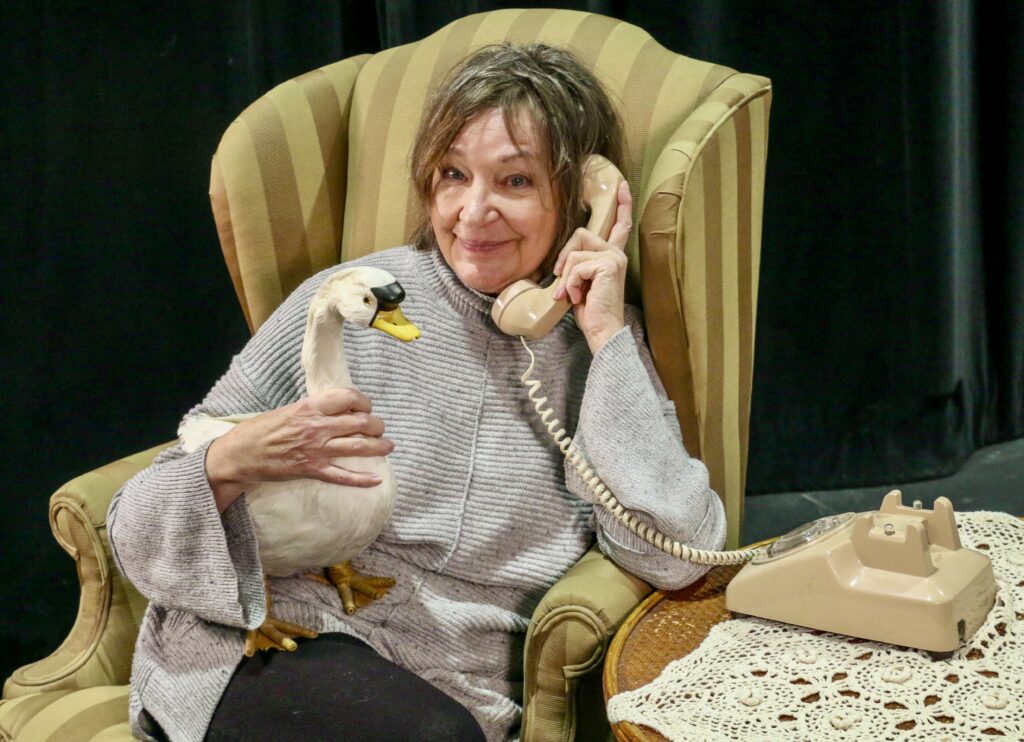
Meet Edith Weiss – playwright, director, actor, standup comedian, mom and voracious defender of vermin. And one of the most universally adored members of the Colorado theater community for the past 50 years.
Weiss has published more than 40 plays, many of them murder mysteries, adapted classics and updated fairy tales for children. Plenty have been performed around the world. But right now, at age 74, Weiss is having a moment 50 years in the making. “And it’s not a stroke!” she says with a laugh.
When her newest work opens on Feb. 13 at Buntport Theater, it will be the first full and fully staged evening dedicated to showing Weiss’ work since she was 24 years old. “It happened to me once right after I got out of college,” she said, “but it hasn’t happened since, at least not at this scale.”
That’s largely because Weiss has come to be considered the absolute authority on the art of the 10-minute play, but short plays just don’t get produced all that often.
But as a writer, Weiss likes to get in, get out and move on to the next story. It’s her sweet spot.
BONUS: READ A SAMPLE FROM EDITH WEISS’ NEW SCRIPT
In fact, her new production, produced by Susan Lyles’ And Toto Too Theatre Company, is an evening of eight short plays, with Weiss herself performing narrative dialogue between each story.
“They’re not just scenes, and they’re not just sketches or skits,” she said. “Each one has a beginning, a middle and an end. Each one has well-defined characters and a really strong point of view.”
That, in a nutshell, is the art of the 10-minute play: And that’s Weiss at her playwriting best.
“I do love a 10-minute play,” she said. “You don’t fiddle-faddle around with a lot of couch talk and kitchen conversation. There’s no filler. You get to the point. And with these plays, I believe I get to the point eight times.”
Take, for example, her story of St. Lawrence. “Did you know he is the patron saint of comedians?” said Weiss. He was, and why? Because the early Romans barbecued him. Truly.
“You know how they used to torture saints and early Christians?” Weiss said. “The legend goes that as he’s lying on the grill, St. Lawrence says to his torturers: ‘Turn me over. I’m done on this side.” I mean, that’s funny. So they made him the patron saint of comedians.”
(Then again, St. Isidore is the patron saint of irrigation systems. Meaning: “There’s a patron saint for everything,” said Weiss.)
Weiss hopes the overall vibe that people take away from the evening will be: “Oh my God, don’t hate anyone,” she said. “We’re all in this together.”
She has certainly given her eight-play collection an irresistible title: “Fierce Satire and Mediocre Sex,” which she defended vigorously when I suggested that maybe – just maybe – “Mediocre Satire and Fierce Sex” might be even better.
“Listen, there’s not one single person I’ve said that title to who hasn’t laughed,” Weiss said. “And that’s what I was going for.”
As for my suggestion, she shot it down like a gunner in the Air Force.
“Here’s what I think,” she said: “Mediocre sex is funny. Fierce sex is good. But it’s not funny.”
Conceded.
The Lowenstein connection
The Edith Weiss story begins in Germany, where she was born, and soon shifts to Canada to New York to New Jersey to Pennsylvania before she arrived in Colorado for good at age 24 in 1976.
One of her early champions was the great Denver theater producer Henry Lowenstein, namesake of both the stage that is now the Tattered Cover Bookstore and the Colorado Theatre Guild’s annual Henry Awards. Now, this part is wild:
“We were both born in Germany,” Weiss said (although 26 years apart). Lowenstein survived the Nazis thanks to the Kindertransport, a British rescue operation that saved nearly 10,000 mostly Jewish children in 1938-39. He eventually wound up at Williamsport High School in eastern Pennsylvania – ”which is the exact same high school I went to,” said Weiss.
She came to Colorado not knowing a soul but was armed with a master’s degree in educational theater from NYU. Weiss remembers taking two playwriting classes in grad school – ”one at Penn State, and one at NYU – and I was the only woman in both of them.”
At a time when creative opportunities in the theater were clearly limited for women, Lowenstein adapted Weiss’ adaptation of “Cinderella” at the Bonfils Theatre. “He gave me my first directing job – and through the years, he came to see almost everything I ever did,” said Weiss, who only discovered that they attended the same high school decades later.
Weiss toured for 15 years as a stand-up comedian, often on the same circuit as rising Denver comedy star Roseanne Barr. At one point, the two even lived in the same Denver apartment building. Weiss also traveled coast to coast and overseas to perform for U.S. troops in the Balkans, Korea and Japan.
“The one that got me the most happened in Korea,” she said. “We got into a car, and we drove right up to the border between North and South Korea. But before we got there, we had to turn off our headlights because we didn’t want the North Koreans to see us. So we got there, and it was this little tiny camp of men. We were doing our show in a place where the guys could sit and drink when I saw this kid. I swear, he was only 18 or 19 years old. He was sitting by himself at the bar, and he was just so lonely. I mean, here we were right up there abutting North Korea in this freezing cold, blacked-out camp. And he was so missing America. He was just so happy to see somebody he could talk to. It made me really glad I was there.”
A place for Edith
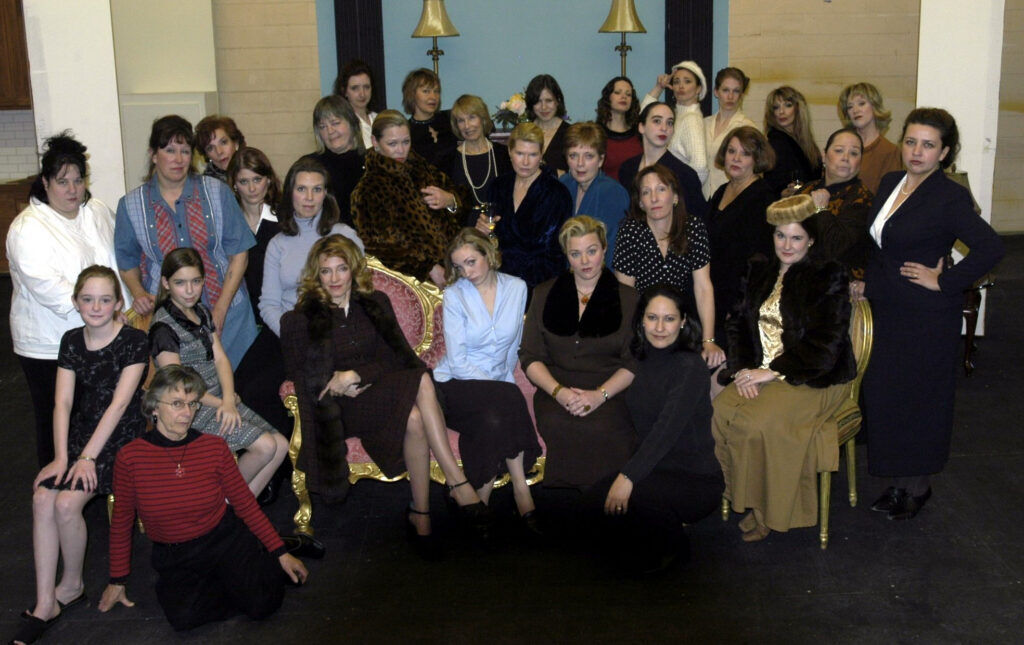
Over the years, Weiss has made her home with local theater companies that give voice to the voiceless. Literally. For seven years, she was head writer and director of the disability-affirmative Phamaly Theatre Company’s “Vox Phamilia,” an annual evening of all-original, often scathingly funny sketch comedy.
“I loved ‘Vox’ because I was writing – and I was helping other people write,” she said. “Boy, did I love that. It opens your eyes about a lot of things when you walk into a rehearsal, and there’s a person with no legs – or half an arm. And then this person comes in with her wheelchair, and she’s carrying freshly made cookies and a gallon of milk in her lap.
“It showed me that these are people who refuse to take pity. They come from a place where everybody takes one look, and they feel bad for them. So I told them: ‘We just have to make this funny. I don’t want this to be all boo-hoo.’ And it worked. It was funny. Those were seven of my favorite years of doing theater in my life.”
Weiss is such a versatile theater artist, it’s hard to peg her as any one thing. She has made her mark as an actor through a remarkable variety of empathetic roles, possibly none greater than playing a museum tour guide confronting the vast emptiness in her life as a portrait of Frida Kahlo comes to life before her in Melissa Lucero McCarl’s “Painted Bread.”

Weiss would add her recent experience performing in the Miners Alley Performing Arts’ “’A Jukebox for the Algonquin,” a melancholy 2024 comedy set in a senior-care center. Onstage Colorado editor Alex Miller wrote that Weiss nailed the role of a sweet, anxious resident named Annie, saying “she walked away with a number of scenes because of the likeable goofiness she projects so deftly.”
On stage, in life or at her keyboard, Weiss reflects a playwright who looks at life with the whimsy of a child – only, in this case, a septuagenarian child whose words and deeds are buttered with decency, charm, heart and hope – all wrapped in a wicked sense of humor.
“Edith has been my colleague, poker buddy and neighbor for more than 20 years,” said Montour-Larson. “Watching her face when she wins a hand of poker is honestly one of my favorite things in the world. I can’t help but smile as she happily takes my money.”
Like Shakespeare and Moliere, Weiss likes uplifting the downtrodden and making the elite look foolish.
“As a playwright, Edith writes with sharp intelligence, deep compassion and great humor,” Montour-Larson said. “Her work is always rooted in real people and real stakes. As an actor, she brings a fearless, precise and deeply human presence to the stage — the kind that makes audiences lean in.”
The gift, she continued, is Weiss’ rare ability to be both extremely strong and beautifully vulnerable at the same time.
Weiss is particularly pleased that “Fierce Satire and Mediocre Sex” is being brought to life by Lyles, whose And Toto Too Theatre Company’s mission is singular here in Denver. “We really are the only company in town that actually does new work by Colorado women playwrights on a steady basis,” Lyles said.
But this play does come at a unique and hopeful moment for the larger community of local female playwrights. Between now and March, at least five companies will be fully staging world-premiere plays written by Colorado women. That’s never happened before. Not even close.
“I think that producers are maybe finally waking up to the homegrown talent we have here,” said Lyles, a grassroots theater entrepreneur who impresses Weiss most “because Susan doesn’t treat theater as either commerce or a corporation,” said Weiss. “ She is courageous. She is a risk-taker. And when you look around and you see theaters doing old chestnuts over and over again or musicals just because that’s what sells – Susan isn’t like that. She does what she feels is good, no matter what. And I think that’s courageous.”
At 74, Weiss is ready to confront the reality that, to many, she is considered, as I once wrote to her chagrin, “just a living, glowing ball of goodness.”
“Are you calling me fat?” she asked me at the time. “First of all, I’m not that round. Anybody who knows me knows I am a tad angular.”
But she is good. People know it. People say it. “Edith is very kind, and it’s safe to be in her orbit. Always,” Lyles said.
That, Weiss said, makes her feel two things.
“First, I feel awkward,” she said. “And secondly – if that is true, then I know where I got it: From my ultra-strict Slovakian father. Because he was so honest, he would never so much as bring home a pencil or a paperclip from work. Never. He just had so much integrity. And while that made him overly strict, that’s where I learned that is the way you should behave.”
With decency.
“Here’s what I learned from my parents,” she continued. “You take your little tiny piece of the world. You make it better. That’s all. That’s it. So even if your neighbor voted for Trump, and your neighbor is a great guy, then that’s it: You love him.”
If you decide to take in some “Fierce Sex” – I mean, some “Fierce Satire,” you’ll get it, said Weiss. She pinky-swears.
“When people see this show, they will be so happy they came,” she said. “I promise. In fact, if they’re not, I’ll buy their (bleeping) ticket. Seriously: I’ll pay their money back.”
I told her I’d rather have a pizza.
“Oh, all right,” she said.
But by the sound of things, I think I’m going to go hungry.
‘Fierce Satire and Mediocre Sex’
- What: A new play by Edith Weiss
- When: Feb. 13-28
- Presented by: And Toto Too Theatre Company
- Featuring: Meredith Young, Jeff Jesmer, Chris Kendall, Sophia Badia and Edith Weiss
- Where: Buntport Theater, 717 Lipan St.
- Tickets: $27-$32
- Info: simpletix.com

Other new plays by Colorado women
- ‘Cowboys and East Indians,’ by Nina McConigley and Matthew Spangler. Denver Center Theatre Company. A family grapples with expectations and cultural collisions moving from India to Wyoming. Through March 1. denvercenter.org
- ‘PUF’ (A Completely Factual and Objective History of the Publick Universal Friend), by Olivia Buntaine. Two Cent Lion Theatre Company, Feb. 6-15 at the People’s Building, 9995 E. Colfax Ave., Aurora. twocentlion.com
- ‘Happy 2b Nappy,’ by Kenya Mahogany Fashaw. A celebration of the beauty, pride and cultural significance of natural Black hair. Control Group Productions, Feb. 14-March 1 at Manos Sagrados, 9975 E. Colfax Ave., Aurora. humanitix.com
- ‘Daughtering,’ by Nina Miller. Three generations of women navigate living, dying and the dead when they are called home to appease unruly spirits. March 13-21 at the Dairy Center for the Arts, 2590 Walnut St, Boulder. thedairy.org

LaMonte McLemore, singer and founding member of The 5th Dimension, dies at 90
The Associated Press
the-associated-press@denvergazette.com
Updated 8 hours ago
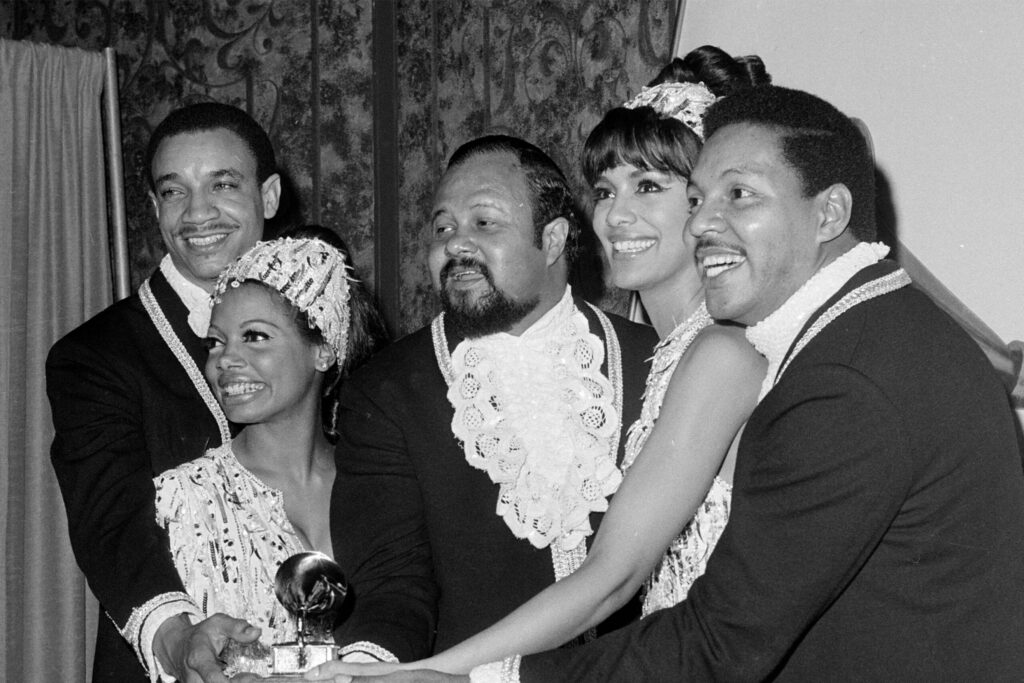
LAS VEGAS – Singer LaMonte McLemore, a founding member of vocal group The 5th Dimension, whose smooth pop and soul sounds with a touch of psychedelia brought them big hits in the 1960s and ’70s, has died. He was 90....

The Associated Press
Reporter

No dinner plans? You can still plan a wonderful Valentine’s Day with these date ideas
Emily Bejarano
emily-bejarano@gazette.com
Updated 9 hours ago
Choose your own adventure this Valentine’s Day with activities, crafting, pop-ups, shows and romantic spa treatments It’s never too late to plan something special for someone you love, whether that person be your significant other or your Galentine. There’s plenty happening around Denver for Valentine’s Day, with...

Emily Bejarano
Reporter

Denver area events for Feb. 5
Carlotta Olson
carlotta-olson@denvergazette.com
Updated 1 day ago
If you have an event taking place in the Denver area, email information to carlotta.olson@gazette.com at least two weeks in advance. All events are listed in the calendar on space availability. Thursday Vinicius Cantuária & Chico Pinheiro Duo — 6:30 and 9...

Carlotta Olson
Reporter
Previews for movies opening in theaters on Feb. 5, 2026
Carlotta Olson
carlotta-olson@denvergazette.com
Updated 6 hours ago
“Buffalo Kids” — (Animation, PG, 81 minutes). Two Irish orphans encounter heroes and villains while facing danger and adventure on their trip by train across America. IMDb “Dracula” — (Horror, R, 129 minutes). After a 15th-century prince denounces God upon his wife’s death, he inherits an eternal...
Carlotta Olson
Reporter

New York ❤️ Colorado Symphony
John Moore
john.moore@denvergazette.com
Updated 9 hours ago
Arts news: ‘Shrek’ drama deepens; important internment play in Brighton; John Irving salutes Olympic grandkids The Colorado Symphony is still floating on an apex after last weekend’s historic tour gave 15,000 New Yorkers a listen to the best our state...
John Moore
Reporter

Weekend things to do around Denver and beyond: Goldens in Golden and more
Dennis Huspeni
dennis.huspeni@gazette.com
Updated 1 day ago
Each Thursday, explore Denver’s essential weekend events curated by The Denver Gazette. Dive into cultural experiences and entertainment delights across the city. Whether you enjoy art galleries, pottery, or outdoor sports, there’s something for everyone in Denver’s vibrant cultural scene....

Dennis Huspeni
Reporter

Daniels Fund awards $450K to three outstanding organizations | NONPROFIT REGISTER
Joanne Davidson Special to Colorado Politics
joanne-davidson-special-to-colorado-politics@denvergazette.com
Updated 1 day ago
You know the old saying about how it’s an honor just to be nominated? In the case of the Daniels Fund and its annual $250,000 Medal of Excellence Award, it wasn’t just an honor to be considered; it was also quite profitable. ...

Olympic Games kickoff sparks Downtown Winter Fest in Colorado Springs
April Borjon
april.borjon@gazette.com
Updated 1 day ago
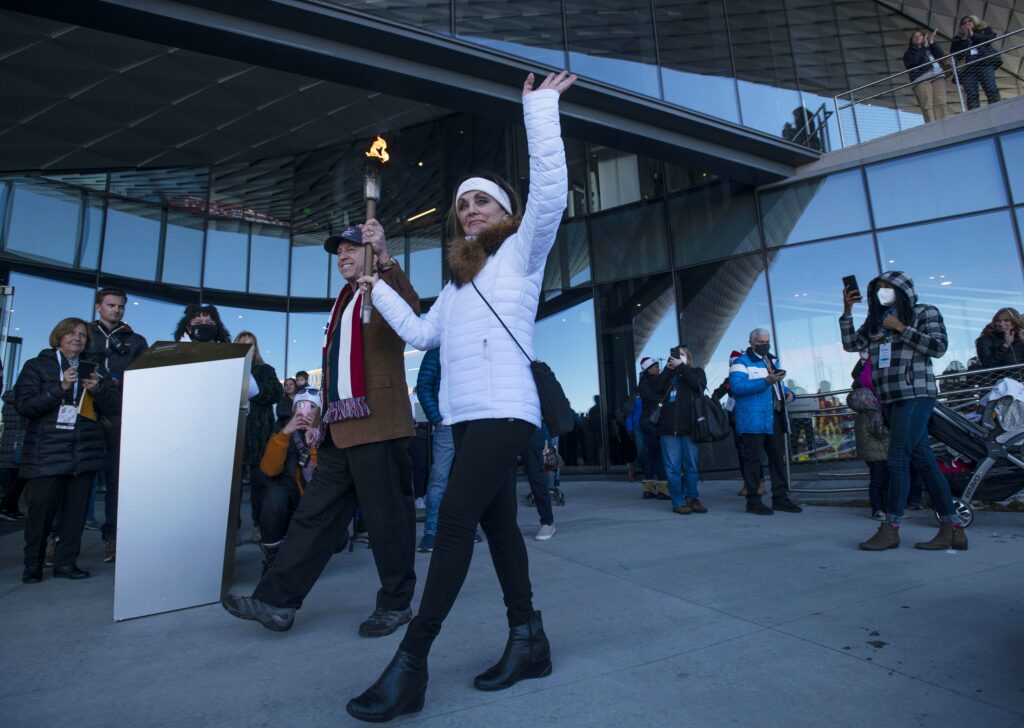
The U.S. Olympic & Paralympic Museum will open its doors Saturday for a free celebration tied to the kickoff of the Olympic Games in Milan, Italy. Downtown Winter Fest will run from 10 a.m. to 3 p.m., offering free admission...

April Borjon
Reporter

Denver area events for Feb. 4
Carlotta Olson
carlotta-olson@denvergazette.com
Updated 2 days ago
If you have an event taking place in the Denver area, email information to carlotta.olson@gazette.com at least two weeks in advance. All events are listed in the calendar on space availability. Wednesday Lord of the Lost & the Birthday Massacre – The...
Carlotta Olson
Reporter

Chuck Negron, lead singer on ‘Joy to the World’ and other Three Dog Night hits, dies at 83
The Associated Press
the-associated-press@denvergazette.com
Updated 2 days ago
NEW YORK — Chuck Negron, a founding member of the soul-rock sensations Three Dog Night who sang lead on such hits as “One” and “Just an Old Fashioned Love Song” and hollered the immortal opening line “Jeremiah was a bullfrog!”...
The Associated Press
Reporter