Colorado judges lean left – just look at the numbers | George Brauchler
Colorado’s judicial selection system is heavily skewed toward Democrats and defendants. It is time to drop the pretense that our system adequately minimizes the impact of partisan political influences on the selection of the judicial branch.
In less than two weeks, Gov. Jared Polis will appoint the next justice to our seven-member Colorado Supreme Court. It will be his second such appointment and his first in more than five years. The discretion, power, and impact of the Colorado Supreme Court’s decisions are such that understanding the process to become a justice — and even a judge — is fundamental to any citizen’s ability to scrutinize and hold accountable the least transparent and most misunderstood branch of our state government.
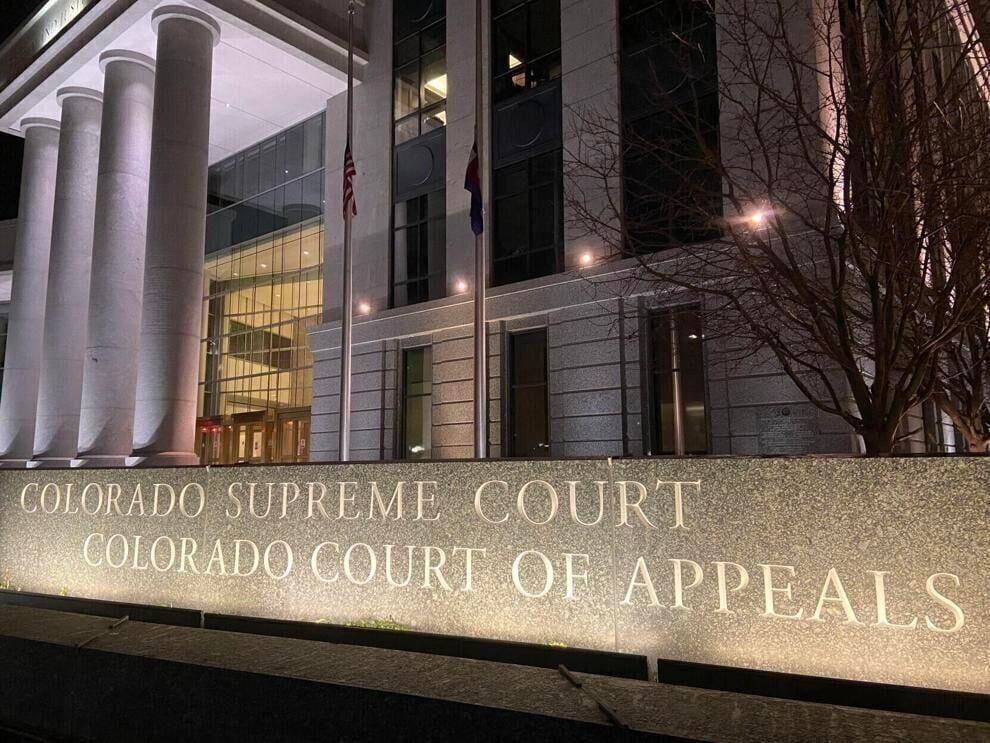
Unlike states such as Oregon, Washington, Illinois, Pennsylvania, Texas and others, Colorado does not elect our justices. They are appointed by the governor after being nominated by a special commission comprised of 17 Coloradans. The scheme is billed as a “merit-based system,” and all past and current justices and judges would agree. But it is a process dominated by partisan political influence.
All six of the current justices were appointed by a Democrat governor. Wait, there is more.
The nominating commission who sent three candidates to Polis is unnecessarily — but deliberately — politically lopsided. The nominating commission is made up of eight licensed attorneys chosen by a majority vote of the governor, attorney general, and chief justice. The remaining nine non-attorneys are all appointed by the governor alone. Of the 17 commissioners, only three — less than 18% — are Republicans. By contrast, Democrats occupy nine seats, more than half of the nominating commission, and the maximum permitted by our constitution. But it’s even more slanted than that. Of the remaining five positions held by unaffiliated voters, three are held by repeated contributors to Democrat political candidates, including for governor.
That obvious and designed political lopsidedness is even more inexplicable given the requirement that two members must be selected from each of Colorado’s eight congressional districts (CD), which are evenly divided between Republicans and Democrats. Nonetheless, in the heavily Republican 5th CD (Rep. Jeff Crank) and 3rd CD (Rep. Jeff Hurd) there are only two Republican representatives — with Democrats in the other two seats. In the overwhelming Republican 4th CD — represented by Rep. Lauren Boebert — there are no Republicans. Zero. In the 8th CD (GOP Rep. Gabe Evans), both representatives are Democrats.
Also troubling is the lack of transparency in the entire process. The applications of those who seek to be on the nominating commission are not shared with the public. Neither are the applications of those seeking to be a Supreme Court justice, nor are the identities of those who applied, but are ultimately not sent to the governor. The interview process, including questions asked and answers given, are not open to the public. We also do not get to see the recommendations of those individuals, or groups to the governor. How can the public trust such an obscure process?
The partisan political slant of our judicial selection process does not end with our Supreme Court, but extends to every level of our court state court system, including trial judges.
There are seven nominating commissioners for each of Colorado’s 23 judicial districts for a total of 161 nominating commissioners statewide. Those commissions nominate candidates to refer to the governor for district (felony) courts and county (misdemeanor) courts — except for Denver’s county court judges, which are chosen by the mayor. For the entire state of Colorado, of the 161 commission positions, there are a mere 19 Republicans, just under 12% of the state total. 40% of Colorado’s judicial districts lack even a single Republican to nominate judicial candidates to the governor’s office.
In the Metro area, made up of the 1st JD (Jefferson), 2nd JD (Denver), 17th JD (Adams, Broomfield), 18th (Arapahoe), and the Mighty 23rd (Douglas, Elbert & Lincoln), there are 35 nominating commissioners. Only four are Republicans and none of them are in Jefferson, Denver, or Adams.
The slant extends beyond partisan affiliation to which side of the criminal courtroom the attorney members sit.
In the five jurisdictions that make up the Denver metro area plus the 4th JD (El Paso and Teller), the most populous in the state, there is one prosecutor (Jeffco) who sits on a nominating committee. In the 2nd (Denver), there are no prosecutors, but there is an anti-death penalty law professor. Current public defenders sit on the commissions of the 18th (Arapahoe) and the 23rd (Douglas, Elbert and Lincoln).
None of this is to suggest that such a hyper-partisan process has not — and cannot — generate good jurists. I have worked with, and appeared in front of, three of our current supreme court justices. They are each intellectual, strong justices and good people. Coincidentally, respectfully, they are all bald.
However, our judge-picking process must become more transparent, accountable and representative of the communities over which those judges will preside. We can no longer count on the decision-makers in the current system to do it. Is it time for Colorado to consider a process that will reinforce all three of those priorities without the pretense of being free of politics — campaigns for judges and justices?
George Brauchler is the 23rd Judicial District attorney and former district attorney for the 18th Judicial District. He has served as an Owens Early Criminal Justice Fellow at the Common Sense Institute. Follow him on Twitter

These internet ‘guardrails’ would guard nothing | Jimmy Sengenberger
Jimmy Sengenberger
jimmy-sengenberger@denvergazette.com
Updated 3 days ago
Whenever government promises to solve a vexing problem, the first thing to consider is whether the solution even would work. That includes when it comes to protecting kids online. This legislative session, a handful of bills are targeting social media...

Jimmy Sengenberger
Reporter
Trump’s critics are not the ‘deranged’ ones | Eric Sondermann
Eric Sonderman
eric-sonderman@gazette.com
Updated 3 days ago
It appears that 63 percent of Americans, plus or minus, are deranged. Per recent surveys, that is the percentage of fellow citizens who do not approve of President Donald Trump’s performance a year into his second term. In Trump’s world,...

Eric Sonderman
Reporter

Hick, much like Trump, harmed rural Colorado | Dick Wadhams
Dick Wadhams
dick-wadhams@denvergazette.com
Updated 6 days ago
Colorado’s congressional delegation unanimously opposed President Donald Trump’s recent veto of the Arkansas Valley Conduit water project which had been passed by Congress without opposition. But Trump is not the first chief executive to unilaterally harm communities in rural southeastern...

Dick Wadhams
Reporter
Record prices, expenses plague agriculture industry
Rachel Gabel
rachel-gabel@denvergazette.com
Updated 6 days ago
This time of year, the salebarns are full of bidders, buyers, and cream pie connoisseurs. The adrenalin and anxiety in the building and around the ring is as thick as the gravy served in the café. In the back of...

Rachel Gabel
Reporter
GUEST COLUMN: Empowering Colorado’s parents and workforce
Stephanie Hancock
sghancock@gmail.com
Updated 3 days ago
Colorado parents know a simple truth that policymakers too often ignore: no two children learn the same way. Yet for decades, weve asked families — especially working and middle-income families — to fit their children into rigid systems instead of...

Stephanie Hancock
Reporter
PERSPECTIVE: A crazy train to energy oblivion in Colorado
Sean Paige
sean-paige@denvergazette.com
Updated 3 days ago
Colorado’s Green Energy Express is careening out of control and heading for a derailment. The only thing that can prevent it now are alert ratepayers recognizing the warning signs and regaining control of this runaway train. It’ll require a return...

Sean Paige
Reporter
Why U.S. Sen. Michael Bennet won’t be governor of Colorado | Jon Caldara
Jon Caldara
jon-caldara@denvergazette.com
Updated 7 days ago
I suggest we get used to saying the words, “Governor Weiser.” The election for Colorado’s next governor does not take place in November. It’s in fewer than five months, on June 30. That’s the state’s primary election. Whoever wins the...

Jon Caldara
Reporter
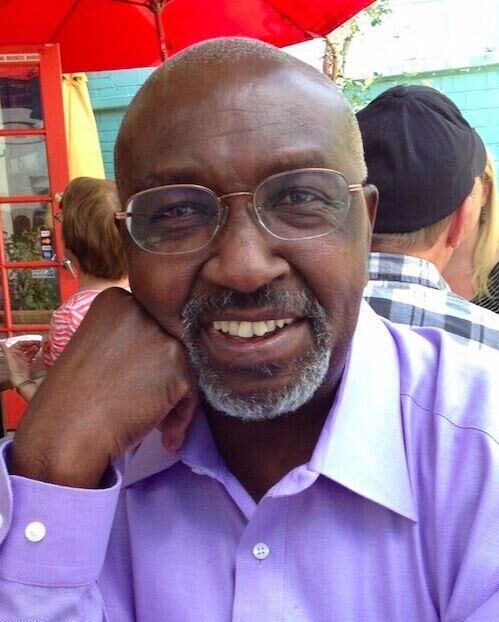
A tribute to Denver Health’s good work | Pius Kamau
Pius Kamau
pius-kamau@denvergazette.com
Updated 6 days ago
The latest Colorado health-care facilities ’construction news is that University of Colorado Health (UCH) and Advent Health, two nonprofit hospital systems plan to build hospitals adjacent to one another in Broomfield, an area with more hospital beds than in most...

Pius Kamau
Reporter
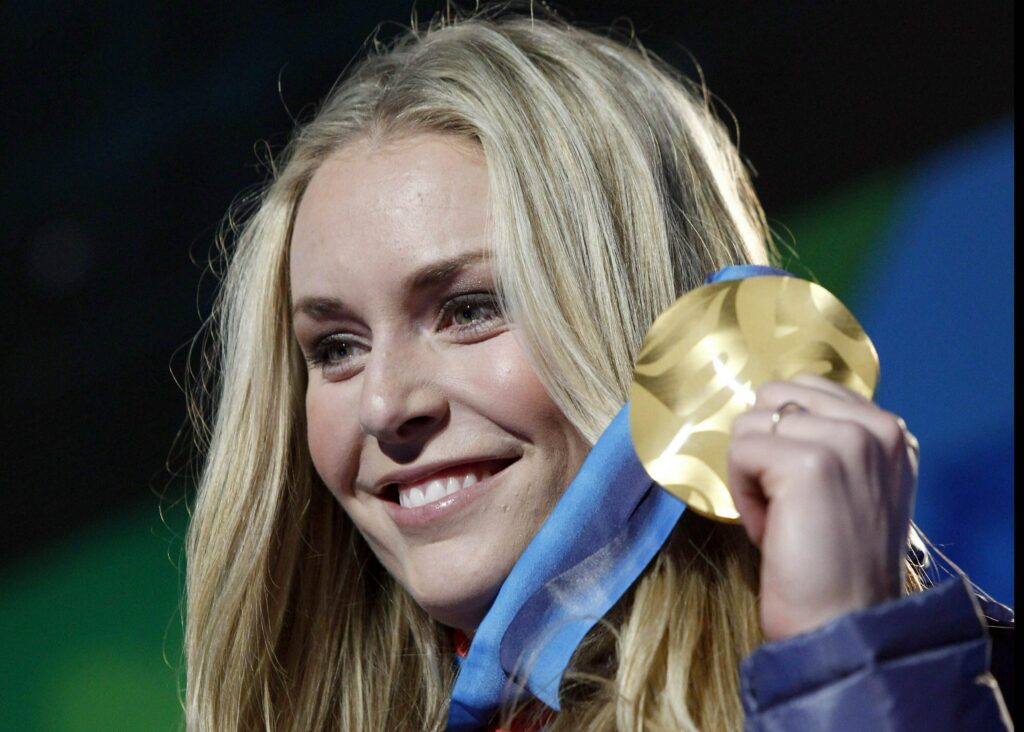
9 great Colorado story lines to follow in the Olympics | Vince Bzdek
Vince Bzdek
vince-bzdek@denvergazette.com
Updated 5 days ago
The Broncos may not have quite made it to the Super Bowl, but you know what, there’s another Super Bowl this weekend for a certain Colorado team. Boasting 33 athletes plus one alternate, Colorado has the most athletes of any...

Vince Bzdek
Reporter
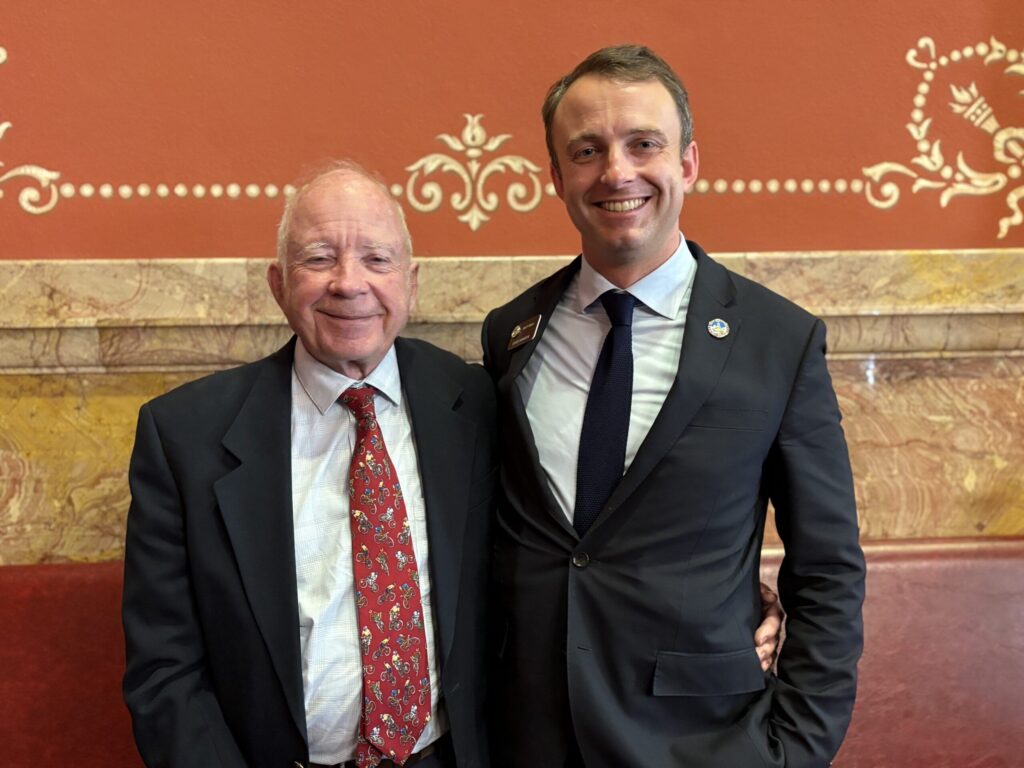
Capitol M: Olympic version | Week of Feb. 7, 2026
Marianne Goodland
marianne-goodland@denvergazette.com
Updated 7 days ago
The lighter side of the state Capitol, usually. Sen. Byron Pelton, R-Sterling, who turns 50 this year, is sporting eyeglasses for the first time. He blames the lege. “With 700 bills to read a year, my eyes are failing me,”...

Marianne Goodland
Reporter