With the deadline missed, Bureau of Reclamation plans to move forward on Colorado River operations
Feb. 14 was no Valentine for the seven states of the Colorado River, which failed to come up with an agreement by that deadline on how to manage the river beginning Oct. 1.
The Department of the Interior and the Bureau of Reclamation on Saturday announced it would move forward with a set of alternatives for how to move forward, compiled into a draft Environmental Impact Statement released last month.
It also released a 24-month study this week on the projected water levels, and that showed that water level at Glen Canyon Dam on Lake Powell is just eight feet above triggering a response to low water levels that could shut down hydropower operations.
And that could happen as soon as the end of the year.
Lake Powell is the water bank for the four states of the Upper Colorado River basin, including Colorado.
Acknowledging the collapse of the negotiations, which became public Friday, the Department of the Interior said in a Saturday statement “While the seven Basin States have not reached full consensus on an operating framework, the Department [of the Interior] cannot delay action. Meeting this deadline is essential to ensure certainty and stability for the Colorado River system beyond 2026.”
The federal government had set two deadlines for the seven states, split into upper (Colorado, Wyoming, New Mexico and Utah) and lower states (California, Nevada and Arizona). The first deadline was Nov. 11. When the states couldn’t come up an agreement, a second deadline of Feb. 14 was set.
The negotiations have largely centered on just how much each basin was willing, or able, to reduce their allocations of Colorado River water.
Both the upper and lower basin states, under the law of the river, have a right to about 75 million acre-feet of water over a 10-year period, or about 7.5 million per year on average. The lower basin states have taken more, by about one million acre-feet, because for years they did not account for evaporative or leaky infrastructure losses.
That’s no longer the case; the lower basin states agreed to take that into consideration, although it’s come at a time when allocations to the three lower basin states have been reduced over the last three years, mostly hitting Arizona’s allottment.
The upper basin states have maintained that they take far less than what they’re entitled to and aren’t willing to agree to any reductions, claiming they’ve already done their fair share.
Department of the Interior Secretary Doug Burgum, in the Saturday statement, acknowledged the seven states have been negotiating, and that the federal government has “narrowed the discussion by identifying key elements and issues necessary for an agreement. We believe that a fair compromise with shared responsibility remains within reach,” Burgum said.
The Bureau is holding fast to its Oct. 1, 2026 deadline to have an agreement in place, the beginning of the 2027 water year.
There are still those who hold out hope for a multi-state agreement, including Colorado Sen. John Hickenlooper, who urged the states to keep working.
That’s in hopes of avoiding litigation, a possibility that many observers and the negotiators have raised and which is growing louder.
In a Feb. 14 statement, Hickenlooper said “[t]he best path forward is the one we take together. Litigation won’t solve the problem of this long-term aridification. No one knows for sure how the courts could decide and the math will only get worse.”
That’s a reference to this year’s to-date record low snowpack, coupled with dwindling water levels at both Lake Powell and Lake Mead.
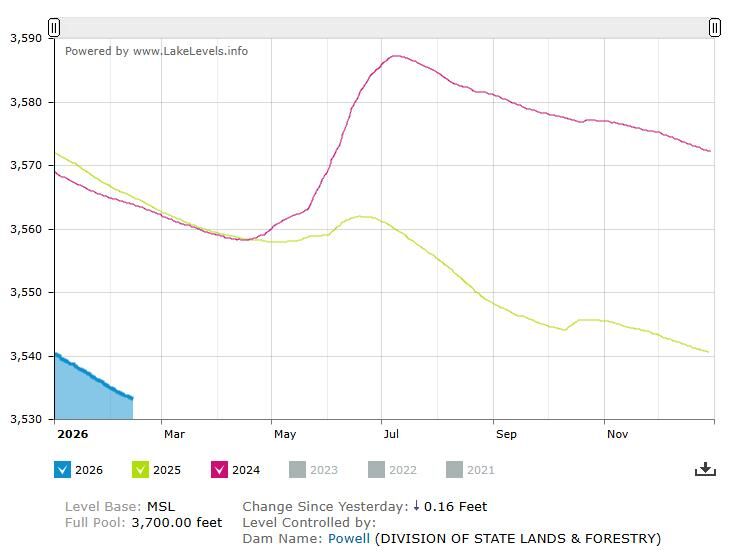
Powell is almost 32 feet lower than at this time last year. As of Friday, Feb. 13, the nation’s second largest reservoir was at 3,533 feet above sea level. That’s about 160 feet above what’s traditionally been viewed as dead pool, or the level that would cause the cessation of hydropower operations at the reservoir’s Glen Canyon Dam.
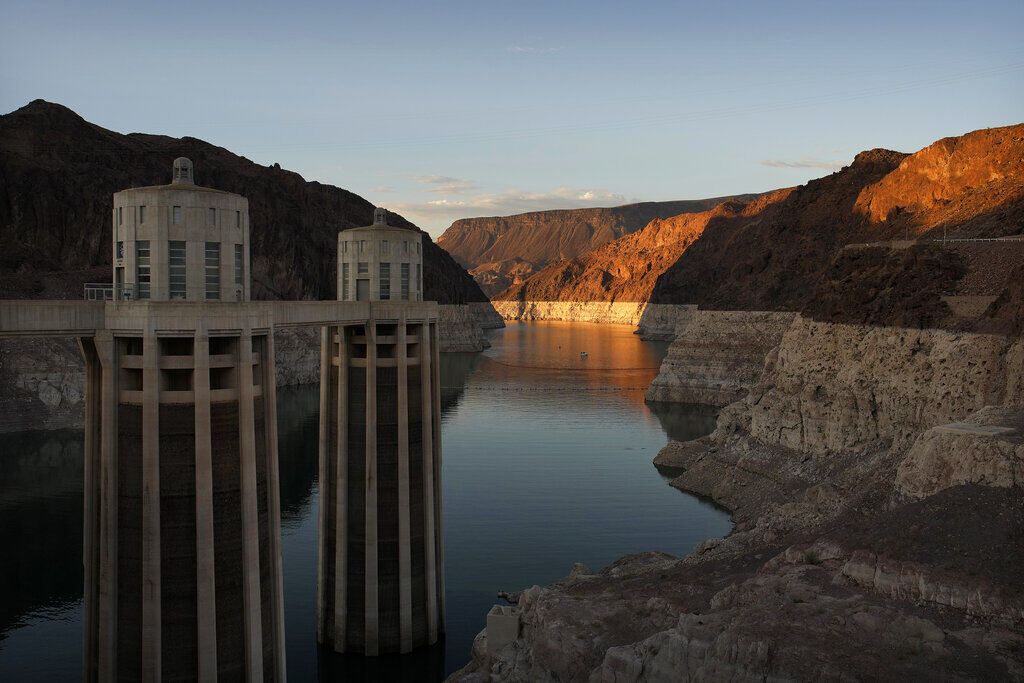
Lake Mead, the largest reservoir in the country and home to Hoover Dam, hasn’t dropped as much from a year ago. Its current level, at 1,065 feet, is 170 feet above dead pool.
But the two reservoirs don’t have to get all the way to dead pool for hydropower operations to be impacted.
That was part of a statement Friday, from Acting Reclamation Commissioner Scott Cameron.
The Bureau released a 24-month study, a projection of where they think the levels at Powell will be between now and a year from now.
The study highlighted worsening hydrologic conditions across the basin.
It noted the lack of snowfall, which pushed the most probable water year inflow forecast for Lake Powell down by 1.5 million-acre feet in the last month, and that’s lower than projections made just three months ago.
“The basin’s poor hydrologic outlook highlights the necessity for collaboration as the Basin States, in collaboration with Reclamation, work on developing the next set of operating guidelines for the Colorado River system,” Cameron said.
“Available tools will be utilized and coordination with partners will be essential this year to manage the reservoirs and protect infrastructure,” Cameron added.
The study noted that Lake Powell could for the first time decline to 3,490 feet in elevation above sea level. The Bureau said that’s the minimum power pool and could happen as soon as December 2026.
“Below this level Glen Canyon Dam’s ability to release water is reduced and it can no longer produce hydropower,” the Bureau said.
That’s about 120 feet higher in elevation than what has been historically estimated for the cessation of hydropower operations. Historically, the minimum power pool was not the same as dead pool. At minimum power pool, hydropower operations would be impacted but not to the point of shutting them down.
At 3,476 feet, which could happen as soon as March 2027, that would be the lowest elevation on record since the dam first filled in the 1960s and would further constrain the dam’s ability to release water.
That change in the level the Bureau views as dead pool was explained by John Fleck, professor of practice in water policy and governance in the University of New Mexico Department of Economics.
He noted in a 2022 blog post that if the Bureau of Reclamation “decides it doesn’t trust the dam’s outlet works…then suddenly ‘active storage’ doesn’t start until elevation 3,490, the level of the power plant intakes. For now at least, 3,490 is the new dead pool,” Fleck wrote.
The Bureau would prefer a 35-foot buffer above 3,490 feet, a target that would allow for “response actions” before Lake Powell drops below 3,490 feet.
High Country News reported just how that works this week.
At 3,490 feet, or minimum power pool, that’s “20 feet above the generators’ actual intakes, or penstocks, but the dam’s eight turbines must be shut down at minimum power pool to avoid cavitation — when air is sucked down like a whirlpool into the penstocks, forming explosive bubbles which can cause massive failure inside the dam.”
Lake Powell, according to the most recent information, is just eight feet above that 35-foot buffer.
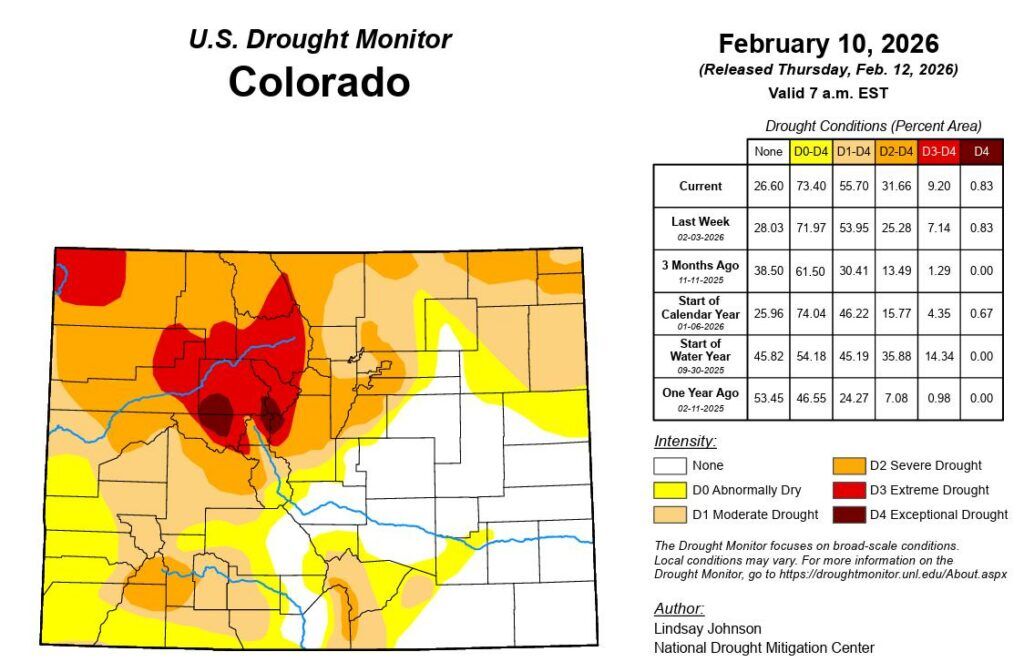
The most recent update from the U.S. Drought Monitor shows extreme to exceptional drought, the worst levels, in the north-central mountains of Colorado, where the headwaters of the Colorado River are located.

Ken Salazar donates archives to Borderlands project, hoping history helps unify country
Vince Bzdek
vince-bzdek@denvergazette.com
Updated 3 hours ago
About the same time the Pilgrims were setting up shop 400 years ago in Plymouth, Ken Salazar’s family was scratching out a toehold in what is now New Mexico, helping to establish the city of Santa Fe. The Salazars had...

Vince Bzdek
Reporter
Senate Democrats weigh skipping Trump State of the Union address
David Sivak, Washington Examiner
david.sivak.washington.examiner@gazetteedit.wpenginepowered.com
Updated 2 days ago
EXCLUSIVE — Senate Democrats are grappling with whether to leave their chairs empty later this month when President Donald Trump travels to the Capitol to deliver the first State of the Union address of his second term. Senior Democrats have...

David Sivak, Washington Examiner
Reporter

Colorado Republicans set meeting to restrain state chair Brita Horn, but she says they can’t do that
Ernest Luning
ernest-luning@denvergazette.com
Updated 3 days ago
A Colorado Republican Party officer has scheduled a meeting of the party’s state central committee to consider whether to curb state GOP chair Brita Horn’s spending authority and hold a confidence vote in her leadership, but Horn said the party...

Ernest Luning
Reporter
Trump administration plans to hold back grant money from Colorado, 3 other states
Thelma Grimes
thelma.grimes@coloradopolitics.com
Updated 2 days ago
The Trump’s administration is planning to withhold some public health and transportation money from a group of Democratic-led states, including Colorado. The other states are California, Illinois and Minnesota. Full details have not been released, including whether the states could...

Thelma Grimes
Reporter

Evans challenger Evan Munsing qualifies by petition for Democratic primary ballot in Colorado’s 8th CD
Ernest Luning
ernest-luning@denvergazette.com
Updated 4 days ago
Thornton Democrat Evan Munsing, one of three major Democratic candidates challenging Republican U.S. Rep. Gabe Evans’ bid for a second term, became the first candidate to qualify for Colorado’s 8th Congressional District primary after submitting a sufficient number of valid...
Ernest Luning
Reporter
Colorado delegation splits in House vote to end federal government shutdown
Ernest Luning
ernest-luning@denvergazette.com
Updated 2 weeks ago
Colorado’s U.S. House members divided mostly along party lines Tuesday in separate votes on a funding deal to end the federal government’s partial shutdown, while giving Congress more time to negotiate long-term funding for the Department of Homeland Security. Lawmakers...
Ernest Luning
Reporter
Specter of litigation looms as Colorado River basin governors head to DC
Marianne Goodland
marianne-goodland@denvergazette.com
Updated 2 weeks ago
Feb. 14. That’s the next deadline for the seven states of the Colorado River to reach an agreement on how to manage the river after the current operating guidelines expire. The U.S. Bureau of Reclamation would like the next guidelines...
Marianne Goodland
Reporter
Colorado’s Democratic delegation calls for Noem’s removal, ICE overhaul
Ernest Luning
ernest-luning@denvergazette.com
Updated 2 weeks ago
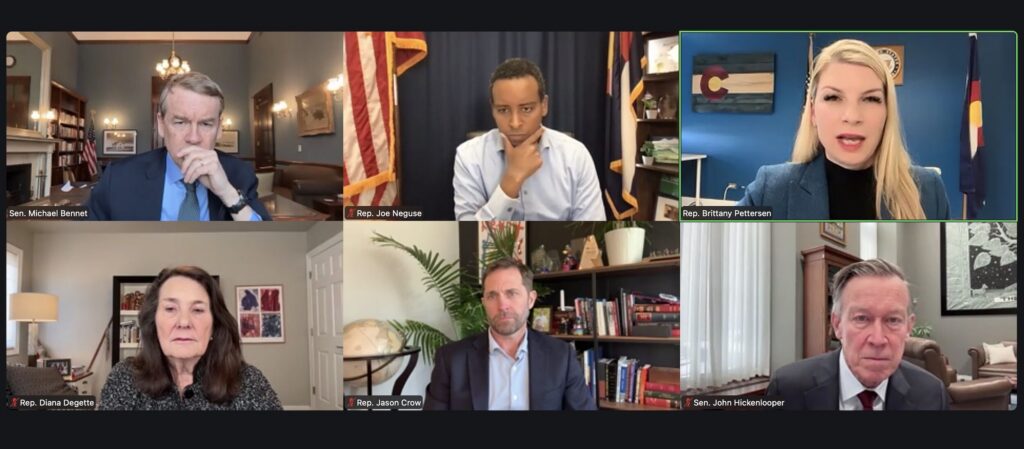
The Democratic members of Colorado’s congressional delegation on Tuesday called for Department of Homeland Security Secretary Kristi Noem to resign or be impeached in the wake of the second fatal shooting by federal immigration agents in Minnesota this month amid...
Ernest Luning
Reporter

Greenland is now Colorado’s problem. And that’s a good thing. | Vince Bzdek
Vince Bzdek
vince-bzdek@denvergazette.com
Updated 3 weeks ago
The conclusion to the dizzying odyssey over Greenland this week reminded me a little of the ending of the “Wizard of Oz.” If you recall, Dorothy, the Scarecrow, the Lion and the Tin Man finish a great and frightful quest...
Vince Bzdek
Reporter
Colorado Democrat John Hickenlooper raises over $1.1 million in 4th quarter for reelection bid
Ernest Luning
ernest-luning@denvergazette.com
Updated 3 weeks ago
U.S. Sen. John Hickenlooper’s reelection campaign raised over $1.1 million in the fourth quarter of 2025 and finished the year with more than $3.8 million in the bank, the Colorado Democrat’s campaign said Thursday. The fundraising haul brings Hickenlooper’s total...
Ernest Luning
Reporter