







Democrats want to decouple Colorado from federal tax breaks

Democratic members of Colorado’s House and Senate on Tuesday announced the introduction of a slew of bills that would reduce corporate tax deductions and sever Colorado’s tax regime from recent federal changes to the tax code.
The federal tax changes provide hundreds of millions dollars in tax breaks. Since Colorado conforms to the federal tax code, any tax cuts at the federal level would reduce state revenue, unless the two are decoupled.
Democrats have blamed Congress and the Trump administration for Colorado’s fiscal woes. Republicans, meanwhile, said years of overspending by the majority party, coupled with government growth and the latter’s refusal to cut the budget are the reasons why the state finds itself in the predicament it is in.
This month, business leaders, who were waiting to see details, raised worries that the proposals would deal another significant blow to Colorado’s business atmosphere. Early-stage companies won’t be able to write off as many losses, any firm buying online software will be forced to pay more and companies with international operations may have to pay more in taxes to Colorado, potentially threatening their presence here, they said.
Meanwhile, Democrats framed the four-bill package as “rebalancing” the state’s tax code in the aftermath of the congressional budget, arguing they would benefit Colorado residents.
The bills would, in part, create a new tax credit, modeled after the state’s Family Affordability Tax Credit, which was deactivated for the 2026 tax year following the passage of the federal budget.
“Colorado’s tax code should work for the people of Colorado, not provide special treatment for monied interests that aren’t effective in advancing state goals,” said Sen. Mike Weissman, D-Aurora. “Recent tax and other law changes at the federal level have been devastating. We must use this moment as an opportunity to examine our tax code and re-balance the scales toward working people. Cleaning up our tax code is a critical way we can mitigate the harms taking place in Washington and put Coloradans first.”
The bills, which will officially be introduced this week, would do the following:
• Disallow corporations from deducting the salaries of executives as operating expenses on their tax returns. The bill is sponsored by Reps. Yara Zokaie, D-Fort Collins, and Emily Sirota, D-Denver, and Sens. Judy Amabile, D-Boulder, and Katie Wallace, D-Longmont.
• Separate Colorado’s tax code from four business tax breaks created or expanded by the Congressional budget, which included write-offs and deductions for interest expenses on debt for larger corporations. The bill is sponsored by Reps. Lorena Garcia, D-Adams County, and Karen McCormick, D-Hygiene, and Sen. Cathy Kipp, D-Fort Collins.
• Repeal tax exemptions and deductions for things like metal bullion, coins and purchases regarding space flight, and make modifications to existing tax credits, including the Community Food Access Tax Credit and the Wildfire Mitigation Tax Credit. The bill is sponsored by Reps. Lorena Garcia, D-Adams County, and Kyle Brown, D-Louisville, and Sen. Mike Weissman, D-Aurora.
• Repeal the downloaded software tax exemption. The bill is sponsored by Reps. Steven Woodrow, D-Denver, and Andy Boesenecker, D-Fort Collins, and Sen. Matt Ball, D-Denver.
Sponsors said the latter would ensure taxes on software products are consistent, regardless of how or where they are purchased.
“Our bill would ensure sales tax on software isn’t being applied arbitrarily,” said Boesenecker. “Whether someone purchases Microsoft Word online or in person, they should not be taxed differently.”
“When people are struggling to juggle their rent, groceries and utility bills, Trump’s corporate tax breaks for million-dollar salaries are a slap in the face for hardworking Coloradans,” said Zokaie, referring to the measure on executive salaries. “With this bill, Colorado Democrats are cracking down on taxpayer funded corporate giveaways to restore the balance toward middle and lower income people.”
Referring to the corporate tax breaks in the federal budget, Kipp said the changes proposed at the state Capitol would keep the state from “spending our tax dollars on development outside of Colorado, instead putting those benefits toward the well-being of families and children in our communities.”
“We’re updating Colorado’s tax code to prioritize hardworking Coloradans, create jobs and reduce costs,” added Brown. “H.R. 1 rigged Colorado’s tax code in favor of corporations and the 1%, leaving us to pick up the pieces to lessen the blow on hardworking Coloradans.”
Rhonda Sparlin, Colorado partner-in-charge for tax and financial-consulting firm RubinBrown, earlier told The Sum and Substance, the news site of the Colorado Chamber of Commerce, that the tax proposals could impact “future investments and future opportunities in the state.”
“There’s something in here that will impact every business. This is universal across small businesses and large businesses,” Sparlin said.
Phil Horwitz, a director at Moss Adams and chairman of the Colorado Chamber Tax Council, said the proposal includes changes that are a “huge deal” for the state in the way businesses must calculate and pay taxes. As Colorado is losing ground in national business rankings and a Chamber-commissioned study found it is the sixth-most-regulated state in America, any boost to employers’ tax obligations could make the state less competitive for job expansions, he said.
He pointed particularly to the proposed change in net-operating-loss deduction, which is a common tax break taken by startup companies to help absorb losses they incur before they can market goods and services profitably. Without that lengthy deduction, companies could struggle to recoup early losses and find it harder to sustain themselves in the long run, he said.
“There’s nothing inherently negative about the net operating loss. The point is that businesses should be able to recover losses from prior periods,” Horwitz said after learning about the bill package. “The idea that we should shorten the time they have to recover losses is indefensible.”
Ed Sealover, Editor of The Sum & Substance, contributed to this article.


With the deadline missed, Bureau of Reclamation plans to move forward on Colorado River operations
Marianne Goodland
marianne-goodland@denvergazette.com
Updated 1 day ago
Feb. 14 was no Valentine for the seven states of the Colorado River, which failed to come up with an agreement by that deadline on how to manage the dwindling water resource beginning Oct. 1. The U.S. Department of the...

Marianne Goodland
Reporter

Ken Salazar donates archives to Borderlands project, hoping history helps unify country
Vince Bzdek
vince-bzdek@denvergazette.com
Updated 15 hours ago
About the same time the Pilgrims were setting up shop 400 years ago in Plymouth, Ken Salazar’s family was scratching out a toehold in what is now New Mexico, helping to establish the city of Santa Fe. The Salazars had...

Vince Bzdek
Reporter

Senate Democrats weigh skipping Trump State of the Union address
David Sivak, Washington Examiner
david.sivak.washington.examiner@gazetteedit.wpenginepowered.com
Updated 5 days ago
EXCLUSIVE — Senate Democrats are grappling with whether to leave their chairs empty later this month when President Donald Trump travels to the Capitol to deliver the first State of the Union address of his second term. Senior Democrats have...

David Sivak, Washington Examiner
Reporter
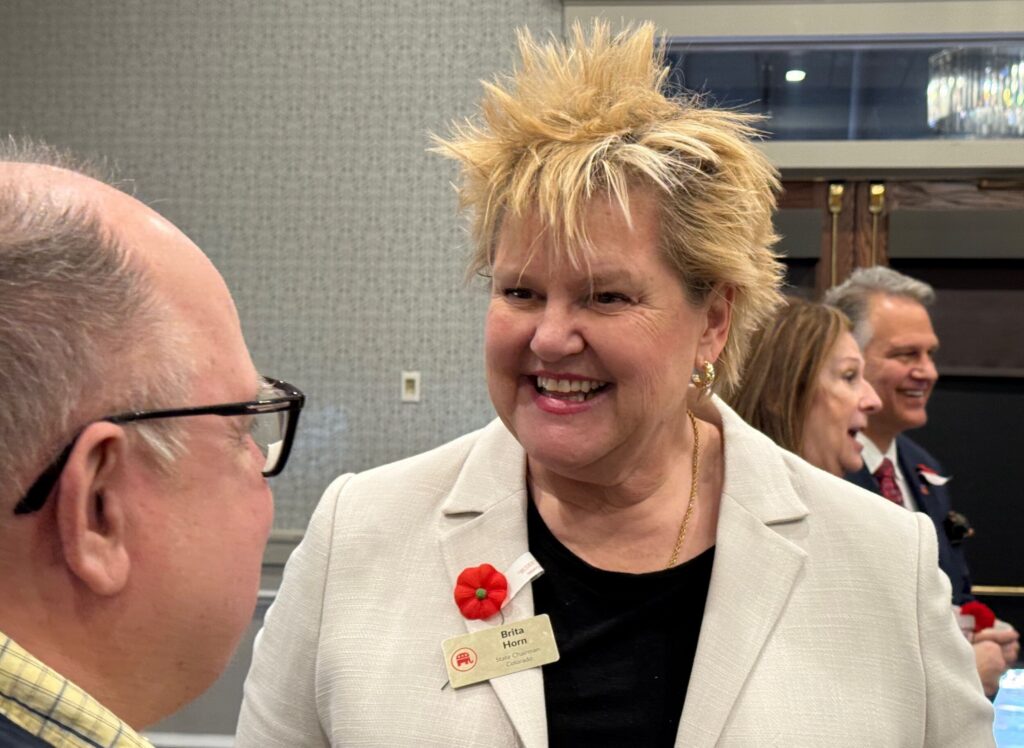
Colorado Republicans set meeting to restrain state chair Brita Horn, but she says they can’t do that
Ernest Luning
ernest-luning@denvergazette.com
Updated 6 days ago
A Colorado Republican Party officer has scheduled a meeting of the party’s state central committee to consider whether to curb state GOP chair Brita Horn’s spending authority and hold a confidence vote in her leadership, but Horn said the party...

Ernest Luning
Reporter
Trump administration plans to hold back grant money from Colorado, 3 other states
Thelma Grimes
thelma.grimes@coloradopolitics.com
Updated 6 days ago
The Trump’s administration is planning to withhold some public health and transportation money from a group of Democratic-led states, including Colorado. The other states are California, Illinois and Minnesota. Full details have not been released, including whether the states could...

Thelma Grimes
Reporter

Evans challenger Evan Munsing qualifies by petition for Democratic primary ballot in Colorado’s 8th CD
Ernest Luning
ernest-luning@denvergazette.com
Updated 1 week ago
Thornton Democrat Evan Munsing, one of three major Democratic candidates challenging Republican U.S. Rep. Gabe Evans’ bid for a second term, became the first candidate to qualify for Colorado’s 8th Congressional District primary after submitting a sufficient number of valid...
Ernest Luning
Reporter

Colorado delegation splits in House vote to end federal government shutdown
Ernest Luning
ernest-luning@denvergazette.com
Updated 2 weeks ago
Colorado’s U.S. House members divided mostly along party lines Tuesday in separate votes on a funding deal to end the federal government’s partial shutdown, while giving Congress more time to negotiate long-term funding for the Department of Homeland Security. Lawmakers...
Ernest Luning
Reporter
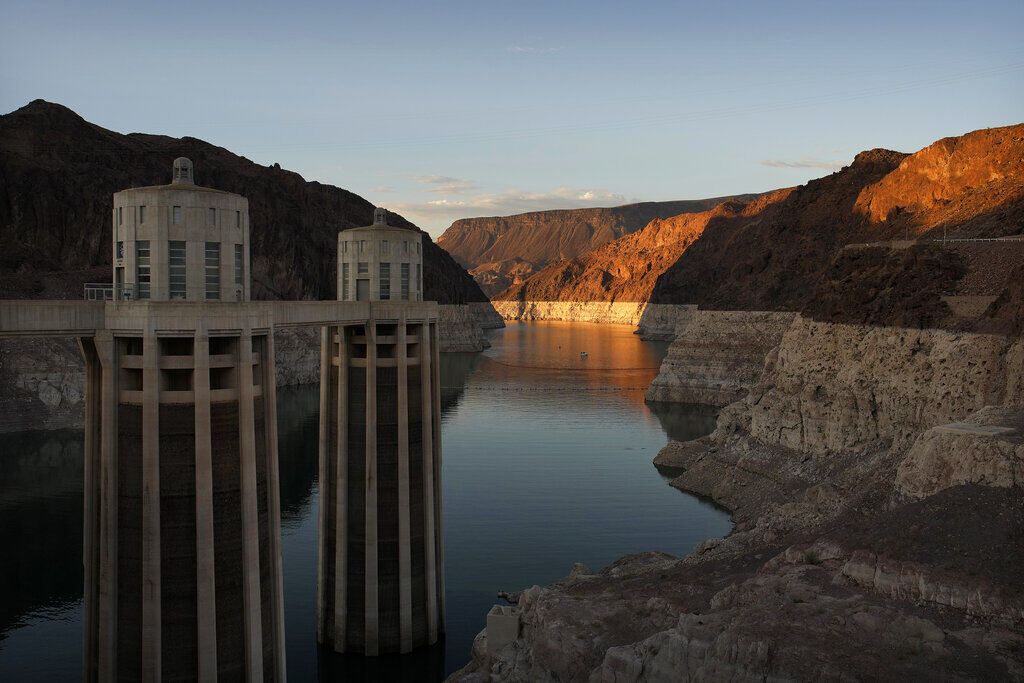
Specter of litigation looms as Colorado River basin governors head to DC
Marianne Goodland
marianne-goodland@denvergazette.com
Updated 2 weeks ago
Feb. 14. That’s the next deadline for the seven states of the Colorado River to reach an agreement on how to manage the river after the current operating guidelines expire. The U.S. Bureau of Reclamation would like the next guidelines...
Marianne Goodland
Reporter
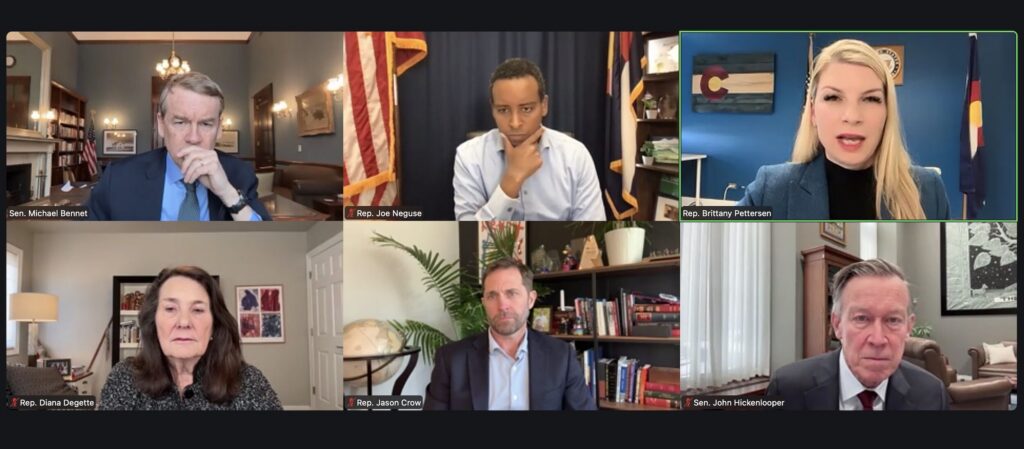
Colorado’s Democratic delegation calls for Noem’s removal, ICE overhaul
Ernest Luning
ernest-luning@denvergazette.com
Updated 3 weeks ago
The Democratic members of Colorado’s congressional delegation on Tuesday called for Department of Homeland Security Secretary Kristi Noem to resign or be impeached in the wake of the second fatal shooting by federal immigration agents in Minnesota this month amid...
Ernest Luning
Reporter

Greenland is now Colorado’s problem. And that’s a good thing. | Vince Bzdek
Vince Bzdek
vince-bzdek@denvergazette.com
Updated 3 weeks ago
The conclusion to the dizzying odyssey over Greenland this week reminded me a little of the ending of the “Wizard of Oz.” If you recall, Dorothy, the Scarecrow, the Lion and the Tin Man finish a great and frightful quest...
Vince Bzdek
Reporter
PREV
PREVIOUS

In legal filing, Denver insists 'sanctuary policies' make jurisdictions safer
Denver has joined some 140 cities, counties and elected officials in filing two amicus briefs backing Minnesota and Rochester, New York — jurisdictions sued by the Trump administration’s over their “sanctuary” policies. In a statement, Denver Mayor Mike Johnston characterized the White House’s actions as “defunding” and “punishing” America’s “sanctuary cities.” The Trump administration, meanwhile, […]

Denver school board to consider property swap
The Denver Public Schools board will consider replacing an administrative building with Pascual LeDoux Academy in the district’s 2020 lease-purchase structure, a financing arrangement tied to the sale and leaseback of several school buildings now under legal challenge. The deed swap is part of a financial maneuver to sell the administrative property on Yuma Street […]