Colorado bill seeks to limit surveillance tech to ‘lawful’ public safety purposes

A Republican legislator is pushing legislation on surveillance technology that, she said, is designed to achieve a balance between aiding law enforcement and protecting people’s private rights.
Her proposal is drawing support from both sides of the ideological aisle, though for different reasons.
Senate Bill 071, sponsored by Sen. Lynda Zamora Wilson, R-Colorado Springs, would require law enforcement agencies to use surveillance technology —such as facial recognition software, license plate readers, and traffic cameras — “only for lawful purposes directly related to public safety or for an active investigation.”
The bill establishes requirements for each type of surveillance technology, including prohibiting the use of facial recognition software without a warrant and limiting the use of traffic cameras to law enforcement purposes, such as for locating stolen vehicles.
Under SB 071, law enforcement agencies would only be allowed to store personal data for a set period of time and would be prohibited from selling that information to a third party. The Attorney General would be tasked with conducting an audit on law enforcement every two years and would have the authority to bring civil action against agencies that violate the law.
Zamora Wilson, who was selected via vacancy committee last June, said her constituents have expressed worries about being surveilled by law enforcement and about their personal information being used against them.
“It brings about an interesting predicament,” she said. “I support law enforcement, and I have family members who are in law enforcement, and the amount of technology that they have saves lives and protects lives. I want to enable law enforcement to use this, but I also want to protect citizens’ information.”
“So, it’s this delicate balance of putting up guardrails such that they can do their job, but also citizens are protected,” she said.
Law enforcement agencies use a variety of technologies to support investigations, including drones, GPS trackers, and CCTV cameras.
In recent years, cities like Denver have faced criticism for their use of automated license plate readers produced by the tech company Flock Safety. Meanwhile, supporters of the technology said it has served as an essential tool in combating crime.
While Denver is reconsidering Flock’s contract, other local governments have embraced it, saying the camera system has “proven very valuable in locating stolen vehicles, wanted subjects and even endangered persons.”
“Law enforcement has very sensitive information about us,” Zamora Wilson said. “My bill talks about securing the data — who has access to the data? How long can you have the data? There’s so many innocent people that are being monitored, and we need to protect them.”
While Zamora Wilson is currently the only sponsor of the bill, she believes she might just have the support of colleagues from both parties. Her two other data bills on privacy issues — Senate Bill 070 and House Bill 1037 — have drawn bipartisan sponsorship.
Senate Bill 070, cosponsored in the Senate by Boulder Democrat Sen. Judy Amabile, would prohibit government agencies from accessing databases that show individuals’ historical location information, such as GPS or license plate readers.
“If you look at Senate Bill 70 and you were to ask Senator Amabile and Representative (Yara) Zokaie about it, we’re totally opposite,” Zamora Wilson said. “They want it for different reasons.”
Rep. Kenny Nguyen, D-Broomfield, who is also sponsoring SB 070, said the bill provides a way to “measure accountability” and increase transparency. He told the Denver TV station KKTV he was particularly concerned with the U.S. Immigration and Customs Enforcement having access to personal data.
“As a person who is a son of immigrants, I am concerned that my data and my license plates can be used through the Department of Homeland Security,” he said.
Nguyen’s view is an argument commonly raised by opponents of the Trump administration’s crackdown on illegal immigration.
Flock has maintained that it does not work with ICE or any other sub-agency of the U.S. Department of Homeland Security and federal immigration agents do not have direct access to its systems. Flock said the data collected by its cameras are owned by the customer, whether that’s a city, school or a private organization.
Zamora Wilson said she’s still trying to find a balance with Senate Bill 071.
“I’m trying to find that sweet spot where it optimizes the capability of law enforcement but also maximizes the protection of people, and that’s a tough one to find,” she said.
Both bills will be heard by the Senate Judiciary Committee on February 23.


Arts community mourns three
John Moore
john.moore@denvergazette.com
Updated 3 hours ago
Ken Walker, Debra Faber and Janelle Orsborn remembered fondly To Dazzle Denver, bassist Ken Walker was family. For more than two decades — we’re talking 250 consecutive months of final Fridays — Walker and his sextet commanded the Dazzle stage....

John Moore
Reporter

Miners Alley punches up the comedy scene in Golden
John Moore
john.moore@denvergazette.com
Updated 3 hours ago
Arts news of the week includes Josh Blue; a new musical written by a Coloradan and an Indigo Girl; and: Why Nirvanna is spelled just right. The Miners Alley Performing Arts Center is expanding its scope and commitment to community...
John Moore
Reporter

Weekend things to do around Denver: Cripple Creek Ice Festival and more
Emily Bejarano
emily-bejarano@gazette.com
Updated 3 hours ago
No plans for the upcoming weekend? There’s still plenty of action happening around Denver and beyond to get folks off the couch. Each Thursday, explore Denver’s essential weekend events curated by The Denver Gazette. Dive into cultural experiences and entertainment...

Emily Bejarano
Reporter
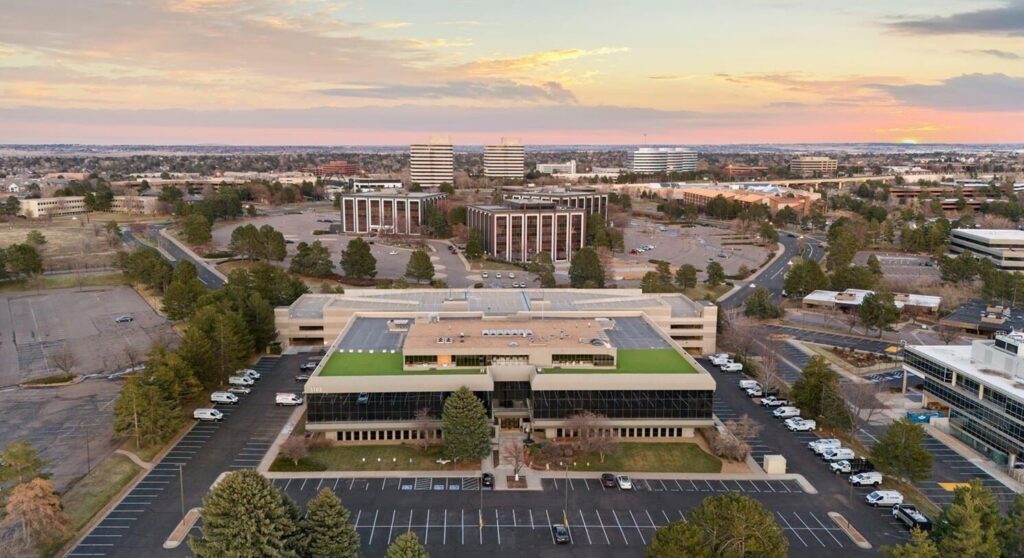
John Madden’s office-top penthouse is modest in scale to its DTC surroundings
Mark Samuelson
mark-samuelson@denvergazette.com
Updated 3 hours ago
At a moment when homes around Denver are wowing with their high-altitude prices, anybody who knew who John W. Madden was might marvel at how low this one is priced. The owner of the penthouse built atop a 3-story office...

Mark Samuelson
Reporter

Potential clues? Palantir shares several risks of doing business in Colorado
Bernadette Berdychowski
bernadette.berdychowski@denvergazette.com
Updated 3 hours ago
When Palantir announced it moved its headquarters from Denver to Miami, it gave little reason for its decision. All it sent out was a short post on X. It came as a shock that the major company known for its...

Bernadette Berdychowski
Reporter

Democrats want to decouple Colorado from federal tax breaks
Marissa Ventrelli
marissa-ventrelli@denvergazette.com
Updated 4 hours ago
Democratic members of Colorado’s House and Senate on Tuesday announced the introduction of a slew of bills that would reduce corporate tax deductions and sever Colorado’s tax regime from recent federal changes to the tax code. The federal tax changes...
Marissa Ventrelli
Reporter

PHOTOS: Ash Wednesday at Denver Cathedral
Stephen Swofford
stephen-swofford@denvergazette.com
Updated 5 hours ago

Stephen Swofford
Reporter

Wheat Ridge adopts muffler requirements to combat noise
Sage Kelley
sage.kelley@denvergazette.com
Updated 3 hours ago
Wheat Ridge is working to muffle automotive noise. The City Council unanimously approved a new ordinance on Feb. 9 that amends the city’s code regarding mufflers, ultimately allowing for the police department to enforce rules surrounding vehicular exhaust noise. The...

Sage Kelley
Reporter

Aurora City Council considers bringing back notice before sweeping homeless camps
Kyla Pearce
kyla-pearce@denvergazette.com
Updated 5 hours ago
New Aurora City Council member Rob Andrews proposed a resolution that, if passed at a future regular council meeting, would bring back the requirement for a 72-hour notice before homeless encampment sweeps. In February 2025, Aurora lawmakers got rid of...

Kyla Pearce
Reporter

Colorado title board OKs language of ballot measure to privatize Pinnacol Assurance
Marianne Goodland
marianne-goodland@denvergazette.com
Updated 6 hours ago
The state’s title board on Wednesday unanimously voted to approve the wording of a ballot measure that would allow Pinnacol Assurance, the state’s workers’ compensation insurance provider of last resort, to privatize. Behind ballot measure No. 218 is Colorado Succeeds,...

Marianne Goodland
Reporter