







Denver plans moratorium on new data centers

As artificial intelligence drives the data center construction boom, building one in Denver is poised to get more complicated after Mayor Mike Johnston and members of the Denver City Council announced plans to impose a moratorium on new facilities.
Under the plan, the city will review additional data-center-specific regulations targeting “responsible land, energy, and water use as well as zoning and affordability for ratepayers.”
Expected to last several months, the temporary halt is another salvo in Denver’s — as well as the state’s — efforts to position itself as an attractive, tech-savvy place to do business, while also trying to regulate technology.
At the state Capitol, legislators are mulling two competing proposals this year. One would, among several provisions, offer tax breaks to attract large facilities. The other would require data center to use electricity from new — not existing — renewable sources, including solar, wind, geothermal, biomass, and limited small hydro.
“Data centers power the technology we depend upon and strengthen our economy,” Johnston said in a statement Monday. “But as this industry evolves, so must our policies. This pause allows us to put clear and consistent guardrails in place while protecting our most precious resources and preserving our quality of life.”
Existing data centers and projects currently permitted or under construction would not be affected by the moratorium, though they could be expected to follow new guidelines once announced.
At this time, city officials said there is only one data center, the CoreSite DE3 facility, permitted and under construction in Denver.
“This data center is under construction on a site that previously operated as a concrete manufacturing plant in the Elyria-Swansea neighborhood,” a spokesperson for the Denver Office of Community Planning and Development told The Denver Gazette. “The project was approved as a use-by-right under Denver’s General Industrial District (I-B) zoning as the use ‘Wholesale Trade or Storage, General.’”
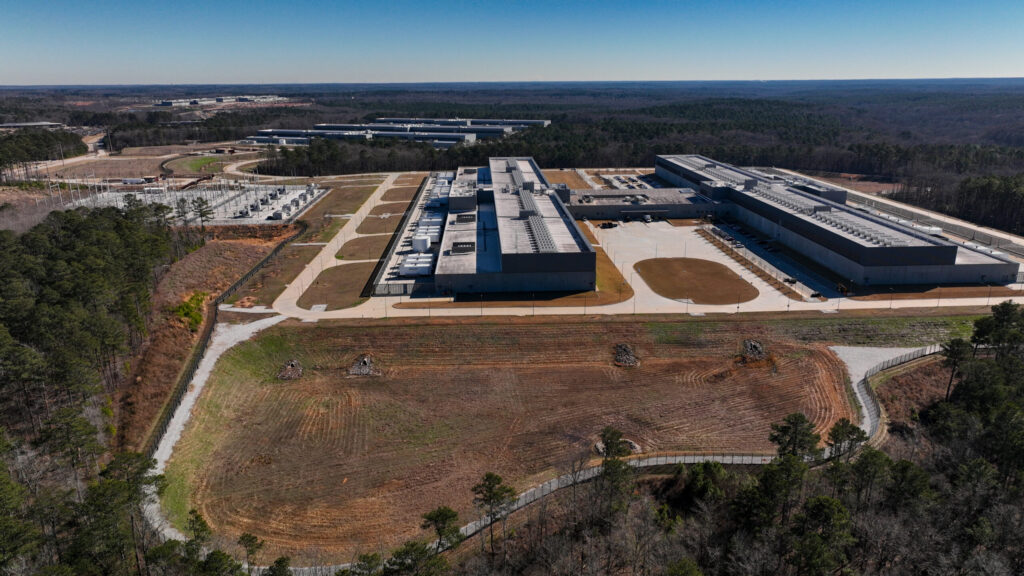
The new 170,000-square-foot data center, situated at 4900 N. Race St., adjacent to the National Western Stock Show complex, is just one of three data centers owned by Denver-based CoreSite.
City officials said future phases of this development have not yet been permitted and that they are unaware of any other planned data centers in Denver.
“Data centers bring with them a unique series of environmental challenges and neighborhood impacts,” Councilmember Paul Kashmann said. “My office has been looking into this topic in depth in recent months. I believe the complexity of the issues involved merits our city taking a pause to give them adequate consideration.”
Kashmann added that while “there remains distance between the mayor’s view and mine, as well as some other council colleagues,” he looks forward to working with Johnston, as well as the community and the industry.
Meanwhile, a Colorado coalition of data center developers and operators is urging lawmakers to pass House Bill 26-1030, which offers tax breaks to attract large facilities, while calling Senate Bill 26-102 a major obstacle to new investment. Proponents of the latter bill insist they don’t want to ban data centers. Rather, they said, they want to ensure data centers won’t slow down Colorado’s carbon goals.
The bills come as data centers — the high-energy-consuming locations where companies that store information in the cloud house the physical infrastructure for their applications and data — are attracting attention from economic developers and environmentalists. Job attractors said they can help fund needed energy-grid updates and supply construction jobs for years as they are built, while environmental advocates worry they over-consume water and use a ton of energy.
Officials said they want to understand the complexities that data centers bring.
“These (data center) projects present new and complex issues that argue for better alignment between Colorado’s economic development, energy, and water strategies, particularly given the obvious impacts of water scarcity in our region driven by climate change,” Denver Water CEO and Manager Alan Salazar said in a statement to The Denver Gazette. “Denver Water, too, believes it is vitally important to fully understand the effects of data centers on water delivery and supply, and will continue to assess their potential impacts on our infrastructure and communities.”
Thirty-seven states currently offer incentives to attract data centers, but Colorado isn’t one of them. And that, industry leaders have said, is a big reason why the Centennial State serves as headquarters to eight data-center-development companies, yet none of them is investing in projects in this state and they seek to build elsewhere in the country.
Sandra Hagen Solin, director of the Data Grid Consortium, described HB 26-1030 as an economic development program with strong protections for the environment, water, air quality and ratepayers. She said it sets clear expectations for companies seeking tax incentives.
The bill lets utilities propose plans to add power to accommodate large new loads while protecting other customers from extra costs, backers said.
A major supporter of AI, Johnston has pinned much of Denver’s future on AI-driven products to increase efficiency, expand services, and to generate much-needed revenue, as the city seeks to dig itself out of a $200 million budget hole.
Recently, Johnston wrapped up his second city-led and sold-out AI Summit in September, when he told attendees that with tools such as AI on the rise, “this is the right moment to think about reinventing government, again.”
The annual high-level conclave explores how cities and municipalities can leverage technology to modernize government and address challenges, such as housing, homelessness, permitting, and more.
Denver already employs several artificial intelligence platforms to enhance efficiency, including the city’s chatbot, Sunny, which answers questions and directs residents to city resources in more than 72 languages.
The city’s planning department also uses AI to map inspection routes, leveraging the city’s existing geospatial data, thereby saving time and resources.
As major cities, such as Los Angeles and Chicago, struggle to move government forward, experts said many are banking on AI to increase efficiency and cut red tape, ultimately boosting revenue.
At the state Capitol, the debate over AI regulation has consumed legislators for about two years.
In May 2024, Gov. Jared Polis signed what was believed to be the first state law that sought to regulate the use of artificial intelligence in the areas of employment, health care, education, and government practices.
While he accepted the bill, the governor at the same time pushed for adjustments to address lingering worries. He asked lawmakers to keep working on it before its 2026 implementation date, expressing worries about its affects on an industry “fueling critical technological advancement.”
And when the legislature decided to delay its implementation, he lauded that move.
“I think that’s great that the legislature said we want to take more time to figure this out before anything becomes operational,” Polis had told attendees of last year’s AI summit. “And I think it’s important to sort of start with what the goal is. I mean, how do you make Colorado the leading state for AI, for consumers and for jobs and for innovators? And then kind of build out a policy that can distinguish ourselves among the other states to achieve that.”
Experts said there is some risk in regulating AI too early and too restrictively, rather than focusing on what AI can actually do. They noted that regulation doesn’t involve lawmakers alone — it also involves consumers, developers and deployers of AI technology.

“I think that one of the risks is that we do this state by state,” Polis said. “We need to approach this nationally for competitiveness and to avoid unintended consequences, to support innovation and add whatever protections are necessary.”
Colorado ranks third among the most concentrated tech-industry economies in the nation, behind only Massachusetts and New Mexico, according to a report released last year by the Colorado Technology Association.
The tech sector, the report said, directly accounts for 10% of Colorado’s employment and 20 percent of the state’s gross domestic product (GDP).
“Data centers are an important part of Colorado’s innovation economy and digital ecosystem,” CTA President and CEO Brittany Morris Saunders said in a statement to The Denver Gazette. “We appreciate the City’s commitment to a deliberate and collaborative review process. Clear and consistent guidance will be important to maintaining Denver’s competitiveness while addressing environmental and community considerations. CTA looks forward to engaging with policymakers, community members, and industry leaders to support balanced, forward-looking solutions.”
A large community meeting to discuss the DE3 data center is scheduled for 5:30 p.m. on Tuesday at Geotech Environmental, 2650 E. 40th Ave.
Reporters Scott Weiser and Marianne Goodland, as well as Ed Sealover, Editor of Sum & Substance, an online news publication of the Colorado Chamber of Commerce, contributed to this article.


Metro Moves: New executive tapped to help grow Ikon Pass
Bernadette Berdychowski
bernadette.berdychowski@denvergazette.com
Updated 8 hours ago
Welcome to the Denver Gazette’s Metro Moves. You’ll get the latest metro Denver openings, closings, hiring and promotion news here. To submit your company’s news, drop an email to bernadette.berdychowski@denvergazette.com. Ikon Pass has a new chief customer executive Alterra Mountain Co....

Bernadette Berdychowski
Reporter
Colorado lawmakers mull competing bills on data centers
Scott Weiser
scott-weiser@denvergazette.com
Updated 3 hours ago
A Colorado coalition of data center developers and operators is urging lawmakers to pass a proposal that offers tax breaks to attract large facilities, while calling a competing bill a major obstacle to new investment. Meanwhile, proponents of the latter...

Scott Weiser
Reporter

Jungle Reef aquarium to bring family fun to Chapel Hills Mall, emphasis on giving animals a ‘second chance’
Alexander Edwards
alexander-edwards@denvergazette.com
Updated 8 hours ago
With some traditional retailers looking for the exit doors at shopping malls across the country or vanishing completely, malls can be forced to evolve or die. Change has become the norm at Chapel Hills Mall, on Colorado Springs’ north side....

Alexander Edwards
Reporter

U.S. Supreme Court to hear bid by oil companies to toss climate suits in Boulder case
Reuters
reuters@denvergazette.com
Updated 3 hours ago
WASHINGTON • The U.S. Supreme Court has agreed to hear a bid by ExxonMobil and Suncor Energy to scuttle a lawsuit brought by officials in Boulder that seeks to hold the oil companies liable for allegedly helping to fuel climate...

Reuters
Reporter

Greeley voters to decide fate of project that includes minor league hockey arena
Hap Fry, Special to The Gazette
hap-fry@gazette.com
Updated 1 day ago
GREELEY • The fate of the Cascadia development — and quite possibly the future direction of the city — is in the hands of Greeley voters this Tuesday during a special city election on whether the landscape-altering project should be...

Hap Fry, Special to The Gazette
Reporter
Denver’s business community reacts to tariffs ruling
Dennis Huspeni
dennis.huspeni@gazette.com
Updated 3 days ago
Within hours of the U.S. Supreme Court striking down the Trump administration’s tariffs, Denver and Colorado business leaders said the justices provided clarity, adding stability and predictability are essential to the American economy. The court’s 6-3 decision centers on tariffs...

Dennis Huspeni
Reporter
U.S. Supreme Court strikes down Trump’s tariffs, upending central plank of economic agenda
LINDSAY WHITEHURST
lindsay-whitehurst@denvergazette.com
Updated 3 days ago
WASHINGTON • The Supreme Court struck down President Donald Trump’s global tariffs on Friday, handing him a major loss on an issue crucial to his economic agenda. The 6-3 decision centers on tariffs imposed under an emergency powers law, including...

LINDSAY WHITEHURST
Reporter

Former Tattered Cover CEO ready to open his new bookstore: Denver Book Society
Bernadette Berdychowski
bernadette.berdychowski@denvergazette.com
Updated 2 days ago
At the Denver Book Society, natural light from the skylight roof floods into a backroom filled with cooking books, puzzles and board games. An arch greets kids into the children’s section decked with bean bag chairs and reading nooks. Soon,...
Bernadette Berdychowski
Reporter

Colorado legislators challenge lottery rules allowing credit card purchases
Marianne Goodland
marianne-goodland@denvergazette.com
Updated 12 hours ago
Back in November, legislators told the Colorado Lottery Commission to hold off on rules that would allow, for the first time, purchases of lottery products with credit cards. The commission went ahead anyway and approved those changes. And now lawmakers...

Marianne Goodland
Reporter

Colorado joins California in lawsuit to restore federal clean energy funding
Scott Weiser
scott-weiser@denvergazette.com
Updated 3 days ago
Colorado has joined a multi-state lawsuit challenging the Trump administration’s termination of more than $600 million in congressionally approved clean energy grants for Colorado projects, Colorado Attorney General Phil Weiser and California Attorney General Rob Bonta announced Wednesday. The suit,...
Scott Weiser
Reporter
PREV
PREVIOUS

At least 6 candidates vying to replace former Sen. Dafna Michaelson Jenet
Sometime in the next 24 days, a vacancy committee for Senate District 21 will hold an election to choose a successor to former Sen. Dafna Michaelson Jenet, D-Commerce City. Michaelson Jenet resigned on Feb. 13 to take a job as director of the David and Laura Merage Foundation for Combating Antisemitism. The competition for her […]

Colorado history told through poetry, spoken word by poets laureate
Young poet and social justice activist Amanda Gorman, the first National Youth Poet Laureate, was just 22 when her “The Hill We Climb” launched the literary art back into a major worldwide spotlight with her 2021 Joe Biden inaugural poem. Her now famous words: “If only we’re brave enough to be it. For there is […]