







EDITORIAL: Colorado — where wolves come to die
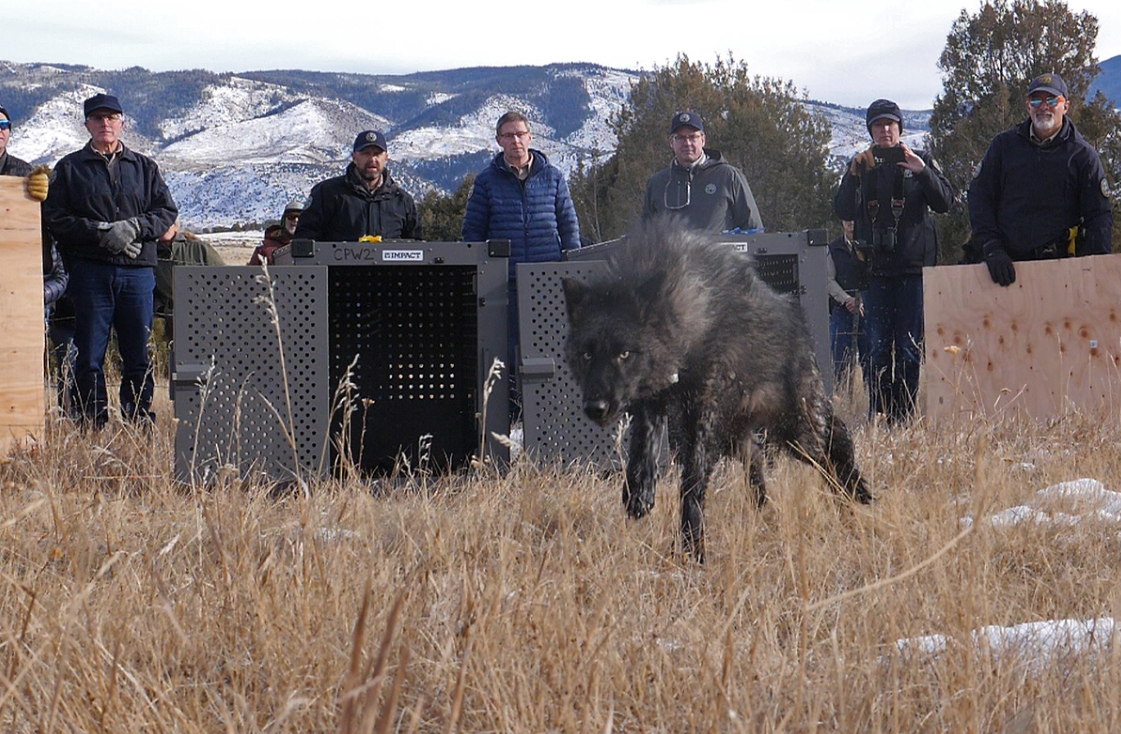
The latest news on Colorado’s precarious and dwindling wolf pack was unsurprising. As reported Sunday in The Gazette, yet another of the wolves relocated to Colorado from Oregon not long ago has died. It happened amid an attempt by Colorado Parks and Wildlife to capture the animal, the state agency confirmed.
Enthusiasts of returning the fabled species to Colorado’s wilds no doubt will mourn the loss. Ranchers, whose livestock were falling prey to the lupine newcomers as predicted, cannot be blamed if they feel otherwise.
Meanwhile, those of us who had maintained from the start that a policy as arcane and scientifically complex as wolf reintroduction never should have been decided on the statewide ballot in the first place — are saying told ya so.
The rushed, bungled and poorly thought through attempt at reintroduction that resulted from Proposition 114 has yielded only a grim irony: Colorado is loving its wolves to death.
As tallied in this week’s Gazette report, five of the original 10 wolves from Oregon have now died. Another seven of the original 15 wolves imported from British Columbia also have died.
A yearling wolf from the Copper Creek pack died, as well, shot by wildlife staff after it killed multiple livestock. Another yearling was shot for the same reason, but according to media reports, survived and, as of October, was still killing livestock and evading capture by wildlife authorities.
For wolves, Colorado has turned into a killing field. It seems the harsh complexities that attend any species reintroduction have caught up with the good intentions, misplaced sentiments — and campaign cash from the national environmental movement — that drove the ballot issue.
Voters approved the notion by the slimmest of margins back in 2020. It passed 50.91% to 49.09% — a difference of about 57,000 votes. Most of the counties that voted in favor comprised the state’s metro areas, where voters’ closest encounters with wolves have been via Animal Planet on the big screen in the family room.
Meanwhile, the state’s livestock producers — who put dinner on the table for most Coloradans — have borne the brunt. Wolves in Colorado have killed more than five dozen calves, heifers, sheep and dogs just since reintroduction was launched with the release of the five Oregon wolves in December 2023.
Whatever the lofty goals of reintroduction in terms of wildlife management — vague aspirations of restoring balance to the state’s teeming elk herd, and the like — the whole effort has taken a very different turn in reality. No one has benefited. Not the state’s cattle ranchers. Not their millions of consumers. And certainly not the wolves themselves, for which reintroduction has become a death sentence.
It turns out to be a lot harder to restore a species than voters were told. Especially if the habitat probably was marginal to begin with. Which is why all such considerations should be left to the wildlife biologists and other experts who are charged with managing wildlife
We’ll say it again: Critics of the 2020 ballot measure were right to deride it as “ballot box biology.” Voters never should have been forced into second-guessing wildlife policy.
The state is vested in the faltering effort at this point, of course, so it’s unclear what lies ahead.
What’s clear, though, is Colorado shouldn’t go down this path again. Warm and fuzzy ballot issues seldom deliver what they promise. They’re more likely to backfire, as this one certainly has.