







The ancient, amazing lives of sandhill cranes, Colorado’s beloved visitors back for seasonal stop
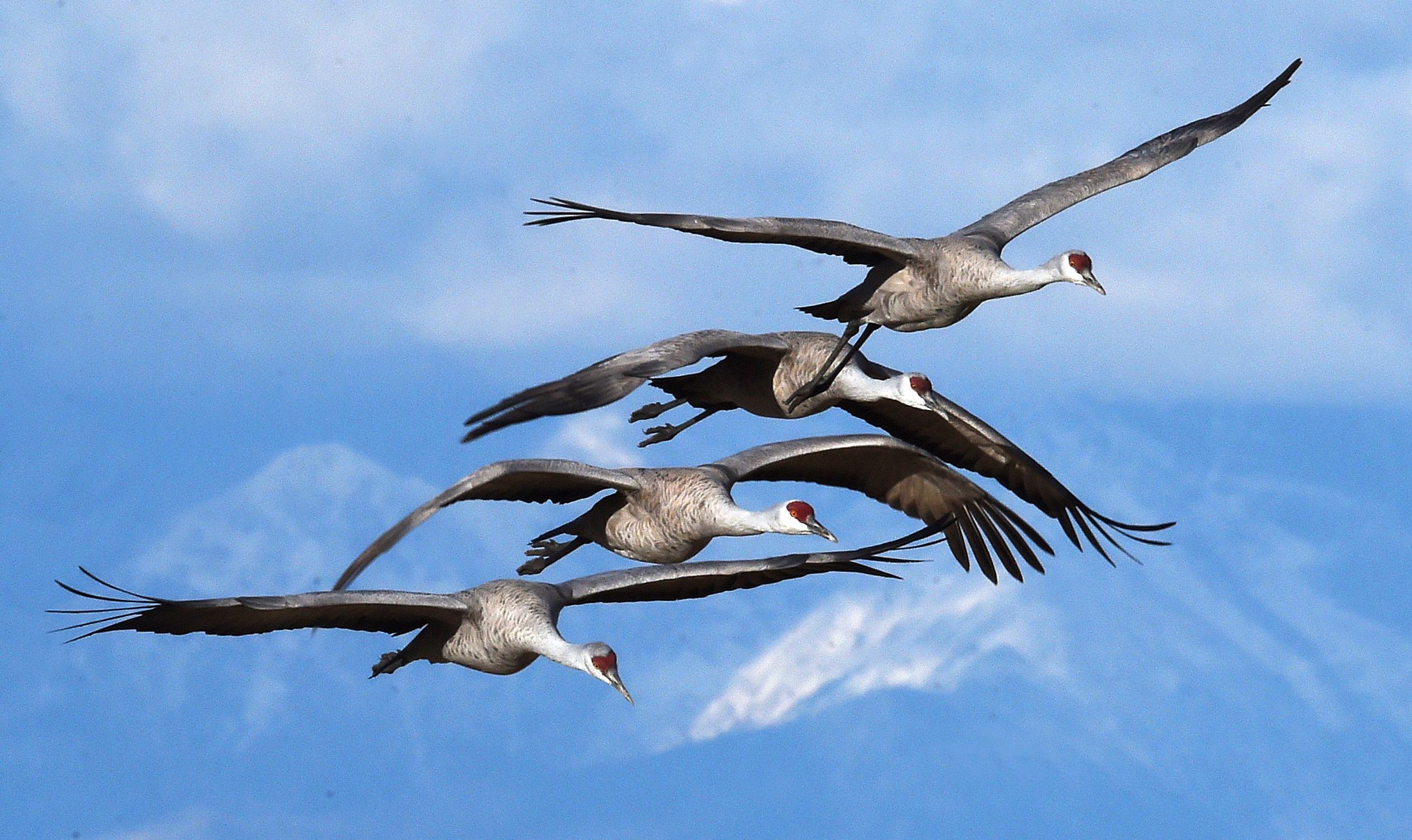
In Colorado’s San Luis Valley, Jenny Nehring longs for this time of year, when her eyes look to the big sky and the big birds flying en masse against the Sangre de Cristo peaks, snow-capped and glowing from the rising and setting sun.
“That never gets old,” Nehring says.
Around her home in Monte Vista, the sandhill cranes are back.
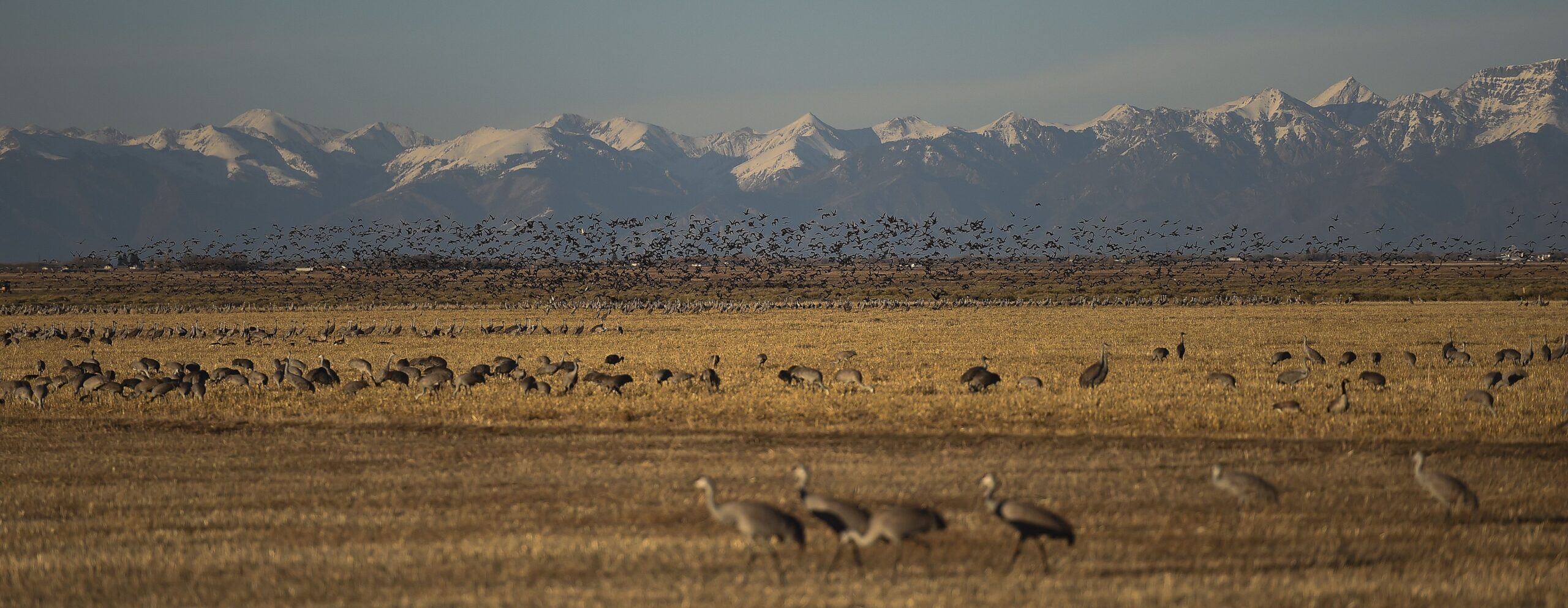
Along their migration, thousands of them stop for the San Luis Valley’s nutritious wetlands and barley fields. And they will be celebrated this weekend during the 43rd Monte Vista Crane Festival, the three-day festival of tours and events that Nehring, the local biologist, looks forward to every year.
She is joined by fellow admirers who flock with the cranes now through March, before their migration continues.
“They are captivating,” says Megan Karschner, executive director of the Colorado Crane Conservation Coalition. “They have this ability to really hook people.”
And to make us want to learn more.
Their Colorado range
The Rocky Mountain population of greater sandhill cranes — as the subspecies is known that winters around New Mexico and Mexico and journeys now toward breeding grounds in the greater Yellowstone area — makes stops in the state beyond the San Luis Valley.
Karschner’s coalition is based in northwest Colorado’s Yampa Valley, where the nonprofit celebrates the return of cranes in early March. They are known to stay and breed through the summer in Routt and Moffat counties.
Nehring points to another “hot spot” in western Colorado: around Delta, where she says thousands of cranes have been counted over recent winters. Similar to the San Luis Valley’s barley, “there’s a lot of corn grown there around Delta and Olathe, so it’s another food source,” Nehring says.
On the northeast plains, along the South Platte River to Nebraska, it’s not greater sandhill cranes that are occasionally seen, but rather lesser sandhill cranes. They are the hunted cranes known as the “ribeye of the sky.”
Their ancient ways
Colorado Parks and Wildlife refers to the sandhill crane as “a living dinosaur,” citing fossil records dating back 9 million years. How long have they been visiting the San Luis Valley? A petroglyph on a rock wall hints at thousands of years.
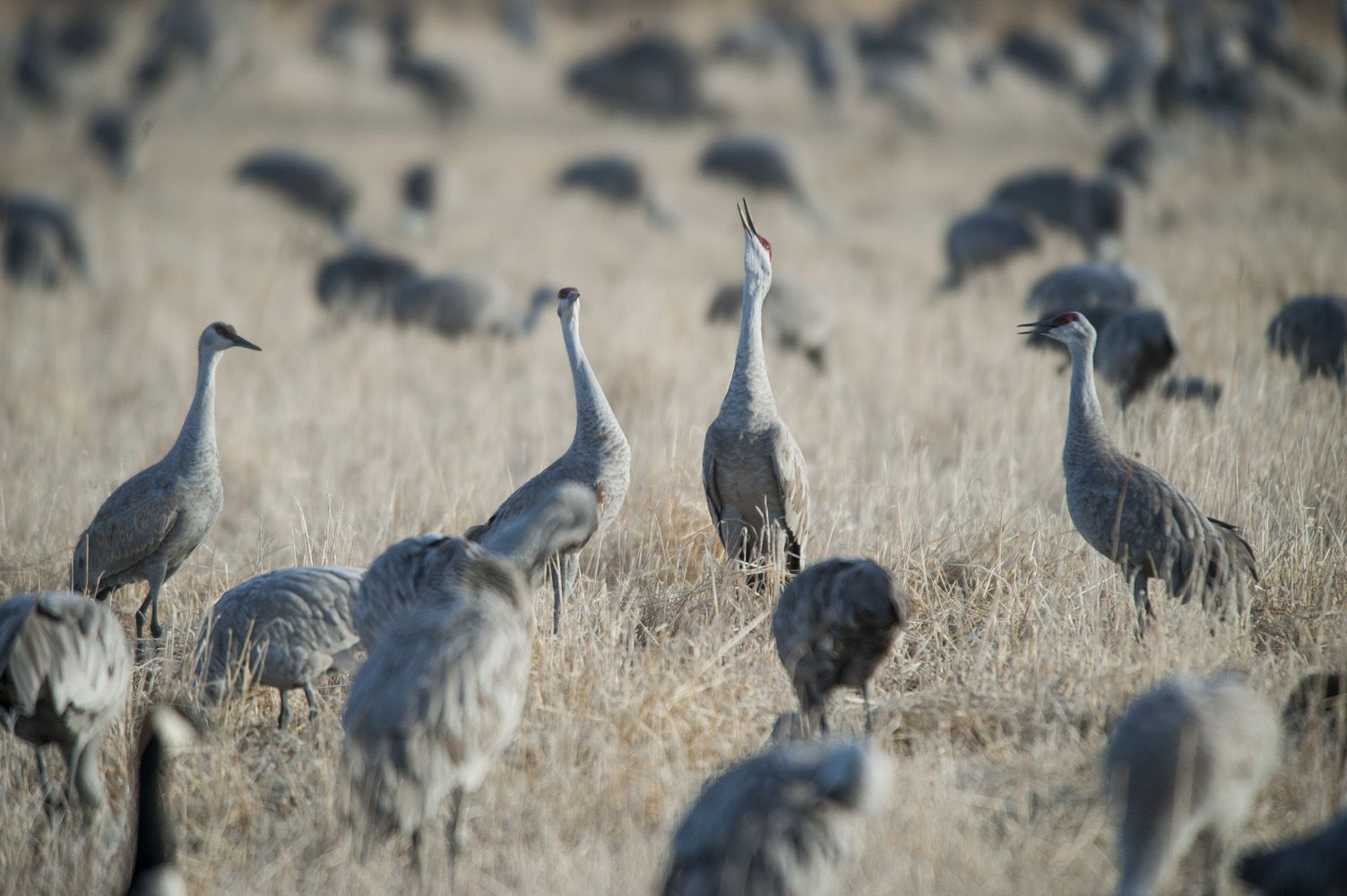
Just as ancient are their calls — “unforgettably loud trumpeting,” which CPW notes “can be heard for miles.” That’s thanks to “a modified windpipe that has been likened to a French horn.”
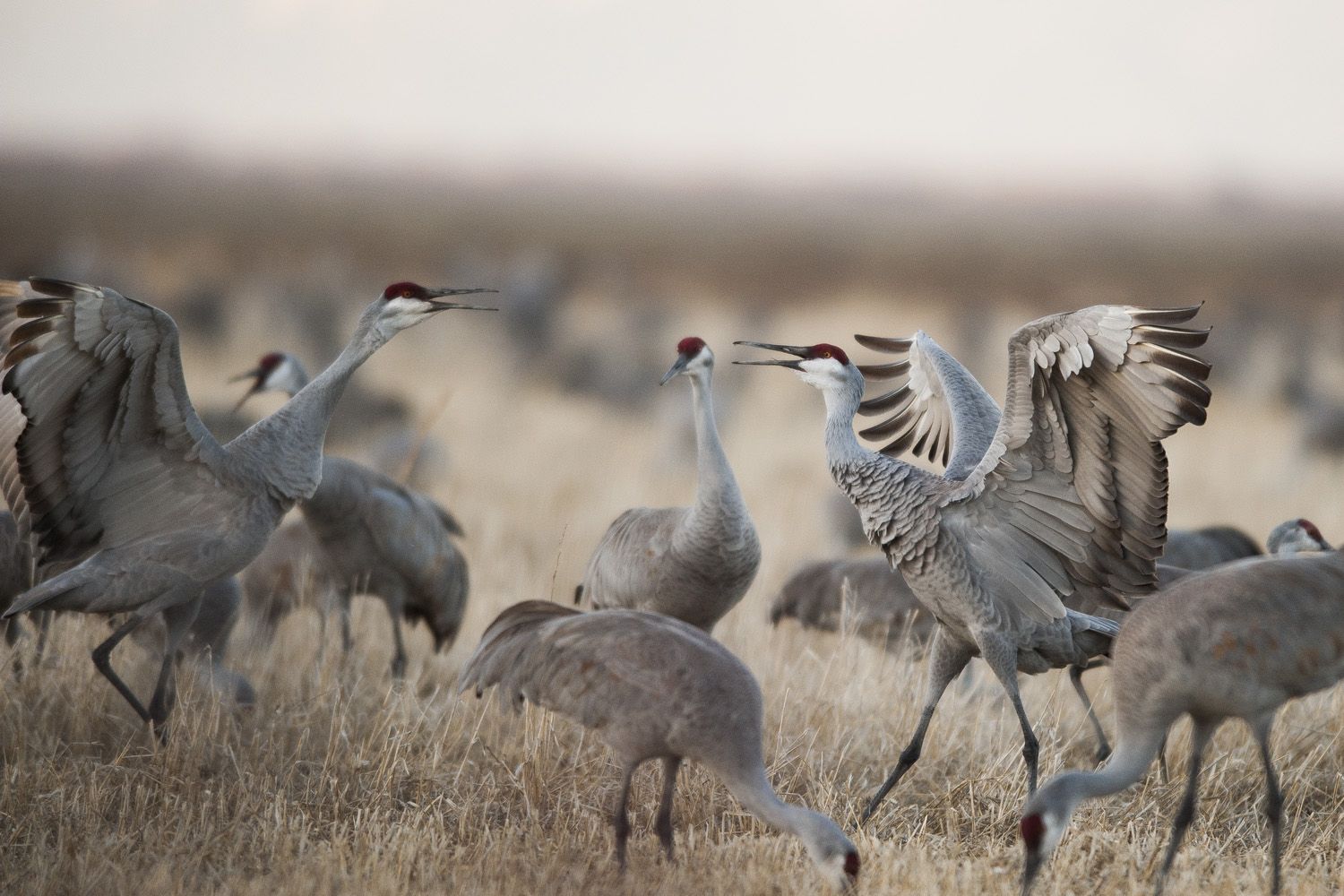
Just as unforgettable: when they flap their wings as wide as 7 feet and leap from their long legs in a common act known as “dancing.” It’s a common act between male and female — “part of finding a mate,” Nehring says. “It’s also just reinforcing that bond.”
The bond lasts a lifetime (possibly 20-30 years). Cranes are famously monogamous.
But it seems the dancing is not only romantic.
“I’ve watched a bachelor flock out in a wheat field, just out foraging,” Karschner says, “and then all of a sudden one of them just gets the itch, and he starts kicking up his heels and tries to get his buddies into it.”
Their family life
A female might lay two eggs, and unlike other birds, the male helps with incubation. Karschner has had an up-close view over the years; the Colorado Crane Conservation Coalition has trained livestream cameras on nests, as viewed on YouTube.
“They’re really dutiful parents. They’ll take shifts and come and relieve each other,” Karschner says. “Sometimes they have a quick exchange, sometimes it takes a little longer and they both lovingly tend to the nest. Others are more mechanical about it and they’re like, I’m out, I’ve been waiting for you for hours.”
Both parents defend the nests against egg-snatching predators, such as coyotes, foxes and weasels.
“They are very formidable birds,” Nehring says. They are known to chase and flap their wide wings, flare their claws and weaponize their bill like “a spear,” she says.
They have other defense mechanisms at their marshy nests, Karschner explains: “They’ve got gray feathers, but often they look reddish or brown. That’s because they take that iron-rich mud of wetlands and they paint their feathers, so they can blend in while they’re sitting on the nest. They’re camouflaging against predators.”
From those two eggs, they are born with that camouflage color. The two hatch “two to three days apart, and the older one is often aggressive to its sibling,” according to CPW. “The parents keep the youngsters separated by walking apart; each adult is followed by one of the chicks.”
Chicks are also called “colts,” for their colt-like legs that quickly grow with the rest of their bodies.
“They gotta be big enough to make that big southern migration by the end of the summer,” Karschner says.
If you go
The Monte Vista Crane Festival runs March 6-8, with several ticketed workshops, talks and tours. The Craft and Nature Fair will be held each day at the Ski Hi Complex. More information at mvcranefest.org
Now through March, before the cranes continue their migration, Monte Vista National Wildlife Refuge is considered the best place for viewing. You can also drive freely around Alamosa National Wildlife Refuge.
Around sunrise and sunset, cranes fly between roosts. Throughout the afternoon, they mostly “loaf” in the fields. For maps and more viewing information, go to mvcranefest.org/plan-your-visit


Colorado Rapids announce downtown Denver soccer celebration
Maren Prince
maren.prince@denvergazette.com
Updated 3 hours ago
Downtown Denver visitors have an opportunity to play, watch and celebrate soccer this summer. The Colorado Rapids is teaming up with the Downtown Denver Partnership to create an “immersive fan zone experience” focused on connecting the local soccer community with the global...

Maren Prince
Reporter

There’s no need to go outside with these five options for streaming
jen-mulson
jen.mulson@gazette.com
Updated 7 hours ago
Feel like shedding a tear? “The Iron Claw” has landed on Netflix, bringing the tragic true story of the Von Erich family to your screen. Starring Zac Efron, Jeremy Allen White and Lily James, the film shows the rise of...

jen-mulson
Reporter
It’s time to apply for big game hunting licenses in Colorado
Seth Boster
seth.boster@gazette.com
Updated 1 day ago
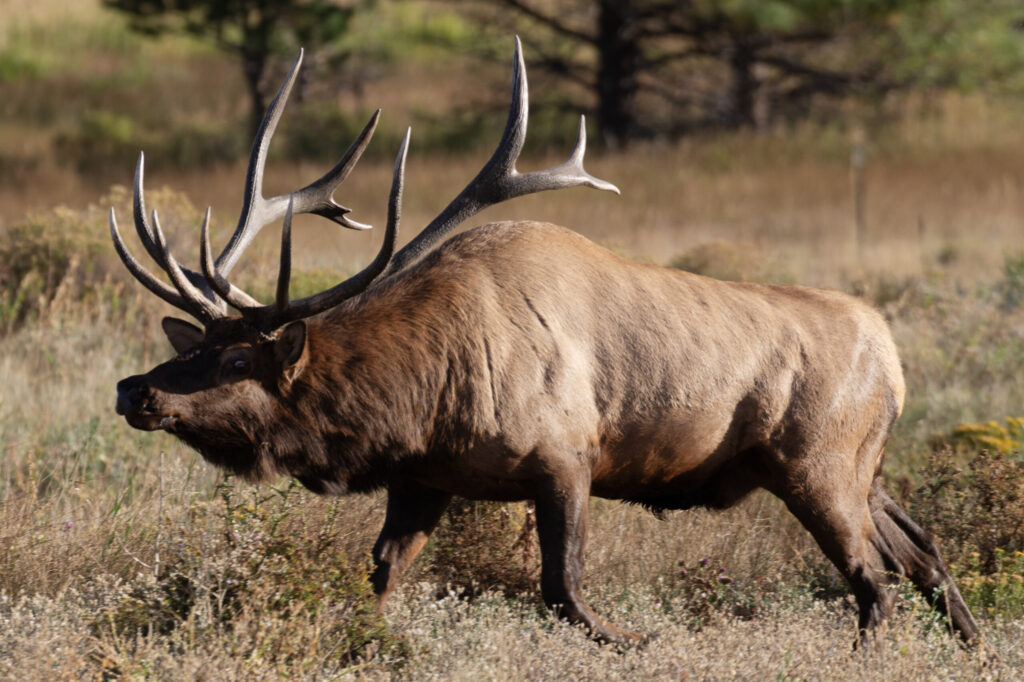
Colorado Parks and Wildlife’s new big game brochure has been hitting hunters’ mailboxes ー the annual reminder to start planning for the seasons ahead. CPW also reminded in a recent social media post: “Whether you’re after a long-awaited lifetime tag...

Seth Boster
Reporter
New Dark Sky Community designated in Colorado, joining short list
Seth Boster
seth.boster@gazette.com
Updated 1 day ago
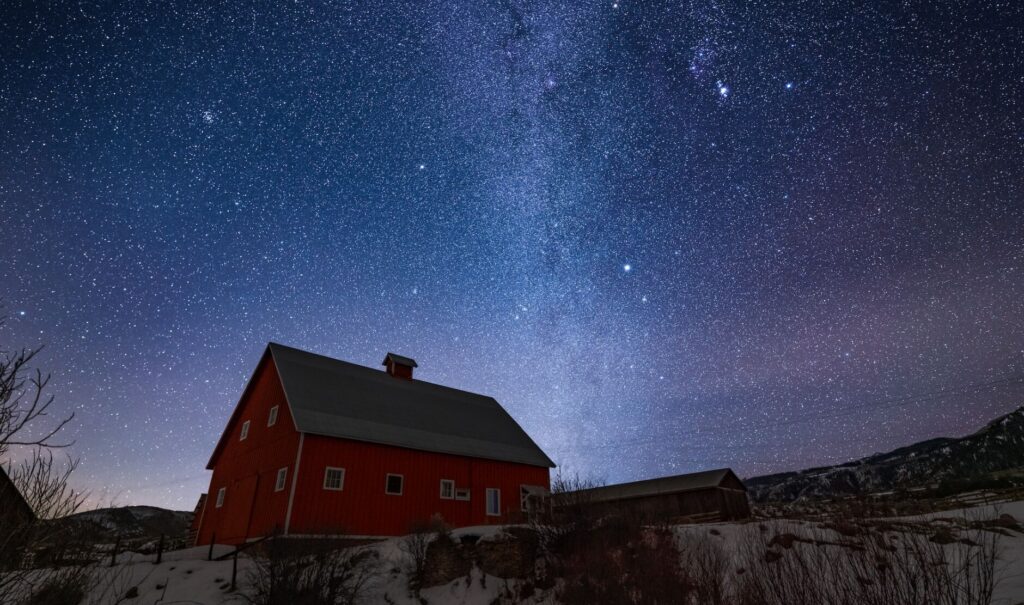
Another part of Colorado has been recognized for its rare celestial view. In announcing the state’s next Dark Sky Community, DarkSky International described Old Snowmass as a “spectacular corner of the Roaring Fork Valley” ー an unincorporated corner between Aspen...
Seth Boster
Reporter
Will Denver’s dueling underground music fests face off at once?
John Moore
john.moore@denvergazette.com
Updated 7 hours ago
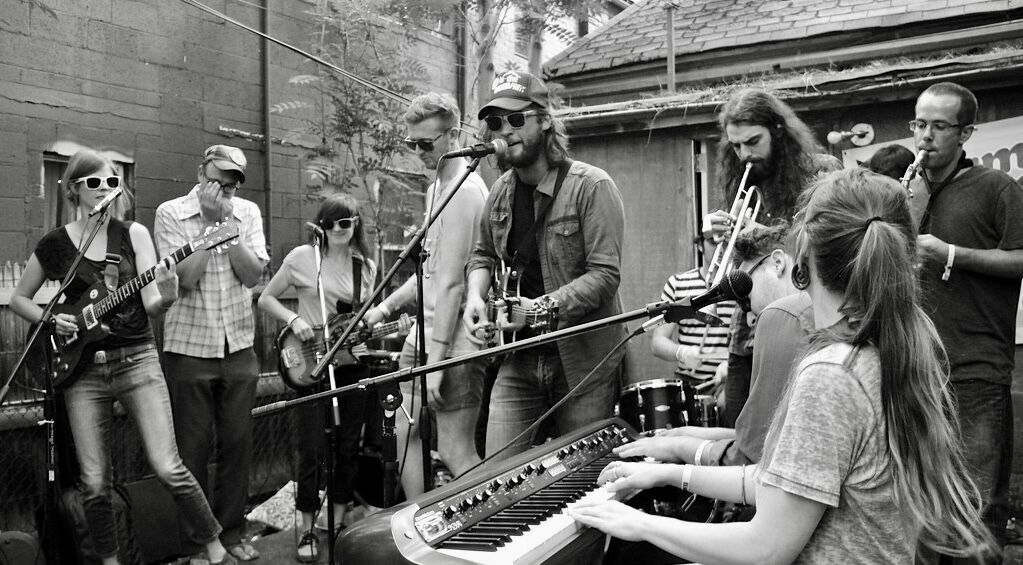
Less than a year ago, local music fans collectively pondered whether the summer music festival might be dead in Denver. (To our credit, we opined in this space: “Categorically not.” Actually, our exact words were: “Don’t be daft, punk!”) But...

John Moore
Reporter

Data: U.S. maternal deaths fell in 2024 and may have dropped again last year
The Associated Press
the-associated-press@denvergazette.com
Updated 1 day ago
NEW YORK — Fewer U.S. women died around the time of childbirth in 2024, a government analysis shows, and provisional data suggests the trend may have continued last year. The U.S. Centers for Disease Control and Prevention on Wednesday reported...

The Associated Press
Reporter
Colorado hot springs celebrates ‘first-of-its-kind’ expansion
Seth Boster
seth-boster@denvergazette.com
Updated 1 day ago
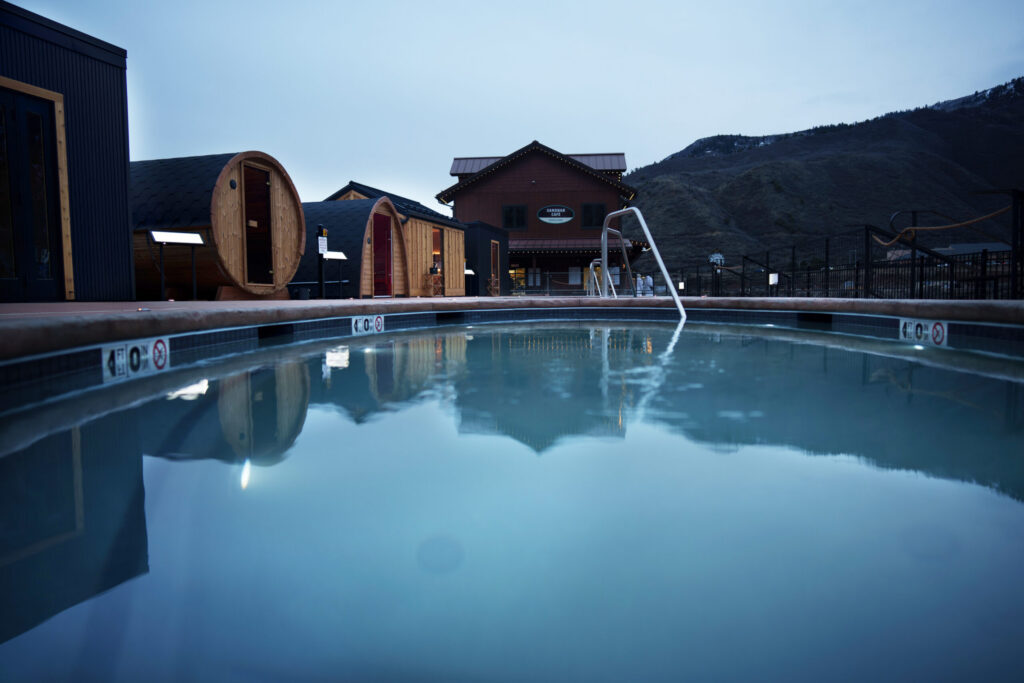
A hot springs destination in Colorado has marked a “major” expansion. And it’s not exactly the expansion you’d expect at a soaking retreat. In Glenwood Springs, Iron Mountain Hot Springs is calling its newly opened Sauna Summit “the country’s most...
Seth Boster
Reporter

Is your diet causing UTIs? Here’s how it may be at fault
Tribune News Service
tribune-news-service@gazette.com
Updated 3 days ago
Miriam FauziaThe Dallas Morning News UTIs can be painful, and they’re not something people like to talk about. But they happen often, affecting an estimated 60% of women and 20% of men in their lifetimes. While we might view these...

Tribune News Service
Reporter

What it’s like to be part of Denver’s potentially smallest parade
Bernadette Berdychowski
bernadette.berdychowski@denvergazette.com
Updated 3 days ago
The Richey family was up until 1:30 a.m. on Sunday working on their second-ever float entry for the Dairy Block’s Petite Parade in Lower Downtown. Lexi, Scott and their son dressed up in all pink to match their float titled...

Bernadette Berdychowski
Reporter

A Colorado Life: Janelle Orsborn’s final message: ‘Definitely live big’
John Moore
john.moore@denvergazette.com
Updated 4 days ago
Actor, author and former Miss Colorado’s Teen fit a lot into her ambitiously adventurous and tragically abbreviated 33 years Janelle Orsborn was big sister to Anna, Abigail, Jake, Daniel and Natalie. But really, says Abigail: “Janelle was a big sister...
John Moore
Reporter
PREV
PREVIOUS
What to know about Friday's snowstorm in Denver
After an unseasonably warm winter, a storm began dumping heavy, wet snow on the Denver metro area Friday morning. The snow is expected to continue throughout the day Friday and could significantly impact the evening commute, forecasters said. The National Weather Service in Boulder has issued a Winter Weather Advisory through 8 p.m. Friday for […]

Cherry Hills officer shot alleged thief during medical exam, department said
A Cherry Hills Village police officer shot an alleged thief Thursday evening after after the suspect attacked the officer during a medical exam, according to a department post on X. After arresting the suspect on suspicion of an auto theft earlier in the day, the officer was present while the suspect was undergoing a medical […]