







Be just like them: Teachers choose friendship over friction at the theater

Two Denver teachers reflect on seeing the immigration play ‘Just Like Us’ at Su Teatro from very different life experiences
The whole way home from seeing a local theater production on Thursday night, Cynthia Shelden was crying and praying.
“It was that emotional for me,” she said.
And when she got home, she took to Facebook.
“If you have ever really thought deeply about U.S. immigration, you need to see this play,” Shelden wrote to a friend base she considers to be largely conservative. “I had no idea when one of my dearest best friends invited me what I was walking into.”

Shelden and Paula Worley are that rarest of American anomalies – “dearest best friends” who respectfully diverge on the subject of U.S. immigration policy they arrived at through very different life experiences.
The play is called “Just Like Us,” Karen Zacarías’ stage adaptation of Denver journalist Helen Thorpe’s Colorado Book Award-winner.
Thorpe was married to then-Denver Mayor (and now U.S. Sen.) John Hickenlooper in 2003, when she began tracking the lives of four Latina best friends – all straight-A students – beginning with their senior year at a Denver Public Schools high school. All four were born in Mexico. Two were legally documented; two were not. Over the next five years, Thorpe chronicled how the girls’ educational opportunities diverged based on their legal status and how that affected their friendships and everyday lives.
Thorpe has said she undertook the project because “I thought the national discussion on immigration was leaving out a vital perspective: That of Marisela, Yadira, Clara and Elissa.” They were all small children when they were brought to this country by parents seeking a better life.
Like all things immigration – it’s messy.

The girls were sophomores when the Sept. 11 terrorist attacks derailed the bipartisan Dream Act that would have made the two undocumented students conditional permanent U.S. residents upon their graduation high school. Twenty-three years later, they still have no legal path to citizenship.
Closer to home, while Thorpe was still researching her book in 2005, Denver Police Det. Donnie Young was shot and killed while working an off-duty security job. The shooter was an undocumented worker at the Cherry Cricket restaurant, which at the time was being held in a blind trust for Hickenlooper while he was Denver’s mayor. Thorpe was now an awkward part of her own story.
As Zacarias described it, “‘Just Like Us’ is about the people you see on the news all the time, like John Hickenlooper and Federico Peña and Tom Tancredo – but it’s also about the people you don’t see on the news. The people who help clean our buildings and go to school here and ride our buses. It’s really about the whole life that is Denver.”
“Just Like Us” is a political play. It’s a personal play. It’s a powerful play. It certainly was for Shelden. She and Worley both taught at the same Denver high school around the same time those four real-life young women were students there.
“I was a little overwhelmed when I left last night,” Shelden said.
But here’s the thing: The play didn’t change Shelden’s mind. It did something better: It changed her heart.
“We do have to close the border,” Shelden said. “I truly believe that. We have got to figure this problem out.”
It’s a conviction forged from first-hand experience.
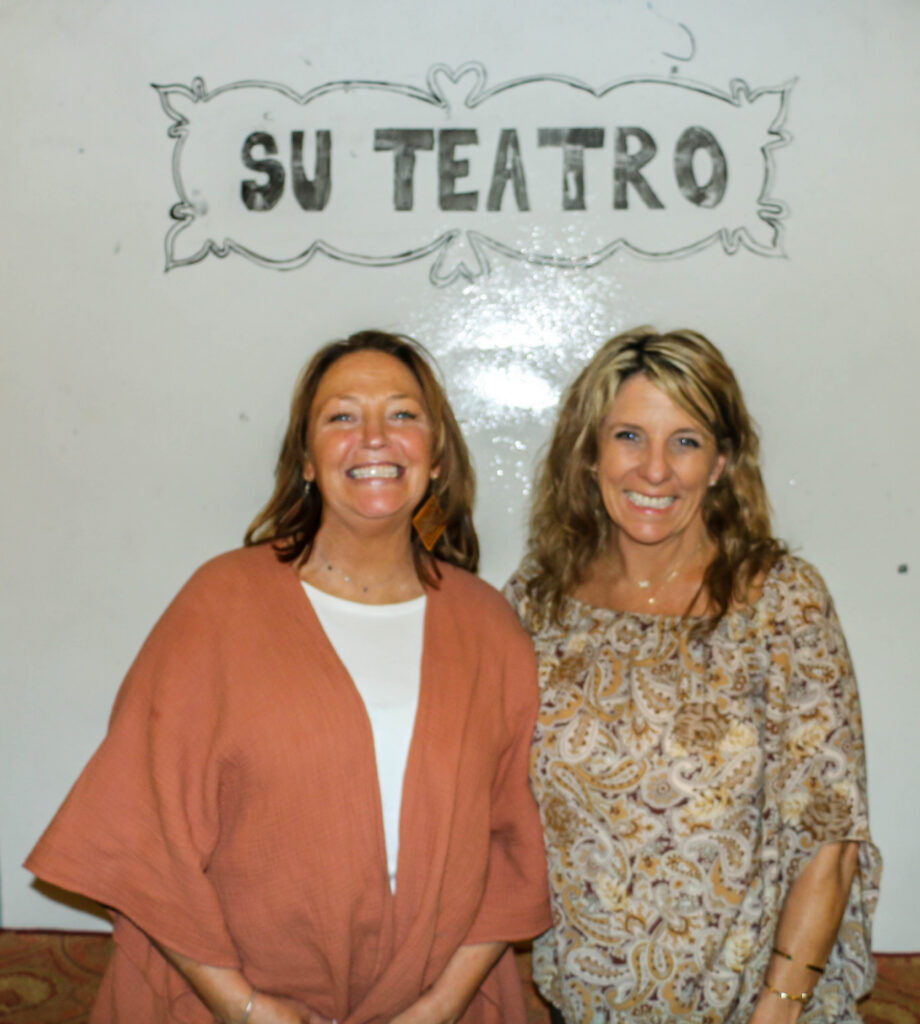
Shelden grew up in Las Cruces, N.M., about 50 miles north of El Paso, Texas, and the Mexico border. Her mom grew in nearby Hatch, N.M., a community known as “The Chile Capital of the World” and one largely driven by migrant labor.
“My family all falls very much on the Republican side, but I have to tell you the issue of immigration was never that big a deal to us until the massive surge that happened in the early 2020s,” Shelden said. “There were so many people who came over the border, and they had to go to places in El Paso or Las Cruces before they could go anywhere else.
“There were so many people at one point that they closed the gym at my old high school because they needed a place for people to stay. And that was super upsetting to many people in the community because all of the town’s resources were being spent on immigrants. Everything was being closed. There were people all over the streets. There were camps everywhere until they got people shipped out. And my whole family lives there. So, yeah, it was a big voting issue for me in the 2024 election.”
It also happened that Shelden was living close to the Cherry Cricket in 2005, when the Young murder sparked outrage and an international manhunt.
“Oh, I remember all the news flashes,” she said. “It was wild.”
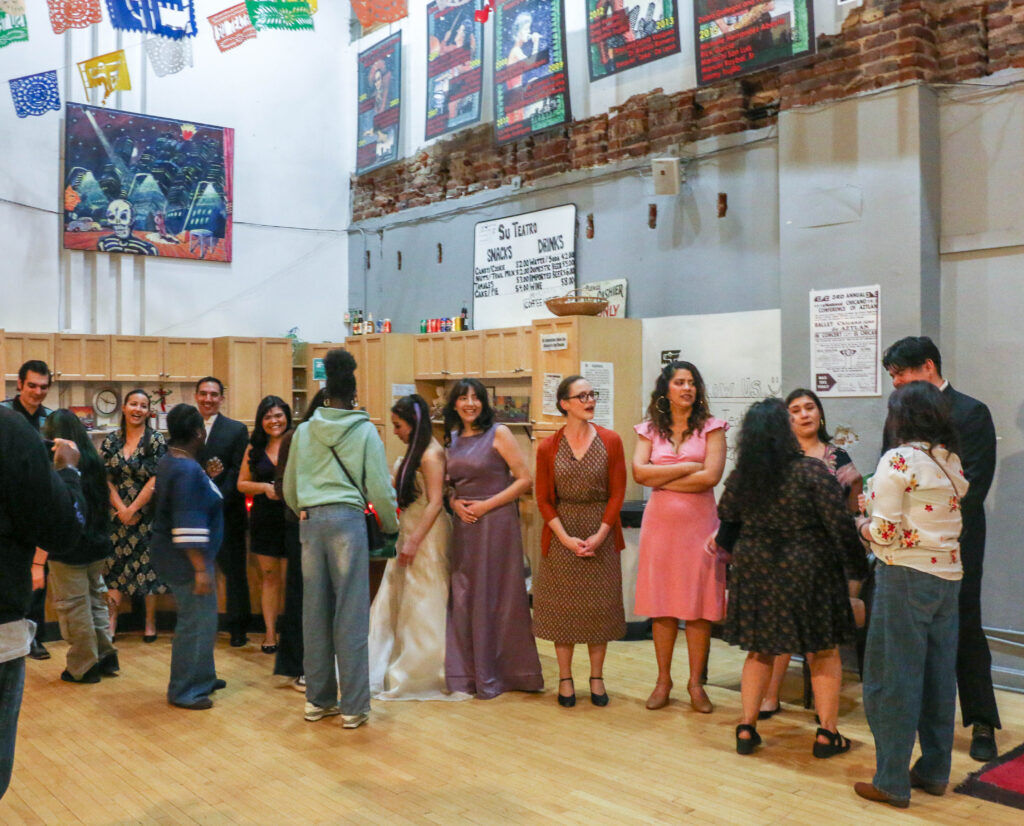
So she was not predisposed to be sympathetic to the story told in “Just Like Us.” And yet, something in her profoundly shifted on Thursday night, when Shelden’s pal asked her to join her at Su Teatro (it means “Your Theatre”) for the first local community-theater production of the play since the Denver Center Theatre Company’s world-premiere staging back in 2013. (It has since been staged all over the world, including at Westminster High School.)
Shelden taught at the high school in question between 1998-2000. Worley’s first teaching job was there from 1998-2003. Worley very possibly taught history to some of the play’s four real-life students, who, even 22 years after graduation, choose to keep their full names unpublished for their own safety. That’s also why we’ve been asked to withhold the exact name of the school.
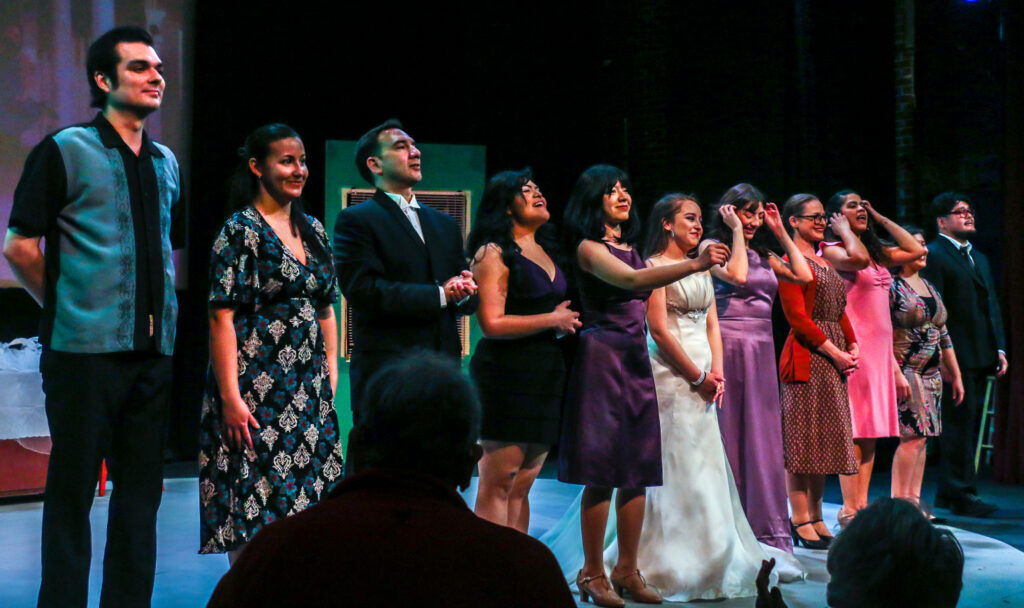
Not Shelden, though. She didn’t teach the straight-A students at the school, where about 67% are Hispanic and 22% are White.
“I basically taught all the kids who couldn’t read,” she said, “so my experience there was very different.”
For Shelden, absenteeism was high. Students were enrolled one day, disappeared the next. Whatever free time Shelden had was spent not on planning but, rather, on calling parents to find out why their kids weren’t in school that day.
As introduced in the play, those reasons are many, and they simply aren’t the same obstacles faced by students in wealthier school districts.
“They weren’t there because they had to stay home and watch a sibling while the parent worked, or they had to go to work themselves and help provide for the family,” Shelden said. “Back in Hatch, the migrants work seasonally, so they moved from valley to valley. In Denver, they move for reasons like affordability.”
Not for lack of interest or commitment, she said.
Worley grew up a few miles and a world away in the Holy Family parish.
“Growing up as a white middle-class woman, I took a lot for granted,” she said. “I didn’t carry the same fears or barriers that many of my students do. We may have grown up with the same dreams, but a lot of their dreams are painfully out of reach. The reality of it is that these are our students, and they’re still here trying their very best while living in a fear that we cannot even fathom.”
Worley now teaches middle-schoolers at Crown Pointe Academy, a public charter school in Westminster. Some of her students might come home from school on any day only to discover a relative has been detained.
She asked Shelden to come with her to the play because she thought Shelden might have a contrary view on the subject, “and that might make for a nice little conversation afterward,” Worley said.
Her take? “I knew I was going to enjoy it, but I didn’t know that it was going to affect me as deeply as it did. It was done in such an artistic way that made you step so fully into the shoes of the girls that you could experience on a very minute level what they might have felt.”
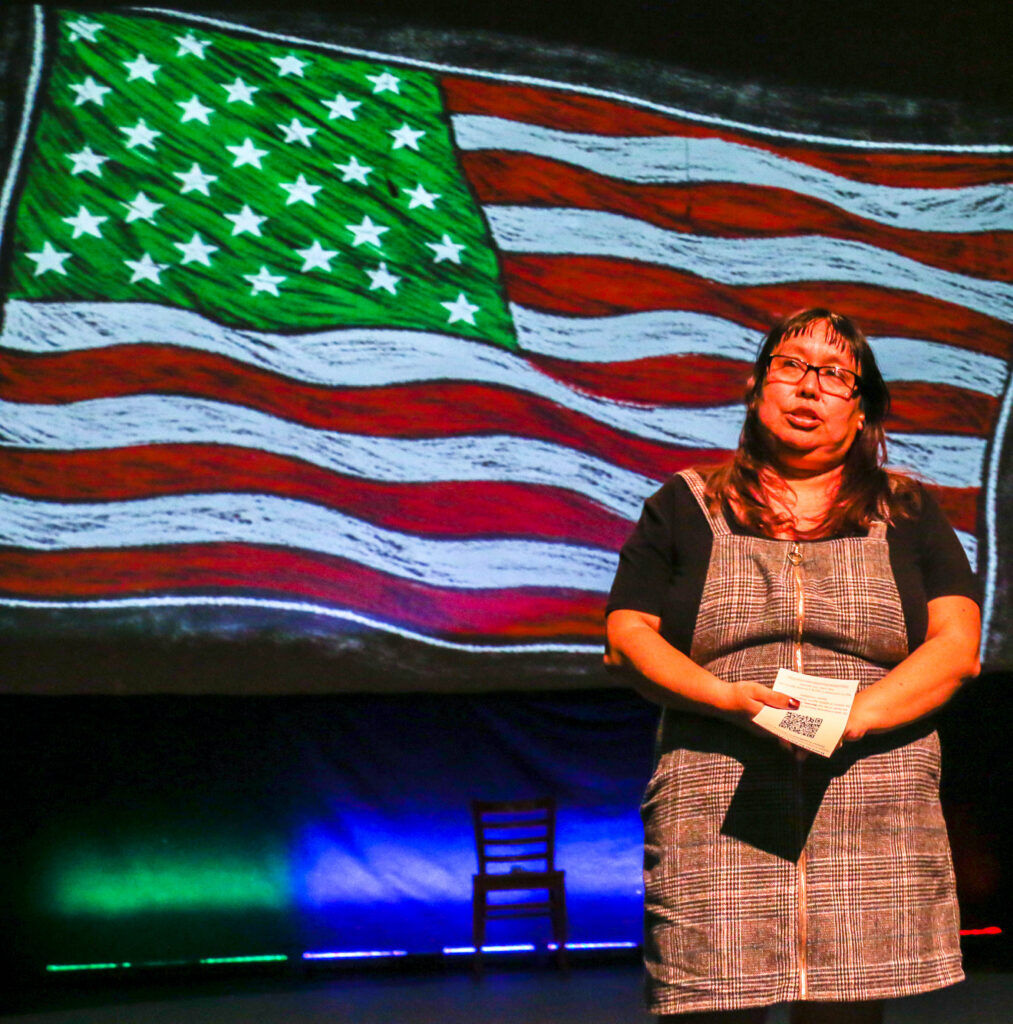
‘A single piece of paper‘
The biggest mind eraser for Shelden was considering for the first time what having a piece of paper can mean to the lives of her students — the one that determines whether you can get a driver’s license. Or apply for a job. Or qualify for federal tuition assistance.
Or if you’re ever driving away from a traffic stop for a burned-out taillight.
“I was just so deeply moved and affected by the story of those girls and the difference of what a single piece of paper makes throughout their entire lives,” Shelden said.
Not to spoil the plot, but there are scholarship funds available to straight-A Latina students in this country – notably, from the University of Denver. But they are extremely limited for those who are ineligible to complete a financial-aid form.
“I have a student right now who’s bright and hard-working and full of serious potential, and one of my jobs is to help my kids find a high school,” Worley said. “She fell in love with Arrupe Jesuit. And she was denied simply because of her legal status. So those dreams are just gone, and that’s horrible.
“I think that this play was just a really good reminder that these students are real, and their dreams are real, and the barriers they face are really real. And, it’s getting worse. But they still keep showing up, and they still keep trying.”
Shelden has been right there in the teaching trenches for years, and she didn’t see it fully. Not really – until Thursday. She was taken aback to hear that of the 600 students who entered the school in 2000, only 235 made it to graduation.
“Growing up where I did in New Mexico, I was considered the minority in my school,” she said. “But I never knew there were kids who didn’t have the same opportunities I did. I guess I did know that at (the Denver high school), but I certainly didn’t realize the scope, because I was working so hard just to get kids reading. The idea that there were seniors who wanted to go to college and couldn’t just wasn’t in my headspace.”
And the almost cosmic Catch-22 for the play’s two undocumented students is that if you came into this country illegally – even if you were brought here in a diaper – there remains no legal path to citizenship for you.
“I can believe what I believe about closing the border,” Shelden said. But that doesn’t mean some accommodation can’t be made for the estimated 12-14 million who already have crossed it.
“Come on, there’s got to be an answer. Some new legislation,” Shelden said. “To be back here again, right where we were, 20 years later? It’s just asinine to me that we don’t have something figured out by now.“
And the thing that perplexes her the most is her profound belief that “most people I really know are so truly in the middle on this.”

What’s in a play
In the play, Thorpe is a character who serves as the narrator, bringing a journalist’s balanced perspective to the telling of the story. The play has its own point of view, certainly, but both teachers believe that it fairly gives voice to those who support tougher immigration policies. Like Tancredo, a four-term Littleton congressman who rode a hardline stance on immigration to national prominence and a presidential bid that was built wholly around immigration.
Tancredo is quoted in the play as saying, “We need to amend the U.S. Constitution to prevent American citizenship from being given to children who were born to parents without legal status. … Every time we let an illegal stay, we are aiding and abetting the demise of our American culture.”
Many in Thursday’s crowd booed. A few cheered. And that was maybe the best part of all.
There’s something about the inherent power of live theater to turn an impossibly polarized conversation into a less-threatening dialogue infused with depth, nuance and basic humanity.
A theater can be a safer space than a town-hall debate.
“I was just thinking on the way into work this morning: ‘How beautiful would it be if everybody got to see this play? Would it make a difference?’'” Worley said.
“I truthfully think that it would.”
‘Just Like Us’
- What: A play by Karen Zacarías, based on the book by Helen Thorpe
- When: Through March 29
- Where: Su Teatro Performing Arts Center, 721 Santa Fe Drive
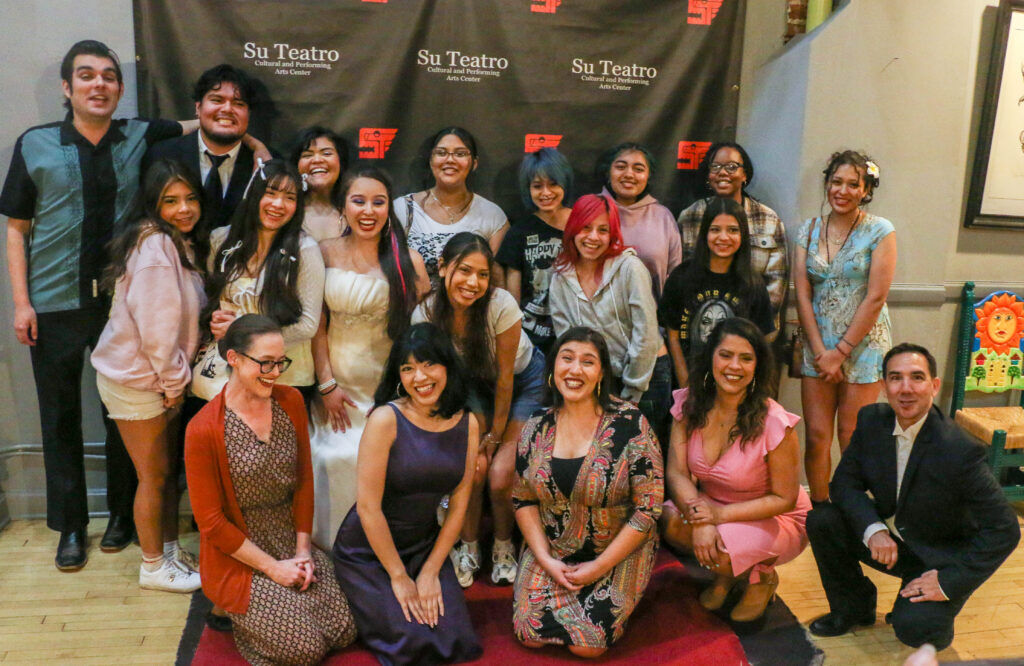
- Directed by: Fidel Gomez and Micaela Garcia de Benavidez
- Starring: Kiara Plaza, Shyan Rivera, Lucinda Lazo, Gisselle Gonzalez and Colleen Lee
- Featuring: Paola Miranda, Joelle Montoya, Nana Marti, Faron Nuff, Brandon Guzman and Joaquin Aviña
- Info: suteatro.org