







RTD rolls out new tools to ease language barriers
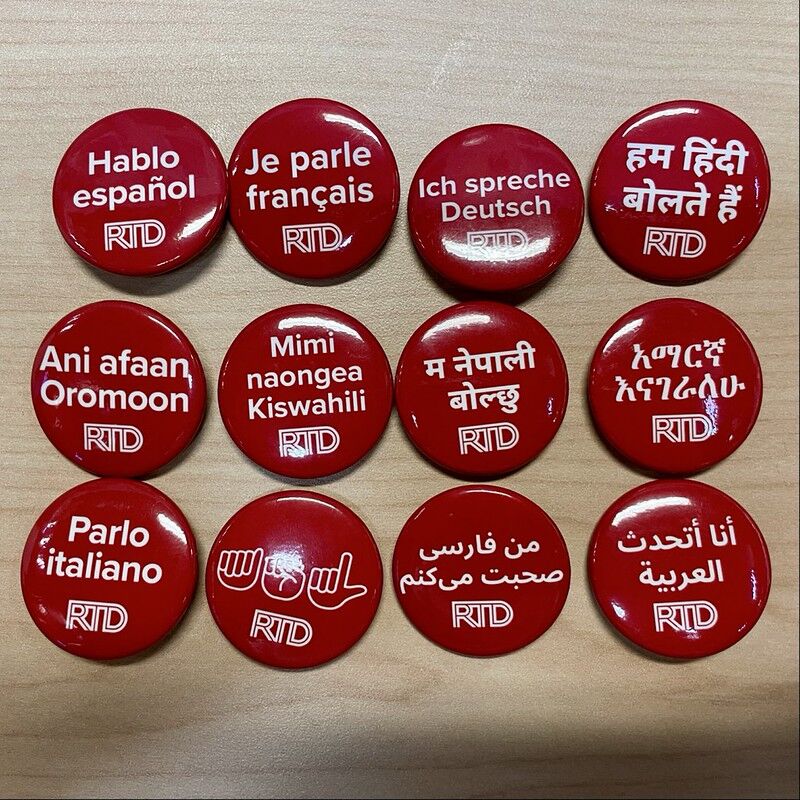
The Regional Transportation District is adding two new tools to help non-English-speaking riders get assistance more easily across the Denver metro bus system.
The agency is distributing 1,500 multilingual “I Speak” buttons to frontline employees and placing “language hel”p QR code decals near bus entry doors. The changes aim to connect customers quickly with multilingual staff or translated transit information.
“Transit works best when customers feel comfortable asking for help,” said Dani McLean, transit equity specialist at RTD who helped lead the button initiative. “These buttons make it easier for customers to quickly identify employees who can help them in their preferred language.”
The buttons cover 12 languages, plus American Sign Language: Spanish, Amharic, French, Arabic, Oromo, Swahili, Italian, Nepali, German, Hindi, Farsi. Employees wear them visibly if fluent. Distribution began the week of March 6, based on a winter 2024 survey of about 660 staff where 30% reported non-English fluency — more than half in Spanish.
The effort supports RTD’s 2025-2028 “Language Access Plan,” which expands document translations, website access, telephonic interpretation and community partnerships under Title VI of the Civil Rights Act.
RTD serves about 3.1 million people. Some 200,812 residents, or 7%, speak English less than very well, according to American Community Survey data. Agency research shows linguistically diverse communities rely on transit at higher rates.
For bus operators facing route, fare or schedule questions, the QR decals provide a quick alternative if there a language gap exists. Scanning opens a language help webpage with Next Ride trip planning, customer care contacts, fares and security details — translated into nine languages. (Spanish defaults on bus scans).
“Our priority throughout the project was keeping bus operator and customer safety at the center of the conversation,” said Andrew Garcia, transit safety specialist at RTD. “By giving operators a simple tool they can point to, customers can quickly access language assistance and transit information … while allowing operators to stay focused on the safe operation of the vehicle.”