







GUEST COLUMN: License plate readers bring swift justice
The tragic killings of Margaret Oldroyd, 86, Linda Dewey, 65, and Natalie Graves, 34, in Wayne County, Utah, earlier this month represent the kind of senseless violence that shakes communities to their core. Dewey and Graves — an aunt and niece — were hiking together when they were killed. Investigators later discovered that Oldroyd had also been murdered at her home. At the outset, there appeared to be no known connection between Oldroyd and the two hikers, deepening the mystery and complexity of the case.
But within less than 12 hours, law enforcement officers across multiple states located and arrested a suspect. A key factor in that rapid outcome was a technology that has increasingly become indispensable in modern investigations: Automated License Plate Readers (ALPRs).
Investigators quickly pieced together a troubling timeline. On Feb. 28, the suspect, Ivan Miller, had crashed his personal vehicle into an elk in the Wayne County area, disabling it. Days later, on March 4, the bodies of Dewey and Graves were discovered near a trailhead along Teasdale Road and Cocks Comb. Nearby, officers located a suspicious abandoned vehicle and soon realized the victims’ Subaru Outback had been stolen.
That discovery transformed the investigation from a homicide scene into a manhunt.
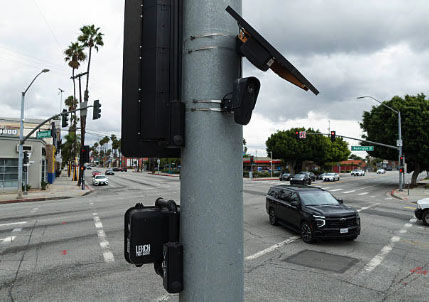
Law enforcement used Automated License Plate Readers in combination with the vehicle’s real-time theft recovery tracking system to monitor the movement of the stolen Subaru as it traveled across state lines. ALPR systems automatically capture license plate numbers from passing vehicles and compare them against law enforcement databases. When a flagged vehicle passes a reader, investigators receive an alert that can help track its movement in near real time.
In this case, the technology allowed investigators to follow Miller’s path as he fled from southern Utah into Colorado. By the early hours of March 5, multiple agencies converged on Pagosa Springs, Colorado, where the stolen vehicle was located and Miller was taken into custody.
This case highlights something important: technology does not replace investigative work — it amplifies it.
Without ALPR data, officers would have had to rely on traditional investigative techniques such as witness sightings, patrol searches, or delayed evidence collection. Those methods remain critical, but they often take time. In a situation where a suspected triple homicide suspect is fleeing across rural terrain and multiple state lines, time is a luxury investigators do not have.
ALPR networks create a digital trail that can quickly narrow the search area. They allow investigators to identify travel corridors, confirm vehicle sightings, and coordinate responses between jurisdictions.
In the Wayne County case, that capability likely prevented further violence. Every hour that a homicide suspect remains at large carries risk — not only to investigators but to the public.
The rapid resolution of the case was not the work of a single department. Agencies across Utah, Colorado, and Arizona worked together in real time. Investigators from the Utah Department of Public Safety State Bureau of Investigation coordinated with the Wayne, Archuleta, Sevier, and Kane County Sheriff’s Offices, the FBI, the Bureau of Land Management, and local police departments in Page, Arizona, and Pagosa Springs, Colorado.
Technology like ALPR systems becomes far more powerful when these partnerships exist. A reader in one county can provide the critical lead that allows officers hundreds of miles away to intercept a suspect vehicle.
Any discussion about surveillance technology often brings debate about privacy — and those conversations are important. Oversight, policy, and transparency must guide how these systems are used.
But cases like the Wayne County triple homicide illustrate the other side of that discussion. When used responsibly, tools like ALPRs can mean the difference between a suspect disappearing into the vast rural West or being apprehended quickly.
For the families of Margaret Oldroyd, Linda Dewey, and Natalie Graves, justice cannot undo the loss. But the swift identification and arrest of a suspect ensures that the investigation can move forward — and that their loved ones’ deaths will not fade into uncertainty.
Technology did not solve this case alone. Investigators, analysts, deputies, troopers, and detectives did the work.
But ALPR technology helped connect the dots fast enough to bring a suspected killer into custody before he could vanish.
In modern law enforcement, that combination of human determination and technological capability is increasingly what delivers justice when communities need it most.
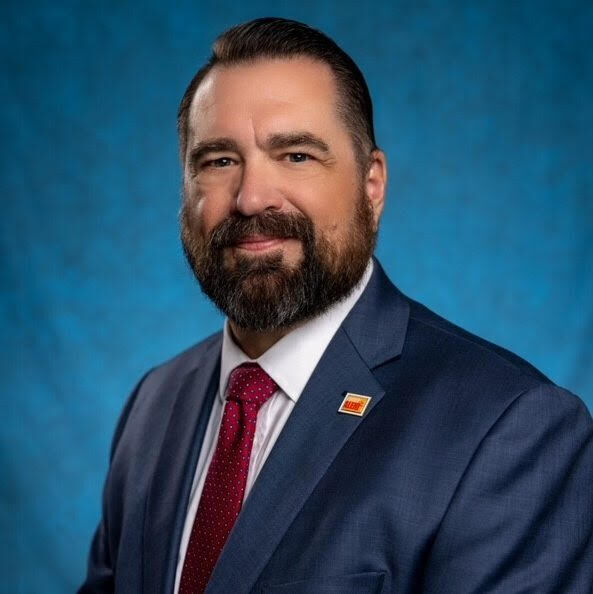
Derek VanLuchene, of East Helena, Montana, is founder of Ryan United. He trains law enforcement across the country on how to best respond to missing person cases, with a focus on child abductions.