







Xcel says $1.85B plan aims to make Public Safety Power Shutoffs rarer
Deliberately shutting off power to residents and businesses is a last-resort tool, according to the chief of Colorado’s largest utility company.
The tool — called a Public Safety Power Shutoff or PSPS — has increasingly been used along the Front Range, which perennially sees strong wind gusts that are the main reason, utility officials say, for the deliberate power disruptions, which have left tens of thousands of people without energy and businesses scrambling to operate.
At a recent legislative hearing, Xcel Colorado President Robert Kenney said when conditions of extreme winds, low humidity and bone-dry fuels align, the utility must cut power to prevent equipment from sparking a fire that could quickly blow up into a wildfire.
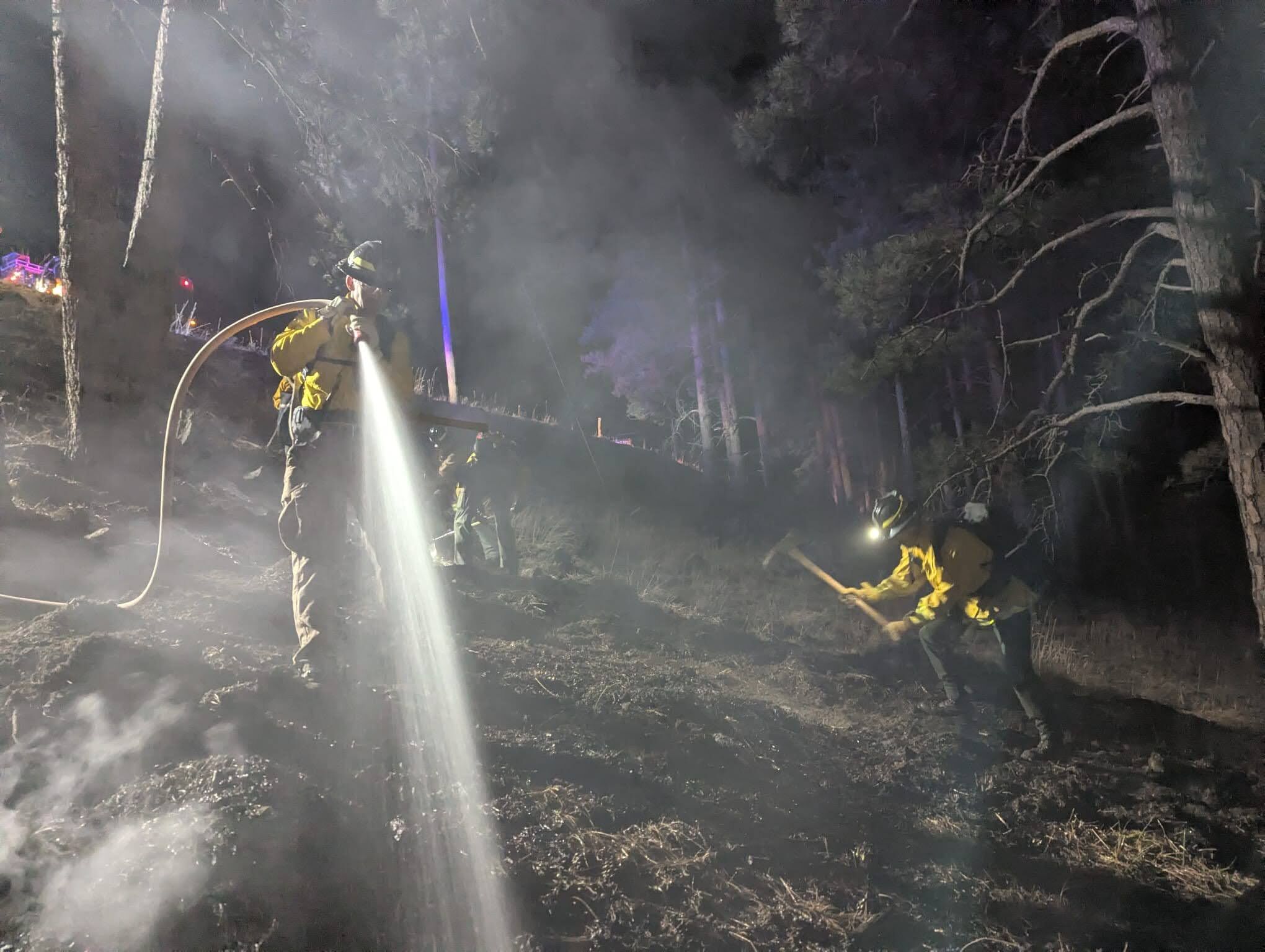
After the National Weather Service issued Colorado’s first “particularly dangerous situation” red-flag warning for the Front Range, Xcel Energy instituted two Public Safety Power Shutoffs on Dec. 17 and Dec. 19, 2025. The predicted winds mirrored those that preceded the deadly 2018 Camp Fire in California, which burned more than 153,000 acres and killed 85 people.
Restoration took days because crews must physically inspect every mile of line before re-energizing — a mandatory safety step that prevents the ignitions a PSPS is meant to avoid.
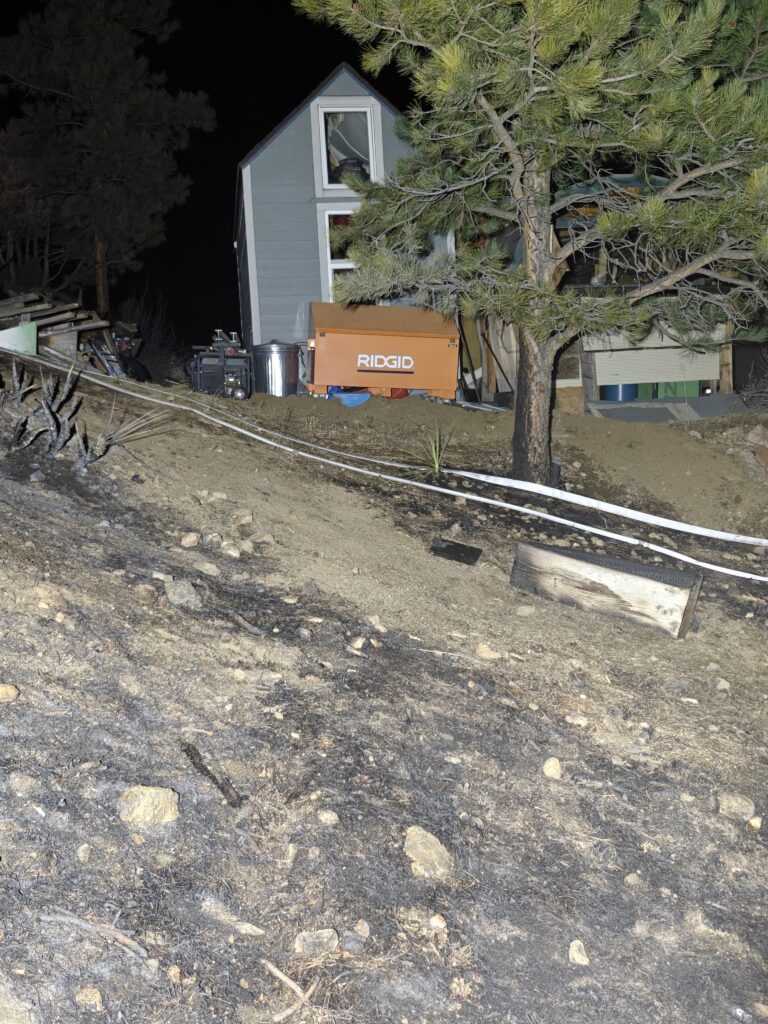
According to Sunshine Fire Protection District Chief Michael Schmitt, the safety protocol failed twice in the mountains west of Boulder, but fortunately, the resulting fires did not blow up because the winds had calmed.
Communication gaps made things worse, he said.
“Xcel has an internal communication failure,” said Schmitt. “So, things that are being reported to Xcel are not being forwarded to the ground crews.”
Kenney acknowledged communications problems during a Feb. 2, 2026, legislative hearing.
Outage maps were sometimes inaccurate. Many residents without smartphones or reliable cell service missed updates. Language barriers left some communities in the dark.
Legislators pressed Kenney on those impacts during the hearing.
State Rep. Jenny Willford, D-Northglenn, described a constituent on 24/7 oxygen who was directed to the emergency room and received the wrong battery-rebate application. State Sen. Byron Pelton, R-Sterling, noted rural livestock producers lost access to water wells.
Meanwhile, an Xcel critic wondered if the company’s power shutoffs — sanctioned by Colorado’s energy regulators — are less about preventing wildfires and more about “conditioning us for Colorado’s future of intermittent electricity.”
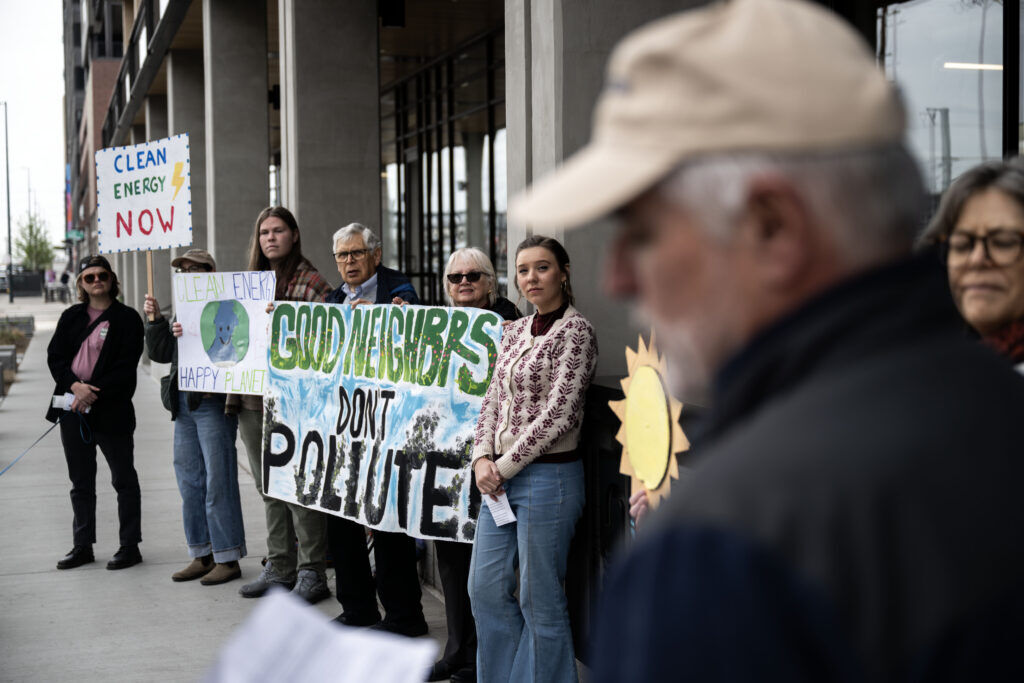
“I mean, why now?” Jon Caldara’s Independence Institute asked in a recent column. “For half a century windstorms were something you complained about while chasing your patio furniture down the street. Now they apparently require turning off the state. Bureaucracy understands that behavior modification must be incremental.”
Some company owners said the deliberate shutoffs have compelled them to consider leaving their business.
Brandon Bortles, owner of Nosu Ramen and Abejas Bistro in Golden, lost nearly $55,000 between the two restaurants over five days of outages. Insurance covered only about $14,000 for one location because it was not on Xcel’s initial PSPS map. The Golden chamber provided $3,000, which Bortles called “a drop in the bucket.”
“Honestly, I’m looking at exit plans,” Bortles said. “It’s like living in a third-world country. We’re all behind the eight ball. I want to know: Are we going to do this 10 times a year? What are we going to do in the future? Just shut down the town every day?”
At the legislative hearing, Kenney acknowledged the hardships and said the company is accelerating battery rebates for income-qualified medical customers and expanding outreach through phone calls, emails and interactive voice recordings.
Xcel is spending $1.85 billion over three years to change that equation, he said.
“Our 2025 to 2027 Colorado wildfire mitigation plan … is first and foremost our plan to protect the public safety from the risks associated with wildfire ignitions,” Kenney said.
Kenney said the goal is clear — make any future shutoffs smaller, shorter and less frequent while protecting public safety.
The plan calls for replacing bare conductor with insulated “tree wire,” inspecting nearly 50,000 poles, repairing 8,400 and replacing more than 10,000. Putting about 50 miles of underground high-risk distribution lines, mainly in the Boulder area, is also planned.
In a statement to The Denver Gazette, Xcel spokesperson Michelle Aguayo said, “We build to the highest standard in the National Electric Safety Code, and the poles we’re using in the highest wildfire risk areas can withstand winds approaching 130mph. With that said, winds up to 125mph are considered Category 3 Hurricane winds, and any overhead electrical equipment would potentially experience damage from both wind and debris in such conditions.”
To reduce future PSPS events, the company is installing sectionalizing devices that let crews de-energize smaller grid segments. Enhanced power line safety settings will limit automatic re-energization of downed lines by detecting when lines are grounded.
Situational awareness is expanding fast, the company said.
Xcel is tripling its fleet of Pano AI ultra-high-definition 360-degree cameras that use artificial intelligence to detect and triangulate smoke plumes across more than 1.5 million acres. More than 100 new weather stations will feed real-time data on temperature, humidity, wind speed and moisture, according to the company.
Advanced detection technology is also available. Line-galloping sensors that detect swinging conductors and solid-state wind speed sensors are commercially deployed by utilities and system operators worldwide to monitor conductor motion and extreme gusts in real time.
Iceland’s Landsnet uses Laki Power gear equipped with ultrasonic wind sensors and accelerometers to detect galloping and ice accretion on high-voltage lines in remote, high-wind terrain. Similar systems from manufacturers, such as LineVision, PLP, FT Technologies and Gill Instruments, are in use or available for deployment.
Xcel still relies on human intervention to shut down circuits. Decisions are made at headquarters based on weather data and threat analysis, not by fully automated systems.
Restoration improvements include pre-staging crews, greater use of drones and helicopters, and testing of automated patrol technology that could cut inspection times by up to 50%.
Meanwhile, income-qualified customers on durable medical equipment can now apply for battery rebates, and expanded outreach is reminding medically dependent households of existing discount programs.
According to California fire officials, after the deadly 2018 Camp Fire — ignited by a worn C-hook on a nearly 100-year-old PG&E transmission tower — utilities installed thousands of miles of covered conductor and pursued extensive undergrounding, resulting in measurable drops in PSPS frequency.
Xcel’s plan follows the same strategy.
The Public Utilities Commission approved the plan in August 2025. For the average residential customer, the plan adds roughly $8.88 per month through 2028 through incremental biannual rate adjustments.