




How Colorado’s involvement in the ‘Gettysburg of the West’ may have changed the course of history
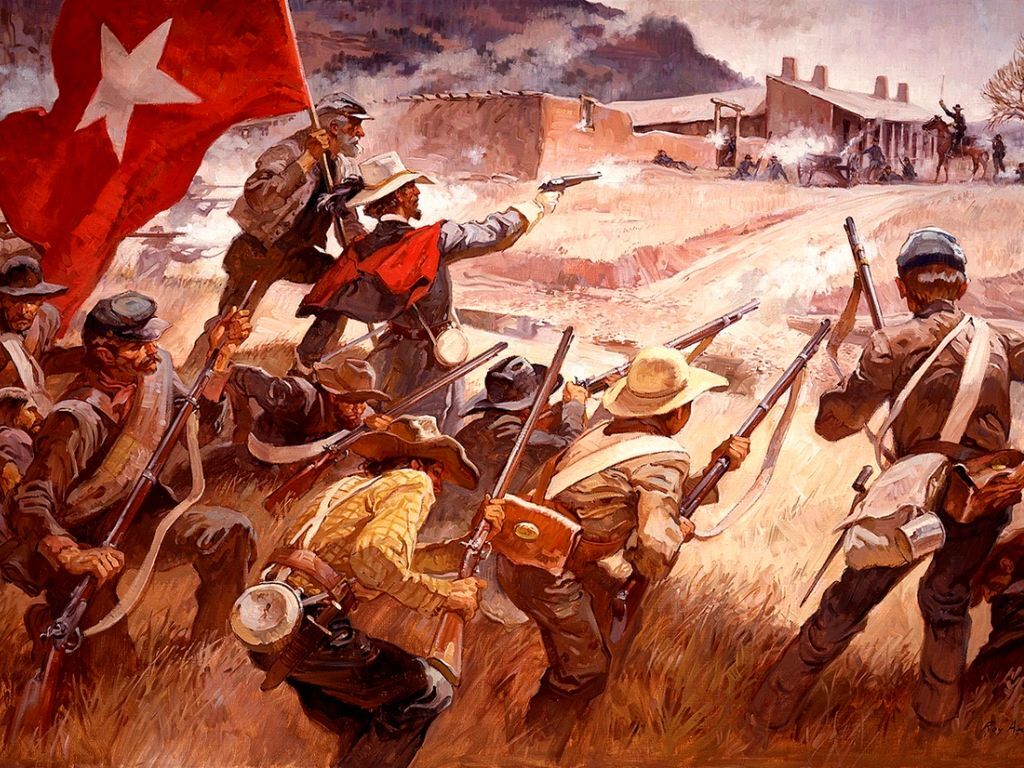
While Colorado isn’t typically a name that gets brought up during discussion of the Civil War, the state did play a role in the conflict that set our nation on the path leading to the modern era.
The Civil War started on April 12, 1861, when Confederate forces fired upon South Carolina’s Fort Sumter. Less than two months prior, the Colorado Territory was established on February 28.
At this time, the Wild West days of expansion and mining were in full swing, with the promises of underground riches in the Colorado Territory calling many to seek out wealth in the area – hopefuls traveling from states that would ultimately fight on either side of the conflict. While the Colorado Territory ultimately aligned with the Union states, there was plenty of local support for the Confederacy, too.
The largest concentration of Confederacy support is believed to have been located at a spot called Mace’s Hole. Named after outlaw Juan Mace and located in the area of Pueblo County’s modern-day Beulah, Daniel Conner, a Kentuckian who ventured west in search of gold, was known to recruit Confederacy sympathizers of the Pikes Peak area to this somewhat hidden community. At one point, Conner claimed that 600 Confederate troops called Mace’s Hole home. It’s also worth noting that Mace’s Hole wasn’t the only spot where the Confederacy had support – per a piece from Emerging Civil War, it was estimated that Confederate supporters of the Colorado Territory numbered about 7,500 of the state’s 34,277 residents as recorded in the 1860 census.
While Confederate forces never formally invaded or occupied the Colorado Territory, the wealth of recently discovered gold fields made the area an appealing spot to claim – a could-be piggybank for the war effort. Plus, the Confederacy did end up claiming the nearby Arizona Territory, which included parts of modern-day New Mexico, and capturing the Colorado Territory would have not only meant securing more resources, but also aided in the South’s effort to push further into the American West.
The Confederate effort to push into Colorado culminated in the historic March 1862 Battle of Glorieta Pass. Taking place about 25 miles southeast of modern-day Santa Fe, this battle is often referred to as ‘the Gettysburg of the West’ due to its significance. A Union victory thanks to The Colorado Volunteers in this three-day battle halted a Confederate attempt to push into the Colorado Territory. Had the South succeeded, it would have meant access to Colorado’s gold and could have allowed the Confederacy to continue to push to take over seaports in Los Angeles and San Diego.
The National Park Service estimates that around 375 casualties took place over the three days of fighting, with the Union Federals ultimately winning after destroying Confederate supplies. This defeat led to the Union pushing back the Confederacy and gaining control over the American Southwest for the rest of the war, preventing Confederate troops from formally invading Colorado, as well.
But there’s still the question about the fate of Mace’s Hole. According to Emerging Civil War, this hideout was broken up by Union forces before any plans that might impact the war could come to fruition. Leaders fled and from 1862 until the end of war in 1865, Colorado faced few threats of a Confederate takeover.
Some evidence of the Confederacy’s hold in Colorado can still be found today with one obvious example being the namesake of a frequently climbed 14,154-foot peak – Mount Democrat. When Mount Lincoln was named in 1861 in honor of Republican president Abraham Lincoln, southern-supporting miners in the area at the time weren’t too fond of this started to refer to the nearby Republic Mountain as Mount Democrat. Despite the Confederacy losing the Civil War, the Mount Democrat name stuck, officially added to maps by 1883.
So, there you have it – while Colorado’s role in the Civil War could have been very significant had it fallen to the Confederacy, it didn’t, and that might have made all the difference.
Congress eventually passed a bill to give Colorado statehood in 1866, but it was vetoed by President Andrew Johnson in early 1867 due to the state’s low population and lack of equal rights for Black residents in terms of voting. This soon changed and Black men in the Colorado Territory were given the right to vote, leading to Colorado later getting admitted as a state on August 1, 1876 by President Ulysses S. Grant.
Want to learn more about Colorado’s role in the Civil War? One of our readers reached out to let us know about a ‘Civil War in the West’ exhibit that can be found at the Fort Garland Museum & Cultural Center.
STAY INFORMED: Get free Colorado news with our daily newsletter (Click here)
Get OutThere
Signup today for free and be the first to get notified on new updates.
PREV
PREVIOUS

Mountain town bluegrass fest set to feature lakeside views of fall foliage
The FreeFall Bluegrass Festival will take place at Nottingham Park in Avon this Oct. 9-11. “We are thrilled to move FreeFall to the breathtaking Nottingham Park in Avon this fall,” said Diane Moudy, the festival’s event producer. “The space hosts a built-in stage with views of Nottingham Lake and the fall foliage of Beaver Creek […]
Beyond Pulpit Rock: Reimagined trails explore lesser-known wilds in Colorado Springs
The white, throne-like monolith looms in plain view from Interstate 25 through Colorado Springs. Drivers popularly pull off to hike up Pulpit Rock. “And they think that’s all there is to it,” Larry Bogue says. But he knows there’s much more to Austin Bluffs Open Space. He knows as he lives in the neighborhood bordering […]