







Denver Public Schools will seek tax hike after record $975M bond package

Eighteen months after promising voters that passing a nearly $1 billion bond would not raise taxes, Denver Public Schools said it will seek a mill levy override.
If approved by voters, the mill levy override is expected to generate $43 million annually, district spokesperson Bill Good said in an email to The Denver Gazette.
DPS already generates more than 25% of its core funding through voter-approved tax overrides — and it is now asking voters to increase property taxes again.
Passing a mill levy override would increase the tax rate in Denver from 29% to 30%, resulting in the average homeowner paying an additional $71 annually, according to the district.
District officials have not outlined a specific funding need tied to the proposed tax increase, saying instead they plan to gather community input on how the money should be spent.

For a median single-family home in Denver, the DPS portion of the property tax bill is expected to rise about $192 from $2,105 to $2,297.
The proposal would mark the latest in a series of voter-approved funding requests, as the district navigates declining enrollment and rising financial pressure.
The district will create a Mill Levy Override Advisory Committee to draft a recommendation to be presented to the board of education in June. The committee’s first meeting is expected to be held next week.
If the board approves the mill levy override in August, voters would weigh in on it in November.
The tax hike discussion comes as the district faces financial pressures.
A recent Denver Gazette analysis found DPS has operated with a negative unrestricted net position for at least two decades, reflecting long-term liabilities that exceed available resources, limiting its financial flexibility.
The district relies heavily on local taxpayers for its funding. Over time, state support has declined as a share of total revenue, leaving Denver more dependent on property taxes, which are not tied to enrollment.
Meanwhile, district officials have warned that enrollment losses — which directly reduce state funding — are outpacing what school closures alone can address, adding pressure to the district’s budget.
Current state law caps the amount a district can raise through an operating mill levy override — up to 25% of its total program funding. Revenue from this voter-approved override can support teacher pay and school programs. It cannot be used for capital construction, which is funded separately through voter-approved bonds.
The 25% cap does not apply to the district’s overall mill levy.
The district can adjust only a small portion of its total tax rate each year. In practice, the changes in a property’s assessed value are what most often determine whether a homeowner’s tax bill goes up or down.
In 2024, Denver voters overwhelmingly approved the largest bond measure in Denver’s history: $975 million.
The bond package included, among other things, $83 million for safety and technology; $240 million to equip 29 schools with air conditioning; and $301 million for “critical maintenance.”
Voter-approved bonds can only be used for capital needs, such as school construction and major repairs or renovations. Those commitments — some dating back decades — lock in a large share of the district’s tax rate each year.
Questions have emerged about how recent bond funding was distributed.
A Denver Gazette review of 2024 planning documents obtained under the Colorado Open Records Act found schools that remained open received about 57% more bond funding on average than campuses later slated for closure or restructuring, raising concerns about how the district allocates capital dollars.
Campuses marked for closure received about $2.6 million on average, compared with roughly $4.1 million for schools that stayed open.
That disparity has led some to surmise that how the bond was sold to the public was misleading — by telling voters each school would get money without disclosing that several would receive way less. That knowledge, those critics said, could have swayed the election in a different direction.
Scott Pribble, a district spokesperson, said need is what dictated the choices.
“It is true that we indicated and plan for all buildings to receive something from the bond package, but we never said that the amounts would be equal,” Pribble has said.
As previously reported by The Denver Gazette, DPS has grown increasingly dependent on voter-approved borrowing to fund the district’s basic needs.
Last fall, district officials started talking about the next round of borrowing just 11 months after Denver voters approved the $975 million bond.
Robin Pulliam, a former DPS deputy chief of staff who oversaw bond and mill levy planning, has said the district is dependent on voters passing a bond every four years because it lacks a maintenance strategy.
“We don’t have a revenue stream that would replace the bond right now,” Carpenter has said. “That would really force some really hard choices.”
Denver voters have approved school bond measures for the past three decades.
In addition to voter-approved bonds, the district has also relied on lease-purchase financing arrangements, known as Certificates of Participation, to take on long-term obligations without voter approval. The practice has drawn scrutiny from critics who argue it reduces transparency around school debt.
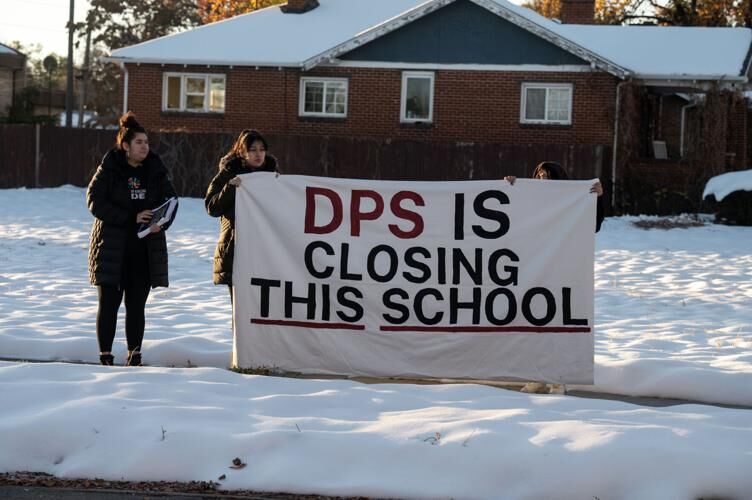
The district’s use of this financing is the subject of an ongoing lawsuit challenging the legality of the arrangements and raising broader concerns about how school debt is issued and disclosed.
Mill levy overrides can be used for ongoing operating expenses.
Denver voters have approved three overrides since 2012, with the latest in 2020, a $32 million mill levy to help hire more school nurses and pay for teacher pay raises and hourly workers like bus drivers and custodians.
Denver homeowners will already pay more in school taxes next year, even though DPS slightly lowered its overall tax rate. The increase is driven by rising assessed home values, a full 52.142-mill levy, and a dramatic increase in the district’s abatement surcharge — the fee the district uses to recoup tax refunds, according to a district report.
Abatement occurs when property owners successfully challenge their tax bills and receive a refund. When this happens, the district must make up the difference the following year by increasing the abatement portion of its mill levy — shifting the cost of those refunds onto other taxpayers.