







EDITORIAL: The death of justice — by a thousand cuts
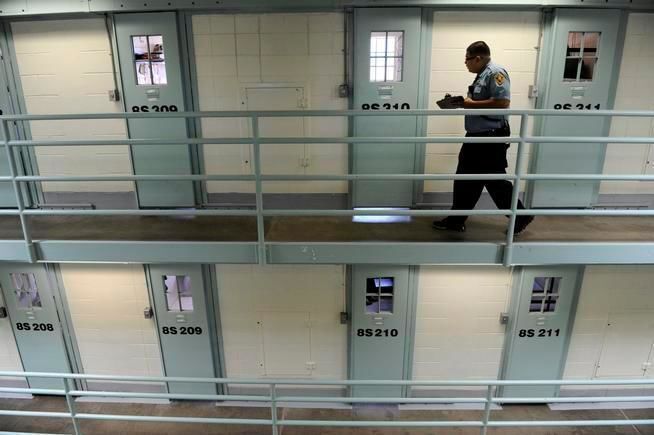
Just how obsessed is the legislature’s “justice reform” wing with emptying Colorado’s prisons?
Let’s just say if they could get away with it, they’d stage a fire drill and open the gates at every corrections facility in the state — then pretend not to notice when no one returned.
The extremists among ruling legislative Democrats are determined to dismantle Colorado’s do-the-crime-do-the-time justice system. They want to replace it with a house-of-mirrors take on justice, in which few go to prison and those who do are issued a get-out-of-jail card almost as soon as they arrive.
The lawmakers have been claiming it’s simply to ease overcrowding in Colorado’s prisons. Never mind there still are empty beds behind bars. And never mind that it is the legislature itself that has been shutting down prisons over the past decade and a half, as detailed for Gazette readers by 23rd Judicial District Attorney George Brauchler in a recent Sunday Perspective.
Close enough prisons, and those remaining open will be “overcrowded.”
Which means the justice reform crusade to keep lawbreakers from doing time is not only about decriminalizing crime — sentencing “reform,” bail “reform,” drug-law “reform” and the like — but also about, essentially, criminalizing incarceration.
Their latest such effort is reflected in a couple of bills slated for a hearing today before the House Judiciary Committee at the State Capitol. Senate Bills 26-158 and 26-159 are yet more attempts by the justice reformers to speed the early release of inmates — to the public’s peril.
SB 158’s formal title, “Youthful Offender Early Parole Procedure,” comes across as innocuous — while also playing upon society’s soft spot for young people. Tragically, of course, even teens can and do commit heinous crimes, and the perpetrators often continue to pose a threat not only to society but also, specifically, to other youths. This bill cuts them loose sooner.
The measure adds the state board of parole as an entity that may approve an application for early parole for an offender who has completed a program showing they’ve mended their ways. The board could approve parole if the governor has not acted on the application after 60 days.
Its sponsors are among the usual suspects of the justice reform crowd — state Sens. Mike Weissman, of Aurora, and Matt Ball of Denver, and Democratic state Reps. Michael Carter of Aurora, and Cecilia Espenoza of Denver.
Weissman is joined by more of the usual suspects — Democratic state Sen. Julie Gonzales of Denver, and state Reps. Javier Mabrey, of Denver, and Matthew Martinez, of Monte Vista — on SB 159. It would lull prying eyes to sleep with its process-forward title, “Inmate Earned Time Formula for Sentence to Department of Corrections.” Rest assured, it’s as insidious as SB 158.
SB 159 adjusts “earned time” formulas for inmates — i.e., the time inmates can lop off of their sentences after supposedly accruing it for good behavior. Good behavior means they don’t commit more crimes behind bars. Which somehow translates to serving less time for crimes already committed. SB 159 would shorten sentences even further, with more generous earned time.
Both bills effectively shift and scatter authority — from the governor to the parole board in the case of SB 158, and from judges to the Department of Corrections, i.e., the bureaucracy, in the case of SB 159. Both will provide cover, in other words, for ever-earlier release of convicts.
The bills are two more blows to Colorado’s justice system as lawmakers administer a slow death by a thousand cuts.
Our guess is only Gov. Jared Polis can stop the bleeding at this point, with a veto. Let’s hope.