







Wellington Webb’s house nominated for landmark status
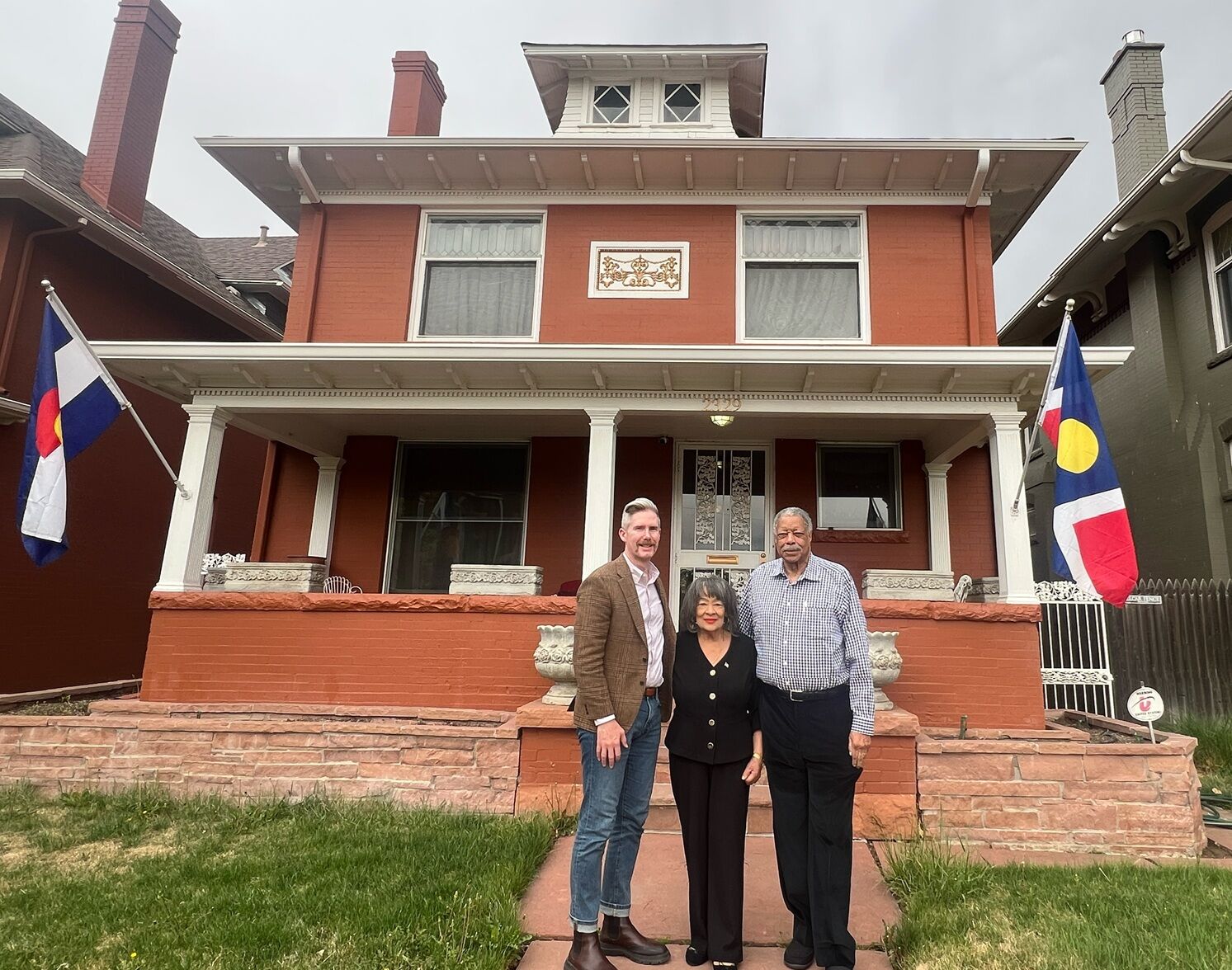
Wellington and Wilma Webb have lived in their 4-bedroom home in Denver’s Whittier neighborhood since 1971, going on 55 years — but they weren’t there for the most important six weeks of their political careers.
“The most unheard part is that we didn’t live here during the campaign,” the former Denver mayor told The Denver Gazette, following an announcement by Historic Denver that it nominated the house to become a city landmark.
In 1991 Webb famously hit the campaign trail on foot, walking 321 miles, knocking on doors and establishing his worn pair of sneakers as a political trademark. For 41 nights, he never returned to Whittier; rather, he spent the night in a different home each evening.
After he went on to win two reelections, Webb sent plaques to each family with whom he had sheltered. “I got the idea from Jimmy Carter,” he recalled.
Go or no-go
None of that had seemed likely when the Webbs met late one night in their family room for a campaign go-or-no-go decision, joined by media consultant Mandy Grunwald, manager Mike Dino, supporter Bob Osenga and a pollster. The latter had bad news: tallies showed Webb’s support in a coming election at 7%.
Webb recalls that Wilma Webb, who had won reelection for state representative several times, said, “You’re not going to win if you don’t run.”
The sneaker campaign was a hit, but Webb recalls that it was a policy position that helped to garner his winning coalition.
In 1980, Whittier was on the flight path into Stapleton International Airport, just three miles east — close enough that skyscrapers downtown were height-limited by jets overhead. After residents in Park Hill sued the city over noise, Mayor Peña’s administration began a plan to move the airport.
But that would cost over $2 billion. Webb, then city auditor, recalls his opponents divided out on the move, one too readily backing it, the other calling for it to be shut down. “I took the middle ground, a more practical approach,” Webb said.
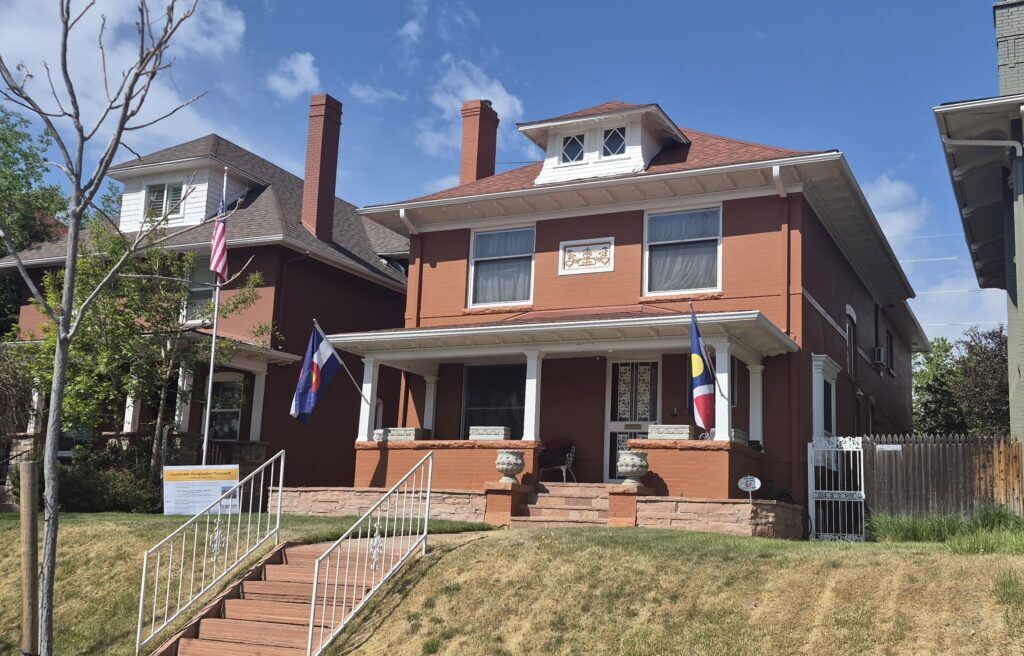
In its nomination for landmark status, Historic Denver gives the home credit for its Denver Square architecture that became popular in the 1890s after the silver boom. But it was the meetings that took place here that lend importance, President & CEO John Deffenbaugh said.
Jimmy Carter’s famous ‘Aunt Sissy’ was among notables who visited — and most every civil rights leader of the era: Stokely Carmichael, U.S. Rep. Charlie Rangel, Jessie Jackson and Coretta Scott King, who visited often and become close to the family.
But Wilma Webb, who went on to serve as regional administrator for the U.S. Department of Labor, says that it was the family aspects that stand out.
Needed work
The couple had gone to different Denver schools, but met early in their political careers, each already with two kids. They married and picked a four-bedroom that needed work: no water heater, and a bathroom with an old-fashioned pull-chain toilet the kids loved to fool with, causing their parents to worry it would flood the floors. (The Webbs donated it to the Molly Brown House.)
“Everything that was good happened in this house,” Mayor Webb added. Those included Thanksgivings with turkey, duck and ham in the family areas they expanded — room for a grownups table and a kids table.
“We chose a neighborhood to raise our family,” the mayor recalled. “We could have moved many times but decided not to.”
“We took an old house and made it into a home,” Wilma Webb added, noting that the pair has filled it with relics of what Denver has been.
HISTORIC DENVER: A nonprofit founded in 1970, noted for its preservation effort for the Molly Brown house and other landmarks. WEB: HistoricDenver.org