







Moderates are not our salvation | Mike Rosen
The word “moderate” is a fashionable term these days as the remedy to the nation’s sharply divided politics, but it’s highly overrated and largely inaccurate. A stark example is Democrat Abigail Spanberger, who was elected governor of Virginia in 2025 as a self-declared moderate, promising not to redistrict the state if elected, having branded gerrymandering as “detrimental to our democracy” as a Congresswoman in 2019. In her first year in office, she signed a bill that would gerrymander Virginia giving Democrats a 10-1 advantage in the U.S. House, from 6-5. (Her voting record in Congress was anything but moderate with a 100% rating form the ACLU and 3% from the American Conservative Union.)
President John F. Kennedy was a moderate Democrat in 1961 when southern Democrats were conservative. Even Bill Clinton was a moderate Democrat president compared to the party’s liberals in Congress during his presidency. The few truly moderate Democrats that still survive in Congress these days are overwhelmed and canceled by the legion of radical left-wingers that have taken over the party.
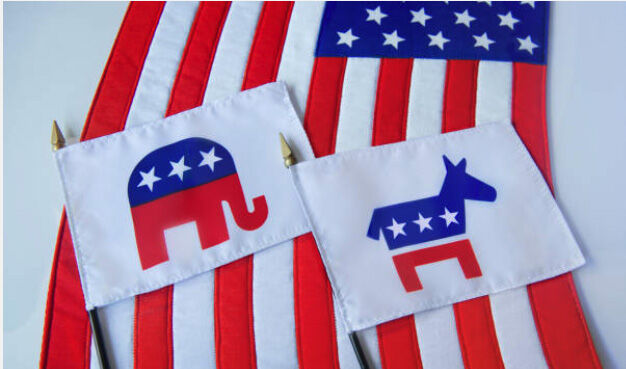
One measure of that is the size and influence of the Democrats’ Progressive Caucus in the House that numbers 100 left-wing zealots like Ilhan Omar, Rashida Tlaib, AOC, Pramila Jayapal, Maxine Waters, and even Bernie Sanders (the lone Senator). It’s total membership accounts for 47% of the 212 Democrat members of the House. By contrast, the Republican Freedom Caucus has only 40 members, accounting for just 18% of the 219 Republican members in the House. They can stir the pot and block some measures but don’t dominate the party. True, the Freedom Caucus has a handful of strident right-wingers like former members Marjorie Taylor Greene and Matt Gaetz, but most are mainstream conservatives like Jim Jordan and former member Ron DeSantis.
In Colorado, radical Progressive Democrats dominate the Denver city council and the state legislature. Although unaffiliated voters outnumber registered Democrats and Republicans combined, most are not really ”independents” or moderates. If a close election turns on swing voters, most of Colorado’s unaffiliated don’t vote for Republicans; about two-thirds of them routinely vote for Democrats.
Precisely where the political center resides is subjective. But using the JFK and Bill Clinton examples cited above, Democrats have obviously moved much farther to a radical leftist extreme than Republicans have on the right since the JFK and Clinton presidencies. Socialism, now the Democrats’ preferred economic model for our country, wasn’t even respectable for the American mainstream back then. And it still isn’t to anyone who understands political economics, Marxism, and world history.
The word “moderate” is multifaceted, a term that modifies the degree of something tangible. As an adjective, you can be a moderate conservative rather than a staunch one. As an adverb, you can eat moderately rather than gorging yourself. As a noun, a moderator is a neutral party standing between two advocates in a debate. That’s fine in a debate but as a human being with the gift of reason, as C.S. Lewis observed, “You can’t be a good egg all your life. Sooner or later, you have to hatch or rot.” When a politician calls himself a moderate, it has no meaning in the realm of ideas. Moderation isn’t a personal philosophy or ideology. It’s not a belief, it’s a style. Moderates don’t innovate. They’re political brokers, attaching themselves to other people’s ideas.
It’s good to know a politician’s stance on particular issues but I care more about his values and basic beliefs. Circumstances, details, and issues change. When they do, he’ll make decisions on the basis of his convictions. If he has none, he’ll act on other factors like opinion polls, getting reelected, or loyalty to special interests. How would a simply moderate politician resolve Iran’s goal of “death to America”? Split the difference and settle for the death of just half of America?”
Edmond Burke told his constituents in Bristol, England, that on matters of great importance he’d act on his beliefs, not on their dictates. If they disapprove of his beliefs, they should vote him out. As a member of Parliament, he stood as their representative, not their delegate, who’s a puppet on a string. It’s a vital distinction and the difference between a statesman and a politician.
Donald Trump certainly isn’t moderate and defies any simple analysis of right or left. He’s a unicorn. I doubt he has a consistent ideology. He’s committed, instinctive, transactional, impulsive, and meteoric. But he has an agenda that I largely agree with and it’s far better than that of the Democrats.
Mike Rosen is a Denver-based American radio personality and political commentator.