







As number of unaffiliated voters grow in Colorado, experts note patterns, behavior
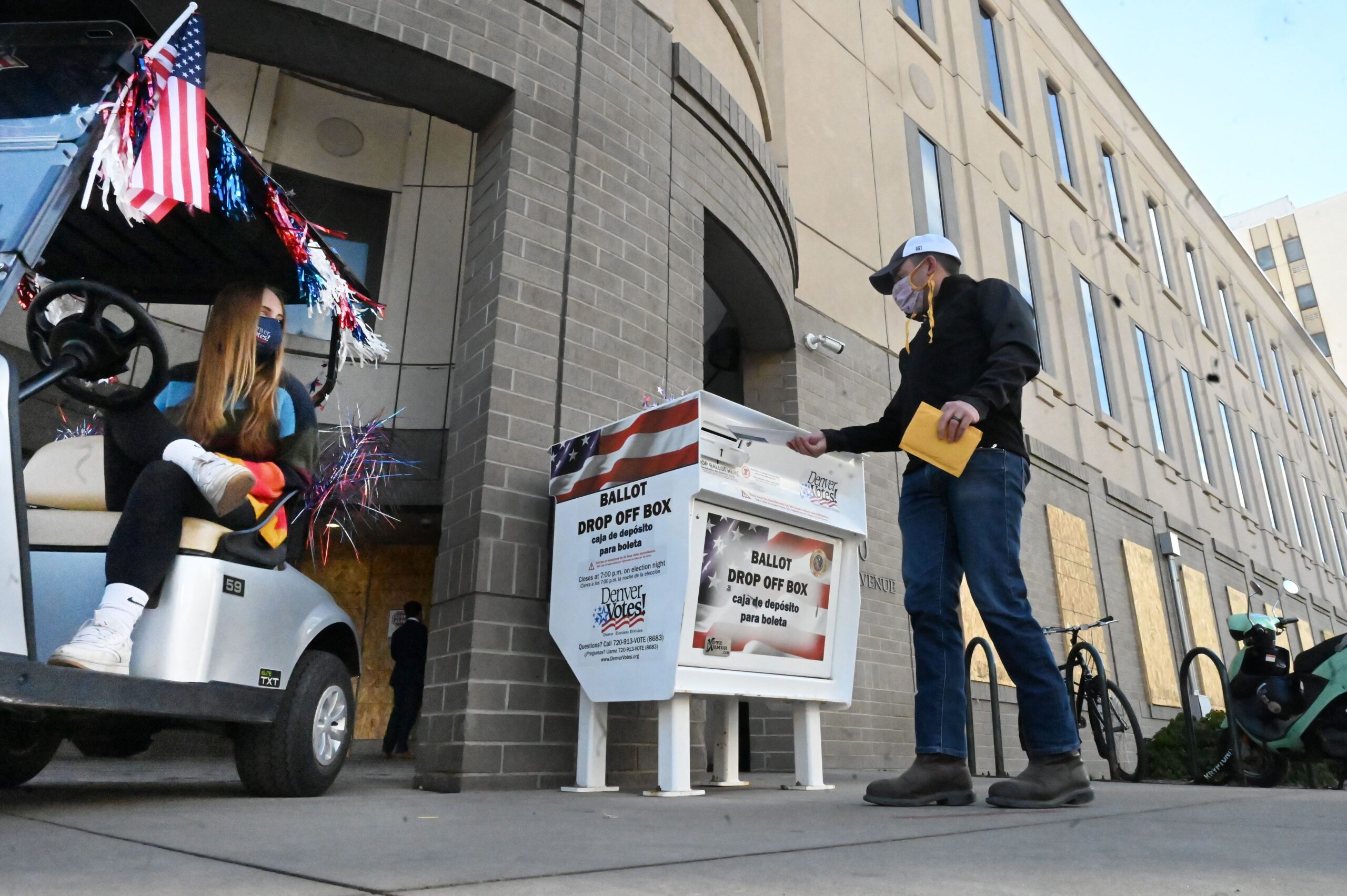
For the first time in Colorado’s history, more primary ballots are going to voters without a party affiliation than to registered Democrats or Republicans.
As such, political experts said, candidates today need to appeal to a new block of people — unaffiliated voters are not monolithic in their political views — who have begun to show patterns in how they behave.
Notably, political experts said, unaffiliated voters tend to dislike political ads, lean more toward the center and are less politically engaged.
In Colorado, they tend to generally lean Democratic while at the same time holding more traditionally Republican views on several issues.
Colorado began allowing unaffiliated voters to participate in primary elections in 2018, following voters’ approval of Proposition 108 in 2016.
Today, unaffiliated voters make up more than half of Colorado’s registered electorate.
As their numbers grow, they will have a bigger say in the results of primary elections — assuming they participate. Only a fraction of Colorado’s 2.2 million unaffiliated voters engage in the primaries — some 344,000 to be exact.
In Colorado, residents who don’t select a party affiliation when they obtain a driver’s license or state ID are automatically registered as unaffiliated voters.
In this year’s June 30 primaries, Democrats and Republicans have contested statewide races, with at least two candidates running for each major race, such as governor and attorney general, in each party.
Who are Colorado’s unaffiliated voters?
While Colorado’s more than two million unaffiliated voters don’t vote as a single bloc, political scientists say some patterns are emerging within this fast‑growing group.
Ryan Strickler, a political science professor at Colorado State University Pueblo, noted that researchers have begun to identify trends.
“The unaffiliated are going to be a little more moderate, they tend to follow politics a little less, and they tend to be less politically-engaged than registered Democrats or registered Republicans,” he said, adding that the lack of political engagement may give candidates with higher name recognition an advantage.
Data show a national shift away from the two major parties, with a recent Gallup poll finding that 45% of Americans now identify as independents.
In the 2024 general election, nearly 1.5 million unaffiliated voters turned in ballots in Colorado, compared to 900,000 Democrats and about 830,000 Republicans.
Turnout in primary elections is much lower.
In 2024, only about a quarter of Colorado voters cast ballots in that year’s primary elections. Of that number, unaffiliated voters accounted for just 36% of the turnout.
A group called Colorado Informed recently launched a campaign to get unaffiliated voters to participate in primaries by letting them know they can, in fact, vote in the major parties’ elections.
The group said the trend shows that only 15% of residents registered as unaffiliated vote in primaries.
Targeting the unaffiliated
Some view the participation of unaffiliated voters as a moderating force. Others regard it as violating party candidates’ First Amendment right of freedom of association.
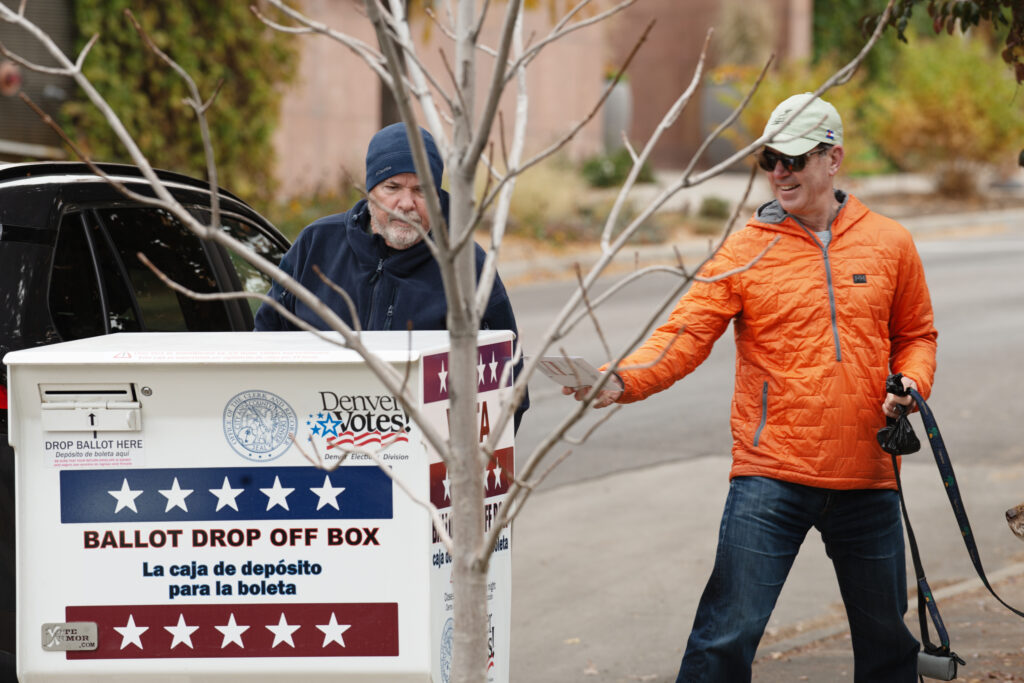
Colorado’s unaffiliated voters generally lean Democratic, but many hold more traditionally Republican views on issues such as immigration, public safety and the Taxpayer’s Bill of Rights, according to Beth Hendricks of the League of Women Voters.
“While our unaffiliated voters do tend to lean Democratic, they have been playing their hand in the Republican primaries and it seems that they’re looking to kind of keep things a bit more balanced and less extreme,” she said.
For the most part, Strickler said, the majority of unaffiliated voters choose candidates from the same party election after election.
“It’s not like every one of these unaffiliated voters is uber-moderate and could go either way,” he said. “I think many of them are gonna solidly vote Democrat or Republican in November, no matter what.”
Their engagement could force candidates to broaden their messaging to appeal not just to their party’s base but also to the unaffiliated — and the undecided.
Hendricks said it may take some time for candidates to develop that strategy — if they choose to at all.
“I personally think that candidates need to really think about that and start changing up their rhetoric to appeal to more people rather than just bashing the other party,” Hendricks said.
Some don’t want unaffiliated voters participating in their primaries at all.
State Rep. Scott Bottoms, a candidate for governor, joined an unsuccessful push to bar unaffiliated voters from the GOP primary, arguing that Colorado’s semi-open system is unconstitutional because it requires Republicans to let non-members help choose their nominees.
Allowing unaffiliated voters to cast ballots in their primaries, Bottoms and the other candidates argued, would lead to “concrete and particularized injuries” by costing their campaigns more money to reach a larger electorate, diluting Republican votes and “(compelling) unwanted association with non-members in the party’s nomination process.”
“These harms are not hypothetical,” the candidates said. “Absent injunctive relief, Plaintiffs will suffer the very same dilution, increased costs, and outcome-altering effects in the upcoming 2026 primary election cycle.”
The Republican candidates also maintained that a statistical analysis proves that unaffiliated voters have “repeatedly and materially” swung the results in multiple primaries, including in the case of Ron Hanks, a former legislator who is challenging Republican U.S. Rep. Jeff Hurd in the 3rd Congressional District.
“For years, we have watched unaffiliated voters change the outcomes of Republican primaries — as indicated by the scientific analysis submitted with this filing,” Hanks said in a statement earlier. “That analysis includes my 2022 and 2024 efforts, but it also includes Democrat races that were impacted by unaffiliated voters in their primaries.”
‘Annoyed’ by attack ads
Some said unaffiliated voters pose a unique opportunity for candidates to increase their chances of winning, particularly those from a more moderate wing of their respective parties.
“For Barbara Kirkmeyer on the Republican side or Michael Bennet on the Democratic side, maybe part of their strategy is trying to appeal to these otherwise not engaged voters with more of a moderate message or Bennet utilizing his name recognition, things like that,” said Strickler, the political science professor from Colorado State University Pueblo.
Seth Masket, a political science professor at the University of Denver, said unaffiliated voters tend to vote for what they know, whether it’s an incumbent or a candidate with an extensive advertising budget.
“If someone has a much bigger advertising spending budget, they’re more likely to see that person’s ads or signs or radio broadcasts. So, they’re more likely to decide late and be influenced by campaign things,” he said.
While Masket said unaffiliated voters and voters in general dislike attack ads, research shows that messaging can be effective.
“Unaffiliated voters are really bothered by attack ads, and that is part of the reason they don’t want to be part of a party, but that doesn’t necessarily mean it causes them not to vote,” he said. “My impression is they actually do pay some attention to those ads and they do use the information in those ads to cast a vote, even if they’re annoyed by them.”
Those attack ads are primarily geared toward registered party members, however, said Strickler.
He said that even with a large pool of unaffiliated voters in play, campaigns still have to energize their core partisans, who remain the most dependable primary voters — which helps to explain the steady stream of negative ads.
Those attacks, Strickler noted, can be highly motivating for the base, but they also risk turning off unaffiliated voters, who may already feel disillusioned with both parties, suggesting campaigns may be overlooking something by leaning heavily on negative ads.
Another popular campaign strategy is what Strickler calls “values-based” or “character-based” messaging.
Strickler noted examples like U.S. Sen. John Hickenlooper’s “This is Me” ad, filmed as he walks through the woods, and Phil Weiser talking about his mother’s birth in a World War II concentration camp — reminders that unaffiliated voters may weigh a candidate’s personal story, values or background when deciding how to vote.
As dissatisfaction with both major parties grows, experts anticipate an increasing share of Coloradans will register as independents in the coming elections.
“It’s a sea change,” said Hendricks. “For almost 250 years, we’ve been operating in this one way. So, it’s a lot to move away from that. But it’s happening and candidates need to recognize that.”