







GUEST COLUMN: Polis and the Great Colorado Wildlife Experiment
By now, Colorado sportsmen, ranchers, outfitters, cattle producers, and anyone who’s ever dragged an elk quarter out of a snow-covered canyon have become familiar with Gov. Jared Polis’s approach to wildlife management. It’s a peculiar blend of science, politics, animal-rights activism, and whatever happens when a Boulder coffee shop discussion accidentally becomes state policy.
Which brings us to the latest fight over the Colorado Parks and Wildlife Commission. After two previous Polis nominees were rejected amid concerns that they would tilt the commission further toward activist wildlife policies, the governor has returned with a fresh round of appointments and a familiar message: everything is balanced, representative, and perfectly reasonable.
Trust him.
The problem is that trust is exactly what many hunters, anglers, ranchers, and agricultural producers no longer have. And after six years of watching wildlife policy emerge from the Governor’s Mansion, it’s difficult to blame them.
This is, after all, the same governor who declared “Meat-Out Day” in a state where cattle production isn’t merely an industry—it’s a way of life. Nothing says “I understand rural Colorado” quite like encouraging the fourth-largest beef-producing state in America to skip the beef. The proclamation was received with all the enthusiasm of a “Ski-Out Day” in Aspen. Counties responded by organizing “Meat-In Day” celebrations, proving once again that if Jared Polis tells ranchers not to eat beef, the only thing he’ll accomplish is selling more beef.
Then there’s the wolf debacle.
Supporters call it restoration. Opponents call it social engineering with fangs. Either way, Colorado became ground zero for one of the most divisive wildlife battles in American history. Ranchers warned about livestock losses. Hunters warned about impacts on elk herds. Polis allies dismissed concerns. Wolves arrived. Livestock depredations followed. And suddenly all those people accused of fearmongering looked a lot less crazy. And the wolves suffered as well.
Remarkably, the governor still seems baffled by the skepticism.
Hovering over much of this debate has been Colorado’s First Gentleman, Marlon Reis, one of the state’s most prominent animal-rights advocates. Everyone is entitled to their beliefs, but when the governor’s closest confidant has spent years championing animal-rights causes, and the administration repeatedly advances policies viewed with suspicion by hunters, ranchers, and sportsmen, people are naturally going to connect the dots. Not because they’re conspiracy theorists, but because they possess functioning pattern-recognition skills.
Which brings us back to the commission appointments. The Senate Agriculture and Natural Resources Committee didn’t reject previous nominees because they were insufficiently progressive. They rejected them because lawmakers questioned whether they were actually qualified for the seats they were supposed to represent. One nominee for a sportsmen’s seat received criticism for lacking meaningful big-game hunting experience. Another carried a long record of wildlife activism that legislators believed made him poorly suited for an at-large position. That should have been a clue.
Instead, the administration appeared genuinely surprised that sportsmen wanted sportsmen seats filled by actual sportsmen. Apparently, that’s a controversial concept now. Next thing you know, ranchers will insist agricultural seats be occupied by people who have actually worked cattle. What radicals.
The deeper problem isn’t one nominee or another. It’s the growing perception that the commission appointment process has become less about representation and more about ideological choreography. Colorado law intentionally requires sportsmen, agricultural producers, outfitters, recreationists, and members of the public because wildlife management was never intended to be controlled by any single constituency. It is supposed to be a balancing act. What it is not supposed to be is a graduate seminar on the emotional needs of apex predators.
Hunters and anglers provide a major part of the funding that keeps Colorado Parks and Wildlife operating. Rural communities depend on hunting, fishing, agriculture, and outdoor recreation. Yet many of those stakeholders increasingly feel as though they’re viewed less as partners in conservation than as inconvenient reminders that wildlife management occasionally involves actual wildlife management.
That perception exists for a reason. And every appointment fight reinforces it.
At some point, Colorado ought probably ask whether concentrating so much appointment power in the governor’s office still makes sense. If every nomination becomes a proxy war over wildlife ideology, perhaps sportsmen should nominate sportsmen representatives. Perhaps farming organizations should nominate agricultural representatives. Perhaps legislative leaders should share appointment authority. Almost any system would inspire more confidence than the current arrangement, in which every vacancy triggers another battle over whether the commission represents Colorado or merely the governor’s latest social experiment.
And then there are those rumored presidential ambitions.
One can only imagine the campaign platform. Meat-Out Day goes national. The Department of Agriculture becomes the Department of Dietary Reflection. Wolves receive a White House liaison. Elk hunters are required to complete sensitivity training before entering the field. Ranchers must submit coexistence plans to predators before turning cattle onto summer pasture.
The possibilities are endless.
Or perhaps Colorado is simply serving as the pilot program. A place where activist symbolism routinely outranks practical realities, and where the people who actually live with wildlife are increasingly expected to defer to the people who mostly post about wildlife.
Either way, the governor shouldn’t be surprised that sportsmen, ranchers, and rural Coloradans are skeptical. They are worried about the wolves. They’re worried about the livestock losses. They’re worried about the future of hunting and wildlife management.
But more than anything, they’re worried about the process that brought all of it here. Because wolves don’t appoint commissioners.
Governors do.
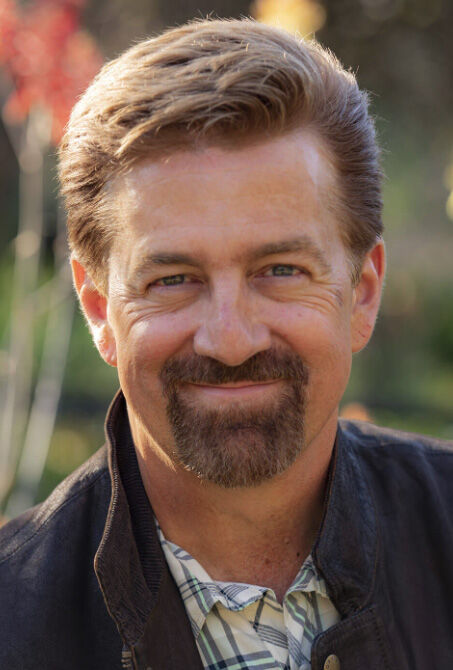
Chris Dorsey is a biologist, philanthropist, conservation thought leader and television producer whose work has appeared in the Wall Street Journal, Forbes, and numerous other national publications.