Once feared lost to fire and flood, a new trail to Hanging Lake awaits
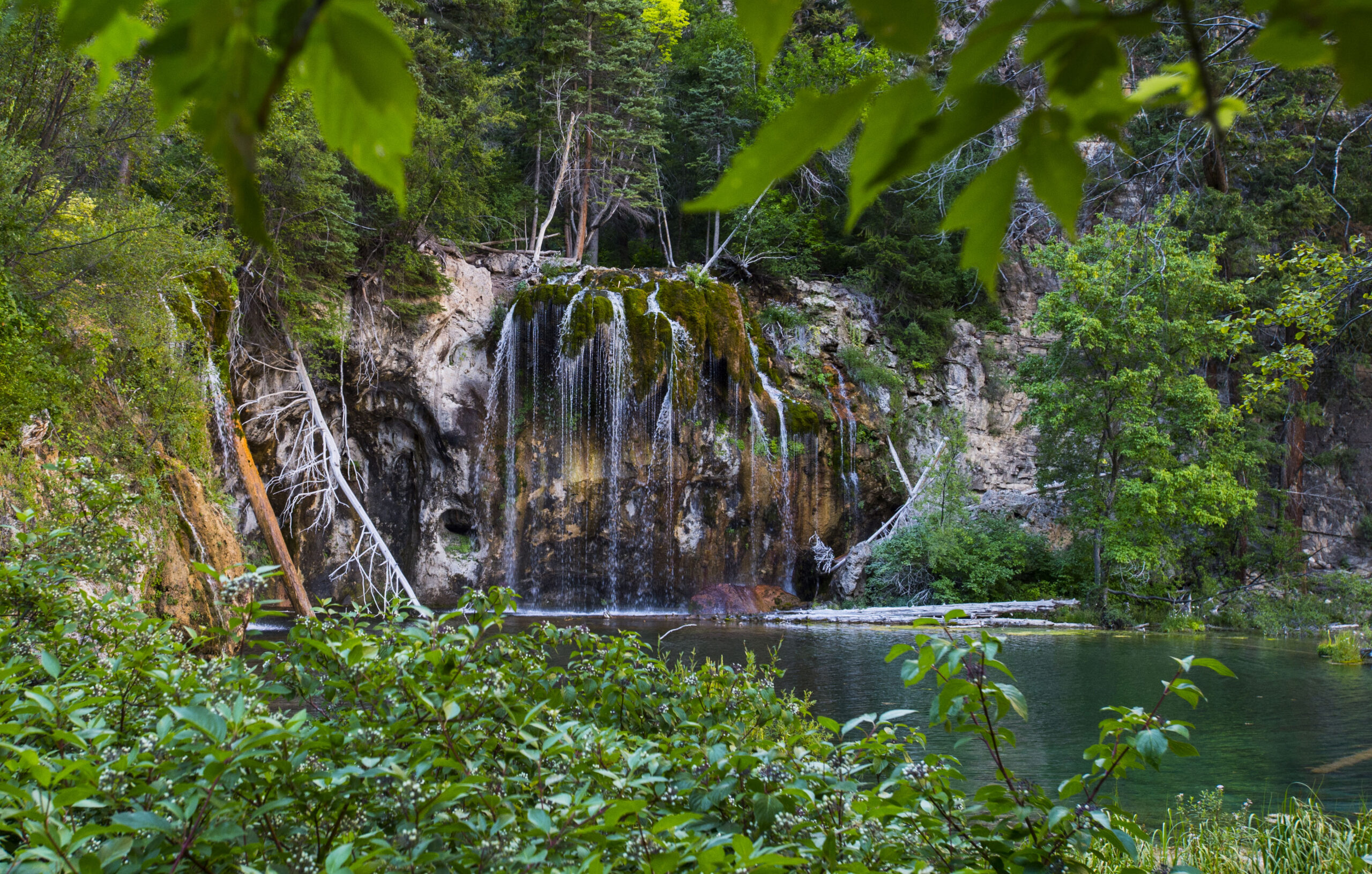
That summer evening in 2020, I was following the news like so many Coloradans. Unlike so many of them, I had not hiked Hanging Lake. And I feared I would never get the chance.
The Grizzly Creek fire was ravaging Glenwood Canyon, where the turquoise, waterfall-fed pool hung high up from the valley. The fire was fast approaching. Reports and maps suggested one of the state’s most scenic, cherished sites would be no more.
Then came an aerial photo. Though the smoky haze, Hanging Lake still shimmered ー intact along with its boardwalk and guardian conifers.
The fire had stayed along the rims above.
“It was this big sigh of relief,” Emily Kasyon recalled from her home in Glenwood Springs. “It was like, Oh, my gosh, it’s still there.”
White River National Forest’s supervisor at the time, Scott Fitzwilliams, took to Facebook to report the good news to a live video audience.
“We’re not out of the woods,” he cautioned.
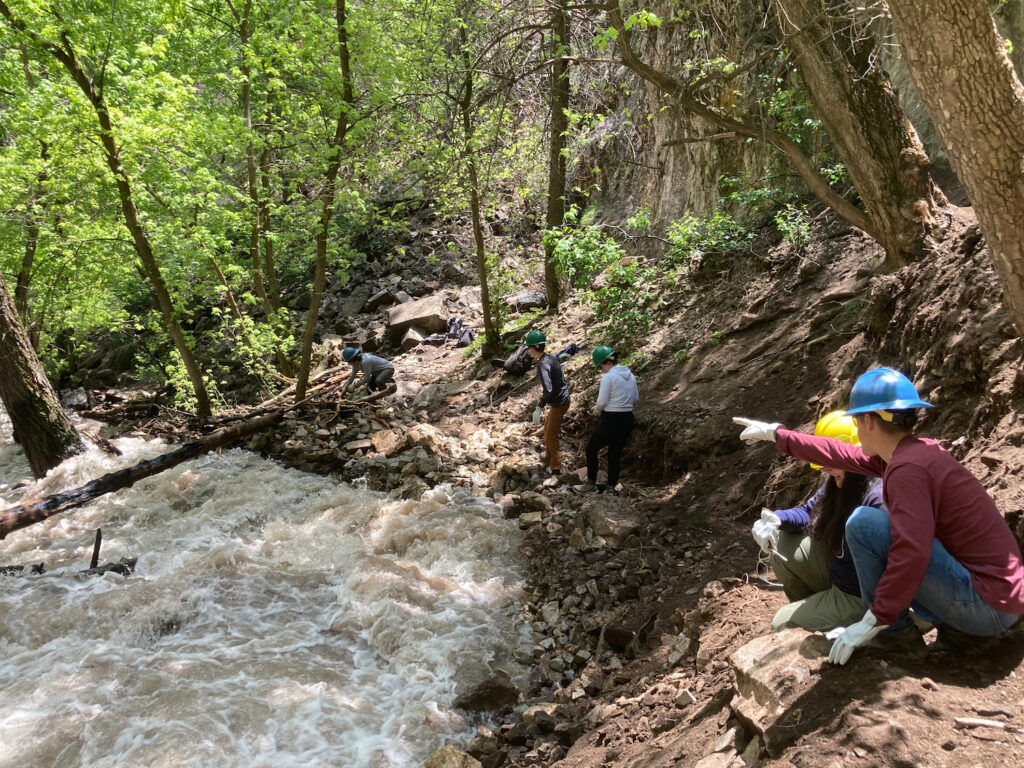
The surrounding slopes were left barren by the blaze; rain, mud and rocks threatened to rush down and wreck the trail and footbridges leading to Hanging Lake. And sure enough, during the spring and summer of 2021, debris came crashing. The trail would be closed at times over the weeks and months ahead as advocates and officials formed a plan.
That included Kasyon, the local coordinator with the National Forest Foundation.
“It was just a mess up there,” she said, thinking back to floods that washed out parts of the trail and dislodged bridges.
Thousands of hiking reservations would be canceled ー among some 72,000 annual visitors that had been tracked over the years, impacting the local economy to the tune of an estimated $4.6 million.
“It’s a state treasure,” Kasyon said. “And so the conversations were never like, it’s over for Hanging Lake. It was always about, OK, what are we gonna do? We just need to figure it out.”
After intense studies and designs, more intense construction over the past few years and nearly $5 million later, a trail has been made. Next week, funding partners with the National Forest Foundation, Great Outdoors Colorado, Colorado Parks and Wildlife along with others in Glenwood Springs are set to gather for a ribbon cutting.
And finally, just recently, I hiked to Hanging Lake.
“I think you’re really gonna enjoy it,” said the attendant checking my reservation at the exit off Interstate 70.
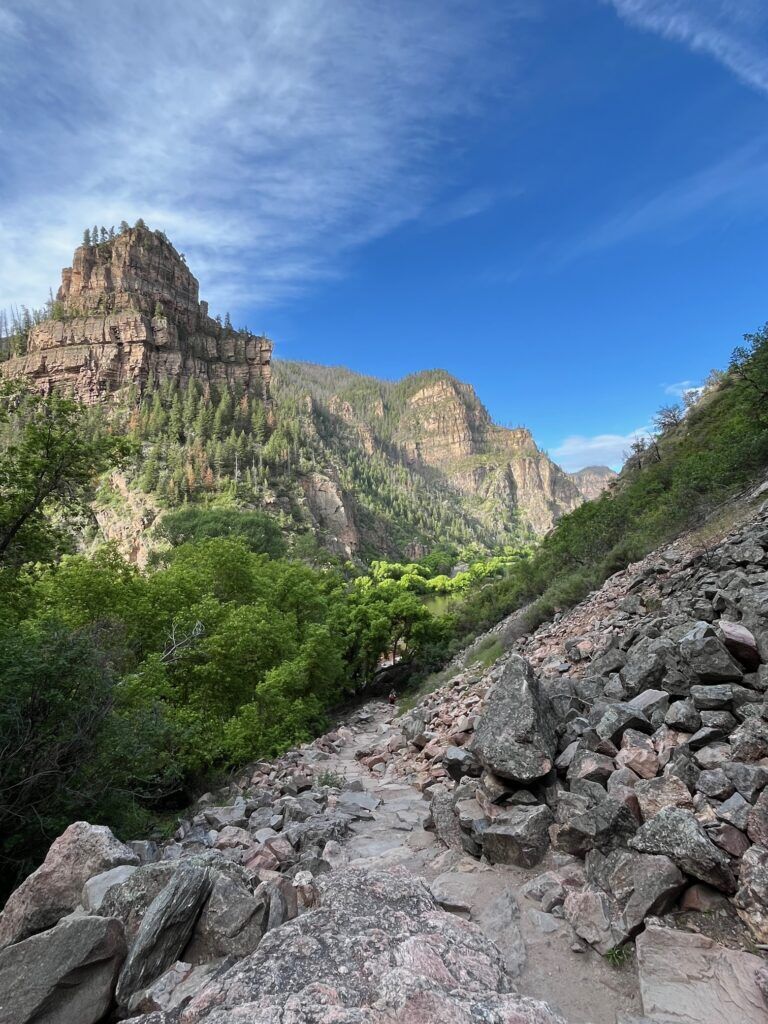
People for unknown generations have enjoyed Hanging Lake. A sign posted at the trailhead shows a timeline starting with the Ute people and moving on to homesteaders, miners and railroaders who established Glenwood Springs in the 1880s.
Following the railroad that reached the town, a rough road was built through Glenwood Canyon in 1902 ー inviting more people to the area that seemed a distant fantasy, with tales of healing hot springs.
And there was that fantastical place tucked high in the canyon.
Hanging Lake drew locals and travelers alike as a town-owned park for decades starting in 1912. The land would be transferred to the U.S. Forest Service in 1972, ahead of I-70 construction through Glenwood Canyon that drew more masses.
The interstate was an engineering marvel that accounted for the natural marvel above. Reads an account in the form that made Hanging Lake a National Natural Landmark: “Out of concern for the Hanging Lake drainage, highway lanes were bored through tunnels on the south side of the river, allowing the construction of a rest area at the trailhead.”
The rest area would be stunning on its own, just off the interstate but seemingly a whole world away. Up a sidewalk overlooking the Colorado River and cathedral-like monoliths, Hanging Lake Trail starts into the canyon over stone steps.
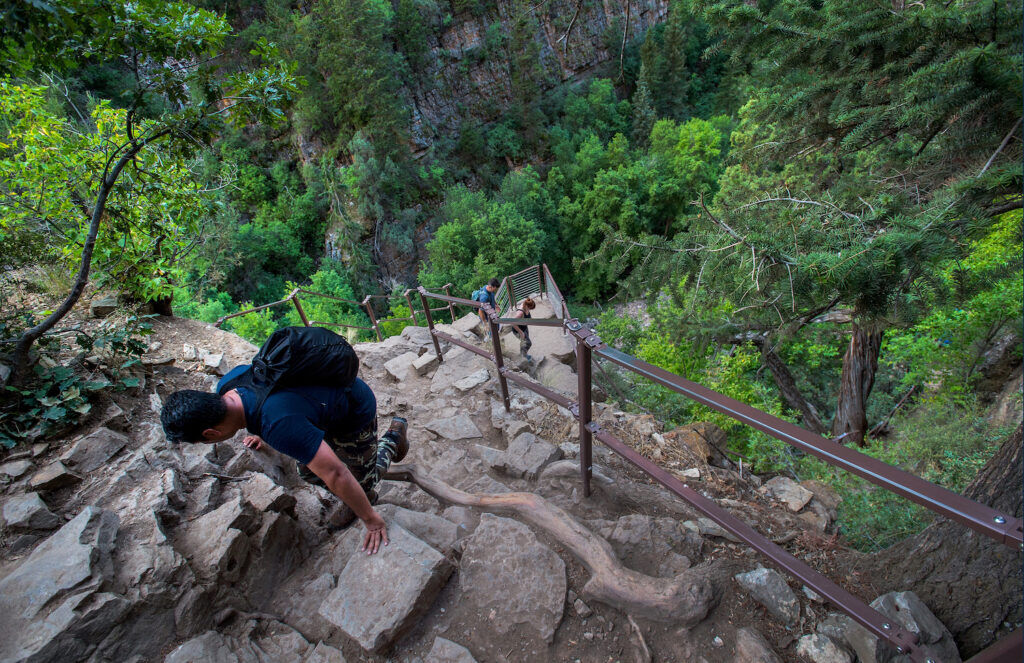
These steps largely define the new trail still spanning the length and creek-side, forested corridor long known. But yes, the stone steps are new. They are not unlike those that have been replacing eroded stretches of trails up Colorado’s 14,000-foot mountains. The steps tend to garner mixed reviews among climbers.
Kasyon, who oversaw reconstruction, recognized Hanging Lake’s former trail “used to be a more rugged experience.” But the new trail is “more sustainable,” she explained ー better able to withstand flooding, the feet of up to 650 people a day (the cap for hiking permits) and requiring less maintenance.
The stone steps are “maybe not everyone’s favorite style of hiking,” Kasyon said. But “when you’re looking at soft surface vs. a hard surface, that hard surface is just gonna last much longer.”
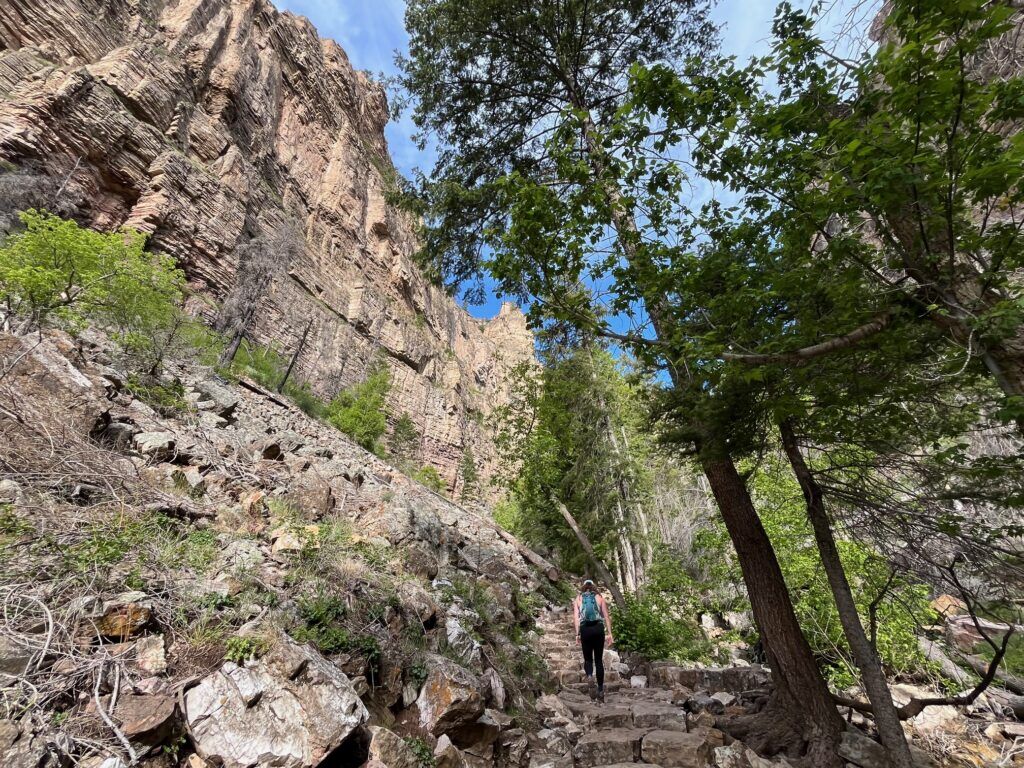
Amid constant trampling, that old trail was only going to last so long, according to onlookers who nominated Hanging Lake as a National Natural Landmark in 2011. The nomination form cited “heavy recreational use” as “the primary known threat to the site.” Also: “a large slide could dramatically alter or even eliminate the lake.”
That seemed possible in the wake of the 2020 Grizzly Creek fire. Leanne Veldhuis had started as the Forest Service’s local district ranger only weeks after the disaster that was followed by flooding and mudslides.
As trail construction was underway in 2024, “It definitely feels really exciting to have this momentum, being near an end point or return to normalcy maybe,” Veldhuis said at the time. “Out of the disasters that have happened in and around the lake and Glenwood Canyon, what’s going to result is this beautiful product that wouldn’t have happened otherwise.”
Kasyon sees the new trail as “a work of art” ー the creation of a stone mason and crews trained to blast larger rock and chisel, cut and shape the steps just so. More than 1,000 steps were crafted, Kasyon said, “and 80-90% I would say was done by hand.”
Along with that, seven footbridges were built along the trail. Each reportedly required two helicopter flights that dropped 2 tons of parts down to workers. “Kind of like hardcore Legos,” Kasyon said. “They had to figure out how to put it all together.”
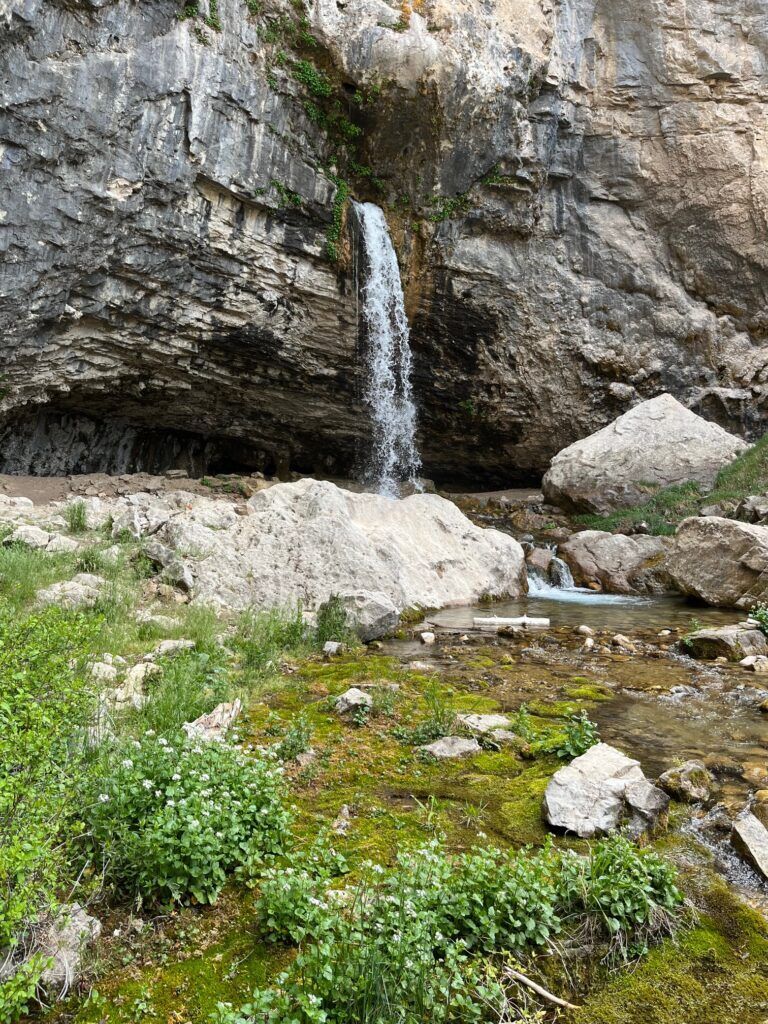
They also put together a boardwalk at Spouting Rock. This is the waterfall gushing from a rock face above Hanging Lake, forming a pool that cascades down.
But what was the source beyond Spouting Rock? Where was the water coming from to create this seemingly miraculous scene? This was the question of specialists hired in recent years, only the next to search for elusive answers. While the source has baffled, Hanging Lake has been otherwise explained: A geologic fault caused a lakebed to drop amid uplift over millions of years, to be filled by vibrant, mineral-rich water.
But standing there at Hanging Lake, I liked to think of it all like a miracle. I was almost too distracted, too captivated, to notice another miracle.
Just to my left, I looked to a ridge of burned trees, victims of that fire that somehow kept moving, sparing this place where I stood, where I felt all the more grateful.
IF YOU GO
Covering about 1.2 miles and 1,200 feet of elevation gain, Hanging Lake Trail is considered challenging. A $12 permit booked online in advance is required for hiking. For a reservation and more information, go to visitglenwood.com/hanginglake