







FBI conducts simulated nuclear exercise in Colorado Springs
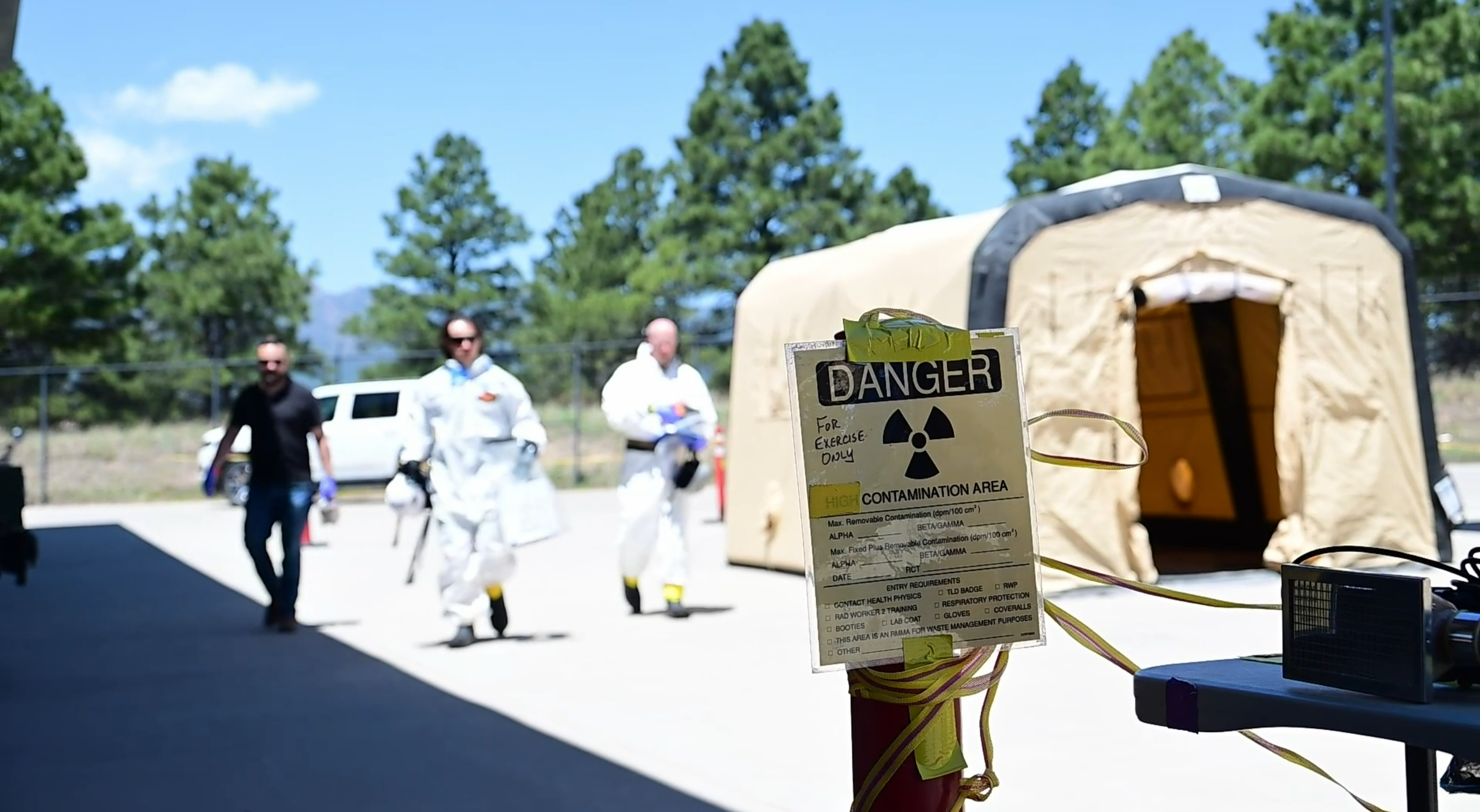
Soldiers and airmen gathered in Colorado Springs this week for a simulated nuclear detonation event to train for the unlikely chance of a terrorist attack in Colorado and Wyoming.
The annual field training exercise has been happening since 2012, according to the FBI, the only federal agency with jurisdiction and capabilities to investigate a nuclear incident.
Dubbed Prominent Hunt, the exercise was an interagency training for the FBI, Department of Energy and the Department of Defense, said Amanda Koldjeski, the special agent in charge of the FBI Denver and Wyoming divisions.
“Regarding anything chemical, biological, radiological or nuclear, it’s imperative that we all conduct joint exercises together because we learn each other’s roles and responsibilities … in the event that an incident ever happens,” Koldjeski said in a press conference Friday.
Koldjeski told The Gazette that more often than not, these incidents are hoaxes. Most of the time, she said, possible threats the FBI is called out to turn out to be something like protein powder or baking soda.
“But every time you get there, you have to treat it like it’s anthrax,” she said.
But there are the oddballs.
There are people across the country, called “science dorks” by Koldjeski, who have a fascination with collecting the periodic table of elements, some of which are highly volatile and dangerous.
“Almost every time, we approach the individual and say, ‘By the way, we hear that you have this material.’ They’re like, ‘Yeah! You want to see it? It’s part of my collection!’ And we’re like, ‘No, we want to take it.’ Because there could be a terrorist who purchases it to build dirty bombs,” said FBI spokesperson Vikki Migoya.
The more serious cases seen across Colorado are calls about bombs, according to Koldjeski. She says the agency gets a lot of them, especially in rural parts of the state.
In many cases, new homeowners buy property in these areas and find old sheds or buildings that contain landmines, grenades or other military ordinances, Koldjeski said. The situations often aren’t dangerous and are promptly handled by the agency’s bomb technicians.
When the FBI is called in for a incident, Koldjeski says they undergo a “meticulous” process to manage it.
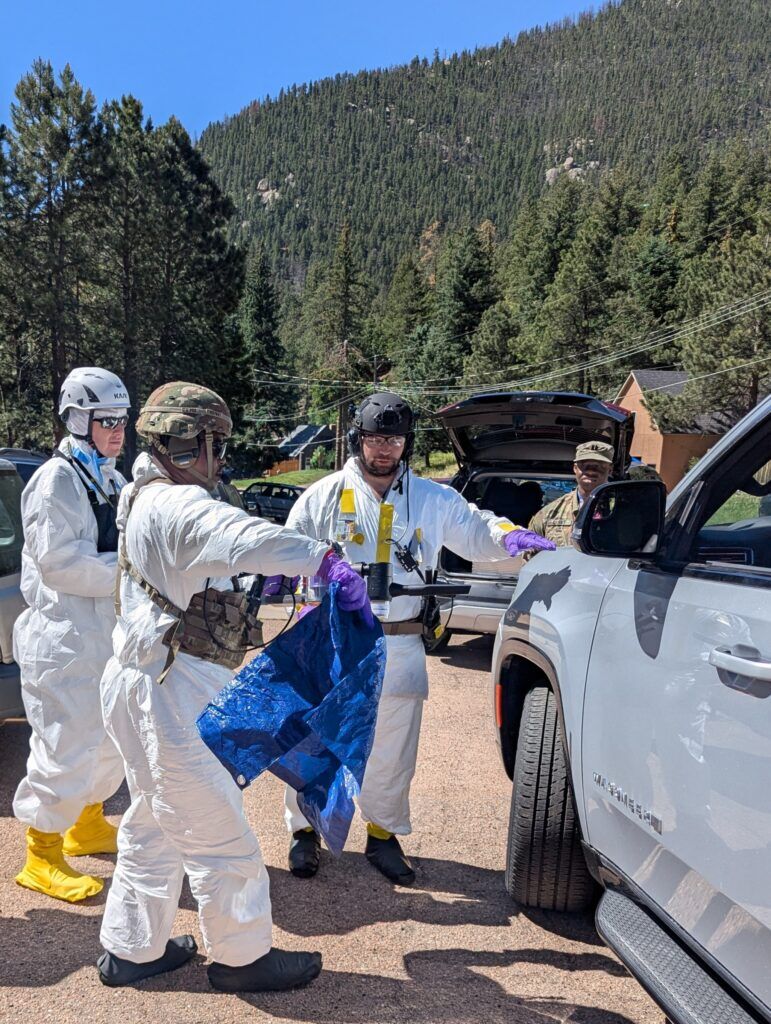
The training in Colorado Springs this week included a simulated detonation that had teams go to the detonation sites to collect samples properly, package them and then transport them to a lab for testing.
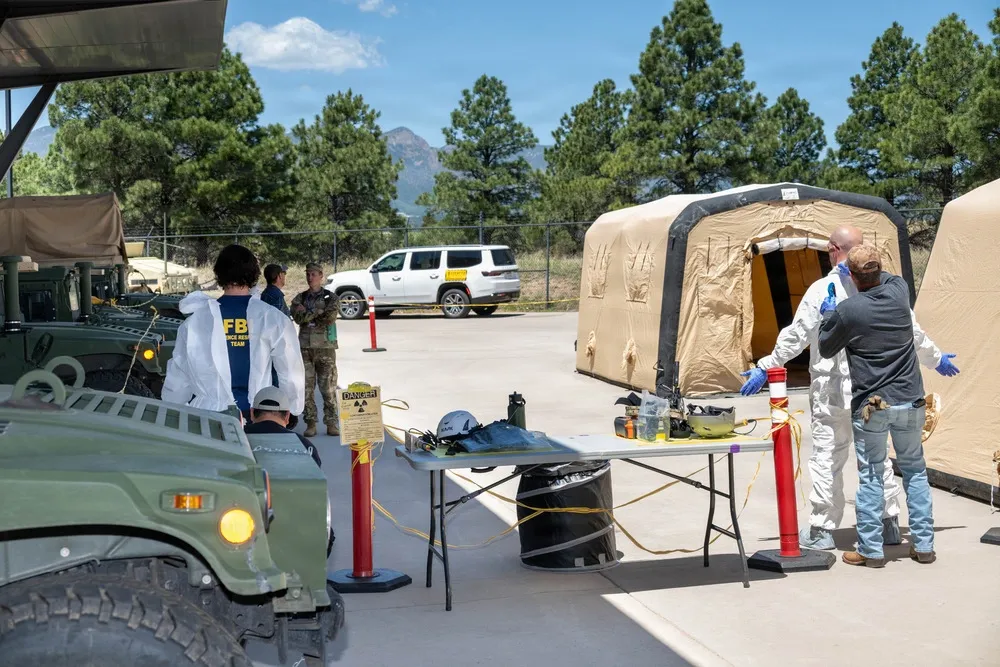
Everybody in the training wore multiple layers of protective gear, which they then removed and disposed of properly to facilitate decontamination.
The main purpose of the training, Koldjeski says, is to see what each agency brings to the table and figure out how to bring all of those “pieces of the puzzle” together.
If a real mass destruction event were to occur, Migoya said the first thing the National Nuclear Security Administration will tell the public is to get inside and stay there until they’re provided with more information.
After that, Koldjeski emphasized that people should monitor for public service announcements in local media and on official X accounts.
“In an event like that, there will be very specific directions for the public,” she said.