







Should autonomous weapons be allowed to kill? | Vince Bzdek

DECK: The pros and cons of automating war
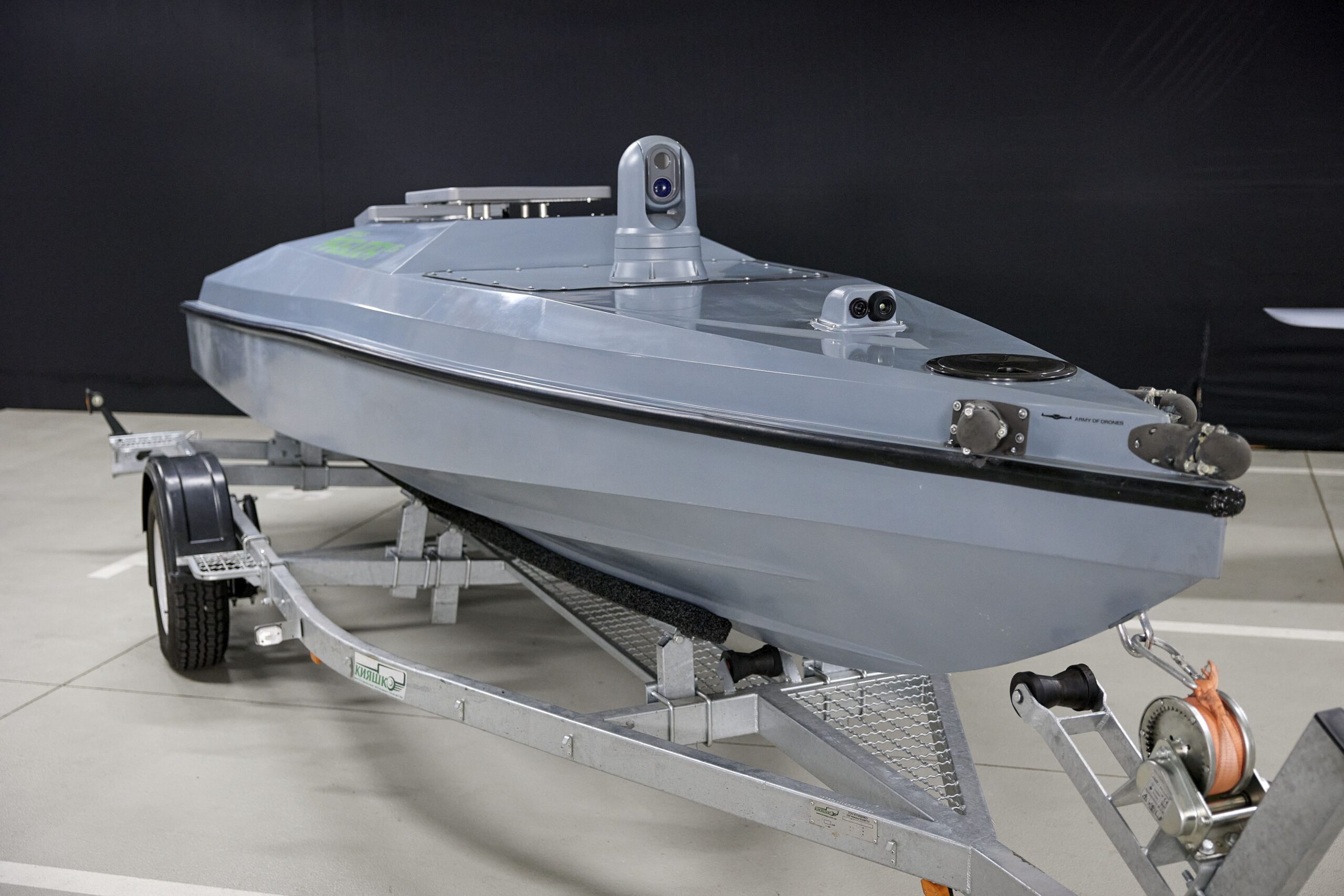
The practice of war entered a whole new era last week when the U.S. Navy used an autonomous Corsair sea drone to find and rescue two soldiers after their helicopter crashed in the Strait of Hormuz.
It is the first publicly known instance of an unmanned vessel rescuing people. The drone was used instead of sending in a ship or a helicopter because it was an area where people could have been shot at, military officials said.
Automated rescue is one thing. What about automated killing as the next phase of warmaking?
How much should we automate war? That is one of the most consequential debates in contemporary security ethics right now as more and more weapons are being designed to think for themselves.
Autonomous systems are already helping speed up the “kill chain” dramatically – the time it takes to find a target and strike it on the battlefield. The biggest question now is: Can we allow autonomous weapons to take a life? Are we ready to outsource death to robots?
According to a report in a publication called New Scientist, we’ve already crossed that line. A senior official in the Ukrainian defense industry told the publication that a test has already taken place in which fully autonomous “Terminator” drones were authorized to destroy anything in a given area.
Human-piloted drones were sent into the area after the test to check results, and confirmed victims included two Russian soldiers and one truck.
Although the use of AI is common in militaries around the world, humans are always in the loop right now and make the final call before the weapons are ordered to kill. The test in Ukraine was the first known instance of death by AI, and it was only a test. The Ukrainian government currently bans the use of AI in the final stage of intercepting targets, according to defense company sources quoted by New Scientist.
These are the known AI-enabled weapons systems either deployed or in active development as reported in military journals and articles:
Ukraine’s FPV and autonomous drones.
U.S. Replicator Program received $1 billion in 2025 to fast-track the deployment of thousands of expendable autonomous drones and surface vessels.
China’s drone swarms — At the 2024 Zhuhai Airshow, Norinco debuted an entire brigade of armored vehicles and drones controlled by AI.
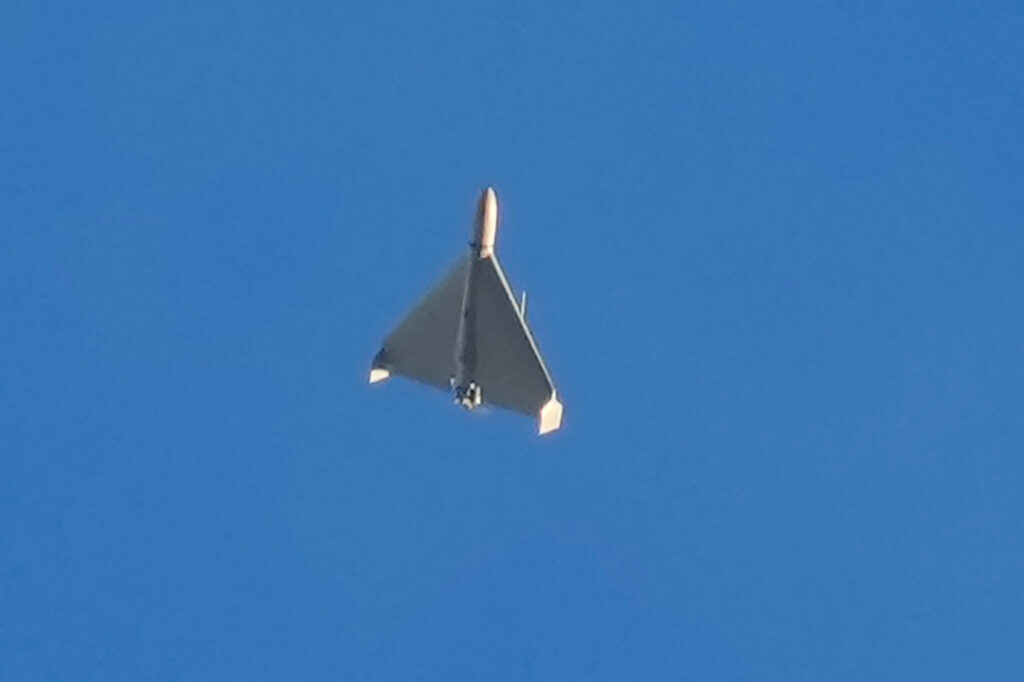
The Shahed (Iranian/Russian) and Switchblade (U.S.) are examples of suicide drones, or loitering munitions, that can autonomously detect and engage targets.
Israel’s Iron Beam — In late 2025, Israel accelerated deployment of a laser system that uses autonomous targeting to neutralize incoming threats at a speed no human operator could match.
The U.S. Phalanx CIWS and Israel’s Iron Dome already in use automated target engagement for incoming missiles and projectiles.
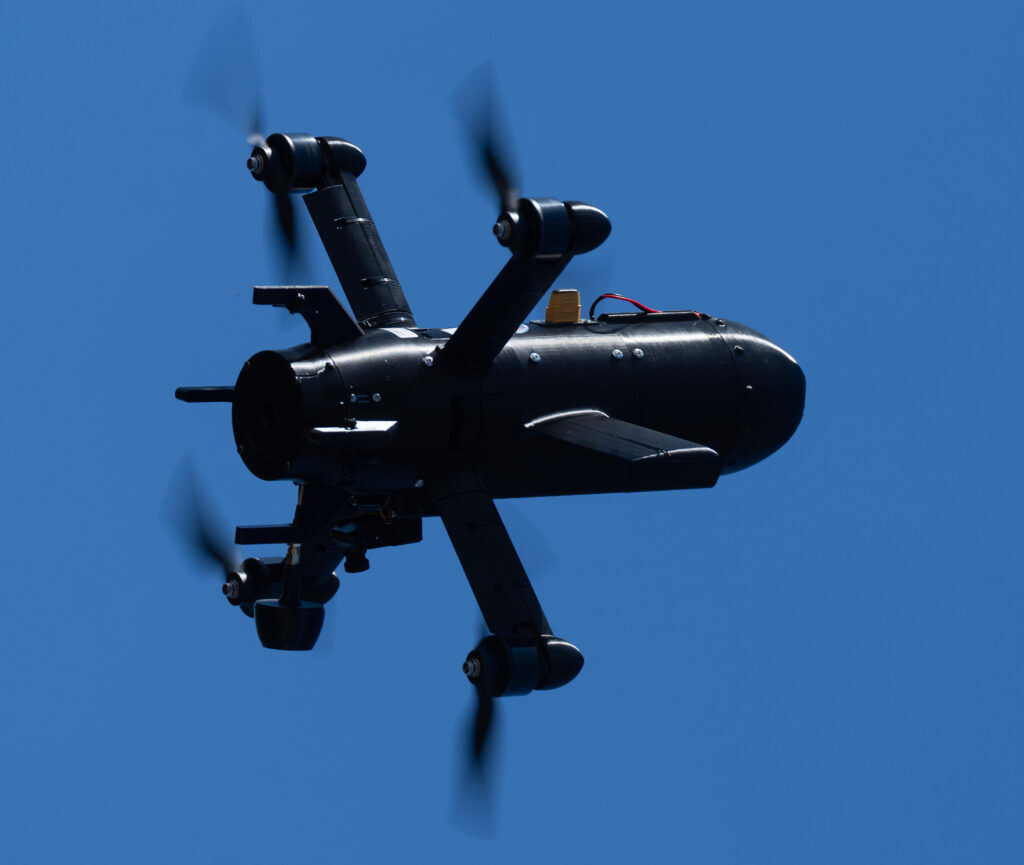
CCAs are AI-controlled unmanned wingmen designed to fly alongside crewed fighters, performing sensor extension, electronic warfare jamming, weapons carrying, and decoy roles. Prototypes from Anduril Industries and General Atomics are expected to be in production by 2028.
Autonomous drones are finding and attacking targets in Ukraine without human involvement, but only against tanks and equipment, not people.
But rapidly developing technology is making the line between autonomous and human blurrier and blurrier.
The U.S. already has software that collects and analyzes vast amounts of battlefield data and selects targets based on that data. However, humans still must confirm the decision to strike those targets.
But if autonomous weapons could save soldiers’ lives, and that decision needs to be made in the blink of an eye, the current reluctance to use them for war could begin to shift.
Here are the current arguments for and against autonomous weapons, as culled from military journals and recent articles:
The case for:
• Force protection. Removing soldiers from direct combat reduces human casualties on the deploying side.
• Speed advantage. AI systems can react in milliseconds, potentially neutralizing threats faster than human decision loops allow.
• Reduced fatigue errors. Machines don’t suffer from stress, exhaustion or emotional reactivity that cause friendly-fire incidents or poor targeting judgment.
• Scalability. A small number of operators can theoretically manage vast autonomous swarms, multiplying combat power without proportional personnel costs.
• Deterrence. The credible threat of autonomous systems may itself discourage aggression.
The case against:
• Who’s accountable? If an autonomous drone kills civilians, who is legally and morally responsible — the programmer, the commander, the manufacturer? International humanitarian law has no clean answer.
• Meaningful human control. The Geneva Conventions and laws of armed conflict require proportionality and distinction judgments that ask whether a machine can truly assess if a military target is worth civilian risk in a given moment.
• Flash war. Autonomous systems operating at machine speed could trigger conflict spirals before any human can intervene. A “flash war” analog to financial flash crashes becomes possible.
• Lowered threshold for war. If your own soldiers aren’t dying, the political cost of initiating conflict drops significantly — potentially making war easier to start.
• Adversarial manipulation. AI targeting systems can be spoofed, hacked, or trained to misclassify targets. An enemy that understands your training data can exploit it.
• Proliferation. Terrorist organizations and rogue states that get hold of such weapons could deploy them with no accountability structures at all.
• Dehumanization of killing. There’s a philosophical argument that the gravity of taking a human life requires a human being to bear that weight. Mariarosaria Taddo at the University of Oxford said this to New Scientist: “It’s not just problematic, it’s horrendous. Do we want to be the society … who allows their government to kill other people, without human beings involved?”
U.N. Secretary-General Antonio Guterres has called for an international ban on autonomous weapons that can kill without human intervention, saying that such weapons could violate international human rights laws by “removing human judgment from warfare.”
The International Committee of the Red Cross and a growing coalition of states are pushing for a binding treaty on Lethal Autonomous Weapons Systems (LAWS). The U.S., Russia, China, Israel and South Korea have resisted hard prohibitions, preferring “meaningful human control” as a softer standard.
Most military ethicists land somewhere in the middle, New Scientist found: AI-assisted targeting is defensible as long as a human remains in the loop; fully autonomous killing crosses a line most legal and moral frameworks aren’t built to handle.
But what if your enemy does it first?
Vince Bzdek, executive editor of The Gazette, Denver Gazette and Colorado Politics, writes a weekly news column that appears on Sunday.