







When it come to math, just do it | Pius Kamau
I recently had a fascinating discussion with an 11-year-old member of a group receiving prizes for excelling in math tests offered by state and national testing bodies. The youngest of a large number of students had done well in tests offered to eighth-graders and below. Since he loved studying math, how could other young people find it attractive? I asked.

I had my own ideas about math pedagogy, having watched as generations of American students were scandalously told, “math is too hard or impossible,” for certain ethnicities, while the same people sang hosannas of praise to Asian math prowess. We’ve all heard many an American parent assert, “I’m no good at math.”
“I just love working on problems,” my young friend said, while his mom attested he had not been coerced into studying math. The parents simply catered to his wishes after finding that he loved mathematics. Our discussion soon veered to the study of languages. Was learning mathematics not like learning French or Spanish? I asked. “Yes. Math is another language. It’s like learning how to play a musical instrument,” he responded. And here, a retired surgeon and a budding 11-year-old mathematician were in complete agreement. He would go far in life, I found myself thinking – just as two railroad workers in Mombasa once told me when I was my young math acolyte’s age.
As village kids we watched two men study for their railway promotion tests. I found it puzzling that reading books gave one knowledge. If knowledge was in books, what was the process of its acquirement? As I narrate in my forthcoming memoir, years later, one of the men would remember my insistent inquiry about books and knowledge: “You will go far,” he said.
We can learn what a good life is by contrasting it to a bad one. As so many decamp from mathematics and scientific learning, we must find ways to re-animate what is being lost and what I found in that large auditorium. A throng of math lovers who exuded a spirit of erudition and well-being, young people who had been immersed in learning mathematics and other subjects of study. Indeed, learning another language opens the door to the house of knowledge.
I firmly believe in the Latin dictum: mens sana, in corpore sano — a healthy mind in a healthy body. We can teach a child how to dance, paint, play ball, and also add a new language — math concepts. An easy language about circles, squares, numbers; addition, subtraction, and multiplication. It’s a simple language of acceleration and deceleration; of straight and curved lines; lines joining points — Cartesian concept. It’s a language of fractions — dividing fruit segments to share with classmates.
More importantly, it is a way of insinuating the vocabulary of the language of the universe into children’s minds, so that when they get to elementary school, math concepts form the lexicon of their discussion. There’s no question that a 12-year-old who has already learned about right angle triangles, hypotenuse and Pythagoras’ theorem will eventually find learning algebra and calculus intriguing and elevating.
Educators should “sell” learning mathematics as fun and elevating, instead of what actually happens. Children are scared with, “Math is too hard for you,” or, “You don’t have a head for math.” Studying math should be as enjoyable as studying literature, geography, writing and playing the guitar. Shakespeare’s work is full of mathematics. In fact Socrates — in his book, Meno — argues that mathematics and knowledge in general has always been in our DNA. All that teachers do is reignite what lies dormant in us.
A nation steeped in mathematics is a nation of rational leaders and citizenry. The opposite is true, too. A nation of leaders divorced of reason and logic, leaders un-seeking knowledge and enlightenment, is a crippled, non-mathematical country.
Those of us who eschewed learning mathematics in our younger days, should not be crestfallen. The door to mathematics remains open, all we have to do is open books of beautiful math concepts. None should ever say: “I am bad at math,” but realize that such a thought is already the start of a new journey to, ”I am good at math, and I am ready to open a book of algebra or geometry.”
Like someone who wants to learn to play an instrument, all you need is, “Just do it.”
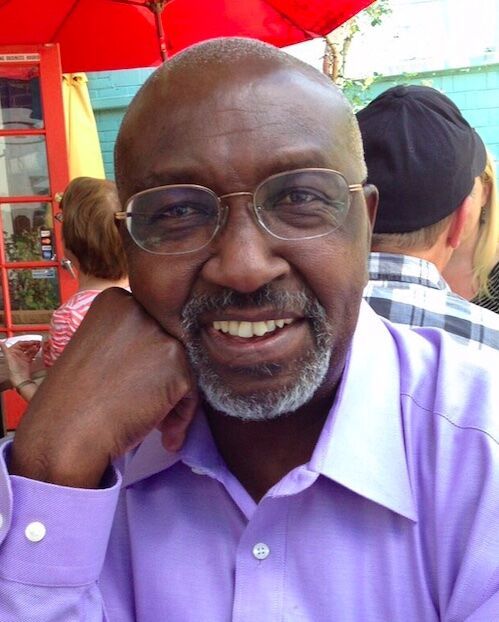
Pius Kamau, M.D., a retired general surgeon, is president of the Aurora-based Africa America Higher Education Partnerships; co-founder of the Africa Enterprise Group and an activist for minority students’ STEM education. He is a National Public Radio commentator, a Huffington Post blogger, a past columnist for Denver dailies and is featured on the podcast, “Never Again.”