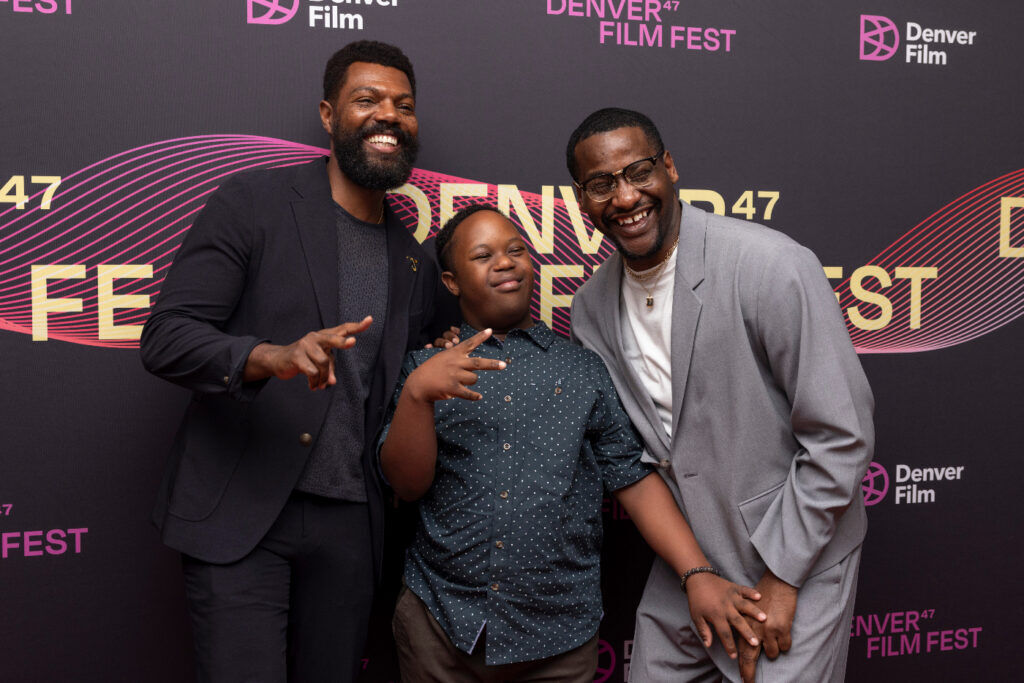
A father-son story for Netflix … and Fathers Day
History-making Aurora actor Jeremiah Daniels, 14, stars in moving drama about a grieving boy with Down syndrome
Jeremiah Daniels is a 14-year-old movie star with a megawatt smile that could light up a marquee.
Of course he has a girlfriend. Have you met this kid?
Comedy legend Melissa McCarthy has. (Not that she’s the girlfriend.)
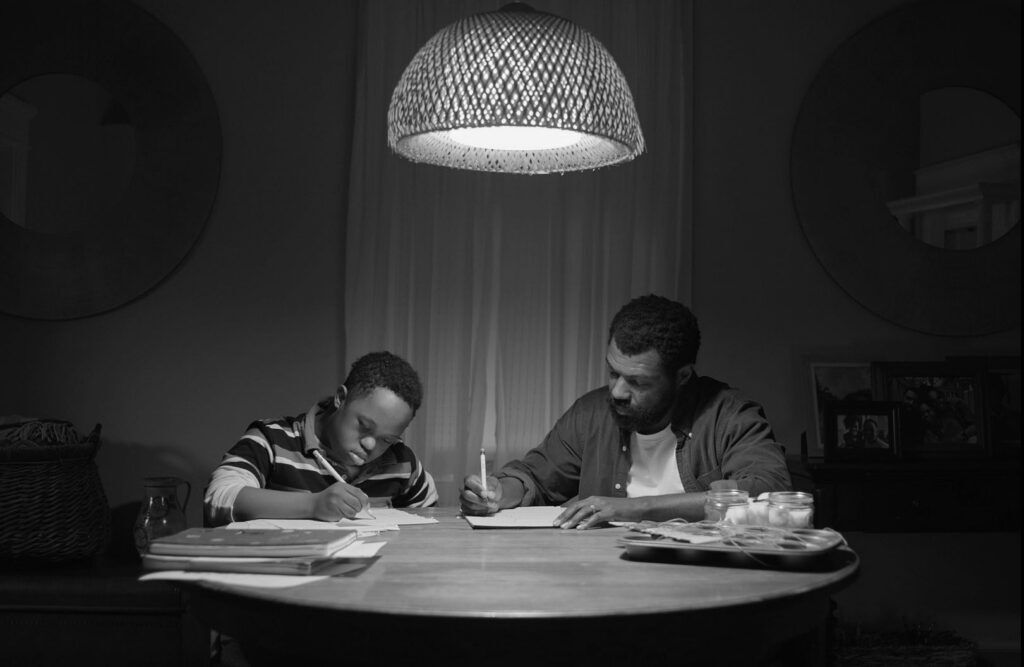
It happened at the 2024 Tribeca Film Festival in New York City. This was after the world-premiere screening of “Color Book,” a stunning black-and-white indie drama that follows a newly widowed Black father and his son with Down syndrome as they journey across metro Atlanta to attend their first baseball game.
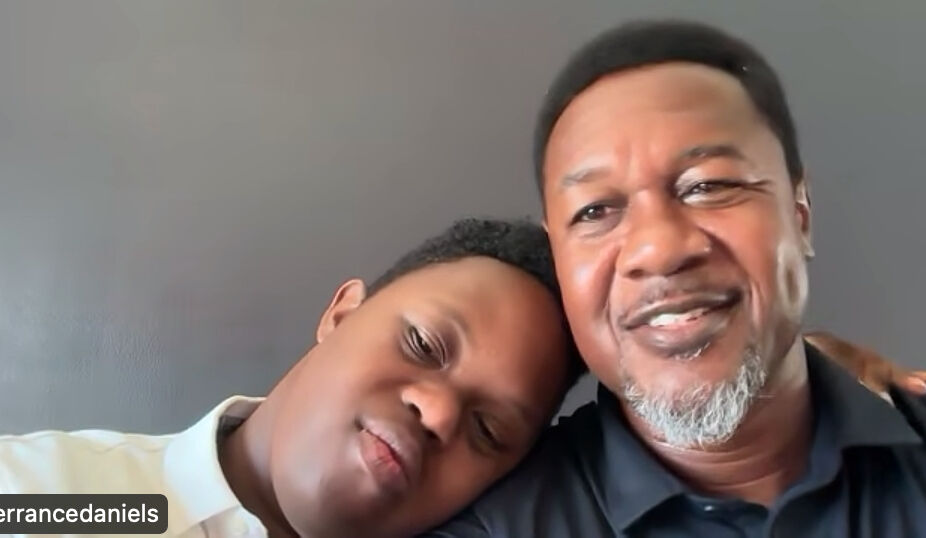
“We were out walking after the screening, and Melissa McCarthy came out of a restaurant just to tell Jeremiah that she had seen his movie at the festival and how great of a job he had done,” said proud papa Terrance Daniels. “So that was our first introduction to being recognized.”
It wasn’t the last. There’s been Jabari Banks, star of the Peacock drama series “Bel-Air.” Loretta Devine from the Netflix comedy “Family Reunion.” The brothers Hodge – Aldis and Edwin – from the Prime crime thriller “Cross.”
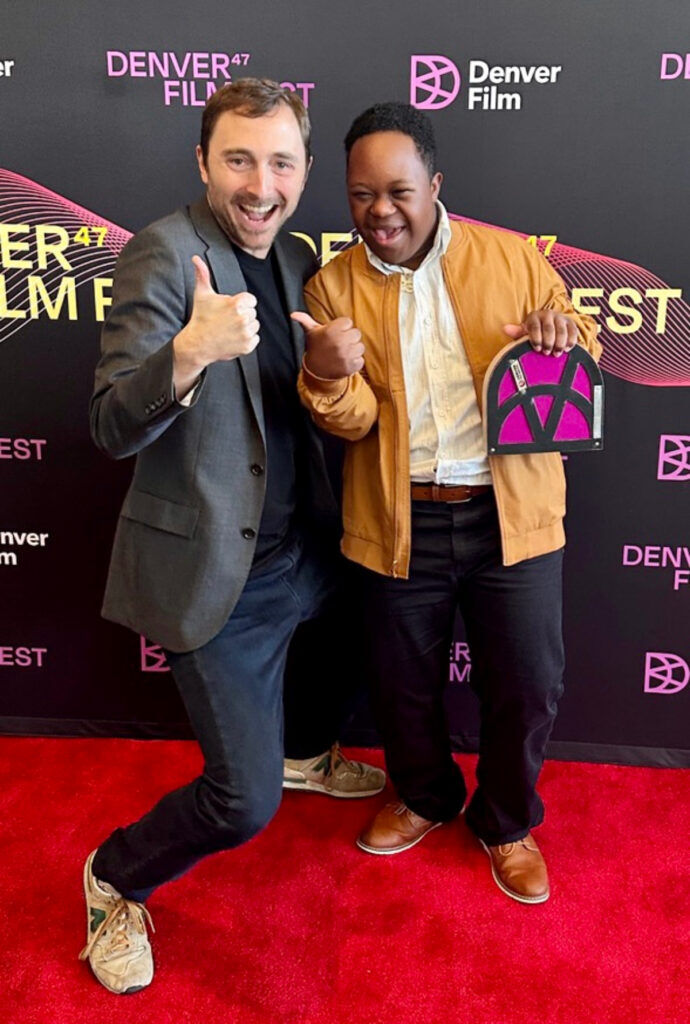
Jeremiah Daniels, now an eighth-grader at North Middle School in Aurora, has enjoyed a whirlwind few years since “Color Book” director David Fortune won a $1 million prize to develop his unique father-son story into a full-length feature film for exclusive launch at the 2024 Tribeca Film Festival. “Color Book” has since won 30 awards, including the American Independent Award from the 2024 Denver Film Festival. Denver Film Artistic Director Matt Campbell sees hundreds of films every year. “This is one of the few that got the emotions swelling in the old chest,” he said. “Color Book” then won the audience award at the 2025 Boulder International Film Festival. Jeremiah has made history by becoming the first actor with Down syndrome to be nominated for an NAACP Image Award.
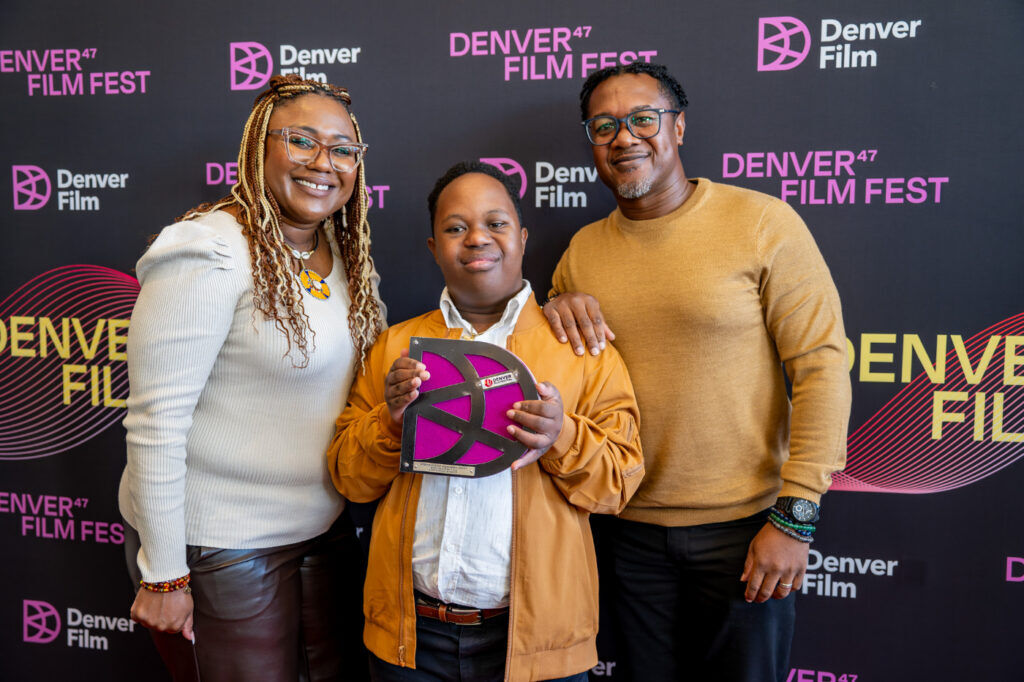
And, rest assured: His girlfriend’s heart is true. We know this because she hasn’t even seen “Color Book” yet. That will happen Friday, when millions get their first chance to see “Color Book” on Netflix. It stands to reason that more people will see the film on that first day of streaming than in two years of festival screenings combined. Terrance couldn’t be happier. For the film. Or for his son.
Video: Watch the trailer for ‘The Color Book’
“I’m excited that the world is finally getting an opportunity to see this movie, because it is a story that needs to be shared,” Terrance said.
It needs to be shared because historically, Down syndrome is the least-funded genetic condition in the U.S. And persons with Down syndrome are among the least-represented communities in Hollywood. The Denver-based Global Down Syndrome Foundation estimates that between 350,000 and 400,000 people in the U.S. are currently living with Down syndrome. About a third of them are people of color.
Many people surely know that Down syndrome is a genetic condition where a person is born with an extra chromosome. Instead of the usual 46, they have 47. Fewer likely know it’s this extra genetic material that alters how brains and bodies develop, leaving many like Jeremiah with distinct physical features, varied learning disabilities – and unique strengths.
But man – that smile.
Critics have been widely praising “Color Book” as an “an emotionally resonant, deeply moving and unapologetically genuine debut feature.” Actor William Catlett is being hailed for his magnetic and vulnerable performance as the grieving father, Lucky. And Jeremiah is being celebrated like a Hollywood rock star for his magnetic portrayal of his son, Mason.
Not bad for his first real acting job of any kind.
“Will Catlett and I would always come to set so serious and ready and prepared to knock out the day,” Fortune, the writer and director, said at a Tribeca Film Festival press event. “And then Jeremiah would come laughing and smiling and beaming with this joy that would uplift the crew from day to day. His presence always kept us going. We needed that joy in the film, and he really provided that, honestly.”
Up the Down staircase
Terrance Daniels moved to Colorado with his mother when he was a young boy. His family now – Terrance, wife Joi, Jeremiah and his three older siblings – live near the Anschutz medical campus. Jeremiah was living an expectably challenged yet joyful life when, one night, dad came across a Target TV commercial that featured a girl with Down syndrome.
Things that make you go, “Huh.” (Not with a question mark – but with a period.)
I was like, “I wonder how come we don’t see more children of color in these entertainment spaces?” Terrance said. “Specifically, children of color with Down syndrome.”
At that moment, the words of Terrance’s wife echoed in his head from his place on the couch: “Joi has always said that Jeremiah needed to be in front of the camera,” he said.
Needless to say: “My curiosity was piqued,” Terrance said of the Target ad.
And that’s when curiosity met happenstance.
Joi has a cousin who is a film producer in L.A. and Atlanta. When a “Color Book” official randomly contacted her to assess her interest in fundraising for the developing drama, she mentioned, “You know, my little cousin has Down syndrome.”
A photo request turned into a Zoom audition that changed everyone’s lives.
I asked Jeremiah what that was like, performing for strangers on a laptop camera for the first time. Was it fun? Was he scared?
“Oh, I’m not scared,” he said with smiling authority. Of anything, clearly.
“I was super excited, actually.”
Jeremiah was asked to read a couple of lines from the script. By then, he had been well rehearsed by his practical parents. He won the part, and the family was off to Atlanta for filming.
Terrance soon realized this was more than just playtime for Jeremiah – he was good. He knew it when his son took specific direction from Fortune – and delivered.
“It was for one of the heavier scenes, and Jeremiah was wanting to smile and kind of laugh through the piece, not recognizing the seriousness of it.” Terrance said. “But when David said, ‘Hey, I need you to lock in and stay focused,’ he took that instruction and delivered exactly what David told him he needed from him.”
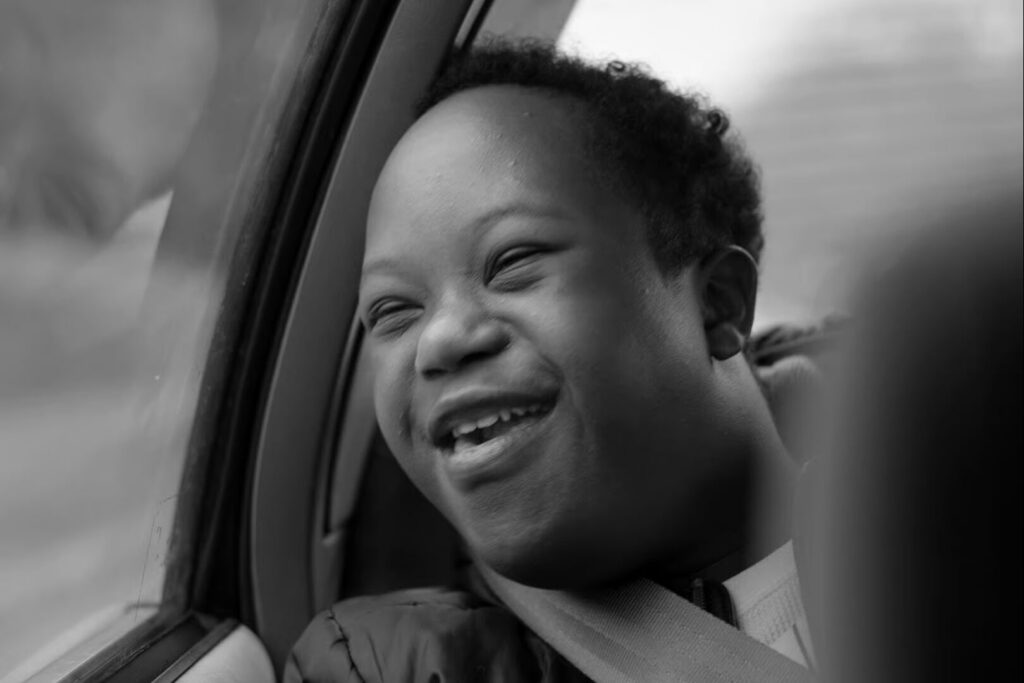
Jeremiah’s favorite scene to film, he said, is an early, tender sequence where Lucky and Mason are making breakfast together not long after the death of the boy’s film mother. It’s a poignant moment that showcases the challenging daily rhythm of a man raising a son with Down syndrome as a single parent. The critical scene is intended to establish the emotional center of the film. Here’s how Jeremiah described it:
“Pancakes and waffles!” he said with a large laugh, burying his head in his dad’s shoulder as if to say, “You get it, Dad.” It’s an instinctive move Jeremiah makes a dozen times during our conversation. Every time Jeremiah likes a given question, his smile explodes and his head reaches for a moment of instinctive physical connection with Terrance. It’s as joyful to watch in real life as anything in a movie.
But, point of clarification: “Any scene where Jeremiah had to eat food – he liked,” Terrance said with a laugh.
While Terrance’s wife is very much alive, the father-son dynamic Jeremiah shared with Catlett on screen resonated deeply with Terrance.
“In the film, Lucky is this loving, caring, guiding parent who is dealing very patiently with a tragedy,” he said. “And while I haven’t had that same tragedy, Jeremiah does move through life at a certain pace. Sometimes, when it’s time to go, he’s still trying to move at that certain pace, and that can be frustrating. In the film, Lucky is frustrated because, on top of parenting, he’s also having to deal with his own emotions – and that makes things a little more difficult. And I really know those moments when you’re just a bit frustrated, but you’re still moving forward with love – and you don’t want to get too overly into your own emotional side.”
For Jeremiah, the Tribeca premiere was the thrill of a lifetime – seeing all those people being impacted in such a positive way by his work, which was essentially play. He’d like to take on more roles now – like, maybe a fireman.
I asked him: “But wouldn’t it be fun to play a bad guy?” He dismissed the idea straight away.
“Oh, no. Not that,” he said definitively.
Then who?
“I want to be Terrance,” he said, burying his head you know where. “I want to be a dad.”
Talk about a moment made for Father’s Day.
What a week coming up
Father’s Day, speaking of, is next Sunday. It’s probably a coincidence that Netflix is dropping this quintessential father-son story two days before. But the connection means the world to Terrance. His face lights up talking about it.
“Father’s Day means a lot to me, because Jeremiah is my everything,” said Terrance. “Having not grown up with my own father, I try to do everything I can to make sure that he and I always have that father-son connection. So we talk about everything. He talks about his favorite thing – which is what, son?”
Jeremiah nails his cue like he’s still on a movie set.
“Food?” he said with a laugh. Terrance re-sets the question.
“Girlfriends,” Terrance told me. “He talks about being respectful to girls.”
I would have talked with Jeremiah about girlfriends all day, but this isn’t People Magazine. So, instead, I asked Jeremiah what it meant to be singled out by the NAACP as a positive role model for other kids, with or without Down syndrome.
“It’s very amazing,” he said.
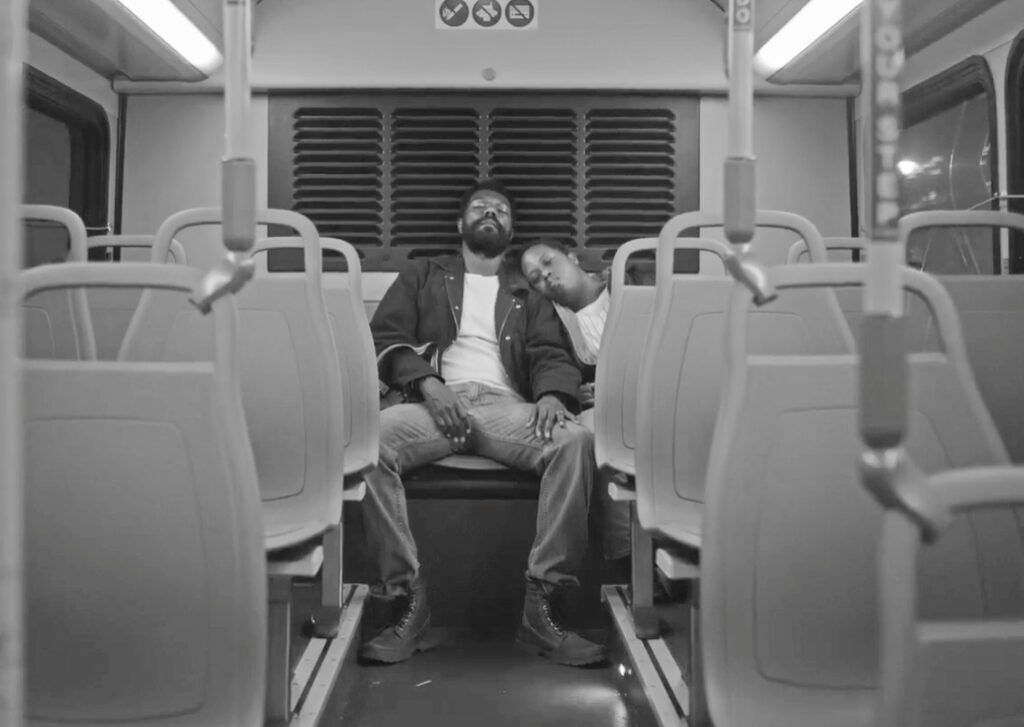
While “Color Book” will surely be seen in large numbers by members of the global Down syndrome community, Terrance sees an opportunity to impact audiences both in and out of it.
“For me, growing up, I didn’t see people with Down syndrome,” Terrance said. “They were kind of tucked away. I’m thankful that, in this day and age, it seems that having someone with an intellectual disability in close proximity to you is much more of a thing now – especially within public-school spaces. But for those kids who don’t have that, I hope, with this movie, they get to see that, whether with Down syndrome or, shoot, any disability: every child, they’re all just kids trying to make it through the world.”
When Jeremiah was born, Terrance and Joi Daniels were essentially told that their child “is” the diagnosis. “And we never agreed with that,” he said. “I want other parents of Down syndrome children to see from this film that there is hope for their child to be more than what the diagnosis says they can or can’t be.”
Daniels’ whole Hollywood-like venture into show business, he said, offers its own message about the dangers of limiting our expectations of children with disabilities of any kind.
“That danger,” he said, “is you’re not allowing the child proper space to grow if you’re not allowing yourself proper space to grow.
“We didn’t know what this experience was going to be, so we stepped out and said, ‘Hey, let’s just go wherever it takes us.’”
Time to convene
On Wednesday, two days before the Netflix drop, Jeremiah and his father will be featured guests at something called the International Conference of the Trisomy 21 Research Society (party!), which will bring leading Down syndrome researchers, clinicians, industry leaders, families, patient organizations and advocates from around the globe to the downtown Denver Hyatt. It’s being organized by the Global Down Syndrome Foundation, founded in 2006 by cable magnate John Sie after the birth of a grandchild with Down syndrome.
There’s no question the Sie family’s commitment to Down syndrome research has and will continue to positively impact the course of Jeremiah’s life and thousands like his. The Global Down Syndrome Foundation has played a critical role in a dramatic rise in life expectancy among persons with Down syndrome from roughly 25 years in the 1980s to nearly 60 years today, thanks in large part to rapidly advancing clinical trials.
The foundation, its programs, its referrals, its community building: “I think it’s all helped us tremendously,” Terrance said. More than anything, he added, is the hope it sends out to families in those darkest first few hours of a diagnosis.
“The initial message is always about what the child can and cannot do – and not very much information is given about how you can find the proper support to help your child have a normal life,” he said. “I do feel like the health message for children with Down syndrome has definitely been greatly amplified by the foundation.”
The calendar is offering one more layer of significance to the movie’s release with much of the nation also set to observe Juneteenth next weekend.
“I have no words actually to express how excited we are about that,” Terrance said of all these colliding calendrical forces. The streaming release date, the upcoming national conference, the NAACP nomination, Juneteenth, Father’s Day: “It’s all very, very exciting,” he said. “But for this movie to land on such a historical date – it just feels like it’s all supposed to happen this way. It feels right.”
If Terrance thinks all that is exciting, just wait till he learns what Jeremiah has planned for him on Father’s Day. (OK, he knows. He was sitting right next to Jeremiah when he told me.)
“I love him so much. He’s my pal. I’m going to take him to Ruth’s Chris!” Jeremiah said of the fancy steakhouse chain. This surprised the both of us listening.
“They must have paid you pretty well on that film,” I teased.
“I think I might be the one footing that bill,” dad interjected with a laugh. No matter. Not the point.
“I mean, to be a father at all is just great,” said Terrance. “I’m just thankful. Thankful for him, mainly.”
John Moore is the Denver Gazette’s Senior Arts Journalist. Email him at [email protected].