







Memorial Day is not enough | Michael A. Hancock
Memorial Day is necessary. It is not sufficient.
A republic needs days of remembrance: lowered flags, wreaths, music, and a national pause. But the thing remembered is not annual. The sacrifice was not annual. The grief was not annual. Lives given in service to this nation were not offered for a weekend, a parade, or a gesture each spring.
That is why the Colorado Freedom Memorial matters.
Located at 756 Telluride St. in Aurora, it is not merely a place to gather on Memorial Day. It is a standing rebuke to forgetfulness. It reminds Colorado that freedom was not paid for by anonymous “fallen heroes,” but by men and women with names, families, hometowns, courage, and interrupted futures.
To visit the memorial is to confront a truth free people evade: freedom is never self-created or self-protecting. It is inherited. And inheritance imposes obligation.
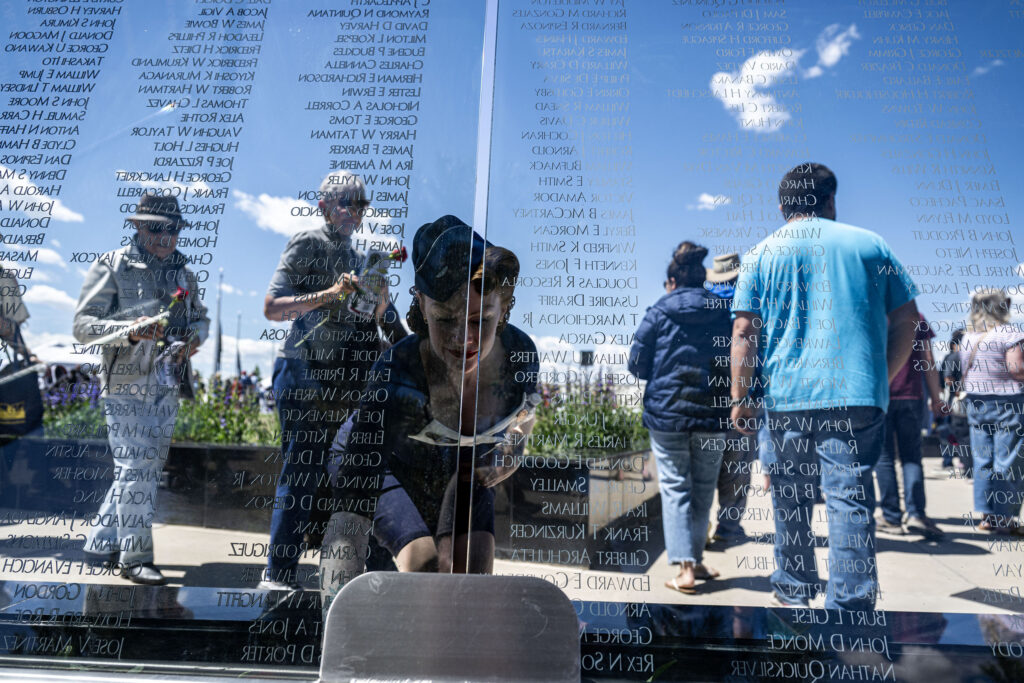
(Stephen Swofford, Denver Gazette)
We are good at enjoying what others secured. We are less faithful in remembering what it cost. Over time, rights become assumptions, peace becomes background noise, and citizenship detaches from the sacrifice that made it possible.
Consider Wallace Simpson.
In December 1917, during World War I, the USS Jacob Jones was torpedoed. The ship sank in about eight minutes. There was no time to send a distress signal. Power failed, and the ship disappeared. Men scrambled for rafts and wreckage. Some died in the explosion. Others were stunned when depth charges detonated.
Wallace Simpson was one of the few African American sailors serving in the Navy during World War I. He graduated from high school in Denver and enlisted. He kept serving even after segregation policies limited black service members to lower positions. On the Jacob Jones, he served as a steward. When the ship went down, he made it to a float. But the seas were brutal. Simpson, weakened by the blast, drowned.
There is cruelty in that story, but also nobility. Simpson served a country that did not yet fully honor his equality. Yet on the Freedom Memorial, his name stands among the others as an equal. The memorial gives him his rightful place.
That is not something to remember once a year.
Consider Ryan Baum.
Before he was a soldier, he was an Aurora kid. He graduated from Smoky Hill High School in 1997 and enlisted in the Army in 2003. In Iraq, he served as an Army Ranger medic. His fellow soldiers called him “Doc Baum.”
In May 2007, Baum was scheduled to come home on leave to see the birth of his first child. One more day. But before leaving, he volunteered for one last mission. His commanders advised against it. He was too close to coming home. But Baum would not let his fellow soldiers go without him. If they needed him, he would be there.
He was killed in Karmah, Iraq, on May 18, the day before he was supposed to come home.
Ten days later, Memorial Day arrived. It was a long weekend. For the Baum family, it was fresh grief. While others wished the weekend had one more day, his family wished Ryan had lived one more day. The next day, his daughter was born.
A three-day weekend cannot hold that story. A single ceremony cannot exhaust its meaning.
That is why the Colorado Freedom Memorial must be perpetually experienced, not annually visited.
It stands for Wallace Simpson, who served when his country’s promises had not caught up with its principles. It stands for Ryan Baum, who gave up his last chance to come home because duty called him out once more. And it stands for thousands more.
The danger in modern life is that we forget them comfortably. We do not deny their sacrifice. We place it on a calendar and return to the pleasures their sacrifice made possible.
But memory worthy of sacrifice must become more than ceremony. It must become discipline.
That is the promise of the Colorado Freedom Memorial and Visitor and Education Center. The memorial gives us names. The center will give those names stories and future generations a reason to return.
It is Rick Crandall’s call to make the second chapter real.
Crandall turned the realization that many Colorado families had no nearby graveside into a memorial where the fallen came home in the only way still possible. Now he is asking Colorado to finish the work by building a place where remembrance becomes instruction.
The center would allow students to encounter the stories behind the names. It would allow veterans, historians, families, and citizens to gather around service and sacrifice. It would make the memorial not only a place of honor, but a place of formation.
Rick Crandall’s appeal asks Colorado what kind of people we intend to be: a people who visit memory once a year, or build institutions capable of carrying memory forward.
Memorial Day tells us when to pause. The Colorado Freedom Memorial tells us why we must not stop remembering when the day is over.
The fallen are permanent witnesses.
We owe them more than annual remembrance. We owe them a living memory.
Michael A. Hancock is a retired high-tech business executive and a Coloradan since 1973. Originally from Texas, he is a musician, composer, software engineer and U.S. Air Force veteran whose wide-ranging interests — from science and religion to politics, the arts and philosophy — shape his perspective on culture, innovation and what it means to be a Coloradan.