







For some in our country, it was an unhappy Fourth | Pius Kamau

This Fourth of July was celebrated with great fanfare; this American experiment in democracy began with the Declaration of Independence and has survived tumultuous times and witnessed great triumphs of the American story. It has been a great 250 years, as historians describe it in different nuanced terms. Before the 4th of July celebration, and because members of the Ute and Muskogee tribes called it an “Unhappy 4th,” we discussed in our podcast what the Declaration meant to Native Americans. “Never Again,” a podcast of the Coalition Against Global Genocide (CoAGG) aims to discuss our many difficult human issues: hate, genocide.
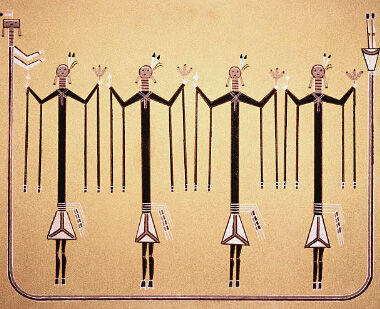
574 federally recognized Native American tribes were excluded when the 13 colonies declared their independence from the English King. “Our ancestors were not there,” children of American Native tribes say. For 250 years, they have survived living on a fraction of the land their ancestors once occupied before the White man’s arrival, looking on as the progress of the rest of America passed them by. Native Americans’ condition is defined by centuries’ old treaties; life in Indian reservations has not been a particularly happy one.
We also discussed more than the why of Native Americans’ Unhappy 4th . I don’t know a great deal about American Indian culture, history, politics and intertribal relations. Like most Americans I consider Native people as a uniform monolith, not unlike the way most Americans consider Africans — as similar people. American Indians constitute different tribes, different nations.
When the White man came to North America, all regions of the continent were occupied by hundreds of indigenous nations. To name a few: Algonquin, Iroquaoin, Cherokee, Seminole — East of Mississippi, and West of Mississippi: Sioux/Lakota, Cheyenne, Arapahoe, Pueblo — Hopi/Zuni. The West Coast was home to Tlingit, Haida, Chinook. Sub-Arctic and Arctic groups thrived for millennia before Europeans brought their guns and the Cross across America’s plains and mountains.
The U.S. government forced 60,000 Native Americans westward in the famous Trail of Tears, a fact Native Americans have never been allowed to forget in 250 years. Reservation life is a fact for those who live beyond the bright lights of our cities and lighted highways.
In our Podcast discussion, I was educated on various aspects of Native life and thought. I wondered about how my own tribal upbringing in colonial Kenya contrasted to that of Native Americans. My tribe, the Kikuyu’s god is Ngai, while Native Americans have a Creator, a less concretely defined entity than the Western God with his idiosyncratic demands and expectations.
The Creator placed the Natives on North American land where Europeans found them. He gifted his children massive herds of bison that were food for Indian tribes for millennia. He provided them with fertile lands, rivers and lakes full of fish. The many tribes lived side by side for thousands of years. One of the ladies remembered how her grandmother pointing up at the starry sky said, “the stars are our ancestors looking down on us.” The Creator never cast anyone into hell and others into heaven. The astronomer Carl Sagan believed we’re made of “star stuff.” When we die, we join the starry skies’ infinity.
My Native American friends’ voices were weighed down by 250 years’ of deep sadness and disappointment. On the other hand, our happiness and our celebration are of course totally understandable. We have come a long way: to include women, Blacks and others in the “all men were created equal” statement of the Declaration of Independence. Nonetheless, Native Americans are owed a great deal.
There is a great deal we can do to make the lives of all who live within the borders of this land better. Sadly though, within the MAGA context, there is little any of us can do to change the nation’s attitude towards Native Americans. Gratefully, the next 250 years are our children’s time and from what I see of them, they seem more open, more imaginative for a more inclusive America.
We cannot undo what the 250 years of American history has done. But we can acknowledge its unfairness, and perhaps endeavor to better conditions for Native Americans. And they, must broadcast to the greater world the miserable condition in their reservations. Americans believe in a fair shake for all occupants of these lands; they need to be educated on the facts of the last 250 years, the dire straits and history’s unfairness to the Native people of this country.
Pius Kamau, M.D., a retired general surgeon, is president of the Aurora-based Africa America Higher Education Partnerships; co-founder of the Africa Enterprise Group and an activist for minority students’ STEM education. He is a National Public Radio commentator, a Huffington Post blogger, a past columnist for Denver dailies and is featured on the podcast, “Never Again.”