







GUEST OPINION: Colorado Springs is building something bigger
Hypersonic weapons and long-range drones are straining the homeland-defense assumptions that helped keep America safe after World War II. They have already shaped battlefields in Ukraine and Israel, and future variants will be designed to reach farther, fly lower, maneuver harder, and overwhelm legacy defenses. Meeting that threat will require two longtime rivals – Colorado Springs, Colorado, and Huntsville, Alabama – to turn decades of competition into a national-security advantage and build the Golden Dome missile shield capable of detecting, tracking, and defeating the next generation of aerial threats.
Colorado Springs and Huntsville have competed since the dawn of the Space Age, most recently in a bruising fight over U.S. Space Command. But the requirements of the Golden Dome map directly across both communities. Colorado Springs is the operational center of America’s national security space enterprise, with the sensors, space operators, and command-and-control cells needed to detect and track missile and drone threats. Huntsville is the heart of American missile defense, where the engineering, integration, interceptors, and directed-energy capabilities needed to defeat those threats are built.
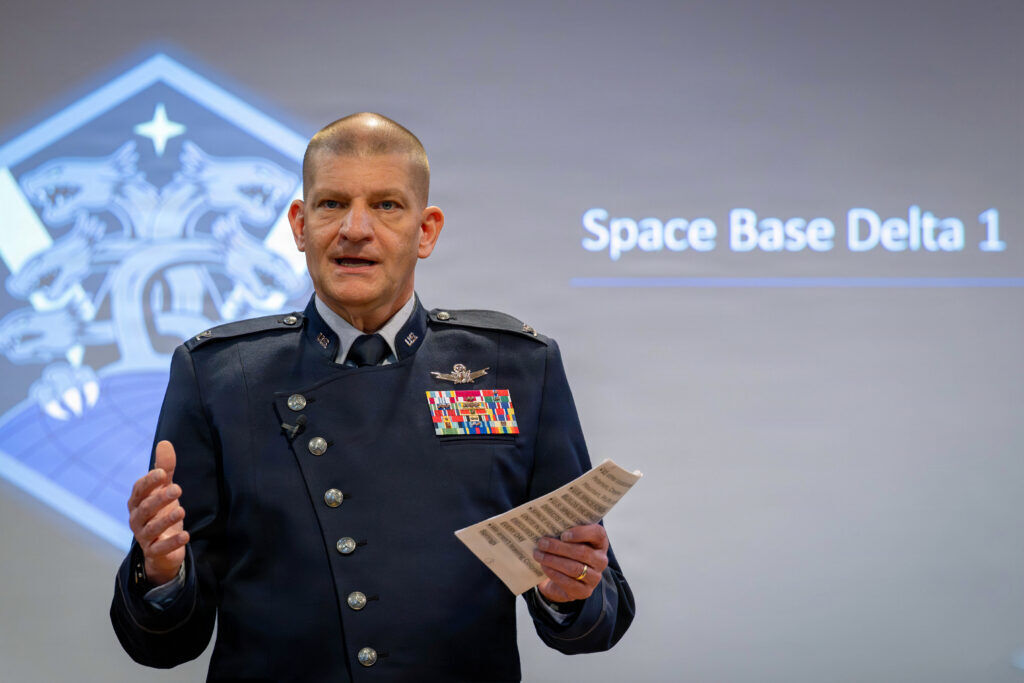
Neither city can do it alone. Golden Dome will require both communities to set aside old grievances and channel the same competitive energy that once divided them into solutions delivered at speed and scale.
That argument is personal to me. I spent years on Capitol Hill working in support of Colorado Springs and its military space mission, serving as Chief of Staff to Congressman Doug Lamborn throughout the U.S. Space Command basing decision process and helping direct the strategic effort to advance Colorado Springs’ case.
From inside that process, I saw the costs firsthand. The competition stretched across more than half a decade and multiple administrations, becoming one of the most drawn-out basing decisions in recent memory. It escalated through successive GAO and Inspector General reviews initiated from both sides. What was never in dispute was U.S. Space Command’s importance to national security. The members of Congress who fought hardest over its location agreed on the mission; they disagreed only over where it should be performed. As the process dragged on, even that distinction became harder to contain. The tension reached into the House Armed Services Committee, which had to fund Space Command’s path to full operational capability while a new headquarters facility remained on hold.
Above all, the uncertainty fell on the men and women of U.S. Space Command, who carried out a mission of national consequence for years without knowing where they and their families would ultimately be based. It also fell on the contractor base, on defense companies whose engineering teams were split across both communities and on residents of Colorado Springs who felt that something important was being taken away. It cut both ways: Huntsville was selected in 2021 after a competition it believed it had fairly won, then watched that decision reversed two years later. Both cities came out of the process with legitimate grievances. That is precisely why a deliberate partnership between them would carry such force.
Preparation for what came next began before the decision was final. In early 2025, I joined Congressman Jeff Crank, Lamborn’s successor, in working through how Colorado Springs should approach any outcome. Crank surrendered nothing. He continued to make the case forcefully for retaining Space Command, but he also understood that responsible leadership prepares for every outcome.
That foresight produced something more durable than a talking point. In June 2025, with the basing question still unresolved and Crank still publicly opposing the move, he and Huntsville Congressman Dale Strong co-founded the House Golden Dome Caucus, now the leading bipartisan forum for the President’s multilayered missile defense initiative. Two members on opposite sides of that fight chose, in the same breath, to lead together on the most consequential homeland defense effort in a generation. They set an example of the leadership this country needs: agreement on what matters, even amid disagreement on what does not.
The missions themselves are complementary. Missile warning and space domain awareness are conducted from Schriever Space Force Base in Colorado Springs; missile defense engineering and integration are centered at Redstone Arsenal in Huntsville. Satellite communications development, space program management and launch coordination span both. Advanced research and development in Huntsville feeds directly into operational systems flown and commanded from Colorado Springs.
Golden Dome will demand integration on a scale no previous program has required. It will need space domain awareness from Colorado Springs, missile defense engineering from Huntsville and an industrial base able to deliver at a scale neither city can provide alone. Golden Dome is coming to both Colorado Springs and Huntsville. The speed of delivery will depend on whether the two communities can operate as one national security enterprise.
At the Colorado Springs Chamber & EDC, my job has been to turn that strategic logic into durable institutions. That meant months of travel between the two cities and close work with the Huntsville/Madison County Chamber, whose leadership has been a committed partner from the start. The lesson has been simple: growing both cities is not parochial economic development; it is how we support the Space Force and the broader national security mission. In October, more than 60 senior Colorado Springs business leaders and elected officials will travel to Huntsville. That visit will not create a relationship. It will publicly recognize one that the defense industrial base has been living inside for years.
What makes this rare is not the partnership itself; civic cooperation happens around the country. What makes it rare is that one of those cities just lost a significant federal basing decision to the other and is leading the partnership anyway. That is the kind of civic behavior the Trump administration, the Pentagon and the warfighter should demand from communities that hold this much of the space enterprise.
Colorado Springs is not stepping back from this mission. We are stepping into a larger version of it, alongside a city being asked, like us, to do more. The strategic value of a coordinated two-city posture supporting U.S. Space Command and Golden Dome exceeds the stakes in the headquarters fight. Colorado Springs and Huntsville are bound by a mission that belongs to neither of us. It belongs to the country. That is the standard against which our partnership should be measured.
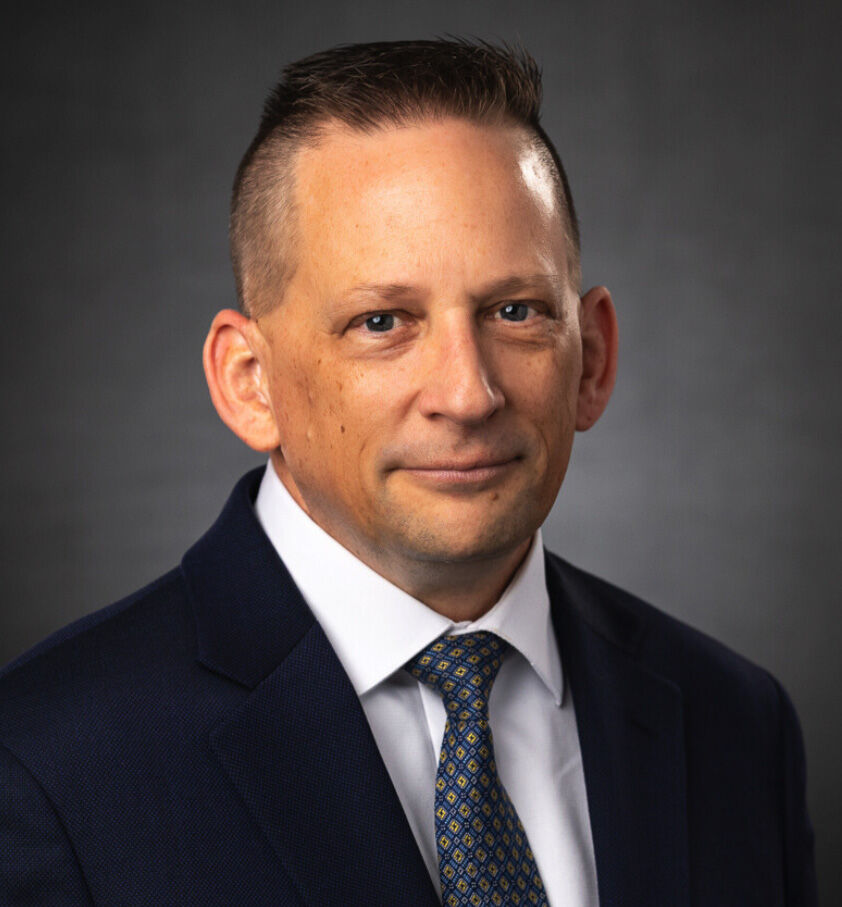
Dale A. Anderson is senior vice president for economic and defense development and government affairs at the Colorado Springs Chamber & EDC. He previously served as chief of staff to Congressman Doug Lamborn and as senior adviser to Congressman Jeff Crank.