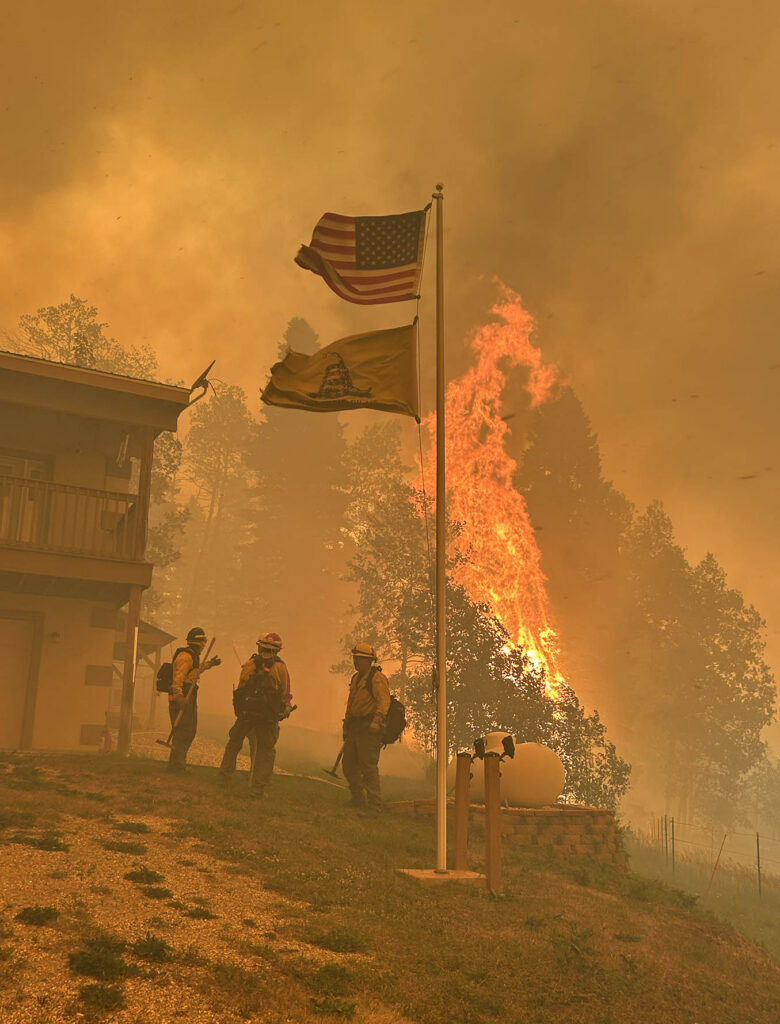
Inferno’s advance defied ‘usual’ fire behavior: Volunteer firefighter at Aspen Acres
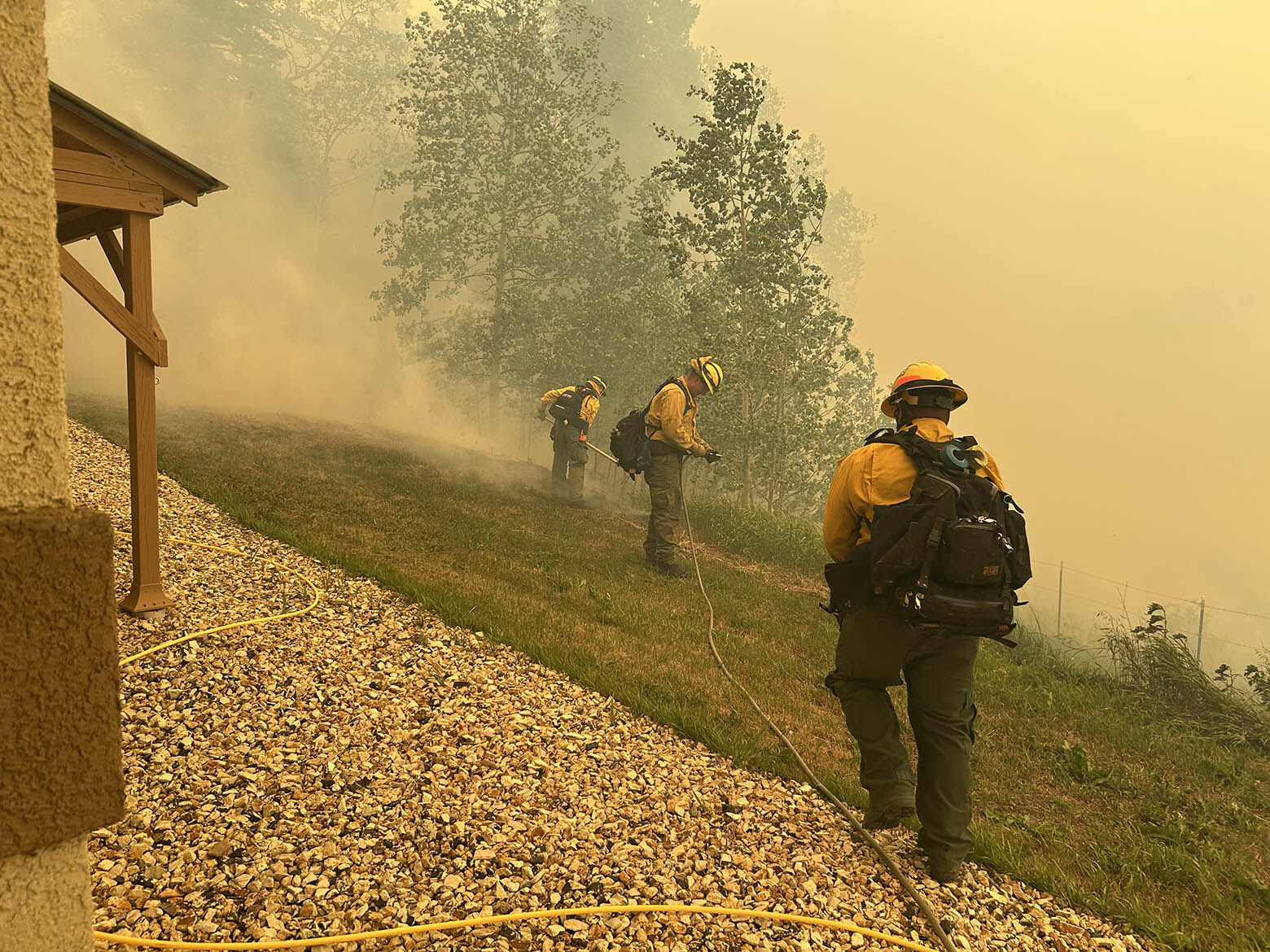
Like her fellow crewmates on the Southern Colorado Interagency Wildland Fire Team, 34-year-old Amanda Wood was no stranger to challenges that sometimes defied standard logic.
An Army veteran, EMT and Palmer High School science teacher, Wood trained to be a firefighter, then joined the all-volunteer agency in March. Less than four months later, she was among the earlier waves called out to battle the Aspen Acres fire, a fast-moving inferno that wasn’t playing by the regular rules of chaos.
Not only because of the strange storms that swept through, bringing winds but no rain.
Or the challenging terrain and dry fuels after a season of record-low moisture.
But because of how it fed.
“When we got there, it was about 23,000 acres, and you could see so much fuel left behind, a lot of still-green grass and trees, which indicated that the fire had moved very quickly,” Wood said.
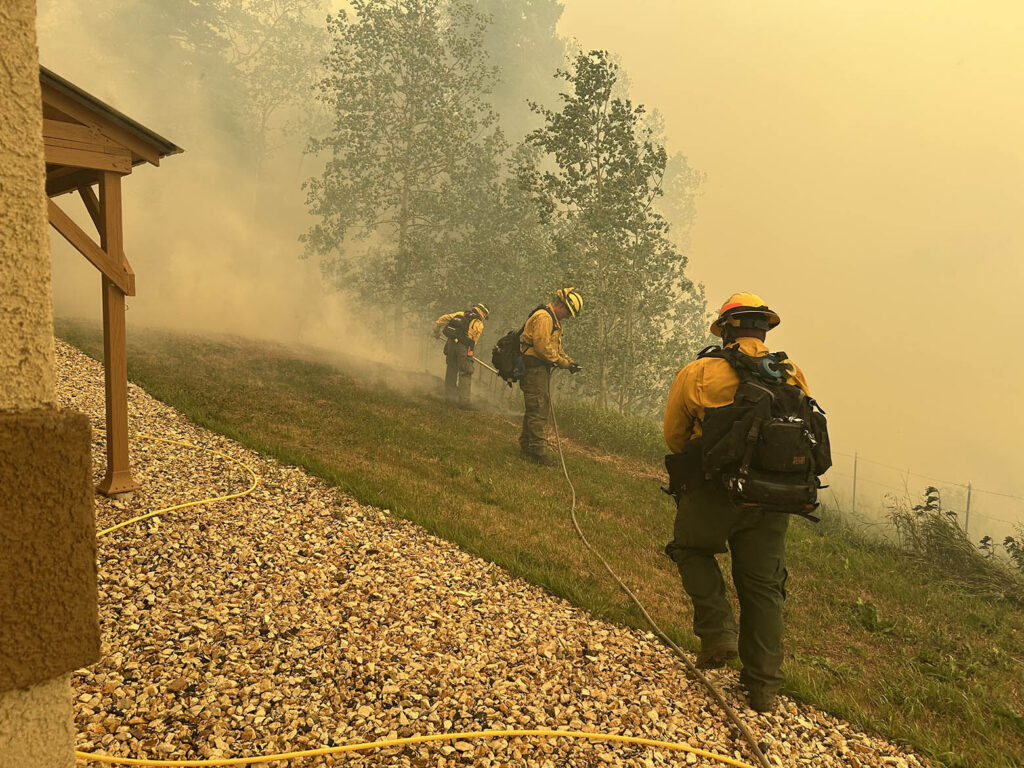
What the fire spared wasn’t mercy, but the fodder for more conflagration.
“With how dry it was, and because of the winds, there was a good chance it was just gonna go back and reignite,” Wood said.
Reignite, it did.
The first flare-up of what would become the state’s – at present – seventh-largest wildfire was reported early on June 29 near the border of Custer and Pueblo counties.
Within a few hours, it had exploded from an estimated 40 acres to more than 20,000, going on to quadruple in size and scope over the following days.
When Wood and her SOCO team, working alongside firefighters from Fort Carson, arrived at a temporary incident command post set up in Rye, she said she was among about 75 firefighters, ranks that within days would swell to more than 800 with the addition of state and federal resources and the arrival of the Alaska Complex Incident Management Team.
Wood was initially tasked with visiting and assessing homes in evacuated communities to determine which structures were “defensible,” and which were not.
“Our instructions were to go, mark homes … do what we could do to just prepare, and leave,” said Wood.
She was assigned to work the “heel of the fire” on the southwest side near its ground zero, the Aspen Acres Campground, where investigators now suspect the cause of the fire was “human” in nature.
“So we got out there and started marking homes, and it was very evident that the fire had moved super fast that first day,” Wood said.
They soon learned just how fast.
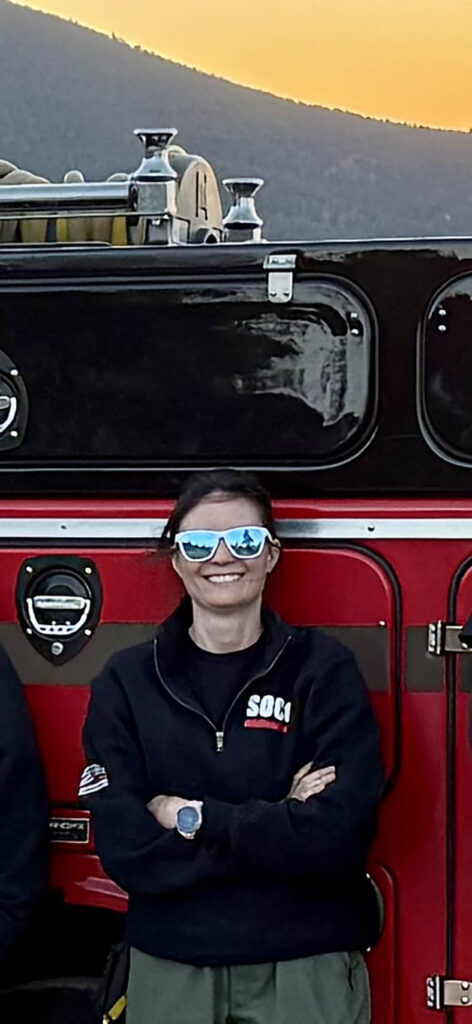
“We were protecting the Boy Scout camp for a little bit, and get a call to go move to a structure to protect that,” said Wood, whose team was called in on days 2 and 3 of the fire.
By the time they’d driven back flames from that structure, the camp was “up and in flames around that again.
“The fire was moving very quickly, in multiple directions,” she said. “Areas that looked like it was going to be done and where it looked like the fire was going to lay down, next thing you know the wind picks up again, and it’s blazing and it’s torching, going up into the trees.”
About that strange stormy weather:
The winds weren’t constant. Sometimes they stopped altogether, leaving an eerie stillness. What little moisture fell naturally from above wasn’t the kind that offered much help.
“We even had a hailstorm come through … then there was a rainbow going into the fire. It was wild,” Wood said.
She said she’s willing and prepared to return to Aspen Acres, even if it means fighting what often felt like an uphill and potentially deadly battle, against everything nature had to throw.
“That’s all you can do is keep trying, doing what we can do. And the number one thing is to always stay safe,” she said.
The recent deaths of three wildland firefighters – Emily Barker, Nick Hutcherson and Sydney Watson – in the Knowles fire in Mesa County, June 27, is “on everyone’s minds, of course,” she said.
That doesn’t mean she and her fellows – those who are paid to fight fires, and those who volunteer – will hesitate if and when the next call-out arrives.
“My availability starts again today,” Wood said Friday. “So yeah, if the opportunity comes up, then I’ll be back out there very soon.”