







Man sentenced for killing police officer in 2005 applies for early release
Courtesy of the Denver Public Library
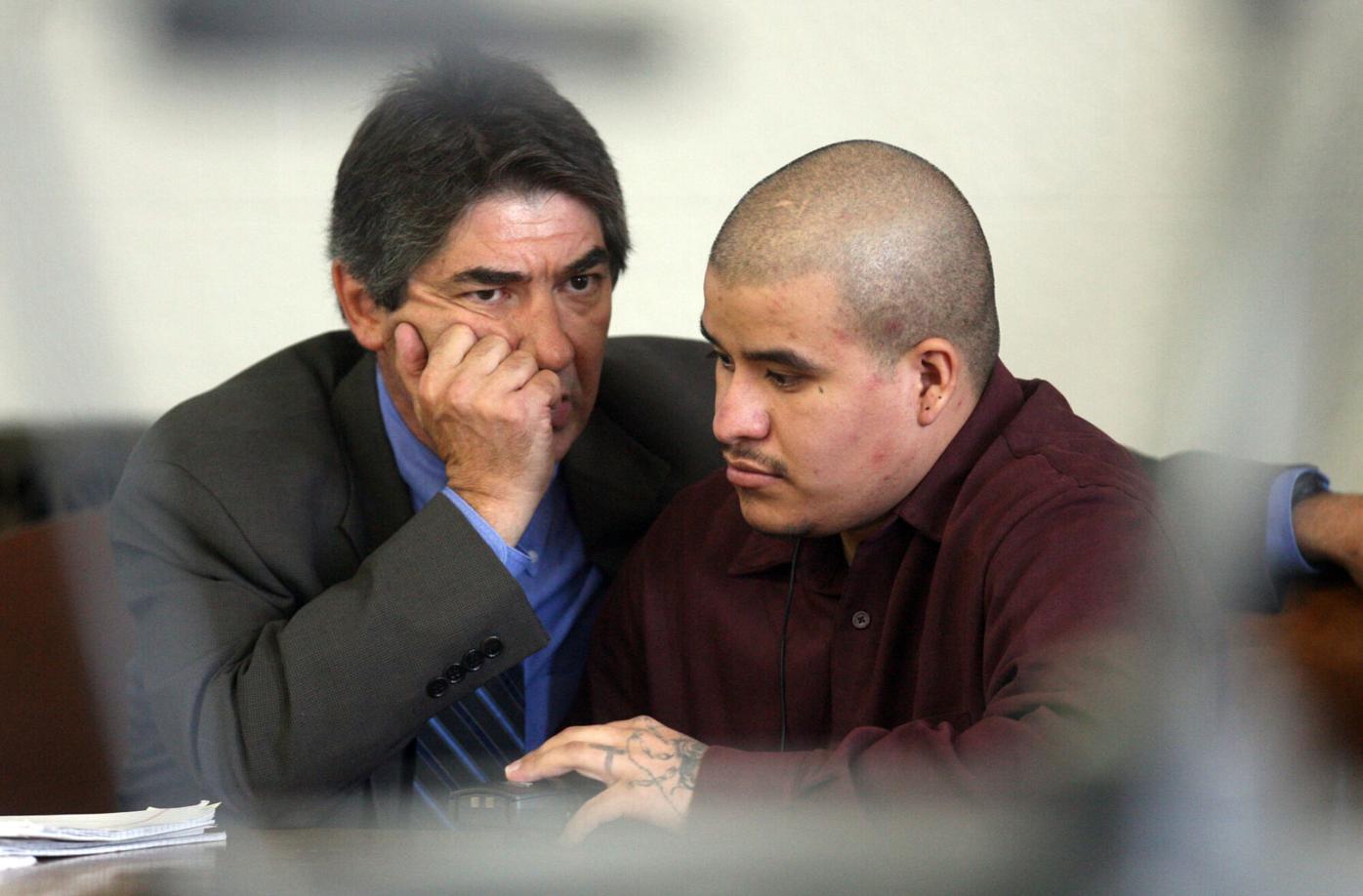
On Oct. 26, 2006, then 21-year-old Raul Gomez-Garcia was convicted and sentenced to 80 years in prison for the murder and attempted murder of two Denver Police Department detectives.
Nearly 20 years since the shooting, Gomez-Garcia, a Mexican national, has applied to receive early parole through Colorado’s Department of Corrections Program for Juvenile Offenders, according to a Colorado Department of Corrections letter obtained by The Denver Gazette.
The letter — sent on March 10 to the families of the victims — stated that Gomez-Garcia applied for the program and gave the recipients a chance to oppose early parole before the Parole Board and Gov. Jared Polis decide on the application.
If approved, Gomez-Garcia would only have served around a quarter of his maximum sentence. He was originally up for parole in 2053.
His sentence is already too easy for the crimes committed, according to former Denver District Attorney Mitch Morrissey.
“It’s basically cutting 25 years off his sentence. I don’t think he deserves that,” Morrissey told The Denver Gazette. “It’s a betrayal to this family – to Bishop.”
The case
On May 8, 2005, detectives Donnie Young and John Bishop were working off-duty, providing security at the Salon Ocampo Hall at 1733 W. Mississippi Ave.
A family was holding an invitation-only baptismal party. According to the family, Gomez-Garcia was not invited.
The two detectives eventually escorted Gomez-Garcia out of the hall. He then returned around 1 a.m. the next morning, while the party was still going on, and shot the two detectives from behind.
He shot Young twice in the back and Bishop once. Bishop was saved by his bulletproof vest. Gomez-Garcia then walked up to Young and shot him in the head, killing him.
A member of the MS-13 gang that originated in Los Angeles, Gomez-Garcia, who was staying in the U.S. unlawfully, fled to California before heading back to Mexico.
Florencia Castañeda Rodriguez, Gomez-Garcia’s grandmother, turned him in to the police when he arrived at her doorstep, according to Morrissey. He was arrested on June 4, 2005.
Gomez-Garcia was not extradited from Mexico for nearly two years.
“This was a really frustrating case for me to begin with because this guy got the benefit of almost everything that he did,” Morrissey said, reflecting on his first large case after he took the mantle of district attorney in 2005.
A treaty signed between the United States and Mexico in 1978 gave Mexico the right to refuse extradition if a person faced the death penalty. Due to Gomez-Garcia likely receiving a first-degree murder charge, and therefore the possibility of the death penalty, Mexico refused to extradite him.
Morrissey recalled meeting with Young’s wife and his two daughters, who likely don’t remember their dad.
“We had to sit down and explain that we had to give up our opportunity to hold him responsible for what he did,” Morrissey said. “We had to compromise the case from the beginning.”
Eventually, Morrissey agreed to only charge the man with second-degree murder and first-degree attempted murder — neither applicable for the death penalty.
Due to the outcome of the case, a bill was signed into federal law in November 2005 that would allow the U.S. to cut aid to countries that refused to extradite a person suspected of murdering a United States law enforcement agent.
The trial
Gomez-Garcia’s trial began on Sept. 5, 2006 and lasted until Oct. 26. He was found guilty of both charges and sentenced to the maximum penalty — 48 years for second-degree murder and 32 years for attempted murder, both running consecutively.
“In my 33 years as a prosecutor, I have never seen a murderer as proud of the act that he did as this guy,” Morrissey said of Gomez-Garcia.
Gomez-Garcia’s defense attorneys asked for him to miss the verdict and sentencing because he had shaved a massive MS-13 into the back of his head.
“This was a guy that was proud that he killed this officer,” Morrissey said. “When arrested in Mexico after being turned in by his grandmother, he told the U.S. Marshall that he was glad Donny had died.”
Program for juvenile offenders
Colorado passed legislation in 2016 that retroactively eliminates life sentences for juveniles.
In the same year, a separate bill — Senate Bill 16-180 — was passed, creating the program for juveniles convicted of felonies as adults.
Depending on the severity of the offense, convicts can apply for the program after serving 20 years. After a convict completes the three-year program, they are eligible to apply for early parole. The governor must approve the early parole.
In 2021, lawmakers expanded the age range of people able to apply for the program, allowing prisoners to apply if they committed crimes before they were 21.
Gomez-Garcia was younger than 21 at the time of the shooting.
Although Gomez-Garcia is technically eligible, Morrissey said that he should never be eligible for early parole. To Morrissey, Gomez-Garcia never even got the actual sentence he deserved.
“This isn’t the high school kid that made a bad, impulsive decision,” he said. “This is was an adult that got kicked out of a baptism at a club. That’s why he came back and ambushed them.”
If Gomez-Garcia were to receive early parole, Morrissey theorized that he would likely be deported immediately back to Mexico, especially under President Donald Trump’s administration.
Gomez-Garcia lived his entire life in the United States and has no personal ties to Mexico, according to Morrissey.
“He has no reason not to come right back to the United States if he gets deported. Then, he’s not under anyone’s supervision,” he said.
The victim and family of the victim have until March 24 to return a victim impact statement.