








EDITORIAL: Don’t herd Coloradans into density zoning

Colorado’s governor and legislature are leading us all down a primrose path to density zoning. It’s a wonky term for cramming more housing into less space. There’s even an attempt at an elegant variation — the more marketable “gentle density” — meaning, wedge more expensive multiplexes between single-family homes.
It’s the hobby horse of the self-styled urban visionaries at the Capitol who purport to know better than the rest of us how we could live more “sustainably.” Foremost among their priorities toward that end is to get more of us to live closer together.
All of which is fine and well for those who choose it. There are neighborhoods aplenty in the population centers along Colorado’s Front Range — both urban infill and out on the periphery — that offer the intimacy of sharing walls with neighbors, retail and the like. And, of course, traditional apartment living always has been a fallback for those of modest means and an entry-level first stop for young workers and professionals starting out on their own.
Yet, fully two-thirds of Coloradans live in single-family homes, in single-family neighborhoods. And now, whether they like it or not, the state as well as some Colorado municipalities are trying to undermine them — by force. State-imposed changes to local zoning codes, pushed through the General Assembly by Gov. Jared Polis over the past two years, mandate a host of revisions to land-use rules on matters ranging from housing units per parcel to parking.
Six Colorado cities are fighting back, challenging the new state laws’ constitutionality in court.
But some other cities are caving in, even embracing the governor’s agenda out of a misguided belief that uprooting their single-family-home neighborhoods will lower housing costs.
As reported in The Gazette this week, Lakewood’s City Council has done just that. By a 9-2 vote, the council erased the use of single-family zoning, allowing for multi-family homes like duplexes and condos to be built in those areas. Many Lakewood citizens are justifiably angry.
The council majority claims the move somehow will make housing in the west-metro suburb more affordable. In a strictly textbook kind of way, it’s plausible. Theoretically, it could increase the number of dwelling units at some point. More supply, lower prices, right?
But connecting those dots in the real world — with all the practical factors that figure into the Front Range’s real estate market — is quite a stretch. Far more likely, the sweeping policy shift only will disrupt the American dream.
It’s a long-cherished aspiration — four walls to oneself with a small patch of land all around — and the state has no business barging in.
Nor does it make sense for local governments to pull the rug out from under neighborhoods where long-standing zoning rules have protected the property values — and the historic right to the peaceful enjoyment of one’s property — of single-family homeowners for generations.
Experimenting with greater density in new, master-planned communities that don’t displace prior neighborhoods and their lifestyles may be reasonable. That also applies, arguably, where urban blight already has deprived a long-declining area of livability, typically in an inner city.
But wherever it’s already established and thriving, Colorado’s predominant and perennially most popular mode of living must be respected and protected.


EDITORIAL: Don’t backtrack on Aurora’s big strides
The Gazette Editorial Board
thegazette-editorial-board@gazette.com
Updated 2 days ago
Aurora already has been down the well-beaten path toward urban despair. Crime, both serious and petty, proliferated in some neighborhoods in the not-too-distant past. The city’s streets teemed with chronically homeless substance abusers, who littered public spaces with their tent...

The Gazette Editorial Board
Reporter

EDITORIAL: Colorado’s wolf experiment has run its course
The Gazette Editorial Board
thegazette-editorial-board@gazette.com
Updated 3 days ago
When the U.S. Fish and Wildlife Service threatened to terminate Colorado’s ability to oversee the reintroduction of gray wolves last month, it was the latest in a string of setbacks for the misbegotten, beleaguered project. As The Gazette reported, a...
The Gazette Editorial Board
Reporter

EDITORIAL: A needed crackdown on Colorado’s child trafficking
The Gazette Editorial Board
thegazette-editorial-board@gazette.com
Updated 4 days ago
As reported this week by our news affiliate Colorado Politics, lawmakers are promising a new foray against child trafficking when the 2026 legislative session convenes at the Capitol next week. It’s welcome news. Colorado is believe to be in the...
The Gazette Editorial Board
Reporter
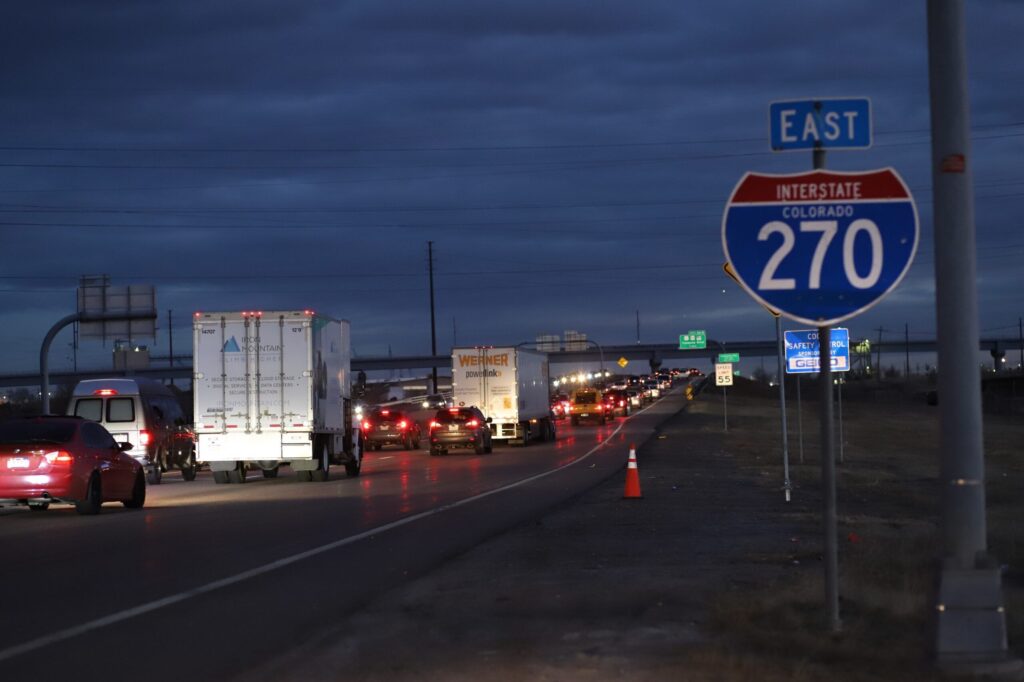
EDITORIAL: Colorado’s transportation dreamers deny reality
The Gazette Editorial Board
thegazette-editorial-board@gazette.com
Updated 5 days ago
A tussle over gridlocked traffic along Interstate 270 north of Denver in Commerce City offers a telling snapshot of the statewide debate over the future of transportation. It’s a potent reminder of the phony pretexts and ulterior motives driving the...
The Gazette Editorial Board
Reporter

EDITORIAL: Colorado’s criminal suspects game ‘incompetency’
The Gazette Editorial Board
thegazette-editorial-board@gazette.com
Updated 1 week ago
Criminal suspects who are deemed mentally incompetent — unable to grasp the charges against them — have the right in Colorado not to be prosecuted on those charges. But they also shouldn’t simply be turned loose to endanger others. Too...
The Gazette Editorial Board
Reporter

EDITORIAL: Need a job? Ask our state government
The Gazette Editorial Board
thegazette-editorial-board@gazette.com
Updated 1 week ago
Colorado can’t shake a troubling employment trend. The latest jobs report reveals the state increasingly relies on government hiring to prop up overall employment numbers — offsetting private-sector job losses. The Common Sense Institute first flagged the problem in an...
The Gazette Editorial Board
Reporter

EDITORIAL: Denver grows its homelessness-industrial complex
The Gazette Editorial Board
thegazette-editorial-board@gazette.com
Updated 1 week ago
Mayor Mike Johnston’s latest pending pratfall on homelessness — having ex-cons staff Denver’s most troubled, city-run homeless hotel — is starting to look even worse. It turns out the San Francisco nonprofit that will employ offenders to run the city’s...
The Gazette Editorial Board
Reporter

EDITORIAL: Restore Colorado water project ASAP
The Gazette Editorial Board
thegazette-editorial-board@gazette.com
Updated 1 week ago
Without getting into the political intrigue that typically underlies any face-off between the White House and other elected officials in either party — let’s just say President Trump was wrong on Tuesday to jettison legislation for a pivotal water project...
The Gazette Editorial Board
Reporter

EDITORIAL: Polis plays games with utility rates
The Gazette Editorial Board
thegazette-editorial-board@gazette.com
Updated 2 weeks ago
It was only a couple weeks ago when tens of thousands of Coloradans lost power — many for days — because of deliberate, preemptive blackouts ordered by Xcel Energy. It took Gov. Jared Polis about a week, it seems, to...
The Gazette Editorial Board
Reporter

EDITORIAL: Let Colorado law officers hand criminals to ICE
The Gazette Editorial Board
thegazette-editorial-board@gazette.com
Updated 2 weeks ago
Even a progressive Democrat like Gov. Jared Polis has acknowledged the need to help federal authorities rein in the criminal element among our state’s substantial population of illegal immigrants. After all, Polis realizes the public is fed up. Yet, his...
The Gazette Editorial Board
Reporter
PREV
PREVIOUS

GUEST OPINION: A call to confront Colorado’s mental health crisis
Mental health touches us all. It’s not a distant issue — it’s here, in our schools, workplaces, neighborhoods, and homes. It’s the teenager battling anxiety, the parent weighed down by grief, the first responder absorbing trauma from every call. And when needs go unmet, the ripple effects are devastating — seen in lives lost, families […]

A small rebellion against nannies in Denver | CALDARA
Of all places to find a growing citizens’ rebellion against the nanny state, who’d guess it’s happening in woke Denver? Take note — if Denverites can claw back a little freedom from their elite, it can happen in your city too. In this city of 70 breweries, 2,000 liquor establishments, some 300 cannabis dispensaries and […]