







How the Avalanche’s arrival in 1995 turned Colorado into a thriving youth hockey market

With nearly 13,000 youth hockey players registered through USA Hockey last year, the sport of hockey is as popular as it’s ever been in Colorado.
How did the game grow so fast and extensively within the state? It didn’t happen overnight.
Hockey didn’t suddenly appear out of nowhere in Colorado when the Avalanche arrived in 1995. It had been a part of the sporting culture long before then. The University of Denver, which owns the most NCAA championships with 10, had won five titles before the Avalanche came to town. Before the Avalanche, you had the NHL’s Colorado Rockies, who called Denver home from 1976 to 1982. Colorado College had a Division I squad. Colorado was no stranger to the game.
But there’s no denying 1995 was a huge year in Colorado for the sport, and not just because of the Avalanche.
“In ‘95, the Denver Grizzlies came in and won the Turner Cup in the IHL, so people had a taste for success,” Angelo Ricci, a former DU forward and the executive director of the Colorado Thunderbirds, told The Denver Gazette.
Fresh off the plane from Quebec, the Avalanche satiated hockey Colorado’s hunger for success, winning a Stanley Cup in their first season thanks to a loaded roster masterfully concocted by president and general manager Pierre Lacroix. With multiple championships at the college and professional levels, hockey gained more traction in the state. More parents were interested in getting their kids involved in the game.
That’s when Colorado hockey really started to take off.
“(Our) 1994 (team, in birth years) was our national championship team. That was one of our best age groups ever,” Ricci said. “(And) 1996, 1997, 1998, (were) all very talented birth years, so you see the residual impact of kids wanting to play hockey because parents had babies in those years and it just boomed.”
“Very talented birth years” is putting it lightly. Some of the names from Ricci’s teams in those birth years include current and former NHL regulars Brandon Carlo, Dylan Gambrell, Michael Eyssimont, Troy Terry and one of the best defensemen in the world, Jaccob Slavin.
With the Avalanche in town and selling out an NHL-record 487 consecutive games at McNichols Arena and Pepsi Center, hockey was hot. Kids wanted to play, but where?
“You can’t play if you don’t have rinks, right?” said John McKibbon, the executive hockey director at Arvada Hockey Association.
They built it, and the kids came.
***
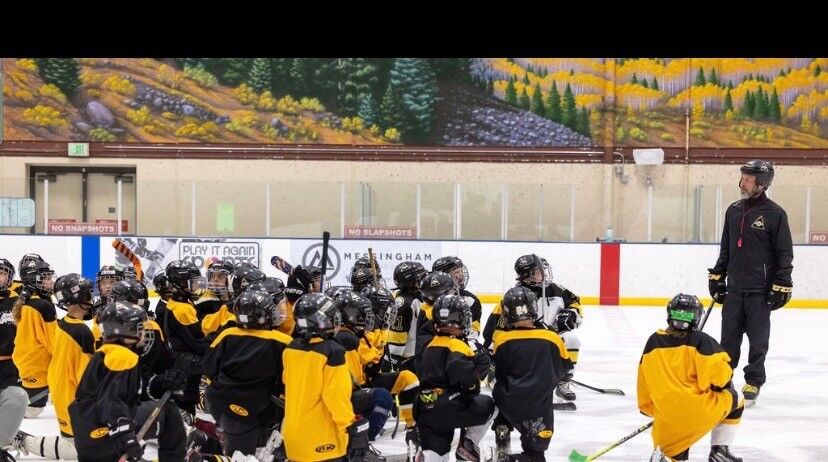
In the decade following the Avalanche winning the Stanley Cup in 1996, several new rinks in the Denver metro area popped up: Family Sports Center in Centennial, Big Bear in Lowry, Joy Burns in Denver, Apex in Arvada, Promenade in Westminster and the Edge and Ice Ranch in Littleton.
With ice to use, the game flourished. Youth USA Hockey memberships exploded from 6,873 in 1998 to 9,446 in 2006, according to USA Hockey. It would be a decade before membership numbers hit that high again, and the reason is straightforward.
“When the Avs do well, we do well,” McKibbon said.
From 1996 to 2006, the Avalanche did very well. They never finished below second in their division and brought home two Stanley Cup championships. The bar was set high, and over the next 10 years, they struggled to hit that bar. That’s perhaps the reason why, from 2006 to 2016, a decade where the Avalanche missed the playoffs seven times and won just one division title, membership numbers in the state failed to grow. In fact, they dropped.
The reality is that as much as the game has grown in Colorado, it isn’t Minnesota, where kids grow into skates, not mountain bikes.
“I believe we’re a niche hockey market,” said McKibbon, who is entering his 27th year running hockey operations at Arvada. “We still get a tremendous number of families who get their sons or daughters starting in hockey who are first-generation hockey people, which is really cool.”
That niche market is presently thriving. When the Avalanche began their current run of eight straight playoff appearances in 2018, membership numbers in the state jumped over the 10,000 mark for the first time. In the three years since the 2022 championship, numbers have leaped from 10,788 to 12,944. The same growth the state saw in the decade following the arrival of the Avalanche has occurred in just the past three years.
****
As the game grows, cracks in the ice appear. Directors are having a difficult time finding good coaches to keep up with the growth of the game. Tier 1 programs in the state have former pro hockey players on their coaching staffs, but it’s been more of a struggle finding good coaches at the youth level.
And when they do find those coaches, they must figure out a way to get everyone on the ice.
“I would tell you, at the state (level) of hockey right now, we’re full,” McKibbon said. “We’re doing creative things and using ice, shared practices and using morning practices during the week. We could use another sheet of ice to run our program and we feel like we could grow into it and go from the 600-plus kids we have now to 1,000 kids, if we had the ice, but we don’t. We have wait lists.”
“In the last five years, we’re dying on the vine. We need (ice),” he said.
Arvada’s not alone.
“There’s just not enough ice,” said Cameron Clemenson, a former coach with the Thunderbirds and the head coach of Okanagen Hockey, an under-15 team. “It’s not like we need five. We need two or three. We could have more talented players coming up just because of the numbers. You look at Minnesota and Wisconsin and Chicago. They produce a lot of good hockey players, but they also have an unbelievable number of kids playing hockey.”
Rinks are being built, just not at the rate they were built in the decade following the NHL’s return to Colorado. Blue Sport Stable, which has two sheets of ice and is located in Superior, was built in 2017. South Suburban Sports Complex, the newest rink in the metro area, opened in 2021 with three sheets. It replaced the old South Suburban located in Littleton, which had two sheets. That’s an addition of just three sheets of ice over the last decade-plus.
Since there’s barely enough ice to go around, youth organizations are forced to turn away kids who want to play because they don’t have room to accommodate them. You can’t snap your fingers and build a rink, though. Owning a rink is a business, after all.
The moment a new rink is operational, it must make money. That means it’s more likely for a new rink to welcome an existing youth hockey organization than to create a new one. That also means making hockey a year-round sport for kids, which has become the norm — for better or worse.
“I think it’s too much hockey,” Clemenson said. “We’re developing really good hockey players because it is year-round, but I think kids should play other sports.”
“I don’t think they should play any sport 12 months out of the year,” McKibbon added.
“Parents are spending almost more than they do in the fall (and) winter on the spring (and) summer these days,” Ricci said. “It’s grown into a massive market now. I do think kids should play other sports, whatever sport it is. I just think it’s good to create athletic balance in terms of learning different skill sets because I think eventually it’ll help your game on the ice.”
The best defenseman in hockey agrees.
“It’s not even about getting your mind off the game. It’s just fun,” Avalanche star Cale Makar told The Denver Gazette. “There’s so many little intangibles that you can gain from every sport. I think it’d be a little short-sighted to just put your kid in one sport, even if they love that. I think it’s good for them to experience other things. There’s so many things I took from other sports that I used toward hockey and you find that passion later on.”
***
Specialization has become a problem in youth sports, and not just in Colorado. It’s not specifically a hockey issue, either. The cost of youth sports, especially if it’s a travel sport, are through the roof.
“Just to play AAA hockey alone, it’s $30,000 (annually). And that’s not including sticks and skates and all that stuff,” Clemenson said.
Whether it’s fear of losing their spot if they leave to try another sport, or the fact playing other sports also costs money, kids are often specializing in one sport.
Major League Baseball recently introduced the Amateur Recovery Period, a rule that prohibits teams from scouting players during certain periods of the year. The goal is to give younger players a time where they can rest, recover and train amid growing concerns that year-round baseball doesn’t allow adequate time for young athletes to recover, both physically and mentally.
Whether it’s effective, or if other sports follow suit, remains to be seen. But pressure and burnout at a young age are two of the biggest reasons young players drop out of hockey. That’s why the Mile High Mites program is seen as one of the best ways to introduce kids to the game.
The Avalanche, in partnership with the NHL and NHLPA, brought the program to kids between 5 and 9 for roughly two decades. For a little over $300, kids can try hockey and the parents get a lot of help, as the little ones are fitted with a set of hockey gear to get them started.
It’s fun and allows the kids to develop a love for the game without external pressure. It may just be six on-ice sessions, but they go a long way.
“It’s by far the single-best acquisition tool to introduce a young person to hockey,” McKibbon said. “We capture about 70% of the kids that come through our Mile High Mite program into our program. That program alone is so good.”
Programs like that continue to grow the game in a positive way, as long as supply can keep up with the demand. With the popularity of hockey continuing to grow and the Avalanche situated to contend for at least a few more years, it’s unlikely the game will take a step back. The talent pool is large, and programs inside the state have shown they can develop that talent.
***
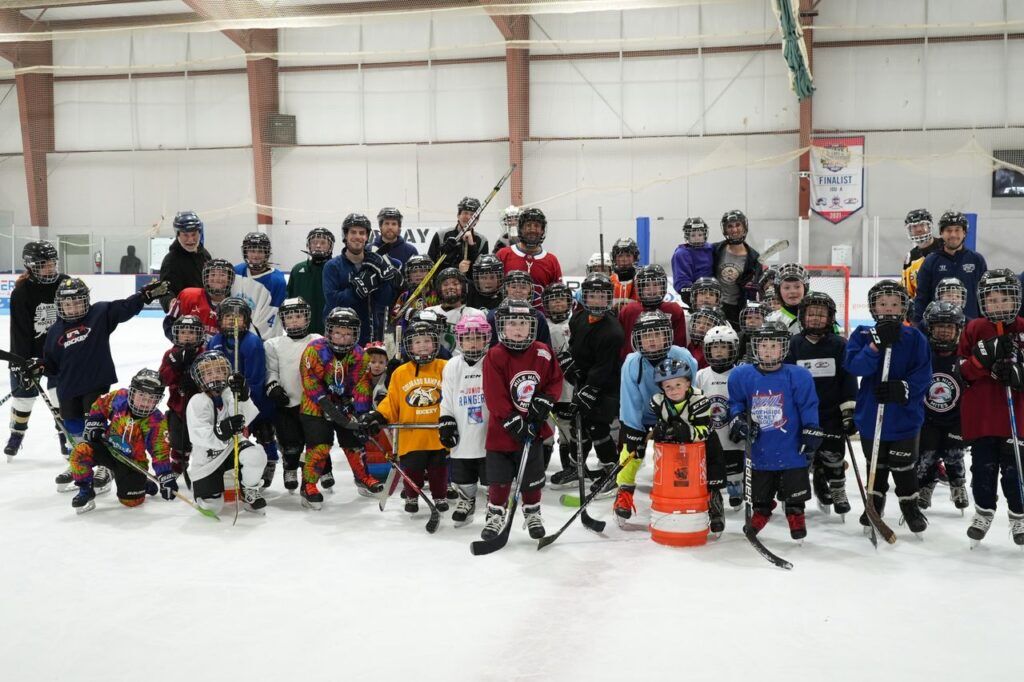
USA Hockey Model Associations follow USA Hockey’s American Development Model blueprint designed to help kids reach their full potential. Arvada Hockey is one of those associations, as is the Colorado Rampage, which is located in Monument. The Rampage might be the premier association in the state, as they have programs for all ages and skill levels all the way up to their Tier 1 teams.
The talent in the state is peaking and scouts have taken notice.
“When we go on road trips, no matter what team it is, people want to come watch Colorado hockey players,” Clemenson said.
“The best part about coaching is the gratification of the kids, when they do something really well, or they move onto the next level, and they give you that phone call thanking you for your time. I do it for the kids,” he said.
Despite the issues the game is facing in the state, it is growing and thriving. It will continue to thrive thanks in large part to the people in charge who care deeply about the game of hockey.
“Well, I love the kids, I love the energy, I love our sport,” McKibbon said. “I just feel like, and I’ve always felt like this throughout my career, I belong at Arvada Hockey Association. I love our game. There’s no doubt about it.”