







A credibility crisis for Aurora’s public safety chair
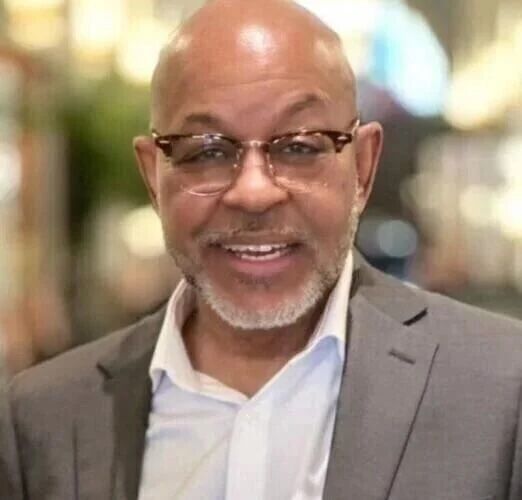
Aurora didn’t just elect Rob Andrews to City Council. The new majority elevated him into one of the city’s consequential roles: chair of the Public Safety, Courts and Civil Service Policy Committee. That title is not ceremonial. It signals oversight, judgment, and moral authority in the lane where public confidence either holds — or collapses.
That is why the past few weeks matter. They reveal a pattern citizens can’t afford to ignore: fog when pressed for specifics, bold declarations without definition, and now a public-safety scandal attached to the person presiding over public-safety oversight.
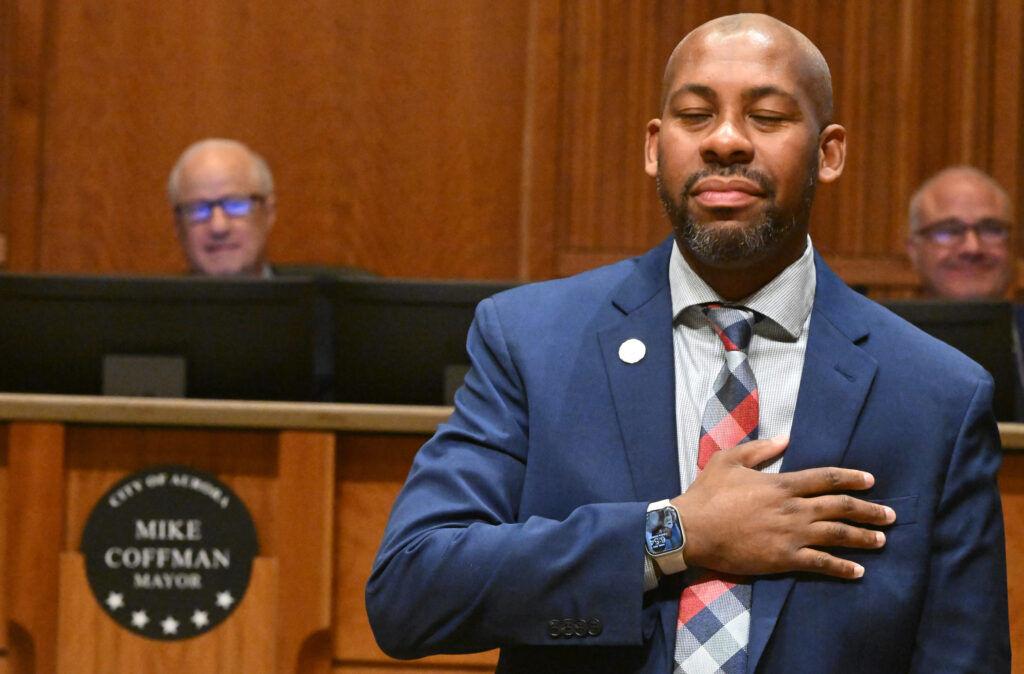
Start with the town hall. Residents did what engaged citizens are supposed to do: they asked clear questions about clear problems.
First: crime reduction. Aurora has touted major progress, including a reduction in major crime of roughly 25%. People wanted to hear how Andrews would help police continue that trajectory. Instead of naming what works and committing to protect it, he leaned on résumé. He said he was a successful CEO and had a “great appreciation for metrics,” then pivoted to a statement that left many in the audience stunned: the police department needed to be “rebuilt.”
“Rebuilt” can mean anything — from strengthening management to dismantling effective practices under political pressure. If you’re going to use that word in a city that depends on policing outcomes, you owe citizens a second sentence: What exactly do you mean, and what happens to crime reduction while you rebuild? The room did not get that clarity. People left confused. Some left alarmed.
Second: homelessness and street disorder. Aurora has invested heavily in moving people from the streets toward stability, including the new Navigation Campus. A resident asked what Andrews would do to support continued efforts to move unsheltered individuals off sidewalks and into that structured pathway.
Again, the answer was not a commitment. Andrews said there are “differing opinions” and that he was interested in “talking about the subject.” Talking is fine. Governing requires decisions, priorities, and measurable goals. When the question is whether the city will maintain a visible standard of public order, vague process language is not “nuance.” It is avoidance.
Third: sanctuary policy. Someone asserted that citizens don’t want Aurora to become a sanctuary city and asked Andrews where he stands. His response: he didn’t really know much about the subject and needed to do research. There were audible gasps.
“I need to research” can be honorable when the topic is obscure. It is not reassuring when the issue has been a defining flashpoint in Aurora politics and directly intersects with public safety, rule of law, and city-cooperation decisions.
What happened next makes the town hall non-answers harder to excuse. After that event, Andrews supported Resolution R2026-03, an ICE-related measure that, as many residents read it, aligns Aurora with protesters in Minneapolis and signals a posture of resistance toward ICE operations in Aurora. Whether one cheers that vote or condemns it, it answers the question he claimed he couldn’t answer: he picked a side quickly.
Then there is the transparency problem. When Andrews ran for mayor against Mike Coffman, I did a cursory background check. What struck me was the informational vacuum. Almost nothing substantive was publicly available about the business or nonprofit he claimed to run — no clear public footprint of outcomes, leadership track record, or organizational detail beyond board affiliations. If I missed something, he should correct the record plainly, with documentation. In politics, a vacuum is rarely harmless.
And now, the most troubling development: a DUI arrest. This past Saturday night, Andrews was arrested for driving under the influence. He has apologized and said he takes responsibility. Due process will unfold. But the civic damage is immediate. Impaired driving is a public safety issue, and the accused is the chair of Public Safety. That is not merely “private.” It strikes at the credibility of the committee and the seriousness of city leadership.
Aurora doesn’t need perfect people. It does need accountability — especially from those placed in oversight roles. So here is what an adult response looks like, starting now.
First, Andrews should issue a written, factual statement concerning the DUI with a timeline: what is alleged, what he disputes, what he does not, and what the public should expect next. Second, he should answer — on the record — the town hall questions he dodged: what “rebuild” means for policing, what measurable outcomes he supports on homelessness and encampments, and where he stands on sanctuary-style policies and cooperation with ICE. Third, the council should consider whether he should remain chair while the DUI case is pending.
The question isn’t whether Rob Andrews is “good” or “bad.” The question is whether Aurora will demand the standard his title implies: answer the hard questions, show your work, and model the responsibility public safety requires. Aurora deserves that answer now.
Michael A. Hancock is a retired high-tech business executive and a Coloradan since 1973. Originally from Texas, he is a musician, composer, software engineer and U.S. Air Force veteran whose wide-ranging interests — from science and religion to politics, the arts and philosophy — shape his perspective on culture, innovation and what it means to be a Coloradan.