







EDITORIAL: ‘Flock’ cams crucial to Colorado’s crime fight
The wins keep coming, across Colorado, for the cutting-edge law enforcement mechanism that perhaps ranks only behind the determination and discipline of our law officers in the crime fight: license-plate reading surveillance cameras.
The Atlanta-based Flock Safety cameras have become an increasingly utilized tool for some of the bigger police departments across the state, from urban areas like Aurora, Colorado Springs and Denver to more suburban climes like Douglas County.
Our state’s boots-on-the-ground officers have as tough a job as ever tracking down and apprehending perpetrators of crimes due to a perfect storm. Departments are still struggling with numbers thanks to misguided “criminal justice reform” state policies enacted amid an “all cops are bad” cultural zeitgeist anchored in the destructive 2020 George Floyd riots. Coddling of auto thieves, shoplifters and juvenile lawbreakers manifests in mounting caseloads.
Throw on top of that crime tied to years of sanctuary policies ushered in by Colorado’s “progressives” in power — inviting the world’s lawbreakers to our state — and police need all the help they can get.
Enter Flock, in many ways the 21st century’s technological manifestation of the old “Neighborhood Watch.” Though we encourage Colorado communities to maintain their Neighborhood Watch, Flock’s license-plate-recognition cameras help complement observant citizens and police, who too often are stretched thin.
The reality is motor vehicles play a key role in a lot of crimes committed across the Centennial State and nation. Sure, crafty criminals go to such lengths as swapping out plates and stealing cars in an attempt to evade police. But Flock’s technology also details for departments such data as missing/covered plates, vehicle make, model, color, alterations, and other unique identifying information.
Three months ago, the technology enabled Aurora police to arrest a thrice-deported Honduran man about to flee the country on charges of attempted first-degree murder, first-degree assault, menacing and illegal discharge of a firearm from a shooting on Interstate 225 the previous weekend.
In Denver, the department’s 12-month pilot program resulted in a drop in auto thefts from more than 12,000 in 2023 to 8,550, on the strength of 300 arrests and 170 vehicles and 29 firearms recovered.
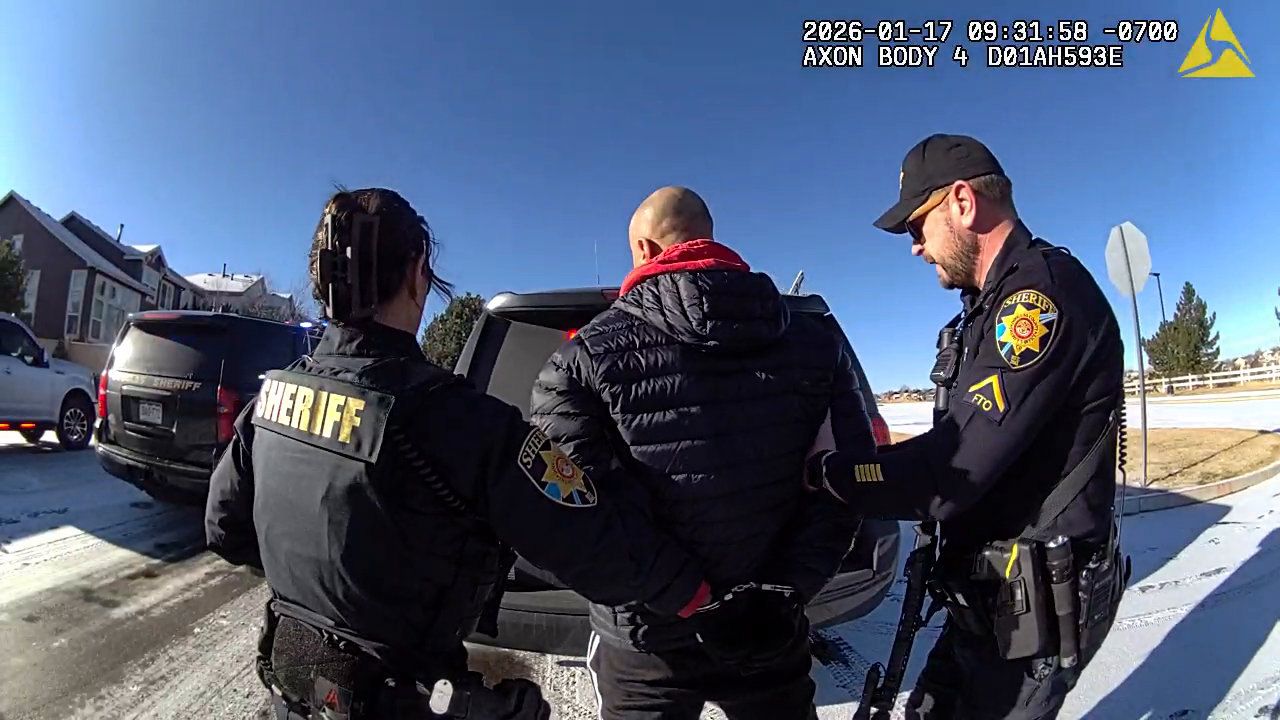
Most recently, on Monday, Douglas County officials said the technology was critical to apprehending 43-year-old Mitchell Aaron Weber after he allegedly fired a weapon at an uninjured victim in another vehicle near Quebec Street and Wildcat Ridge the day before. As in many cases, the technology paired with community members providing information to lead to a breakthrough.
It was the second time in less than a week Douglas County deputies credited Flock cameras with assisting in an arrest. A week earlier, an armed carjacking suspect, Daniel Reynaldo Tolentino, was identified by a Flock camera on Jan. 12, leading to a chase through Highlands Ranch and a shootout with deputies in Littleton, resulting in the alleged, attempted first-degree murder of a law officer, among other charges.
After years of worsening trends, Coloradans should be encouraged by how the advent of this technology is succeeding in tracking down some of the state’s worst offenders. Flock offers the extra lookout law enforcement has needed for so long.


EDITORIAL: Another attempt to gut TABOR
The Gazette Editorial Board
thegazette-editorial-board@gazette.com
Updated 14 hours ago
For well over three decades, the Taxpayer’s Bill of Rights has protected Coloradans against money-hungry government. Amended into our state constitution by rank-and-file voters in 1992, TABOR has been the public’s last line of defense against predatory politicians. It limits...
The Gazette Editorial Board
Reporter
EDITORIAL: Union bill would kill choice for Colorado schoolkids
The Gazette Editorial Board
thegazette-editorial-board@gazette.com
Updated 1 day ago
The Education Freedom Tax Credit is such a windfall for Colorado schoolchildren that both a Republican Congress and our own Democratic governor support it. Created in Washington last summer and made available to all states that opt in, the federal...
The Gazette Editorial Board
Reporter
EDITORIAL: Union bill would kill choice for Colorado schoolkids
The Gazette Editorial Board
thegazette-editorial-board@gazette.com
Updated 1 day ago
The Education Freedom Tax Credit is such a windfall for Colorado schoolchildren that both a Republican Congress and our own Democratic governor support it. Created in Washington last summer and made available to all states that opt in, the federal...
The Gazette Editorial Board
Reporter
EDITORIAL: Union bill would kill choice for Colorado schoolkids
The Gazette Editorial Board
thegazette-editorial-board@gazette.com
Updated 1 day ago
The Education Freedom Tax Credit is such a windfall for Colorado schoolchildren that a Republican Congress and our own Democratic governor support it. Created in Washington last summer and made available to all states that opt in, the federal tax...
The Gazette Editorial Board
Reporter

EDITORIAL: The wrong way to protect pups
The Gazette Editorial Board
thegazette-editorial-board@gazette.com
Updated 4 days ago
Last week, the state House passed a bill to ban the retail sale of dogs and cats from pet stores statewide. But good-hearted intentions don’t guarantee the best outcomes. House Bill 26-1011 would bar pet stores and brokers from being...
The Gazette Editorial Board
Reporter

A chance to transform the Middle East
Hugo Gurdon
hugo-gurdon@denvergazette.com
Updated 2 days ago
The most revolutionary force in the Middle East is President Donald Trump. America and its ally Israel, achieving unparalleled levels of military and intelligence integration, have decapitated the Iranian terrorist regime, devastated its command structures, destroyed its weapons, and sunk...

Hugo Gurdon
Reporter

EDITORIAL: Forget Front Range rail; Colorado needs better roads
The Gazette Editorial Board
thegazette-editorial-board@gazette.com
Updated 6 days ago
The fanciful idea of Front Range Passenger Rail continues to be touted at public forums up and down the Front Range. The tour made its latest whistle stop last week at the Mt. Carmel Veterans Service Center in Colorado Springs....
The Gazette Editorial Board
Reporter

EDITORIAL: Denver’s restaurants are still reeling
The Gazette Editorial Board
thegazette-editorial-board@gazette.com
Updated 7 days ago
Denver’s restaurant industry is in turmoil. While much of the rest of the country’s restaurant markets have bounced back from the pandemic, a new report from the Denver Restaurant Liaison Project found that Denver’s eateries continue to face “structural contraction,...
The Gazette Editorial Board
Reporter

EDITORIAL: Downgrading murder equals justice deformed
The Gazette Editorial Board
thegazette-editorial-board@gazette.com
Updated 7 days ago
It might sound like an overstatement to say Colorado’s offender-friendly legislature is hellbent on decriminalizing crime itself. But, really, what else could you make of House Bill 26-1281, introduced just the other day at the state Capitol? Get ready to...
The Gazette Editorial Board
Reporter
EDITORIAL: Colorado — where wolves come to die
The Gazette Editorial Board
thegazette-editorial-board@gazette.com
Updated 1 week ago
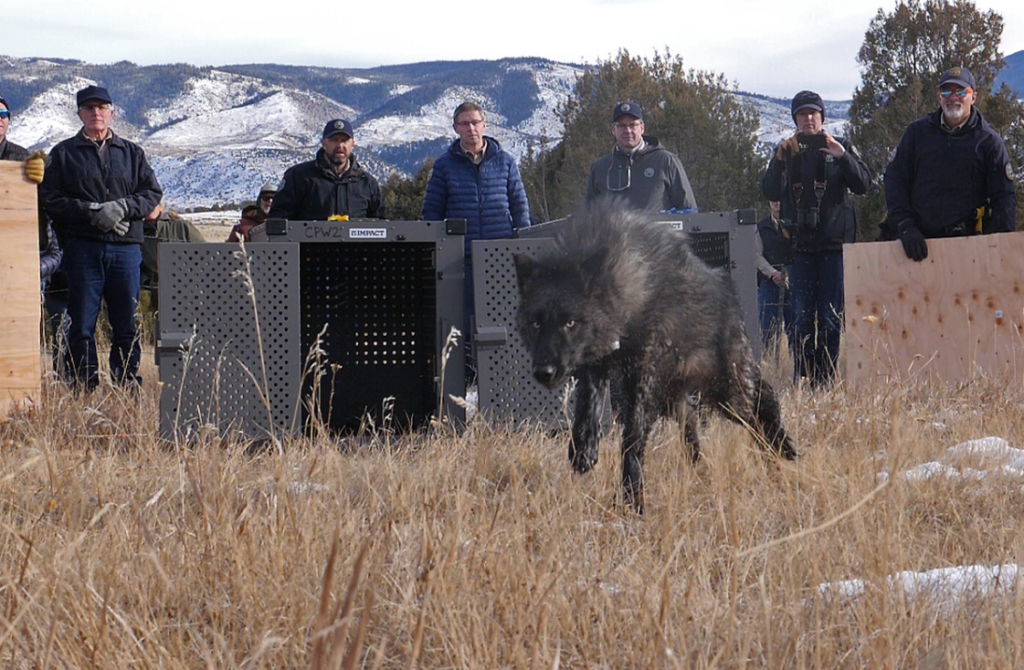
The latest news on Colorado’s precarious and dwindling wolf pack was unsurprising. As reported Sunday in The Gazette, yet another of the wolves relocated to Colorado from Oregon not long ago has died. It happened amid an attempt by Colorado...
The Gazette Editorial Board
Reporter
PREV
PREVIOUS

Enrollment nosedive makes case for school choice | Jimmy Sengenberger
Since the pandemic, my columns have chronicled a steady downward trend in K-12 enrollment. Now, fresh data from the Colorado Department of Education confirms it’s only deepening. K-12 enrollment is at its lowest in a decade. Just 870,793 students are enrolled in Colorado public schools — 42,440 fewer than in 2019-2020. This year’s 1.2% drop […]

2026 will be a big Democratic year, unless President Trump avoids the 'sixth-year' jinx | Bob Loevy
Here is analysis of which political party, Democratic or Republican, will win the 2026 general elections for the U.S. Senate and the U.S. House of Representatives this November. Because the president will not be on the ballot in November, such elections are often referred to as “midterm” elections. More important, however, these elections are occurring […]