





Harrowing snowmobile incident resulting in death of one and ‘lucky’ rescue of two highlights key safety lessons
Guest article written by Anna DeBattiste; Colorado Search and Rescue Association (Check out our podcast with Anna on Apple or Spotify to learn more about search and rescue in Colorado)
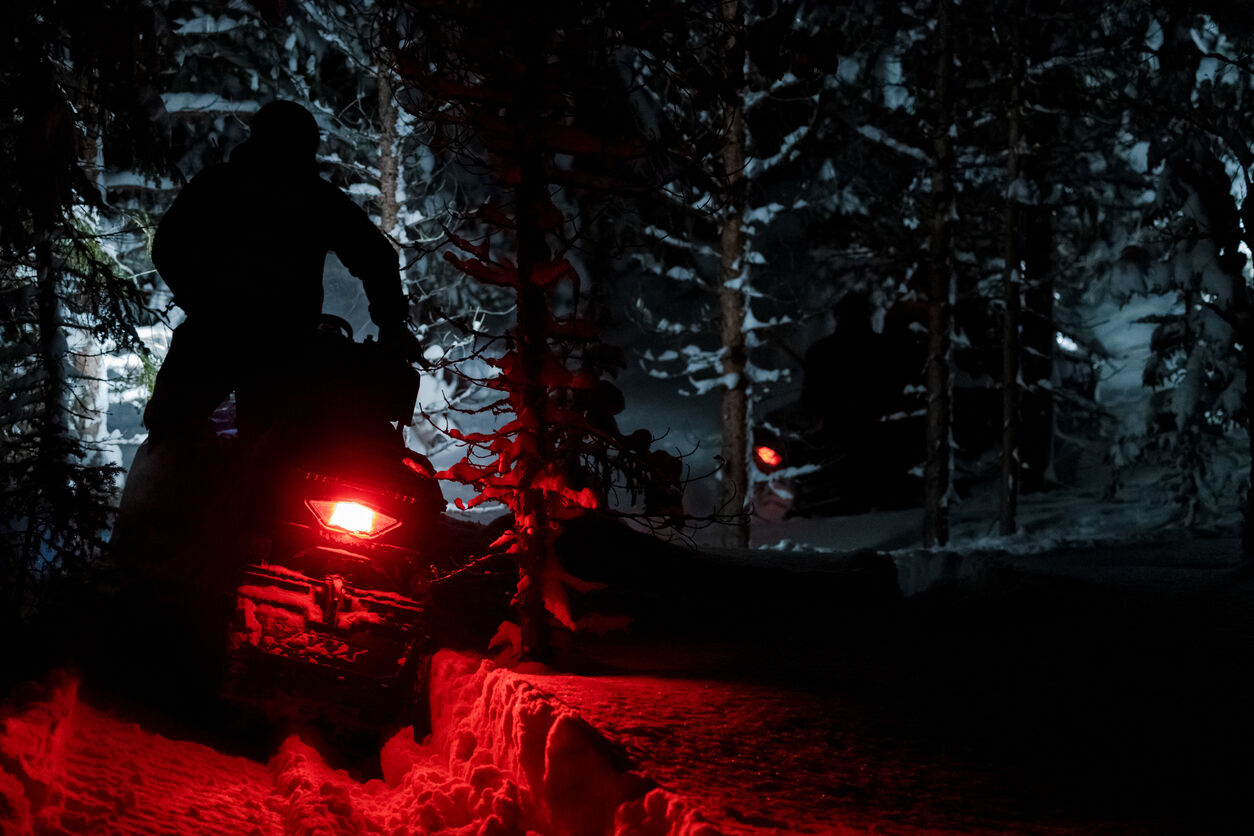
In 2008, Summit County Rescue Group was paged on a cold, snowy January evening to find three missing snowmobilers. The three men were experienced and skilled snowmobilers, well known in the Grand County community they were from. They had been missing since the previous evening, and local snowmobilers from Kremmling had been out looking for them ever since, with no luck.
The weather was truly terrible that evening – it was extremely cold and windy and there was little to no visibility. The experienced snowmobilers who were out looking for their missing friends advised SCRG not to send rescuers into the field until the weather cleared, so members were paged for 5:00 am the next day.
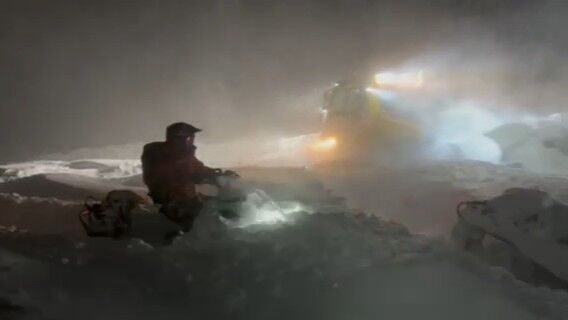
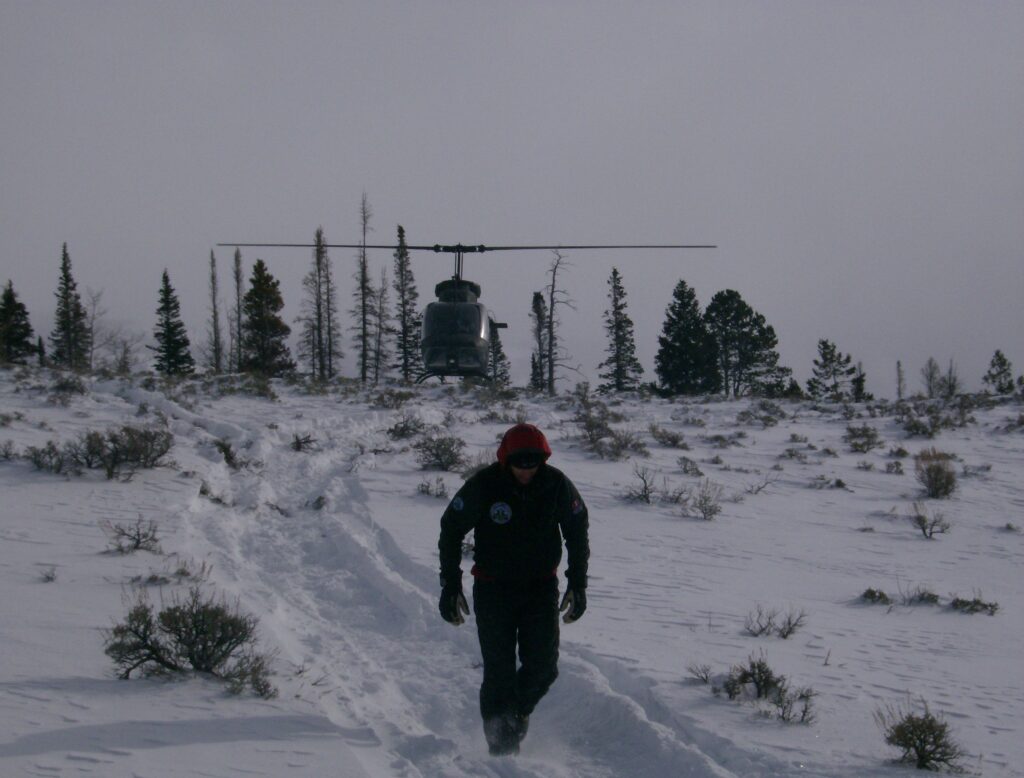
What followed was an intensive all-day search involving SCRG members, Summit County Sheriff’s Office, two helicopters from the Colorado National Guard’s High Altitude Aviation Training Site (HAATS), and rescuers from Lake County SAR, Vail Mountain Rescue Group, Grand County SAR, Alpine Rescue Team, Routt County SAR, and Rocky Mountain Rescue Group. State coordinators from CSAR (which was called the Colorado Search and Rescue Board back then) were helping to coordinate aviation and mutual aid resources. The command post, set up at the Spring Creek trailhead, was soon swarmed with family and friends of the missing men, locals looking to help out, and television reporters. It was chaotic.
Cell phone coverage in the area was very spotty, but friends and family of one of the missing men began to receive confusing text messages from him late that morning, and one of them even received a phone call. The missing man said a snowshoe team had just walked by him. The call dropped before he could relay any location information, but at least the call confirmed that one of the missing men was still alive. The mission coordinators also believed it meant they were searching in the right area, since there was indeed one SCRG snowshoe team in the field.
Mid-day, a combined team of skilled SCRG riders and local riders found an abandoned snowmobile stuck in a drainage. More snowmobilers were sent to search the area.
Meanwhile, one of the Black Hawks from HAATS had had to make a landing due to mechanical problems, and a crew was flown in to service it. They finished repairs at about 5:00 pm, and both helicopters left the scene to fly back to their Eagle base. Just after they passed over Elliot’s Ridge into Eagle County, the pilots spotted movement below. On closer inspection, it turned out to be two men by a fire, waving to the helicopters. One of the helos landed, picked up the men, and flew them to the Eagle Airport, where they were taken by ambulance to a hospital in Glenwood Springs.
Back at command, the mission coordinators didn’t have radio communications with the pilots and were left wondering, where was the third man? Two of the command crew members drove to Glenwood Springs late that night and interviewed the two men the next morning. They learned that after one of the snowmobiles had gotten stuck in a drainage, the three of them had tried unsuccessfully to dig it out until it was evening and the storm was blowing in. They doubled up on one snowmobile and tried to ride back, but visibility was so poor that they made a shelter and fire and tried to wait out the storm. By morning, two of the men were very concerned about the third, who had become incoherent. One of them decided to try to ride out and get help. He was the more skilled rider of the three, but the snow was deep and unconsolidated and visibility was still limited, and he ended up going the wrong direction, riding off a cornice, and getting his snowmobile stuck in a drainage. He continued on foot.
The other two, meanwhile, moved off the ridge to a more sheltered spot and built another fire. The one suffering from hypothermia had become completely irrational by now and was trying to put his boot directly into the fire. Sometime in the early hours of the next morning, he passed away. His friend did his best to mark the spot and then left on the one remaining snowmobile, which soon got stuck. He continued on foot and eventually was reunited with the other survivor, where the HAATS helicopters found them.
That they were found at all was a matter of pure luck. Because it was believed that no one could have ridden to the area they were in, regardless of how skilled, all the searchers were elsewhere. In fact, the snowshoe team had never been close to them at all. The one who reported seeing a snowshoe team was simply hallucinating from hypothermia.
What can we learn from this incident? The snowmobilers followed most of the recommendations of the “three Ts” of safe backcountry recreation planning:
Trip planning – We don’t know the extent to which they left their plan with people back home, but there was obviously a large group of local riders who knew they were out, had a general idea of the area they were planning to ride, and knew when they were supposed to be back.
Training – These were highly skilled, experienced riders who knew the area well.
Take the essentials – While we don’t know everything they had with them, they obviously were fairly well dressed and had firestarting materials and a saw to gather wood. For two of them to survive such extreme temperatures for two nights, they must have been well outfitted. What they might have been lacking is a compass, which could have prevented them from traveling in the wrong direction when visibility was low, and more advanced communication equipment, such as a personal locator beacon. PLBs were not common in 2008, but they were available. Snowshoes might also have helped when their sleds got stuck.
We might say this case illustrates that even for expert riders who are well prepared, things can go wrong, even tragically so. Especially for those planning to ride in extreme terrain, weather or circumstances, extra gear and planning are essential.
According to Flattoppers Snowmobile Club, ““Survival often depends on three things; your state of mind, the equipment in your survival pack, and your knowledge of how to use that equipment.” Here are some safety considerations for snowmobilers.
What to wear
Routt County Search and Rescue, a team that rescues a lot of snowmobilers, recommends the following:
Wear layers of clothing, and avoid cotton. Layers are important so you can add and subtract them to prevent becoming chilled from sweat.
Wear waterproof clothing made for snowmobiling; ski clothes are not usually warm enough. Make sure to wear bibs to keep snow out of your bottom layers
Wear armor – knee and chest protection at minimum
Use a DOT-approved full-face helmet plus a breath box for cold and windy days
Have extra gloves, goggles, socks and a buff
What to Carry
Not every ride requires everything below, but these categories help riders make smart decisions based on terrain, weather, and remoteness.
Must-haves for any backcountry ride:
These items address the most common causes of snowmobile SAR calls: trauma, avalanches, navigation errors, exposure, and mechanical issues.
- Avalanche transceiver, probe, and shovel (and a riding partner carrying the same)
- Offline mapping capability with go / no-go zones clearly visible
- Food and water
- Folding saw (for firewood or clearing a route through trees)
- First aid kit
- Basic survival kit:
- Reliable fire-starting method
- Emergency tarp or bivy blanket
- Extra gloves, goggles, and dry clothing layers
- Basic repair and recovery kit:
- Spare belt
- Spark plugs
- Basic tools
- Tow strap
Strongly recommended gear, especially for longer or more remote rides:
These items significantly improve self-rescue capability and survivability when plans change:
- Two-way satellite communicator / SOS device (Garmin inReach, SPOT, iPhone with Satellite SOS, etc.)
- Avalanche air-bag pack
- Two-way radio
- Headlamp and/or glow sticks
- Hand and/or body warmers
- Metal water bottle or cup for melting snow
- Siphon for transferring fuel
- Snowshoes (small, packable models)
- Extended survival kit
- Shelter system: Tarp w/ para cord
- Foam pad for insulation from snow
- Redundant fire-starting options:
- Waterproof matches
- Butane lighters
- Easily ignitable tinder
- Lightweight items like fuel-soaked tampons work well as emergency fire starters.
- Signaling aids – signal mirror, whistle, flashing strobe light
Avalanche awareness
If you don’t have avalanche equipment and training, it’s essential to learn at least one thing: What constitutes avalanche terrain and how to avoid it. The Colorado Avalanche Information Center’s website has free educational resources on their website to get you started. Should you decide to ride in avalanche terrain, you’ll want to take at least a Level 1 avalanche course.
Whether you plan to ride in avalanche terrain or not, always check weather and avalanche forecasts before you ride and make sure you know where the no-go areas are. Colorado backcountry SAR teams respond to snowmobile-related avalanche accidents nearly every year. Many of them involve snowmobilers high-marking in avalanche terrain.
.
Safe riding and etiquette considerations:
(Thank you to Flattoppers Snowmobile Club for many of these tips)
- Always approach the crest of a hill or rise with caution: there could be hazards on the other side such as another rider, rocks, a drift, pond, or a 1,000 foot cliff.
- Always look over your shoulder for oncoming riders before changing your direction of travel, on or off the trail.
- Any bump protruding from the surface of powder snow should be suspected as a hazard and should be avoided. These bumps could be from rocks, stumps or steel fence posts. Don’t take any chances.
- The safest way to cross over a fence is to drive very slowly next to a fence post that is clearly visible and where no wires, nor bumps in the snow from wires, are visible. Fences in good repair will have a post set approximately every four feet. (Know where you are riding; if you are not sure whether or not a fence is a private property line, don’t cross it.)
- Beware of water. The safest snowmobiling rule is never to cross lakes or rivers. Besides the danger of plunging through the ice, you have far less traction for starting, turning and stopping on ice than on snow.
- Similarly, watch for hidden depressions caused by creeks, drainages or springs as they can catch riders by surprise and are the cause of many trauma calls we respond to.
- When stopping along the trail, make sure you park in an area visible to oncoming riders, and pull over to the far right to allow other riders plenty of room to pass. Don’t block the trail and force others to go around you. When parked along the trail, always look over your shoulder for oncoming riders before proceeding down the trail.
- Watch your speed. Ask yourself, “Am I driving slow enough to see an object in time to avoid a collision?”
- An X made of sticks, poles, skis, etc. marks a hazardous area to be avoided.
Be courteous to all non-motorized users like cross-country skiers, snowshoers and dogsleds by slowing down and passing them with caution. - When approaching other riders on the trail, indicate how many riders are following in your group by holding up the correct number of fingers. The last rider holds up a fist to indicate that he is the last rider. Example: If there are three riders in your group, the first rider shows ✌️ two fingers, the next shows ☝️ one finger, and the last rider shows a ✊ fist.
- Develop a habit of keeping your tether attached to your machine at all times. This ensures anyone can move a parked sled if they need to, and that you can start it quickly in an emergency situation. Learn more about safe use of your tether here.
- The trails are not a race track. There can be families riding with small children, so find an open meadow to safely race your buddies.
- If you’re towing a skier or have a ski rack on your sled, watch out for potential impalement and entanglement hazards.
- Be aware of the dangers of tree wells, where you can end up face down, unable to extricate yourself. Snowmobilers and skiers have suffocated in tree wells.
- If you’re riding in a group, stay together and stay in communication. Here’s a great survival story that illustrates the dangers of riding alone: Happy to be alive.
- Focusing on the tail light of the snowmobile ahead of you is the cause of many accidents. If your eyes are fixed on the tail light, you are not likely to notice the slight turn the machine ahead makes to avoid a collision or hazard on the trail.
- When high-marking:
- Never high-mark without avalanche equipment and training. Practice using your equipment with your riding buddies.
- Remember that wearing a transceiver is no guarantee of surviving an avalanche. Many avalanche victims die of trauma rather than suffocation.
- Only one person at a time should be climbing. Everyone else should be parked outside of the runout zone, facing away from the slope, and out of the way of a potential avalanche, watching the climbing rider.
- If someone is caught in an avalanche, keep your eyes on him until the snow stops moving. Turn off any running snowmobiles, which may interfere with transceiver signals. Start a transceiver search right away, rather than riding out for help. You are your buddy’s best chance for survival.
- Know your signals.
Consider taking a snowmobile safety course. Even experienced riders can learn something new, and children will take safety more seriously if their parents take a course with them.
If something happens and you need rescue, know that rescues take time, and that we will typically only rescue you and not your sled. Colorado backcountry SAR teams don’t charge for their services and want you to err on the side of caution when you need help. Call us, but have reasonable expectations about how long it will take us to reach you. We are not on shift, waiting in a firehouse to slide down a pole. We’re all volunteers who respond from our day jobs and family responsibilities. We have to go to our team’s headquarters to load up snowmobiles, drive to the trailhead, and ride into the backcountry the same way you did. A few things you can do to help us:
When you call 911, know how to give the dispatchers your location coordinates (learn more about making a 911 call from the backcountry here). Once you’ve given your location, stay there.
Make a shelter to keep any injured parties warm. Insulate them from the ground with your tarp, and put extra clothing on them.
If you’re able, build an access road for us while you’re waiting
If you have an FRS radio, you may be able to communicate with a responding team on channel 3.0. Colorado SAR teams do not monitor this channel, but once they’ve been activated by a 911 call you may be able to talk to them on the channel. The team may also ask you what channel you’re already using and will communicate with you there.
Lastly, consider investing in a two-way satellite communications device, especially if you’ll be riding in extreme terrain and/or remote areas, or planning to be out for an extended period of time. If this technology had been available to the three missing snowmobilers in Spring Creek back in 2008, that incident would likely have turned out less tragically.
STAY INFORMED: Get free Colorado news with our daily newsletter (Click here)
Get OutThere
Signup today for free and be the first to get notified on new updates.

PREV
PREVIOUS
Three expected waves of snow could bring 30 inches to some Colorado peaks
Over the next two weeks, three waves of snow are expected to move through the state of Colorado, including one that started on Feb. 11. A first wave of snow could bring anywhere from 8 to 18 inches to many Centennial State mountains in the most likely scenario, according to the National Weather Service. This […]
Colorado is officially on the NWS 'risk of heavy snow' map for 7 upcoming days
A gasp of fresh air is coming for Colorado’s winter slopesport enthusiasts with days of powder ahead. As noted in prior reporting, the next two weeks should be pretty snowy in Colorado, with many of the state’s peaks expected to get about two feet of snow or more during this period. At least three waves […]