Aurora weighs options for police oversight body
Aurora officials have begun the process of creating a police oversight body, exploring similar offices in cities like Denver and Fort Worth, Texas, to understand, they said, what works and what doesn’t.
Five years ago, the City Council approved funding for the creation of the police oversight office but held off while a consent decree between the city and the Colorado Attorney General’s Office moved forward so as not to have two such bodies simultaneously, according to officials.
Supporters of creating the oversight body said independent police oversight is necessary because it protects human rights, promotes constitutional policing, increases public confidence and trust in police, ensures greater accountability, and enhances risk management.
Others said they are wary that political ideologies are driving the initiative, instead of realities on the ground, and pointed to crime in Aurora trending down, which they argued is a major reason why an oversight body is unnecessary.
The Aurora Police Department has been under a consent decree since 2021, when the city signed an agreement with the Colorado Attorney General’s Office to implement sweeping changes to policing — notably in the use of force and how officers engage with residents — following the death of 23-year-old Elijah McClain in 2019 while being arrested by three officers.
That consent decree comes to a close in February 2027.
City Manager Jason Batchelor said $330,000 in funding and authorization for two staff members for an oversight office still exist.
The renewed push for the oversight body is being spearheaded by two of the city’s new councilmembers: Amy Wiles and Gianina Horton, who won last year, part of the wave of progressive candidates that toppled the previous conservative-leaning council.
How the city will operate the oversight office, the amount of power oversight officials and committee members will have, and what they will or won’t be able to do are still up in the air.
Some community members want the Aurora oversight office to have more powers than Denver’s oversight office, which only makes recommendations to the police department.
Aurora’s city charter, however, states that an oversight body can’t have any actual control over the police department and its role is advisory.
The protests
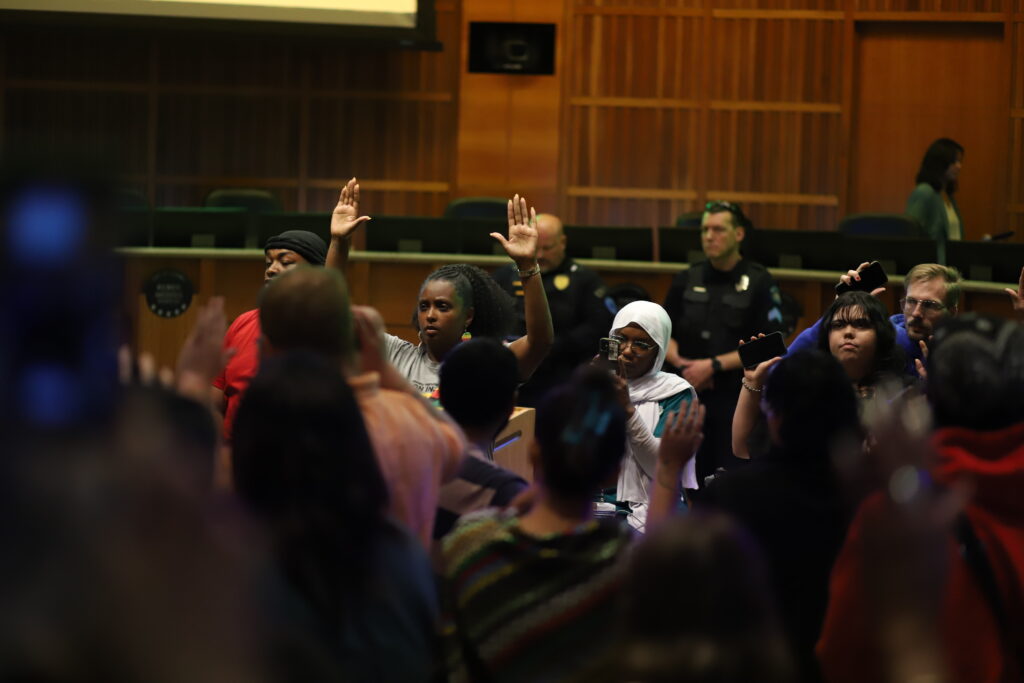
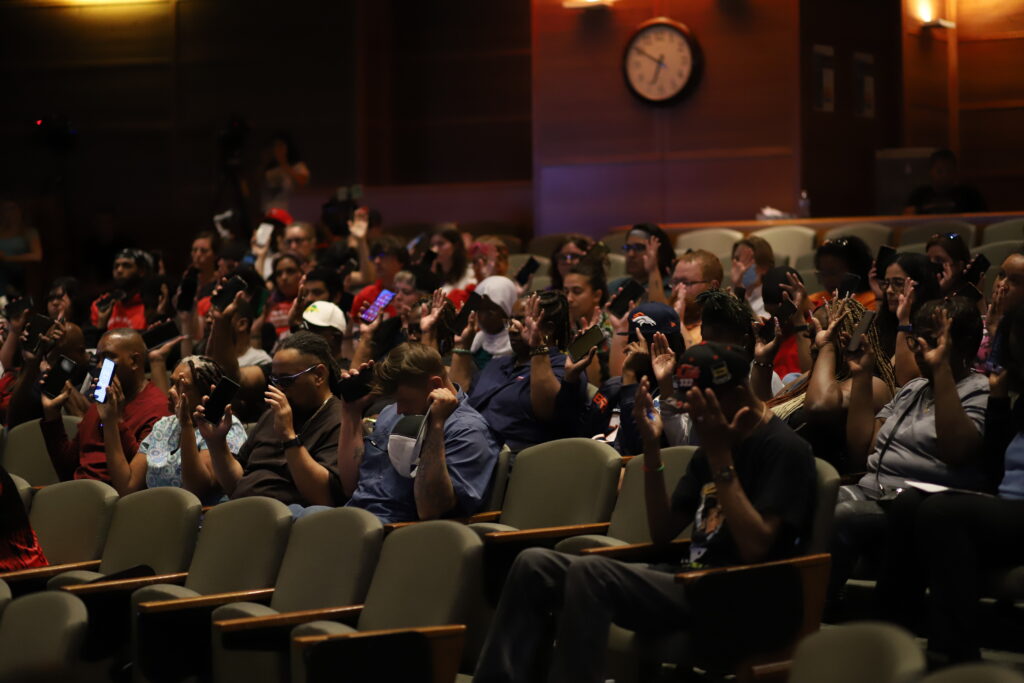
Part of the pressure for an oversight body is coming from the protesters that have attended every Aurora City Council meeting for more than a year following the death of Kilyn Lewis.
Lewis was shot by a SWAT officer as police sought to arrest him on an attempted murder warrant. Lewis was not armed, and the protesters have suggested that his death was racially motivated or part of a pattern of Black men getting shot and killed by police officers.
Aurora officials have rejected that narrative.
The officer’s shooting of Lewis was found to be justified by the 18th Judicial District Attorney and an internal investigation by the Aurora Police Department.
There have been other police-involved shooting incidents in the city, including that of Rashaud Johnson and Rajon Belt-Stubblefield, also unarmed Black men. District attorneys and the police department have not yet released decisions in those cases regarding the use of force and whether they were justified.
MiDian Shofner, the CEO of Epitome of Black Excellence and Partnership who has helped lead protest efforts since Lewis’ death, said that the consent decree has not resulted in any real change to what she said are biased policing tactics and uses of force.
On the other hand, Councilmember Stephanie Hancock, who has long supported police and the city’s “tough on crime” approach, said crime has gone down under Police Chief Todd Chamberlain and she doesn’t see a need for an oversight body, though she also emphasized she isn’t against it.
Hancock and the protesters have clashed over the matter during council meetings.
Aurora Mayor Mike Coffman said oversight is never a bad thing, and he wants leaders in civil rights, policing and law to come together to build a successful oversight office.
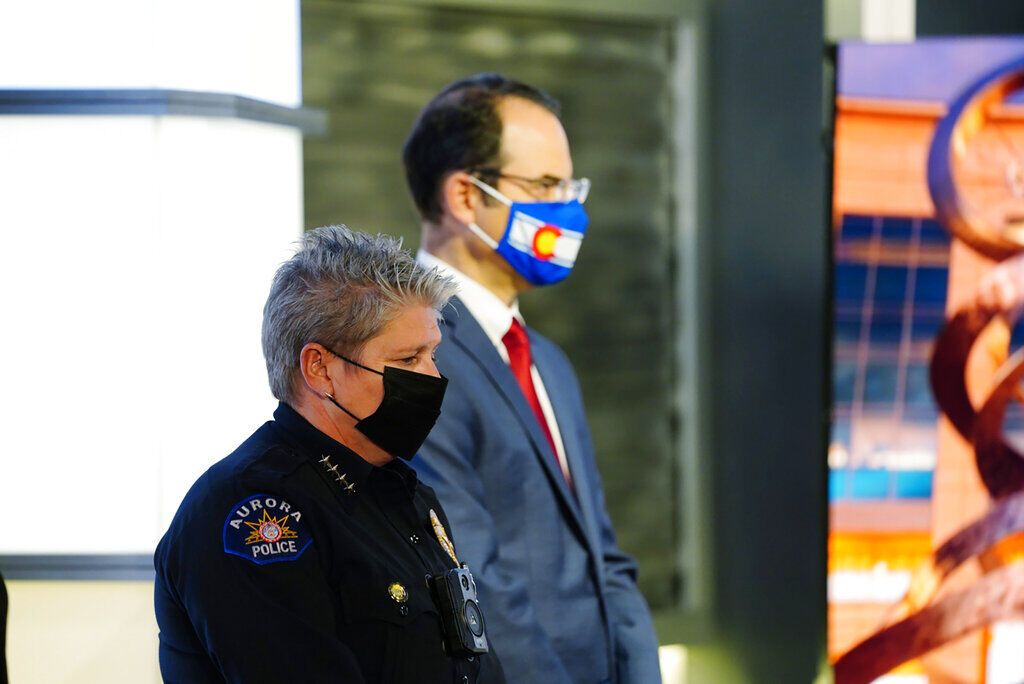
Chamberlain declined to comment on the efforts, saying it is too early in the process to speak on the matter, but Batchelor, the city manager, said the police chief is in “full support” of an oversight office.
The Aurora Police Association did not respond to a request for comment.
An oversight office
What oversight office officials are able and unable to do is governed by the city charter, which states it can only be advisory in nature, Batchelor said.
As discussions about an oversight office picked back up this year, Batchelor and other city officials visited other jurisdictions, including Fort Worth and Boise, Idaho, that have oversight bodies, Batchelor said.
In both places, they saw success by oversight offices that have “unfettered” access to police information and systems as well as outreach and interface with community members, he said.
In Denver and Fort Worth, oversight office officials have access to police documents and can recommend policy changes and investigate community complaints.
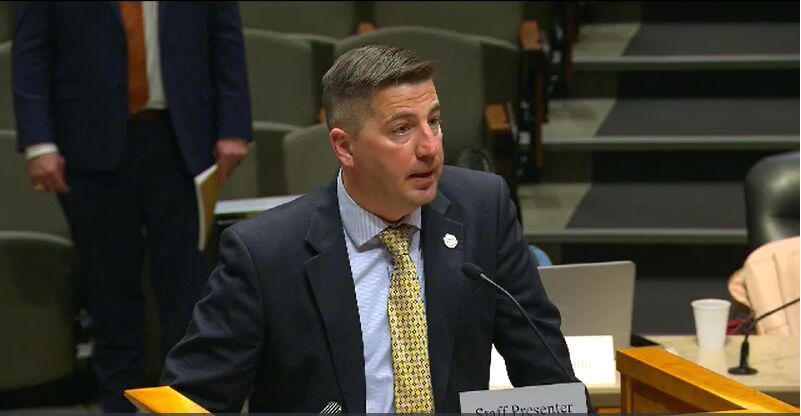
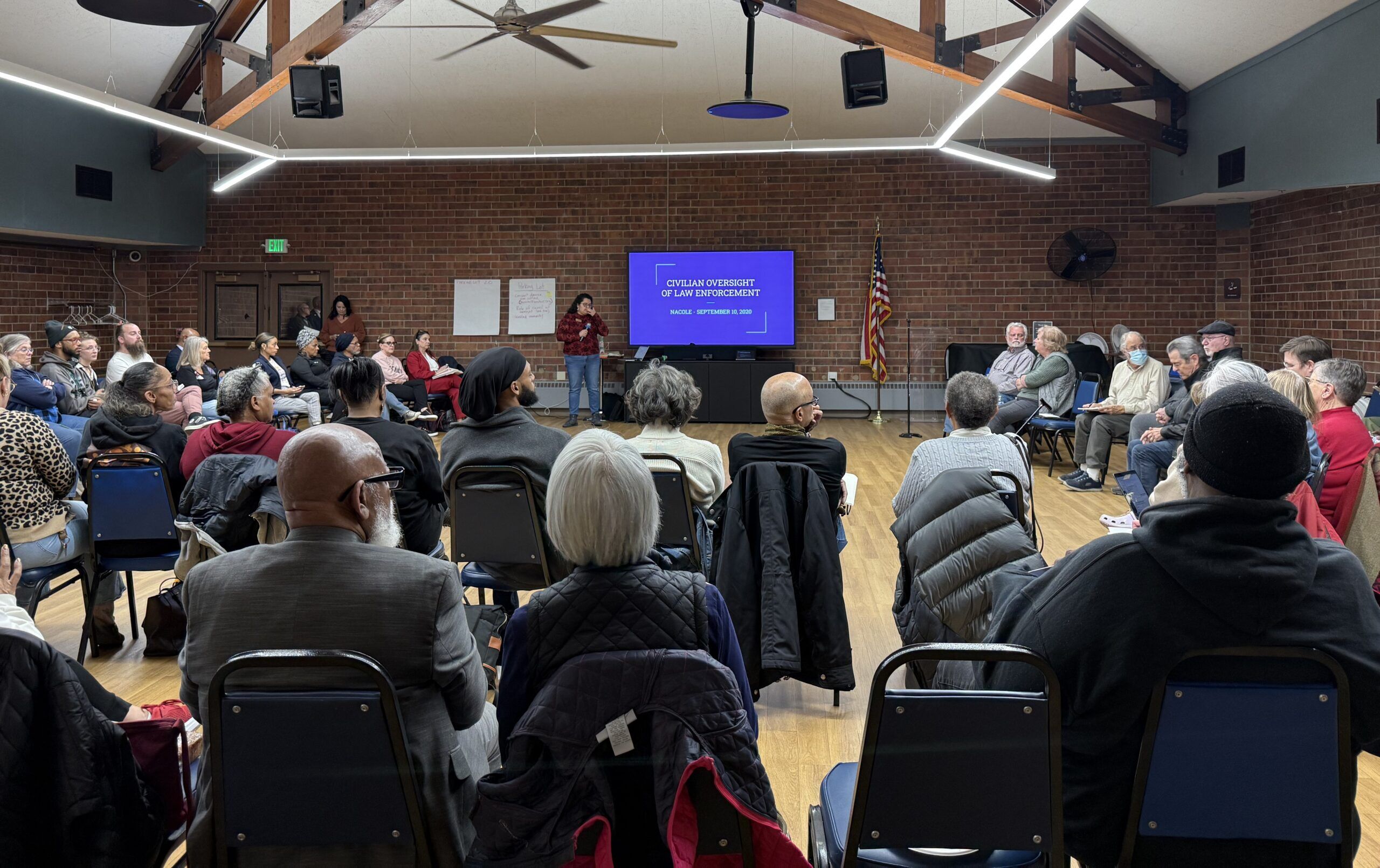
Horton and Wiles have organized two community meetings to discuss details about an oversight committee with members of the public.
At those meetings, unfettered access to police documents was a frequent demand by some quarters.
Other requests and demands from groups and individuals at the meetings included giving the office control over officer-involved use of force incident “narratives” and banning former or current police officers from being part of the oversight body.
There are more than 160 oversight agencies across the U.S, according to the National Association for Civilian Oversight of Law Enforcement.
Although there are many different types of oversight offices and boards, most of them act as recommending bodies to the police departments they oversee.
Aurora officials are looking to Fort Worth as an example, due to the city’s size and structural similarities to Aurora.
Fort Worth Police Monitor Bonycle Sokunbi visited Aurora Tuesday to talk about the city’s monitor model, saying her team does not have direct power over decisions made in the department but that police officials have taken all of her office’s recommendations.
Sokunbi has full access to police information, assists in hiring police leaders and officers, handles complaints against the police directly and makes policy recommendations to police officials, she said.
In her time as monitor, since 2023, the department has taken every recommendation she has made, she said.
In Denver, the Office of the Independent Monitor and seven-member Citizen Oversight Board provide oversight to the Denver Police Department’s force of about 1,500 officers and the Denver Sheriff’s Department, which has about 1,000 sworn deputies.
Batchelor said that while Denver has a different form of government and is bigger than Aurora, there are still things to learn from its oversight efforts. He said Aurora’s oversight body will change and shift as time goes on, like Denver’s has.
Denver’s independent monitor was created in 2004 to replace the city’s Public Safety Review Commission following the police shooting death of 15-year-old Paul Childs in 2003. In October 2004, the Denver City Council unanimously passed an ordinance creating the OIM and COB, and Denver voters subsequently approved a ballot measure granting the monitor access to police department records.
Voters passed a measure that put the OIM and COB in the municipal charter in 2016, inoculating the office and board from any effort to disband it.
Denver’ OIM and COB are independent from Denver’s police and sheriff’s offices, and the bodies prepare annual reports for the Denver City Council and mayor. They are not directly supervised by the mayor and council but are funded by the Mayor’s Office.
When there is a complaint against the department or officers, Monitor Lisabeth Castle’s office becomes part of the process, she said. Her office also looks at policing trends and makes policy recommendations to department heads.
However, the Denver Department of Safety director has the final say on discipline of police. The OIM is responsible for giving recommendations, she said.
“Some people say the purpose of oversight is to go after cops, but that’s not the purpose of oversight,” Castle said. “The purpose of oversight is to encourage trust with the community through transparency and accountability.”
The limited power of the oversight office in Denver has been a “frustration” for residents, Castle said.
The number of use of force incidents by DPD officers has remained relatively steady over the years but has gone up, with 820 reported uses of force in 2022, 844 in 2023, 881 in 2024 and 993 in 2025.
But the OIM’s success isn’t measured in numbers like uses of force, Castle said. Instead, it is measured through transparency and community trust, and Castle has seen an impact in that regard, she said.
“Bringing transparencies through our reporting to the community gives them the tools to say, ‘This is not OK, this does not meet our community standards,’” Castle said.
Outgoing COB Chair Julia Richman, who has been on the board since 2020, said the oversight model in Denver has had successes, but its lack of direct authority over the police department is a flaw.
“The Monitor’s office has recommending power, but they don’t have any authority to change those processes and that’s a failure of the model,” Richman said.
Transparency and accountability are still important, she said, and having those things has resulted in policy changes by the police department.
The OIM’s George Floyd report led to substantial changes in the way the DPD handles crowd control, Castle said. Its Michael Marshall report addressed how people with mental illness are dealt with in custody, she added.
Richman has seen “a lot of growth” since the George Floyd report, she said. There have been many protests in the past year, but she said most were “low incident.”
A multi-year effort by the oversight bodies resulted in better tracking and monitoring of non-monetary settlements, Richman added.
It’s hard to judge the office’s impact in terms of numbers, Castle said, because there are a lot of factors at play.
“It’s not like you can say there are more sustained cases of more complaints and therefore that is a measurement,” she said. “It fluctuates up and down, and what is important is that it’s being reviewed and addressed.”
A former law enforcement official said oversight bodies’ missions are often laudable. In practice, they start out with objective goals but often cannot escape ideological pulls, he said.
Part of the problem, the former official said, is that the people who often apply for oversight bodies or who want to get appointed to review panels have an ideological axe to grind. And, over time, the deck gets stacked, he said.
Coupled with intense pressure from activists, the end product — whether that’s a review of a case or a policy recommendation — is “more ideology, less objective,” said the former official, who spoke on condition of anonymity to freely express his viewpoints.
The former official noted that Seattle and Portland have been among the cities that “pushed the envelope” on policing oversight, particularly in their emphasis on diversity, equity and inclusion, and Colorado’s municipal governments should be wary of the outcomes there over the years.
Oversight debate in Aurora
One underlying assumption among supporters of the oversight body is that the city has lost the community’s trust.
Shofner, the Aurora protest leader, said she does not foresee an oversight office fixing the issues that have resulted in the protests but hopes it can be a jumping-off point for repairing accountability and trust.
In her mind, the oversight body is a “refuge” for the community, she said, which includes off-duty police officers. It would give those officers new perspectives, she said.
People affected by police violence would have their voices heard and be uplifted, she added.
“We should be able to agree that safety and accountability are not opposites,” Shofner said. “The officers who are most harmed by lack of oversight are often the ones who want to do the job the right way, but they’re forced to walk alongside unchecked colleagues. Oversight is not about punishing good policing. It actually isolates risks.”
Hancock, the councilmember, isn’t necessarily against an oversight body in Aurora but is wary of political ideologies taking over, she said.
“To have a citizen-led committee would be like having mob-rule subject to whatever political or ideological whims are at play,” Hancock said. “The political ideology is really what’s driving this, rather than the actual statistics and data showing how crime has improved in the city.”
Over the last four years, crime reports have decreased from about 20,000 in 2022 to 18,000 in 2023, 16,000 in 2024 and 12,500 in 2025.
In Hancock’s experience, the general consensus among Aurora residents is that people are happy crime is down and they believe the police department has a “solid police chief,” she said.
“I’ve been having my town halls and the percentage of people showing up at City Council meetings yelling at us and demanding things compared to the 415,000 people in this city are a very small amount,” she said. “They are just the loudest voices.”
When the oversight office comes to fruition, Hancock said, she hopes it is “not adversarial in nature.”
“I hope it’s cooperative between community, the council and the police,” she said. “APD’s main concern is protecting victims of crime and we need our citizens to feel like APD is a resource for them no matter what.”