







A look at Trump’s eclectic campaign playlist and past musician complaints
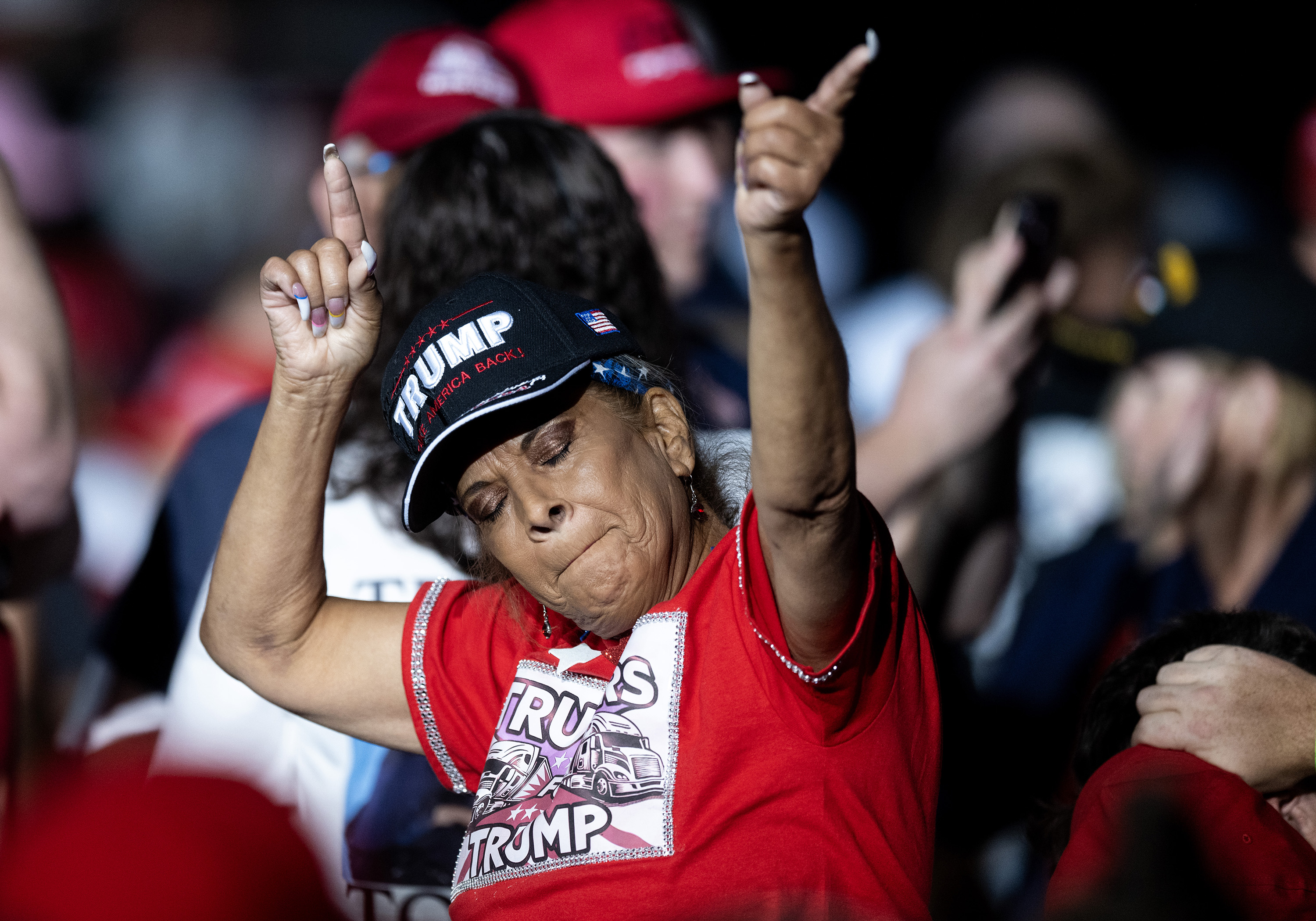
From campaign trail soundtracks, former President Donald Trump’s playlist at his rallies have always struck a chord.
Trump’s politics may be polarizing, but his music selection is eclectic.
His campaign played a mix of genres from country to pop, symphonic rock and R&B, folk and heavy metal music, even a gospel song by Elvis.
Here’s part of the playlist at Trump’s campaign stop in Aurora Friday:
• “Don’t Bring Me Down” by the Electric Light Orchestra
• “Live and Let Die” by Guns N’ Roses
• “Jump” by Van Halen
• “Soul Man” by The Blues Brothers
• “Jolene” by Dolly Parton
• “December 1963 (Oh What a Night)” by Frankie Valli and The Four Seasons
• “California Dreamin’” by The Mamas & The Papas
Campaigns use popular music because it moves people.
Very few in the crowd did so Friday, until the DJ played “Y.M.C.A.” by the Village People. The Y.M.C.A. dance is performed to the 1978 hit known for its simple synchronized arm movements that spell out the letters “Y,” “M,” “C,” “A.”
No one, though, rocked the zombie-like danced to Michael Jackson’s “Thriller,” which features the famous “claw” hands and sharp, jerky movements.
During the chorus, attendees grooved and acted out the letters popularized by the disco group known for its gay themes. Rally attendees also wiggled to “Great Balls of Fire” by Jerry Lee Lewis, a 1950s rock-n-roll singer songwriter nicknamed “The Killer” for his piano performances.
Julie Sigler, of Highlands Ranch, sang along with Pam Tillis’ 1991 hit, “Don’t Tell Me What to Do.”
“I think it’s a good playlist,” Sigler said.
Of the more than two dozen artists prominently featured during Trump’s rally, Elton John appears to have been the favorite. Campaign staff played at least five songs by John: “I’m Still Standing,” “Pinball Wizard,” “Funeral for a Friend/Love Lies Bleeding,” “Goodbye Yellow Brick Road” and “I Guess That’s Why They Call it the Blues.”
A good campaign playlist doesn’t just get people tapping their feet, it has also moved artists to criticize its use by politicians with whom they disagree.
Tom Morello with Rage Against the Machine, for example, famously wrote of former Speaker of the House Paul Ryan using of the group’s music: “Paul Ryan is the embodiment of the machine our music rages against.”
The artists who have complained about Trump using their music included Neil Young, Beyoncé, the Foo Fighters, ABBA and Celine Dion.
In 2016, when Trump was running his first campaign, Bruce Springsteen objected to the former president playing “Born in the USA.” Springsteen did not take legal action against Trump. He endorsed Trump’s opponent, Hillary Clinton.
The majority of the complaints, if not exclusively, appear to be lodged against Republican candidates, not Democrats. This could just be an ideological reflection with many musicians leaning left politically. So, when Republicans with opposing policies use their music, it may feel like a misrepresentation of the artist’s values.
Despite all the artist complaints, lawsuits have been rare.
Elijah McLaughlin, an intellectual property rights attorney at the Vethan Law Firm in Houston, said the reasons are complicated. First of all, the artist may not actually own the licensing rights. And studios, which frequently own the license to be able to release the music, can sublease an artist’s material, often without their knowledge.
“As much as they may grumble and they may not like it, it’s possible he (Trump) is using the songs with a legal license,” McLaughlin said.
Another issue is that — unlike contract law — copyright law is always having to catch up with the times. Think about emerging issues like streaming and Artificial Intelligence.
“The borders are really hazy,” McLaughlin said.
The way to prevent Trump from using an artist’s music typically starts with a cease-and-desist letter. If unsuccessful, then the artist must file a lawsuit.
If the campaign refuses to stop using the song, the artist may bring different claims — copyright or trademark infringement, for example.
Survivor band member Frankie Sullivan, for example in 2012, filed a lawsuit against former Republican Speaker of the House Newt Gingrich for using the band’s 1982 hit “Eye of the Tiger” — the anthem for Rocky III. (The lawsuit was settled out of court.)
Trump’s campaign also played “Eye of the Tiger,” prompting some of the rally goers to sing along with the chorus.
Trump has argued he has a blanket license under the fair use doctrine.
The final song on the playlist?
Lee Greenwood’s “God Bless the U.S.A.”