







Denver rounds up immigrants living in encampments before sub-zero temps settle in
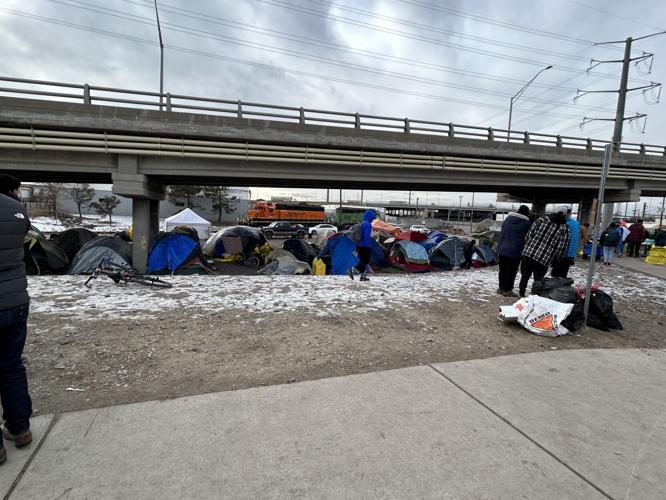
City of Denver officials help immigrants move from an encampment under the 48th Avenue overpass, near Fox Street, into emergency shelters ahead of freezing temperatures forecast for this weekend.
Dennis Huspeni [email protected]
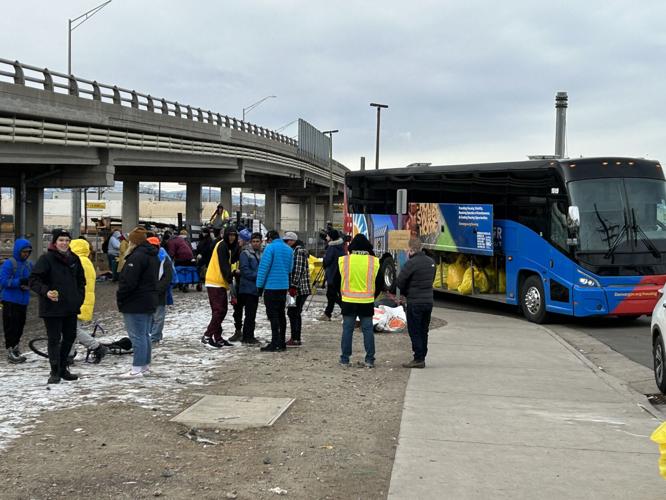
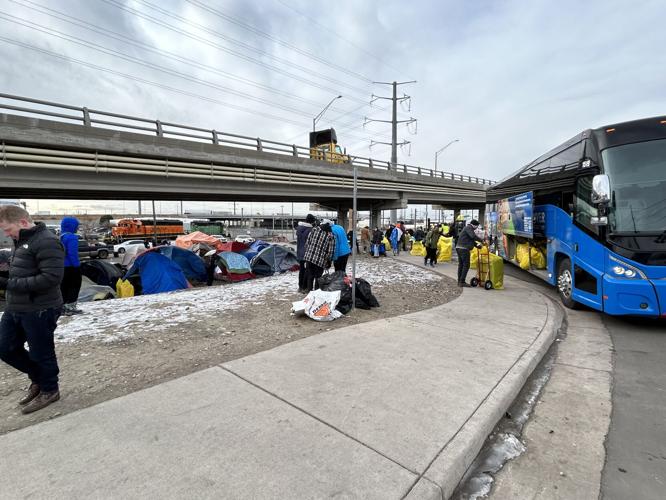
Denver officials on Thursday circled the city’s two remaining large immigrant encampments in advance of the arctic blast expected to blow in this weekend.
The largest of the two remaining encampments at Fox Street and West 48th Avenue had — at the last estimate — about 50 tents and 100 people, said Jon Ewing, a Denver Human Services spokesperson.
But eyeballing it Thursday, Ewing said the encampment appeared to host about half as many immigrants who were living on the street.
Some of the homeless immigrants — who illegally crossed America’s southern border and arrived in Denver — accepted offers to travel to another destination, Ewing said.
“It wasn’t lost on me that they were picking warmer destinations,” Ewing said. “It’s just super cold and we want to get them out of the cold.”
Early in the crisis, city leaders assumed the responsibility of temporarily housing the new arrivals and paying the travel expenses for those on their way somewhere else.
Denver Human Services has been managing the city’s response since the city lifted its emergency declarations. As of noon Thursday, Denver had received 37,393 immigrants from South and Central America in the year since about 90 arrived in the cold downtown in December of 2022.
“We’re just trying to offer them a place to go into instead of being in the elements,” said Jose Salas, deputy director of communications for the mayor’s office. “So, it’s safety. It’s a humanitarian effort that we’re trying to accomplish here by bringing them indoors.”
Ewing said the tents at these two encampments were still standing.
Last week, officials conducted a sweep of the largest immigrant encampment at Speer Boulevard and Zuni Street, which sprung up about three months ago when the immigrants — who had been sheltered — exhausted their city shelter vouchers and moved onto the street.
The Zuni Street encampment had had roughly 150 tents and about 300 immigrants.
To date, the city has spent a whopping $38 million to address the humanitarian crisis unfolding at the U.S. border with Mexico and in Denver.
Earlier this week, Denver Mayor Mike Johnston warned council members that the city had reached a breaking point in the response effort, which now is threatening the fiscal health of Colorado’s most populous city.
If the influx remains unabated, Johnston has said the cost to city taxpayers this year could reach up to $180 million, which represents about 10% of the city’s budget. To address what could become a fiscal catastrophe, Johnston has asked department heads to shave 10% to 15% from their budgets.
Officials have speculated that Denver’s status as a “sanctuary city” is, at least in part, the appeal for immigrants coming to Colorado’s state capitol. Others point to the city’s relative proximity to the Mexico border.
Generally speaking, a sanctuary city is one that has established policies that discourage law enforcement from reporting an individual’s immigration status to federal authorities.
Once largely confined to gateway cities such as Los Angeles and New York, the immigration crisis has now spilled over into America’s interior and to cities like Denver.
The round up Thursday was on par with what officials have done for the homeless community when the weather become life threatening.
According to the National Weather Service, an arctic air mass this weekend is expected to plunge the mercury to deadly levels in Denver. On Friday night, gusts of up to 15 miles per hour could pull the wind chill to as low as -12 degrees.
Overnight lows through Monday night are expected to plummet below zero.
“This is an effort to save people’s lives,” Salas said.
Denver Gazette City Editor Dennis Huspeni contributed to this report.