




Golden leaders look to another 150 years of Coors Brewing’s impact

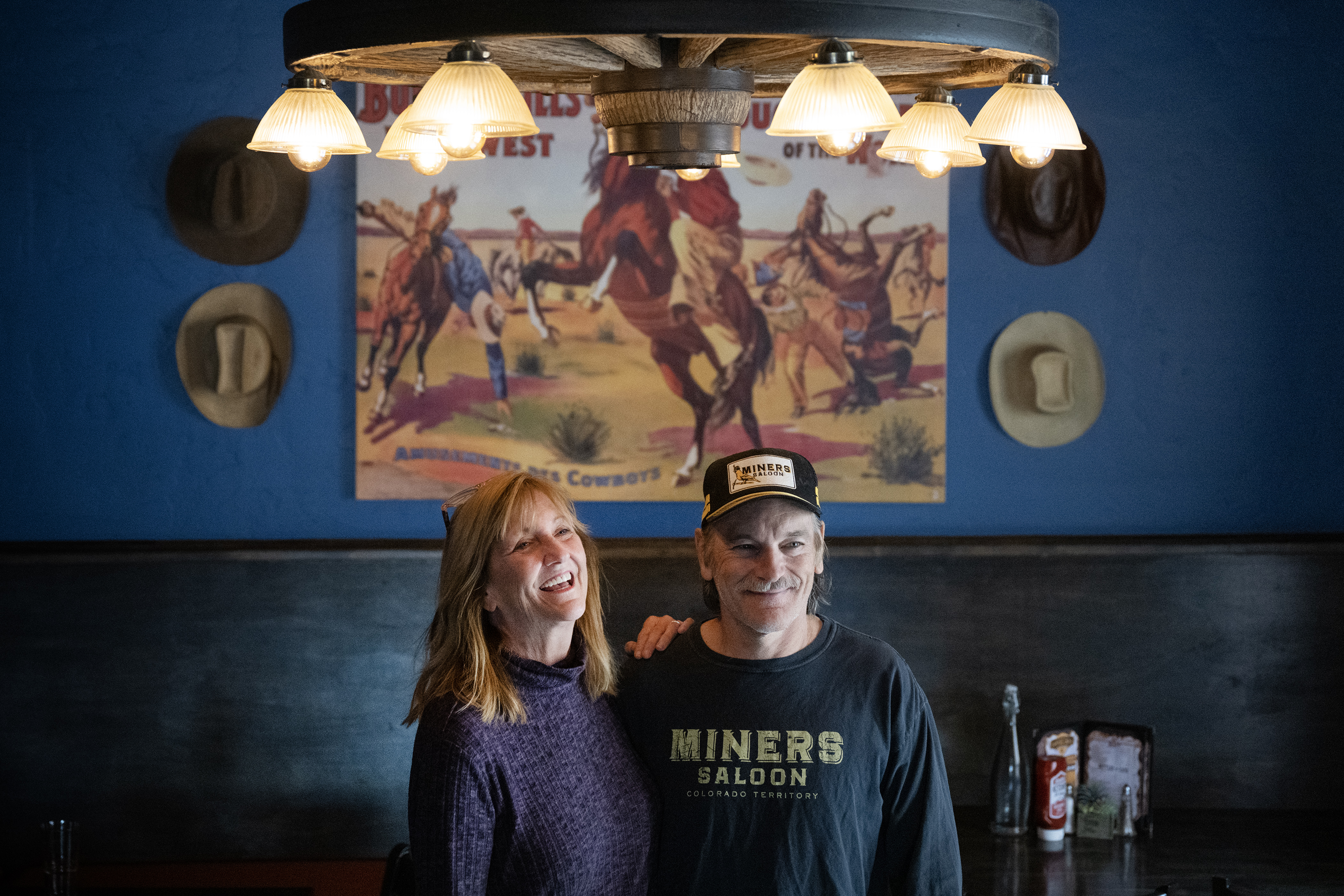
Aimee Valdez descended down the stairs and “into the guts” of her downtown Golden restaurant, rattling off the old ghost stories and historic lore that she and her husband, Dean, have mentally compiled about the storied building over the years.
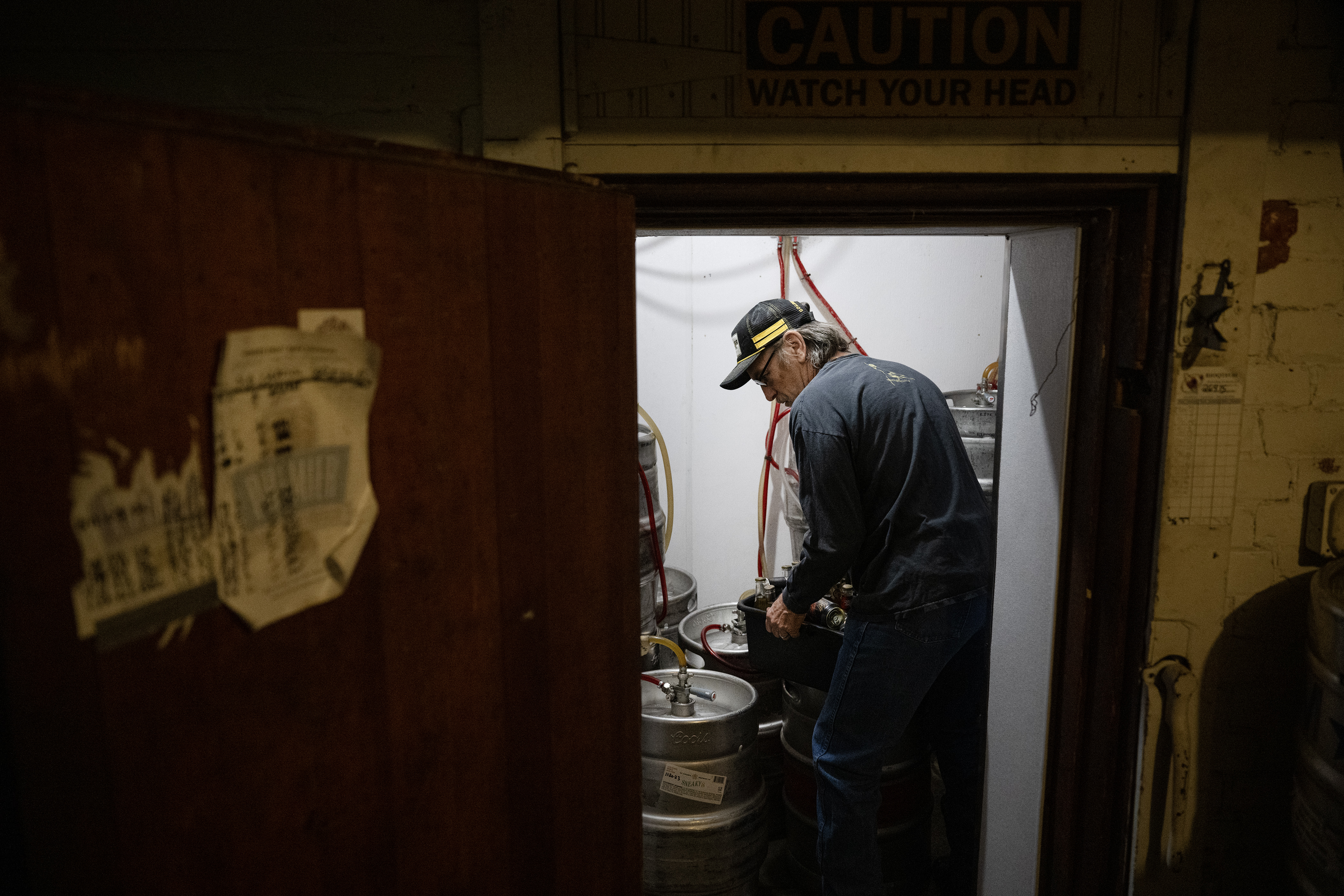
Upstairs, diners grabbing a late lunch washed down the Old Capitol Grill’s smokehouse grub with ice cold suds. In the room below their feet, Aimee unlatched an aged wooden door built into the basement’s brick walls. Dean crouched his way inside and shuffled around kegs to show the room’s size and purpose, a slight chill creeping out the open door.
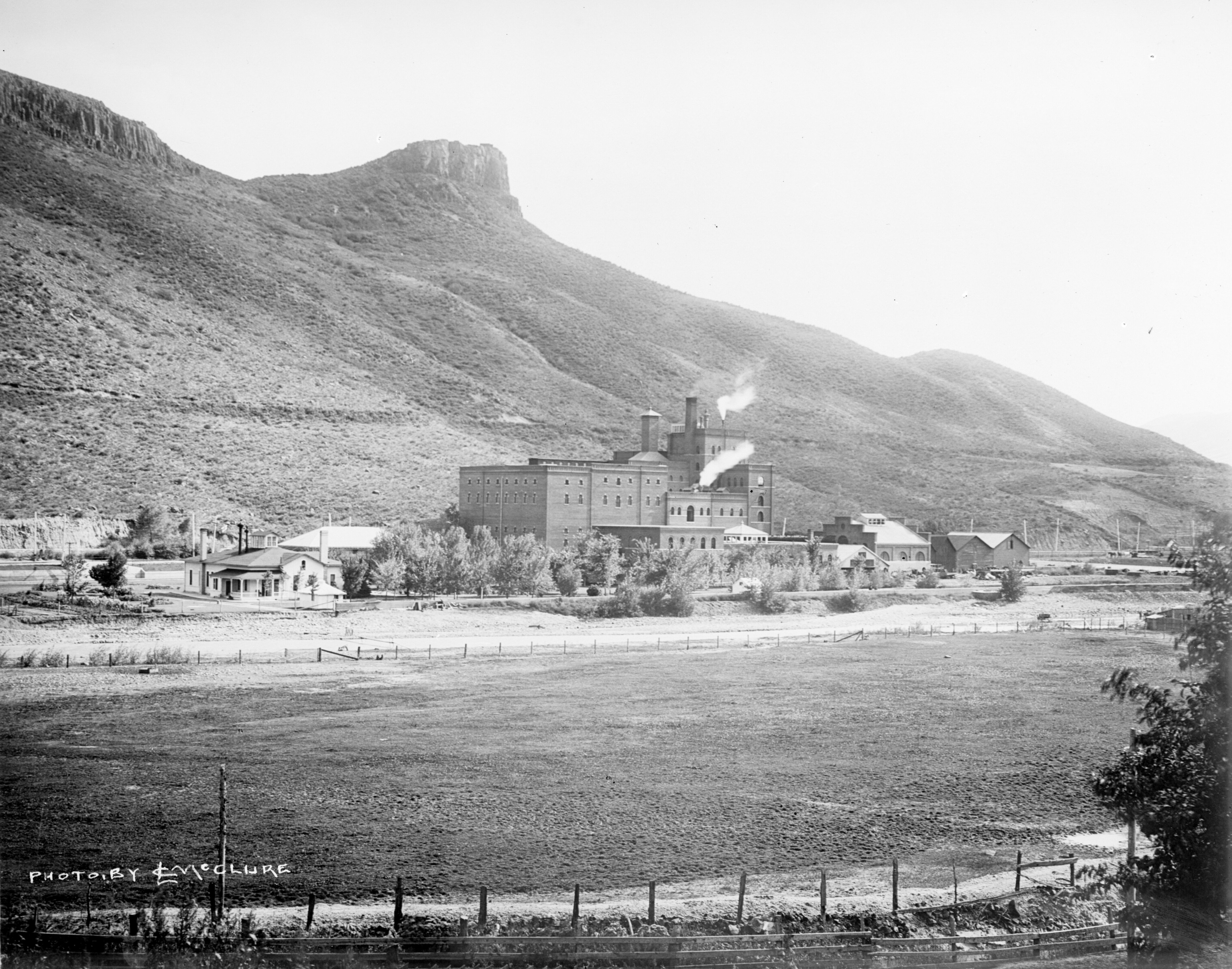
Just like the name “Coors” engraved on the building’s exterior, the basement keg cooler brimming with antiquity offered another hint at the site’s 150-year-old past.
“Back in the day, if you brewed it, you had to sell it,” Aimee said.
The Coors Brewing Company sold its beer from that very spot during some of its earliest years, the couple said proudly from the former Coors building turned restaurant. Although Aimee and Dean struck out on their own roughly a decade ago, the couple spent the bulk of their careers working with, or for, Coors.
Dean, whose father worked for the Coors brewery, followed in his dad’s footsteps starting with summer jobs, and then a 20-year career with Coors. He also chairs the Golden Chamber of Commerce’s board. Aimee’s professional relationship with Coors began when she worked for a public relations agency helping introduce its beer to the Michigan market. Coors recruited her in-house in 1990. She worked for the company either full-time, or as an independent consultant, until 2016.
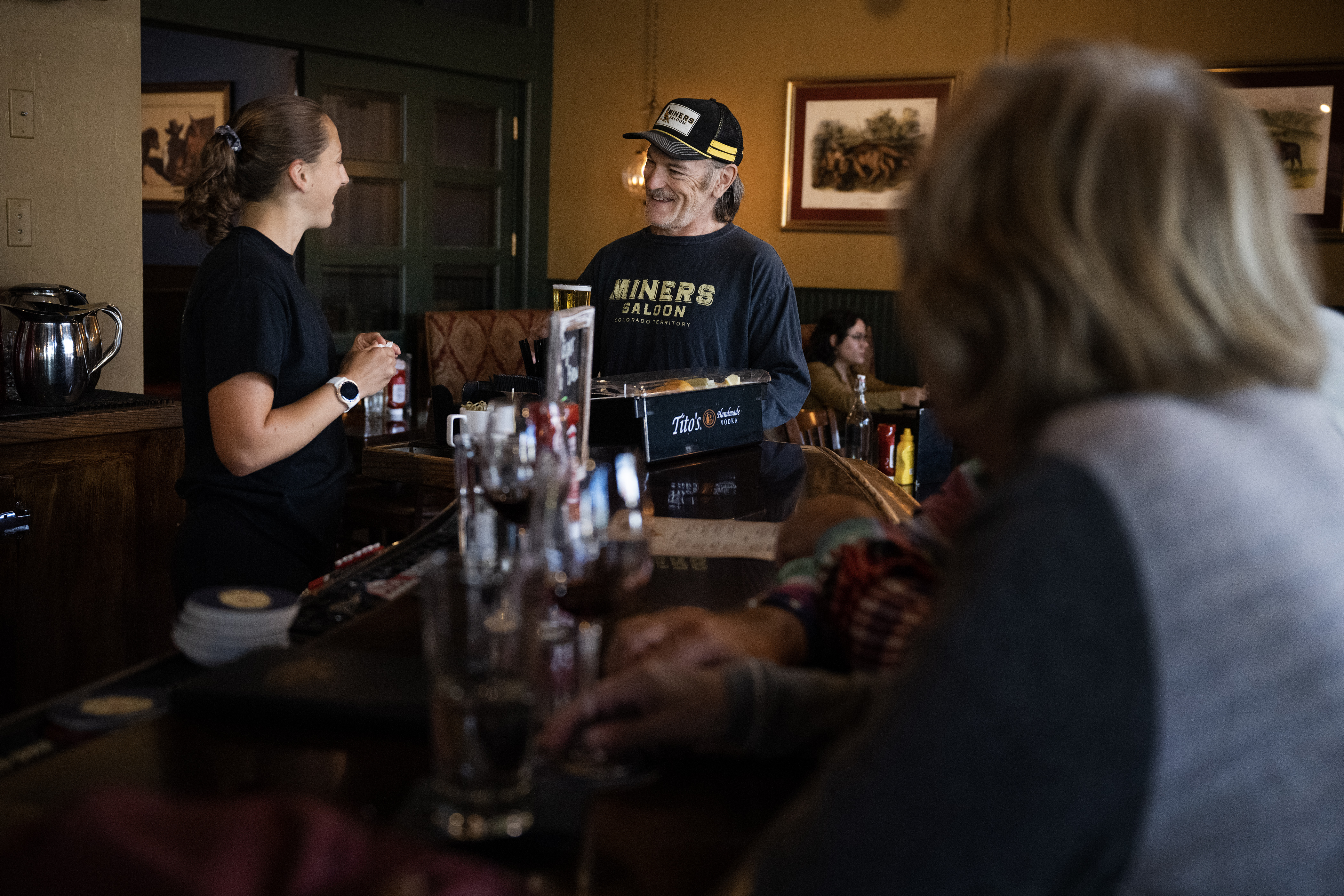
Somehow, Aimee and Dean said, they got into the restaurant and bar business. They opened a liquor store in 2013 before opening multiple restaurants in Golden. All serve Coors.
“We bleed Coors red,” Dean said, adding that Coors has its naysayers in town, but not him.
“You should bow to that brewery every day, because without Coors here, this town would not be what it is. Coors put this town on the map,” he said.
Past, present and future impact
The party may be over, but the buzz generated by the celebration last month of Coors’ 150th anniversary also put a spotlight on the brewery’s economic impact in the foothills community where it was founded — and beyond.
Coors’ story includes industry-changing innovations, periods of controversy around its labor practices and still-unfolding initiatives aiming to propel the company’s Golden plant through another 150 years.
There are the highs: Such as the oft-mentioned way Coors dramatically altered the beer industry’s approach to packaging and consumers’ ability to recycle with its introduction of the aluminum can.
And there are lows. State historians with History Colorado, which produced a series examining the state’s beer industry, noted in an installment on Coors that the brewing company was “notoriously unfriendly to the cause of organized labor” at various chapters in its history and the subject of allegations it carried out racist hiring practices.
Workers went on strike briefly amid labor disputes in 1890, and periodically in the decades that followed.
In the 1960s and 1970s, activists with the Chicano Civil Rights Movement were joined by labor unions and civil rights organizations in boycotting Coors to push back against labor practices they called unfair and discriminatory.
The company was hit with numerous state and federal complaints of racist, sexist, anti-union and anti-gay behavior, resulting in a decade-long boycott led by the American Federation of Labor and Congress of Industrial Organizations, which resulted in the union’s decertification in the late 1970s.
Tensions eased after Coors struck agreements with Black and Hispanic groups to change its hiring practices, work with minority-owned distributors and invest in minority communities. Similar negotiations with organized labor yielded an end to the union-led boycott in 1987, though the company’s workers again rejected union representation. The local AFL-CIO didn’t respond to requests for comment.
Today, Coors employs more than 2,150 people who live in Golden, Jefferson County or the Denver metro area, according to the City of Golden.
The company estimates it contributes billions annually to the local economy, taking into account jobs, taxes and tourism.
“Hundreds of millions” are being invested into the brewery’s G150 project, which is upgrading the Golden brewery’s fermenting, aging and filtration facilities. It’s expected to be complete next year, after starting in 2020.
Coors brewing officials declined live interview requests about the G150 project and its future plans for the company. But a spokesperson said via email that at its peak, the G150 project will bring more than 450 workers in skilled trades and project management. For years to come, the spokesperson said, Molson Coors’ taxable asset base will be “significantly increased as we continue to produce iconic beers known the world over.”
The Molson Coors website touts the project as one that will reduce the brewery’s energy and water usage by at least 20% and waste by 35%. Water usage will go down by 100 million gallons annually, according to Molson Coors.
The Molson Coors spokesperson said the company is committed to keeping “good-paying jobs in Golden and throughout Colorado,” and that the G150 project ensures that.
Coors enthusiasts in Golden hope the G150 project means Molson Coors is committed to keeping its Golden presence for another 150 years, and braced for industry headwinds.
Aside from tough economic times — supply chain disruptions, high inflation and tightening household budgets — the beer industry is navigating shifting consumer habits. Younger generations are drinking less as interest in non-alcoholic beverages piques.
Molson Coors saw shipments of 41.62 million barrels in the U.S. last year, according to the Boulder-based Brewers Association. That was down from the 43.85 million seen in 2021, according to a BA spokesperson. Thanks to shifts in the light lager market, sales will likely be higher this year, the spokesperson said.
From surviving prohibition to evolving into an industry titan, the brewing company has persisted. And although Coors has demonstrated an ability to innovate, it will need that in transitioning to its next chapter, local business leaders said.
‘It’s immeasurable’
A few days after Coors’ 150th celebration, Robin Fleischmann, an economic development manager with the City of Golden, stared at a list compiling the ways Coors has made an economic impact in Golden.
There are examples aplenty, she said, but summing it up is still difficult.
“It’s like, impossible. It’s immeasurable. It’s gigantic,” Fleischmann said.
Coors’ marketing prowess, its ability to tie its product to the mystique of Colorado and the state’s Rocky Mountain Spring Water before its beer became widely available throughout the U.S., doubled as marketing for the city and state, she said.
The company’s beer wasn’t distributed nationally until 1986, though its signature Banquet brew’s amber bottles and gold cans had already developed an almost cult-like following in the years preceding. At one time sold in only 11 western states, the beer’s much-sought-after status was the basis of the smash hit 1977 movie “Smokey and the Bandit,” starring Burt Reynolds — the year’s top box-office draw — as the Trans Am-driving bootlegger helping transport 400 cases of “Colorado Kool-Aid” to Georgia.
Coors Brewery tours remain one of the leading reasons people visit Golden, Fleischmann said.
Before the pandemic, 300,000 people visited annually. Post-pandemic changes to how tours are offered significantly lowered how many people come through town, Fleischmann said. Tours now operate on a reservation system that restricts visitation numbers, but last year still saw an estimated 60,000 people visit the brewery.
That was despite tours being closed in the first quarter of that year because of COVID-19, Fleischmann said. Thousands of those visitors in turn shop, dine and recreate in the Golden area, she said.
The Molson Coors world headquarters may be in Chicago, but Coors’ ties to Golden go well beyond the sweeping plant that remains, said Nola Krajewski, executive director of the Golden Chamber of Commerce.
“There is something very iconic in the Coors brand that you definitely associate with Colorado, even if their headquarters is else where,” Krajewski said.
The impact is multifaceted, she said. Whether it’s the local restauranteur that carries Coors products, the shop owner opening doors to the foot traffic Coors’ brewery generates, or the local residents whose “brother’s girlfriend’s sister” works at the brewery, “it would be hard to find someone here in Golden not impacted by Coors.”
“Everyone in some way has a connection to Coors, or is in some way impacted by them,” Krajewski said.
Current or former employees have turned into local business owners now supported by Coors, like Aimee and Dean Valdez, she said.
“On a national level, they are leaders in the brewing industry. And I think that what they do is an inspiration to others,” she said. “We have seen all of these micro-breweries across the nation pop up.”
‘The next big thing’
Karen Hertz, chief brewista at the Golden-based Holidaily Brewing Co., grew up in Colorado respecting Coors as a homegrown company — but never expected to work there.
When the technology bubble burst in the late 1990s, Hertz found herself looking for a job. Then an IT professional, Hertz wound up working on Coors’ human resources team. She would go on to spend eight years with the company, eventually working in logistics, getting beer from the brewery to distributors.
Then her career path took another unexpected turn. Hertz, a two-time cancer survivor, was advised to go gluten free. Suddenly, she could no longer drink her own employer’s products.
“What I ended up dong was opening a brewery of my own, and we make entirely gluten free beer,” she said.
Her time at Coors was instrumental in preparing her to run Holidaily, which employs 28 people at three locations in the Denver metro area, distributes to seven states and serves a niche consumer base with few other enticing gluten free beer options, Hertz said.
Coors’ impact on the industry, craft breweries and microbreweries is far-reaching, she said. The company’s advocacy for the beer industry at a local government level, like returning beer to grocery stores, comes to mind, Hertz said.
She also scales down and implements technologies developed by Coors in her operations at Holidaily. Scaling can be tricky, she said. Coors’ operations dwarf her own small business’.
When Hertz worked at one of Coors’ distribution centers, the brewery shipped 150 trucks of beer daily from that center alone. When she opened Holidaily, her business plan aimed to ship one truck of beer that entire year. Eight years later, she anticipates hitting 5,000 barrels this year.
“Maybe at our 150th anniversary, we will also have 150 trucks a day going out of one warehouse,” she said.
The beverage landscape is changing, Hertz said.
Seltzer demand grew for a couple of years before tapering off, and statistics are showing younger generations drink less, she said. Those consumer habits create hurdles for a saturated beer industry also responding to higher costs of transportation and high inflation, she said.
The raising of beer prices during the past one-to-two years may also be reaching a point that beer lovers are not willing to pay, and affecting sales, she said.
Holidaily is chugging along thanks to the niche it serves, she said. As for Coors, she expects the company that survived prohibition, is a technological innovator and champion of the aluminum can will adapt, too.
“Coors is usually pretty nimble and figures out how to participate in whatever the next big thing is,” she said.
The Coors’ family’s technical ceramics company — CoorsTek Inc. — is redeveloping its campus in downtown Golden. Peter J. Coors said at a September press conference that the 1.3 million-square-foot project is on track to have its first building completed in 2025.
Though Coors officials declined live interview requests for this story, they have spoken publicly about the brewery’s relationship with Golden.
“The symbiotic relationship between the city and the brewery has been great. Like any siblings we have our rivalries, our differences, but the brewery would not be what it is today without the city of Golden, and I think the city of Golden wouldn’t be what it is today without the brewery,” said Peter J. Coors, a fifth generation Coors family member and director of the Coors Brewery modernization project. “We’re a major tourist attraction here in Golden. Not many people say, ‘hey, I’m going to Lakewood to visit,’ it’s ‘I’m going to Golden’.”
“If it weren’t for the decades of support we’ve received from the Golden community, we wouldn’t be where we are today,” Peter J. Coors said last month. “We thank the people of Golden for being the catalyst of Molson Coors and the growth in Golden.”
Colorado Politics reporter Ernest Luning contributed to this story.


Get OutThere
Signup today for free and be the first to get notified on new updates.
PREV
PREVIOUS

Body parts stolen from crypt in Colorado, deputies say
The incident happened at the Crown Hill Cemetery, located at 7777 W. 29th Ave.

Biden tells Iran 'be careful' after Hamas attacks Israel
President Joe Biden made a public warning to Iran “to be careful” following the Iran-backed terrorist group Hamas’s attack on Israel over the weekend. “We’ve made it clear to the Iranians: ‘Be careful,'” Biden said on Wednesday at a roundtable of Jewish community leaders at the White House. ISRAEL WAR: BIDEN’S $6 BILLION IRAN PRISONER […]