







Denver’s city council is among the most diverse in history. Will it deliver? | ANALYSIS
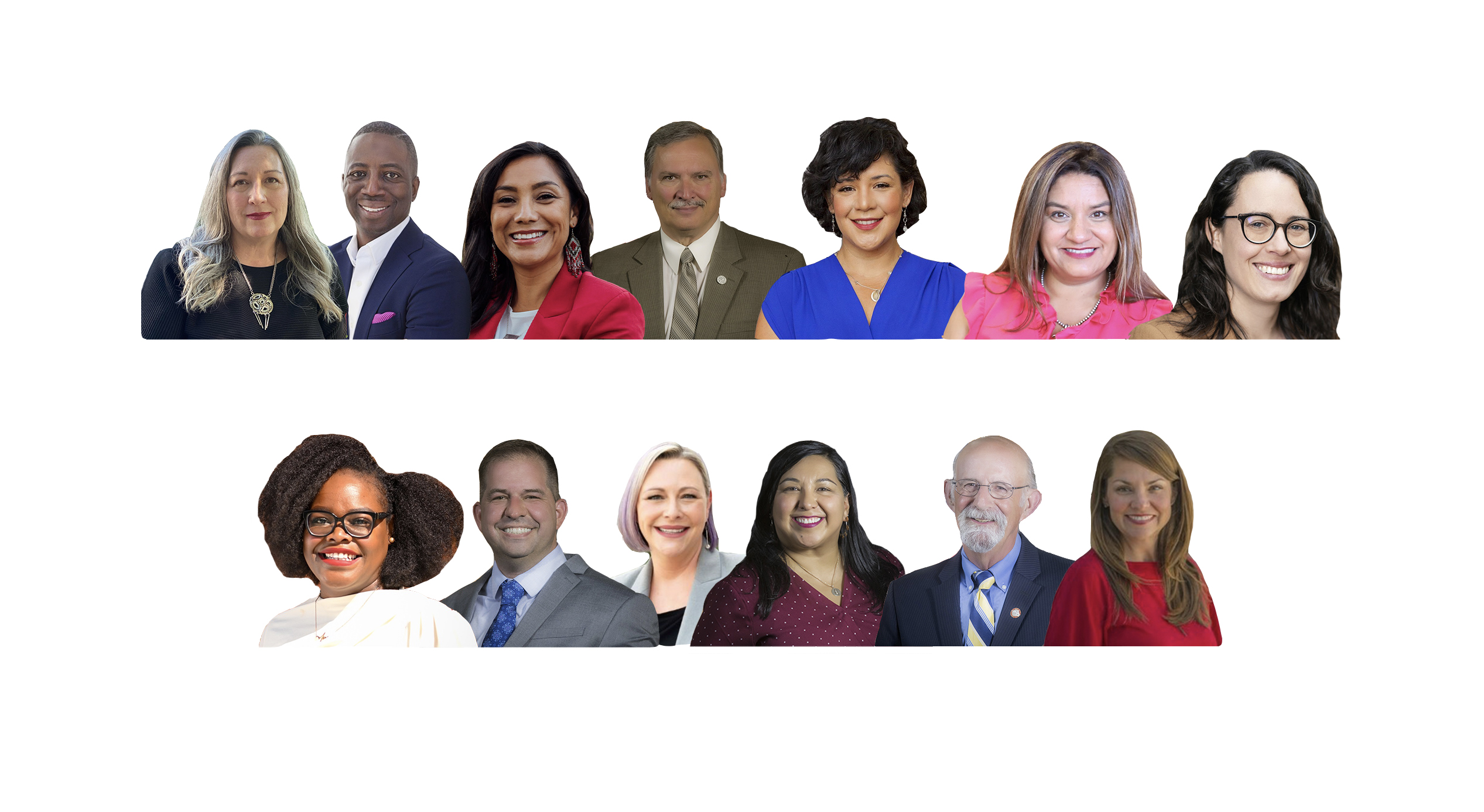
When Denver Mayor Mike Johnston took his oath of office in July, he paid homage to the new city council and specifically noted its diversity.
“Would you take a minute, please, and just enjoy and revel in the incredible gifts and diversity and talents of what this city council brings as a sign of a vibrant, powerful, diverse Denver?”
Indeed, in terms of race, gender and sexual preference, the city council stands as one of the most diverse in Denver’s history.
After the 2023 election, the governing body consists of two Black, openly LGBTQ+ councilmembers, six Latinos, and nine women. The council also has a member with a physical disability and another has experienced homelessness. Their age range spans almost four decades.
The councilmembers tout their diversity, saying it makes them uniquely qualified to represent the city’s population and to make decisions that better serve communities.
Already, some postulate that diversity has begun to influence policymaking.
Whether that means solving the city’s most pressing issues — and how quickly that can be accomplished — remain to be seen.
The new council, along with the new mayor, faces major challenges magnified by Denver’s unique characteristics, notably a homelessness crisis that is spiraling out of control, a housing situation that is pricing low-income and often longtime residents out, and violent crime that appears more intense — particularly in downtown Denver, where a spate of shootings over the last few months has put residents and businesses on edge.
Johnston, for one, has vowed to take 1,000 homeless people off the city’s streets by the end of the year. He also promised to end homelessness as a crisis by the end of his first term. For now, the city council has acquiesced to the new mayor’s requests, approving, for example, the purchase of “pallet shelters” without any public bidding.
So far, the city’s measures have led to 168 homeless people leaving the streets, which means Johnston and the city council have two-and-half months to go to get 832 homeless people into shelters.
Diversity in race, sexual preference
Diversity can include several factors, including race, gender, sexual preference, ideology, culture, age, religion, nationality and different life experiences.
Broadly speaking, progressives often highlight diversity in race and sexual preference, celebrating them as signs of social progress. Others, including some in the conservative quarters, favor diversity of thought and opinion, arguing they’re necessary ingredients to robust public discourse.
Members say early indications show the council is working well together, with that added layer of diversity helping to create a better dialogue.
“What diversity always brings to the table is kind of a real amazing spectrum of experiences, impersonal lenses that you apply to things,” District 3 Councilwoman and Denver City Council President Jamie Torres said. “So, I appreciate all of those things that come from my colleagues, because it makes our work more complex, more rich, and more accurate.”
The councilmembers who talked to The Denver Gazette regard their diversity as a tangible benefit to the city.
“Most of our values actually show up in our policies,” said District 8 Councilwoman Shontel Lewis, who identifies as the council’s only queer, Black woman. “For me, it’s not enough for us to look like the individuals who we are serving, but to really align ourselves with the needs in which community is shared that are important to them.”
Lewis, part of a slate of candidates endorsed by the Democratic Socialists of America, is pushing for a set of progressive policies as a solution to homelessness. Specifically, Denver’s homelessness can be addressed “with policies like forgiving medical debt, or getting more folks housed by giving them basic income,” she said.
Others see their election as an opportunity to highlight issues they believe have not been given sufficient — or any — spotlight.
District 9 Councilman Darrell Watson, who identifies as a gay Black man, looks to bolster policies to support people facing evictions.
“When you look at folks who are facing evictions, causing instability, you’re not thinking about the queer community that much as I am,” Watson said.
“Whether you are someone who is transgender or someone that is living with HIV, the medications become so expensive that paying for rent or paying for other utilities is hard,” he said. “Those aren’t things that the Denver City Council has talked about much, but they will be because I will be on the dais talking through those things when it comes to our housing policy.”
Of the estimated 5,818 homeless people living on Denver’s streets, 3 percent of them identify as LGBTQ+, according to the city’s Jan. 30 homeless point-in-time count.
Watson said those who identify as LGBTQ+ sometimes get kicked out of homes and end up on the streets.
“We were elected because I think communities are looking for folks with stories, folks and backgrounds that reflect them, and things that are important to them and their family,” Watson said.
Watson defeated Candi CdeBaca, an incumbent councilmember considered by many as a progressive stalwart. Like Lewis, CdeBaca received the backing of the Democratic Socialists of America.
Diversity in experience, circumstances
The members also point to their diverse experience as a benefit to the city, giving them insights into challenges by having lived them.
Lewis, who was once homeless, said she offers a “very unique” experience.
“I just think I bring up their very unique perspective where I understand housing issues,” she said. “I understand the connection to transportation, and how we are utilizing the social determinants of health to help us build better policies that actually impacted the lives of the individuals in a positive way within our community.”
The councilwoman said she struggled with mental health, income and balancing life challenges.
“I really understand what communities are grappling with, and what it takes from a lens of governance to be able to make folks whole,” she said.
District 10 Councilman Chris Hinds, who relies on a wheelchair, has worked on disability issues.
“Things that I’m working on include really making sure that everyone has access to everything,” said the councilmember, who is serving his second term after being first elected in 2019 and who said, as far as he knows, he’s the only elected official locally who uses a wheelchair to get around.
Hinds has backed polices to ensure no sub-minimum wage jobs for people with disabilities. A new law he advocated for also sought to create wider electric vehicle charging lanes for better disability access. In 2008, then-Denver mayor and now U.S. Sen. John Hickenlooper signed the “Chris Hinds Act” into law, the result of advocacy by Hinds and others to close loopholes and prevent the fraudulent use of disability parking.
“I was like, ‘Well, jeez, if they’re going to start naming laws after me as a private citizen, imagine what I could do as an elected official,” Hinds said.
He added, “Having that knowledge of how to advocate for things at the state level really helped me, specifically with disability rights, with my voice at the city level.”
The councilmembers also said their makeup represents balance.
“I am a woman, a mom, and a business owner,” District 5 Councilwoman Amanda Sawyer said. “We have diversity, we have challenges and so many different things going on. There is a lot of work to be done and competing interests.”
Will the council deliver?
Councilmembers welcome the diversity in Denver’s policy-making body.
“You’ve also got two older white guys,” said District 6 Councilmember Paul Kashmann, who took office in 2015. “You know, you have diversity in these more visible areas.”
He added, “We got some extremely bright people in this group who are politically motivated. (They) want to create more equity, to create more balance to better involve communities that have historically not gotten much respect from councils in the past.”
Indeed, the brand-new council appears in sync, but whether members can sustain it remains to be seen. It’s not uncommon for a policymaking body to stridently argue, and tension has flared up in in the past. Cdebaca, for example, once compared fellow Hispanic lawmakers to a “malinche,” prompting her colleagues to respond with “basta” or “enough.”
The councilmembers also acknowledged they need to start solving the city’s biggest problems — and soon.
“I feel that everybody’s in it knowing that we’ve got big issues to address and very focused on … how do we get it done?” said District 4 Councilmember Diana Romero Campbell.
By one specific metric at least — Johnston’s promise to find shelter for 1,000 homeless people by year’s end — the city is struggling.
To reach that goal by Dec. 31, Denver would need to move from the city’s streets an average of 11 homeless people per day. Counting July 18, the day Johnston made his promise, as the starting point, the city has transitioned into shelters nearly two homeless per day on average.

