Colorado’s youth corrections chief recognized nationally for innovation, results
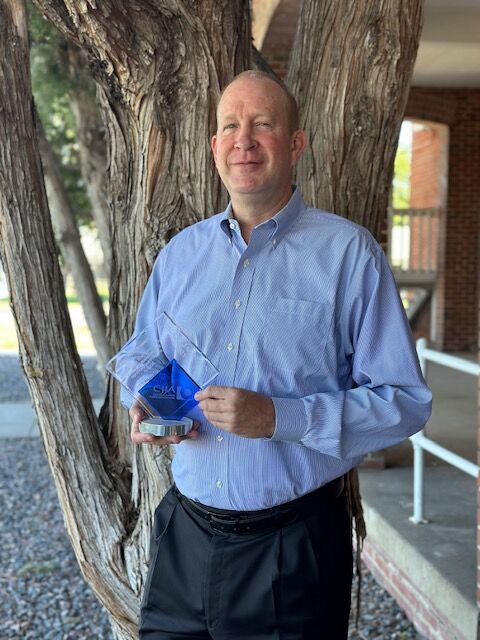
Colorado’s youth correction system chief received a top national award which recognized him for a career of enterprising work with juveniles and staff.
The Council of Juvenile Justice Administrators named Colorado Division of Youth Services (DYS) Director Anders Jacobson recently as the 2023 Juvenile Justice President’s Award recipient. He received the award over corrections leaders in states with traditionally challenging youth systems like California, New York and Illinois.
“Anders is a mentor who has worked hard to bring outcomes for youth not just in Colorado, but nationally,” said CJJA Executive Director Mike Dempsey, who was reached on the road while touring juvenile correctional facilities in Los Angeles. “One thing you have to realize is that these kids are all the same no matter where you go. They are all high-risk and they all deserve the same good outcomes and environments”
Jacobson is known nationally for his unique and non-traditional ideas when it comes to wraparound services and alternatives to punishment. He dedicated his 28-year career to rehabilitating youth who land in the justice system by treating them as human beings. Many of the juveniles, he said in an earlier interview, still have a chance at rehabilitation as opposed to the days of the “scared straight” approach — which he said has been proven to turn out more emboldened criminals.
“The evidence is very clear. If you go the other route you’re going to produce a better criminal,” Jacobson said.
He and his team developed solutions that prioritize trauma-responsive care and treatment, education and reintegration back into the community.
“Ninety-nine percent of the juvenile population is going to be your neighbor and my neighbor,” he explained. “They have lost their freedom. And the court has taken that freedom. There’s nothing that says The Division of Youth Services must be tough on this kid.”
For example, instead of having one staff member overseeing up to 20 teens in a pod, Jacobson uses a smaller-is-better approach where one or two staff members oversee 8-10 juveniles in a secure location.
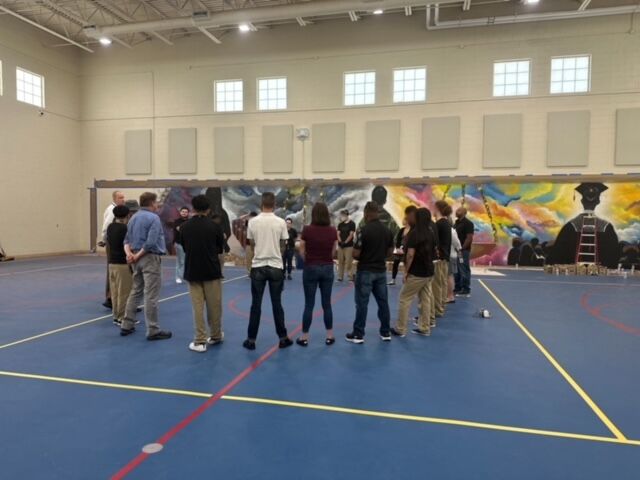
Under Jacobson’s direction, Colorado DYS changed the environment in its facilities to look more like home. White walls were repainted in bright colors, comforters replaced thin sheets, offenders wear khakis and polo shirts instead of jail scrubs.
Jacobson is convinced that if an environment looks like a jail, kids will act like criminals.
“We suck out as much of the correctional feel as we can and we’ve found that it has an impact,” he said.
There’s also been a drastic reduction in seclusion time on Jacobson’s watch. Where teens used to be locked in seclusion for hours, the average time limit in seclusion is now 45 minutes. Also, youth who act up are given a chance to cool down.
“Now they go in, chill out and lay on a bean bag,” he said. “We’re not wrestling kids on the ground and putting them into seclusion.”
Since these changes were put in place, youth are reoffending less. The most recent data, just published six weeks ago, showed that DYS had a 26% recidivism rate — a 15% drop compared to the 41% rate three years ago.
“The way you can look at this is most people who show up at DYS have been through the system for years, the vast majority of them have been through child welfare and multiple out-of-placement programs,” Jacobson said. “They ultimately get into DYS and almost 100% of the kids who come to us nobody could find the right interventions to help them. We were able to turn that around to arguably 75% success because they didn’t reoffend.”