







Legislators spar over staffing increases, education funding in Colorado’s $36 billion budget plan
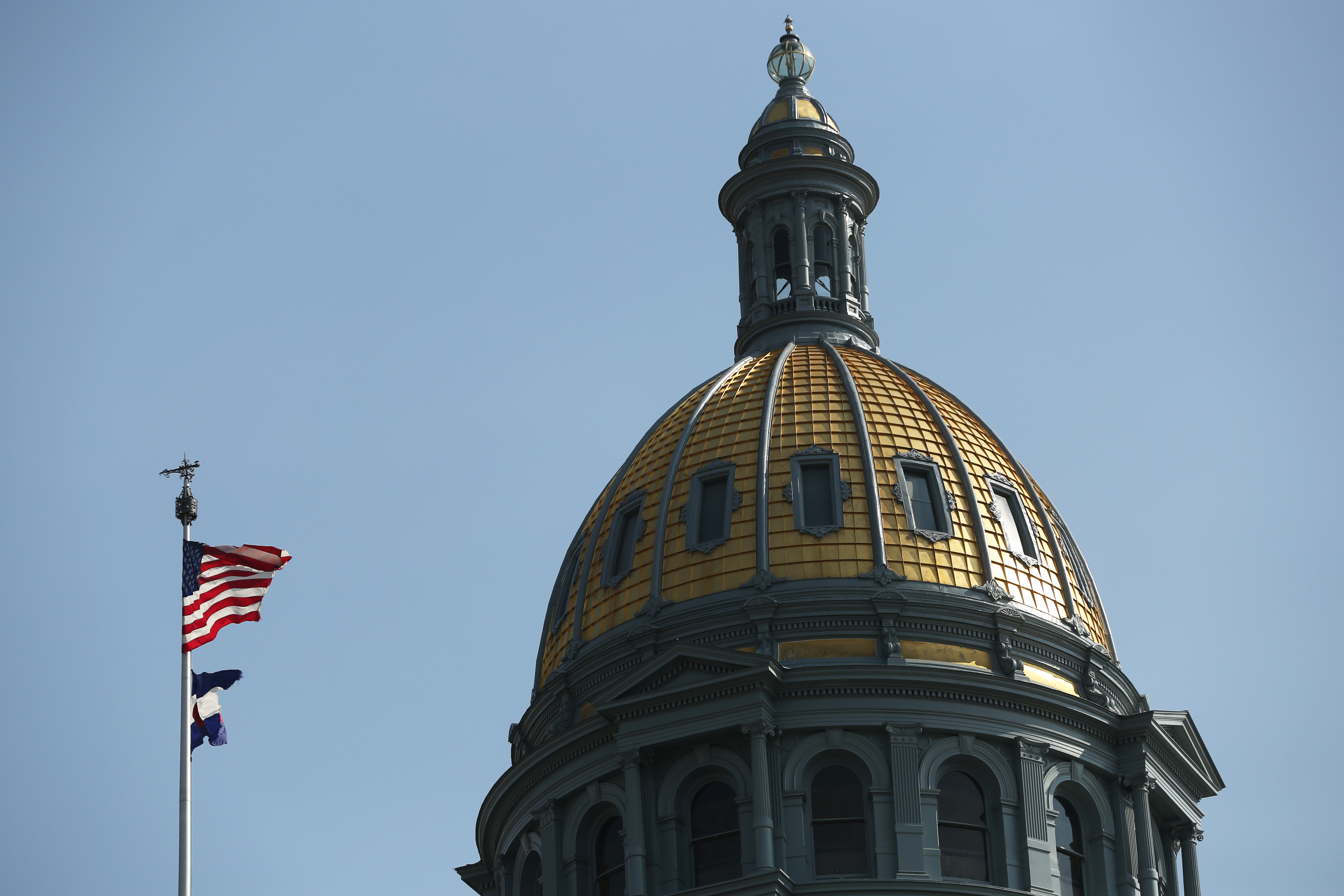
Colorado’s representatives on Tuesday sparred over staffing increases and the rationale for an array of funding proposals, notably money for private educational institutions, as they pored over a plan to spend $3.5 billion more in the next fiscal year.
The proposed spending for 2022-23 amounts to $36.4 billion, including hiking general fund expenditure by $1.5 billion or 12.1%. While Republican lawmakers criticized the proposal as yet another act of expanding government, Democrats argued it returns the state to normal spending level as Colorado begins recovering from the COVID-19 pandemic.
Members of the Joint Budget Committee unveiled the spending plan yesterday, the first salvo in the state’s annual budgeting process, and House caucuses met Tuesday to sift through House Bill 1329, also known as the “Long Appropriations Bill.”
Lawmakers are tackling the Long Bill as Colorado’s economy begins to pull out of the pandemic-induced economic coma of the last two years but also faces headwinds, notably soaring inflation, rising gas prices and a war in Europe that’s threatening global security.
“We made $3.3 billion in reductions in 2020 and it really feels like now we’re bringing forward a budget that’s getting us back on track,” said Rep. Julie McCluskie, D-Dillon, chair of the Joint Budget Committee. “This is fueling that Colorado comeback, the idea that we can get everybody back on their feet.”
The spending plan includes $14.1 billion for health care, $7 billion for education, $5.4 billion for higher education, $2.6 billion for human services, $1.8 billion for transportation, $993 million for corrections and $900 million for one-time only money that lawmakers are still figuring out how to spend.
Largely based on increases in general fund money, the plan calls for major increases in several areas, notably raising health care spending by $1.02 billion or 33.4%, and hiking public safety funding by $26 million or 15.4%.
Under the proposed budget, all state employees would also receive a 3% raise.
With fentanyl deaths on the rise, Colorado Bureau of Investigation seeks more funding and staff
Much of Tuesday’s discussion in the House Majority Caucus revolved around some of the 800 new full-time employee positions the budget plan seeks to fund. Amid this 1.3% increase in staffing, lawmakers are poised to deny Department of Law’s request for an additional staff person for its patterns and practices unit.
Colorado’s lawmakers propose to spend $36.4 billion, which funds 3% raise for government workers
“I think that’s an important unit,” said Rep. Adrienne Benavidez, D-Denver. “I think there’s a number of sheriff, police departments that may be in need of being looked at. Commerce City had requested one several years ago from the federal Department of Justice. … Why wasn’t that additional (employee) approved?”
JBC member Rep. Leslie Herod, D-Denver, defended the decision, saying the committee allocated additional staff to handle pattern and practice investigations last year but had “not seen any evidence” that the investigations have expanded since then.
That’s a reference to a change in JBC procedure, the result of a 2021 bill that puts into motion evidence-based budgeting.
Other Democrats criticized the approach of funding the position out of the Department of Law, calling for collaboration from the much higher funded Department of Public Safety.
The House Minority Caucus also focused on the addition of more full-time positions in state government.
JBC member Rep. Kim Ransom of Littleton noted an increase in the governor’s budget, which calls for adding 75 more full-time employees. While the legislature does not have the authority to impose hiring decisions — that’s based on a previous court decision — the General Assembly funds those positions, Ransom explained.
“While we don’t say ,’You have to hire that many,’ they have the funding to hire them,” she said, in response to a question from Rep. Rod Bockenfeld of Watkins.
The addition of employees who will help implement the collective bargaining agreement negotiated with Colorado WINS, the state employee union, also raised eyebrows among Republicans.
The Department of Personnel and Administration budget, for example, adds funding for four full-time employees, Ransom pointed out, but that doesn’t count stewards in a variety of state agencies.
The $1,374,990 increase for the department includes compensating state agencies for the time those stewards will spend on union business, as well as hiring someone who will handle tuition reimbursements, also covered under the agreement.
Amidst the host of hiring hundreds of employees that the budget intends to fund, the number of staffers is decreasing in one department – the Department of Higher Education, which listed 97 fewer full-time employees than in the previous year.
Ransom said she isn’t sure about the exact cause but speculated it could be lower enrollment at the state’s public colleges and universities. That led Rep. Richard Holtorf of Akron to opine about the high cost of tuition and his criticism of state-funded educational institutions. In his district, students are not going to Colorado universities due to “extreme liberalization” of those institutions, he said, adding that’s driving them to Kansas and Texas.
Ransom noted a 2% limit on tuition increases, as contained in the budget, except for the University of Colorado, which offers a flat-tuition model that guarantees the same tuition for students who commit for four years.
The proposed budget also funds 65.7 new full-time employees in the Department of Public Health and Environment to increase air quality monitoring and programming. McCluskie said Gov. Jared Polis proposed more staffing following the downgrading of Colorado’s air quality from “serious” to “severe.”
Rep. Tracey Bernett, D-Longmont, questioned how the state would fund the new positions long-term, as the budget only allocated one-time money over the next two years.
McCluskie said the state will “need to either increase fees and fines and use those dollars to help offset what the expenses will be,” adding that 21 or 22 of the positions will likely be temporary, ending after two years.
Republicans also zeroed in on Medicaid funding. Ransom said she believes Colorado’s Medicaid costs, which are matched by federal dollars, will start coming down in the near future as people get back to work and disenroll from the program. However, for 2022-23, the state will add more than $1 billion in general fund dollars to Colorado Department of Health Care Policy & Financing’s budget, mostly to cover higher provider rates and Medicaid enrollments, including the loss of some federal match dollars.
Minority Leader Hugh McKean and Holtorf also questioned the increased funding for the Secretary of State’s security detail. Under the proposal, the state will spend $10,000 per month just for monitoring social media for threats – to be done by a private firm. Additional funding, largely from business fees paid to the Secretary of State’s office, also covers private security for Jena Griswold and other staffers at public events, at a cost of $32,400.
Budget package includes $32,000 for Griswold to hire private security
Lawmakers also discussed education funding at length, particularly private education.
Democrats raised concerns about the state providing stipends to private higher education intuitions and various funding programs for charter schools.
Rep. Cathy Kipp, D-Fort Collins, criticized the proposed increase in mill levy equalization for charter schools, calling it “problematic.”
“You have local voters voting to increase how much should go to their local schools and you have the state saying, ‘Well, you did that for these schools, so we’re going to do the same thing for all of these other schools,’” Kipp said. “It leads to district shopping … and there is a potential of totally gaming the system.”
“We need a better solution for this long-term,” she added.
Other Democrats questioned funding for charter schools’ construction and facilities, and asked what would happen if the state removed these funding increases entirely.
Additional complaints among Democrats included the allocation of $800,000 for the Office of Judicial Discipline since the legislation to create the office hasn’t been introduced yet, and lawmakers are supposed to craft the budget using current law. Kipp also advocated for the budget to address the Department of Revenue’s financial inability to provide driving tests, outsourcing them to private providers who charge more than the state statute allows.
Over in the Republican caucus, Akron asked if sentencing reform has led to a reduction in the population at the Department of Corrections. Ransom said it’s been difficult to assess the success of those bills due to the pandemic, given that some people were paroled and others were moved into community corrections during the health crisis. She noted that crime is on the upswing, and that prison buildings have remained online for that purpose.
“It is a perfect work of art … it does not need any amendments,” McCluskie jokingly pleaded with her caucus. “There is nothing that needs to be changed.”
Colorado House approves universal preschool, new Department of Early Childhood
Amendments from both caucuses were due by 4 p.m. Tuesday and both caucuses will meet first thing Wednesday morning to review the amendment package. The House will begin to debate the package at 11 a.m. A final vote is likely on Thursday, and then the budget heads to the Senate.