







Aurora Police, civil service commission battle for hiring power
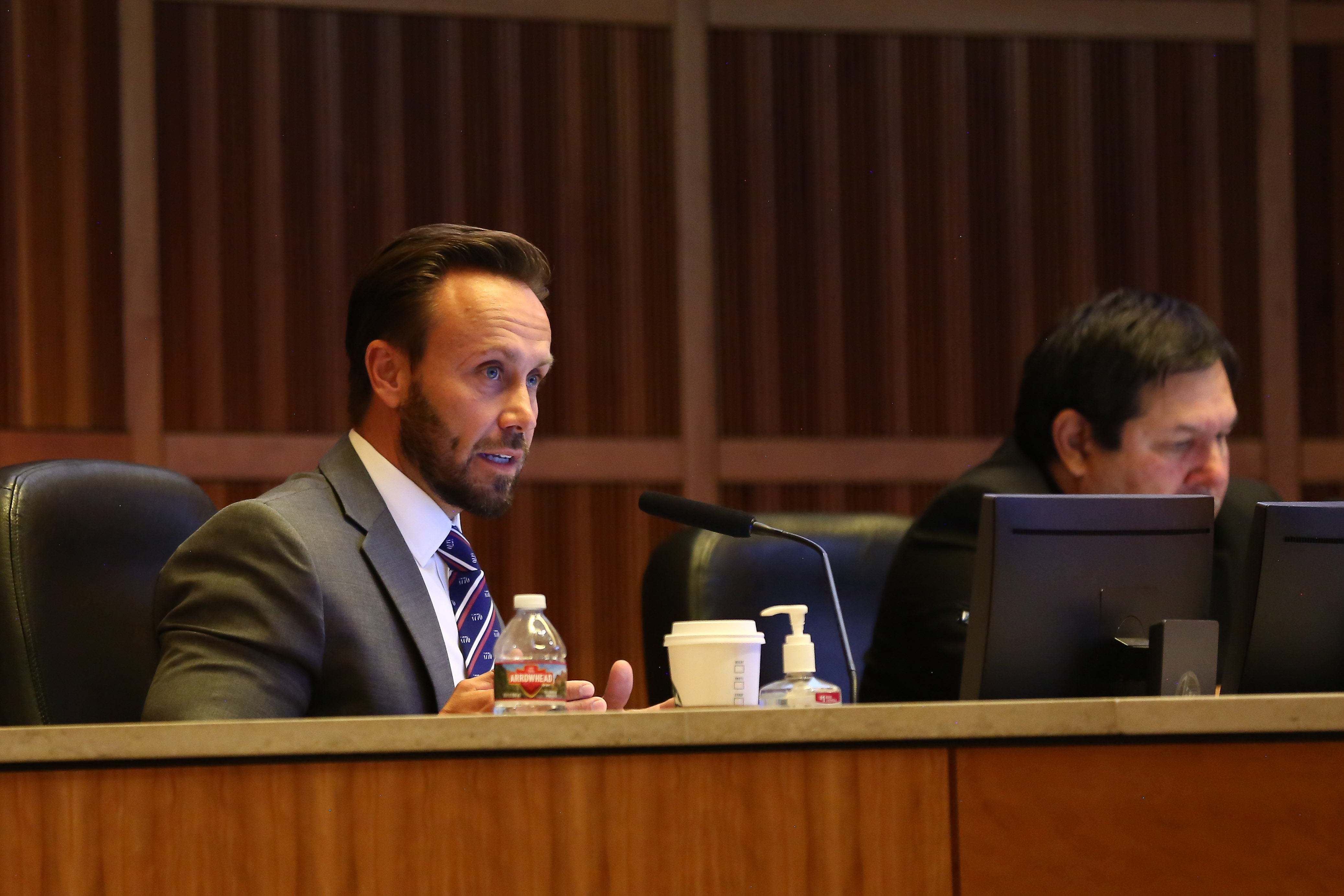
The Aurora Police Department chief of police blasted the city’s Civil Service Commission on Monday saying the group is crippling the agency’s ability to hire officers amid a staffing crisis.
Interim Chief Dan Oates voiced strong support for a proposal to shift hiring power from the independent civilian commission back to the city’s fire and police departments.
While both progressive and conservative councilmembers voiced support for the plan, not all were on board. The commission’s leadership countered the plan risks “bringing back in the good old boys” culture and nepotism in hiring practices.
The head of the Commission was not invited to the meeting to respond to the criticism, but watched the meeting and said many of Oates’ complaints lacked context.
The debate unfolded at City Council’s Monday night study session, where no formal action is taken but items are discussed by councilmembers before moving to a regular meeting for official votes. The plan is slated to come back to the council’s Dec. 13 study session after the civil service commission can meet to review it.
In general, the drafted proposal brought forward by Councilmember Dustin Zvonek would direct the city manager to work with the commission and create new processes for hiring entry-level police officers and firefighters. It would require that departments have final say over who is hired, something the commission currently determines.
Zvonek said he wants to more heavily involve the city departments in their own hiring. He believes placing the process under the city manager’s oversight will lead to more accountability. The change is also required by the city’s consent decree, he said.
“It allows us to comply with the consent decree, and to add a layer of accountability,” he said.
Aurora is currently under a consent agreement with the state for making changes to the city’s safety agencies after an investigation by the attorney general’s office found patterns of bias and excessive force in policing. The fire department also had a pattern of using the sedative ketamine in violation of the law, the investigation found, though the department stopped using the drug more than a year ago.
The Aurora Civil Service Commission was created in 1967 by the city charter. The independent commission of five city citizens establishes the qualifications, issues exams to candidates and sets certification requirements people must meet while applying for entry-level police officer and firefighter positions.
City Attorney Manager Pete Schulte told public safety committee members earlier this month that the commission began managing almost all aspects of hiring for those positions in the early 2000s. Schulte said that means the departments are not meeting new employees until they arrive at the training academy.
He is not aware of any other municipalities that hire police and fire personnel the way Aurora does, he said on Monday. The civil service commission is still important, he said, and the drafted resolution would not eliminate its role in hiring altogether.
Zvonek still wants the commission to oversee any appeals from candidates whose applications are rejected. The commission would also continue running the background checks and issuing the required exams applications required in his vision for a new process.
Oates lambasted the commission during the study session, which he said is only hiring 2.5% of applicants despite the police department experiencing a staffing crisis. Oates projected at the current rate of hiring, the February training academy will graduate three basic police officers, when the department needs 30.
“We are in an existential challenge,” he said.
The department is still seeking the hiring rates at Denver and Colorado Springs’ agencies, but learned Lakewood’s police department hires 7% of candidates, Oates said.
He also said the process to vet and hire candidates is painfully slow and loses candidates to other departments in the “world of hyper-competition for candidates” that law enforcement is facing.
If the best possible candidate applied tomorrow, he said, it would take them more than four months to undergo the commission’s hiring process, meaning they could not make the next academy in February. The academy after that is not until May. Most candidates would find a job elsewhere in that time, he said.
Oates said the issue is an “overreach of authority of the commission that has bogged us down, turned candidates away and made it hard for us to hire.”
A division chief for the department said roadblocks include disqualifiers “for which there is no appeal” such as discrepancies in applications, marijuana use in the past year, minor traffic infractions and petty offenses. That does not allow a “whole person” approach to hiring that the city’s consent decree urges, he said.
A particular source of frustration for the department, Oates said, was that it recently learned “there are hundreds” of candidates who expressed an interest in the department but were not being heavily recruited. Candidates are required to take a national test and if they pass can request their results be sent to departments they might like to work for, he said. Hundreds were reportedly putting APD on their lists.
“We’ve never known that,” he said, meaning the department could not contact those candidates and shepherd them through the application process for APD.
“The insensitivity to our needs that hundreds of people have expressed interested in Aurora PD and the commission would not tell us about that,” Oates said. “It shows a lack of sensitivity to the crisis that we are facing.”
Councilmembers Francoise Bergan and Juan Marcano expressed support for the plan, although Marcano asked for a fiscal note before council votes on the matter. City Manager Jim Twombly said it could take time for staff to determine potential costs and it will depend on what new processes are created.
Interim Fire Chief Allen Robnett also voiced support for the plan. Some who go through weeks of training end up deciding firefighting is not for them, he said. He would prefer for the fire department have a bigger role in hiring, to educate candidates about the realities of firefighting “before they accept a position.”
“Somebody on that list did not get picked because they took that seat,” he said.
Councilmember Curtis Gardner was highly skeptical, though. He questioned the data presented by Oates and asked if the department researched the reasons behind the 2.5% hiring rate. He noted the city is running a chief of police chief search that came up empty handed.
“Could it not have to do with the quality of applicants we’re getting,” he said.
Harold Johnson, who chairs the civil service commission, told The Denver Gazette he watched the meeting and that he was not personally asked to present or respond to the city departments. Most of what Oates presented “was taken out of context.” He was grateful to Gardner for asking about the quality of candidates who apply to APD, he said.
High-quality recruits are choosing other departments because their reputations “right now are a lot more desirable,” he said. If a candidate is accepted into both Aurora and Denver’s police department academies, “it would be a no-brainer,” he said. Denver’s department offers “a lot more stability” than Aurora’s, he said, as does Colorado Springs’.
“Those are departments that are stable,” he said.
The hiring process might be able to speed up some but performing psychological evaluations and background checks takes time, he said.
“It’s not as simplistic as they are trying to say – that they can take over it and boom, it’s going to work, just smooth,” he said.
He was open to changing rules about marijuana use, he said, and that contacting the candidates who pass their national test is something the police department could take over. He adamantly disputed the claim the commission is not contacting those candidates.
He also said the plan would eliminate checks and balances in the hiring of Aurora’s first responders. Johnson pointed to recent reports that Oates reversed disciplinary recommendations for one of his division chiefs and then promoted them.
“This gives all of the power back to the chief,” he said. “I would not want him to have that kind of power. Absolute power corrupts absolutely.”