







Second trial begins in Weld County for man accused in 1984 disappearance, death of Jonelle Matthews
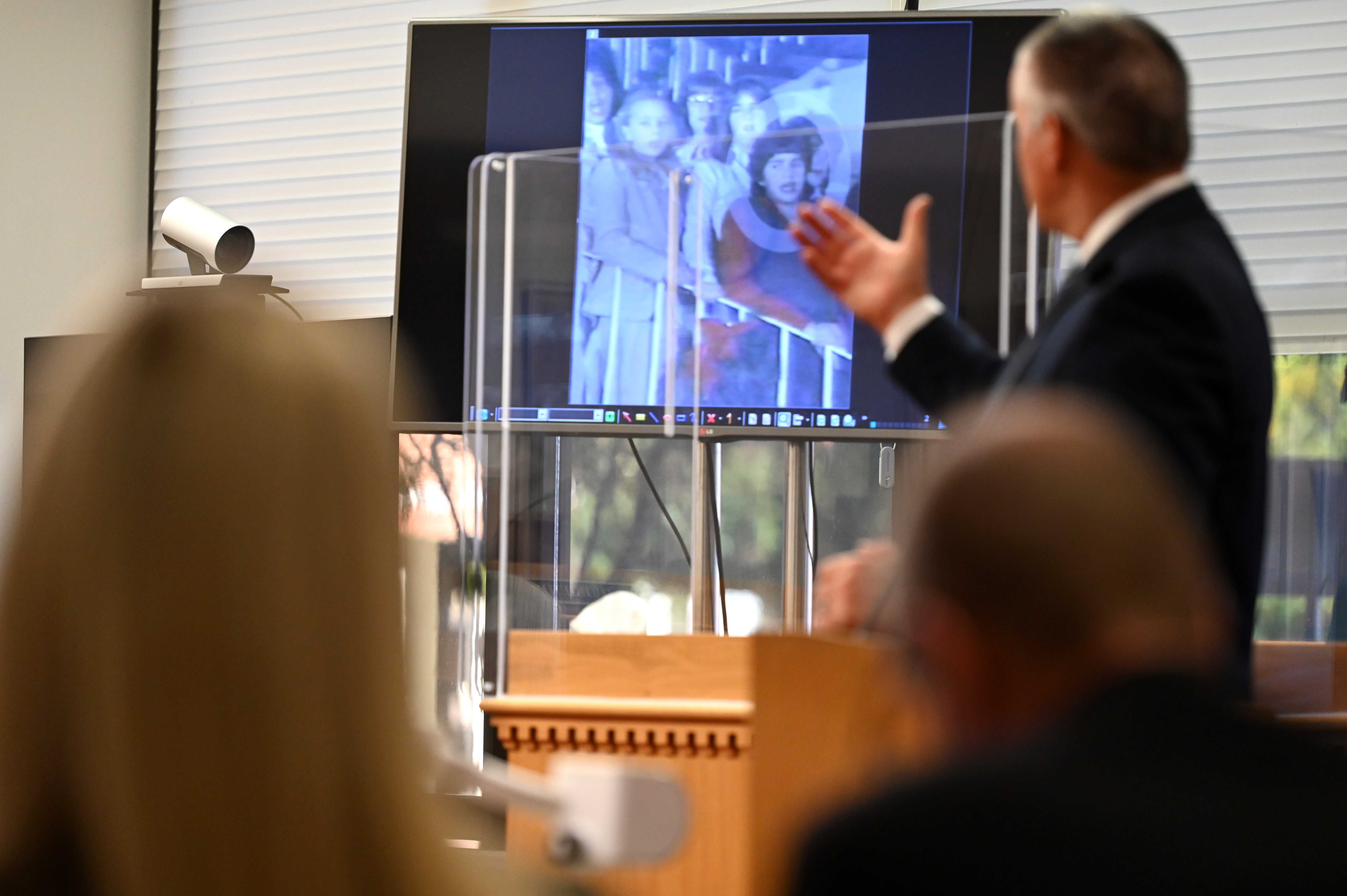
Prosecutors said there were hints — obsession with news coverage of Jonelle Matthews’ disappearance. Strange, unprompted statements claiming to have information about the little girl’s disappearance before he was ever a person of interest in the case. Knowledge that snow had been raked outside her family home to destroy footprints left behind, a detail prosecutors claim investigators revealed to no one for years.
These are just some of ways, prosecutors said, Steve Pankey cued investigators over the years about his alleged involvement in the disappearance and death of 12-year-old Jonelle Matthews a few days before Christmas in 1984.
Pankey, 71, faces five counts in connection with Jonelle’s disappearance and death in 1984, including first-degree murder after deliberation, felony murder, second-degree kidnapping and two crime-of-violence sentence enhancers.
“It’s almost as if over the course of time, the defendant walks up to the shoulder of law enforcement, taps them on the shoulder, and says, ‘Here I am. Come get me,’” said Weld County District Attorney Michael Rourke in his opening statement Friday morning for Pankey’s trial.
Pankey first went to trial a year ago, which ended with a deadlocked jury.
Jonelle went missing from her family’s house in Greeley at 320 43rd Avenue Ct. the night of Dec. 20 after she performed in a holiday choir concert. She vanished apparently during a brief window between when a friend dropped her off at home around 8:30 p.m. and when her father got back from her sister’s basketball game about an hour later. Jonelle appeared to have been in the middle of making cross-stitch embroidery gifts when she disappeared, the shoes she had worn that night on the floor and the room’s space heater still on.
Prosecutors said the family friend who had driven her home from the concert that night stayed until he saw her go into her house and turn on a light. But when Jonelle’s father, Jim Matthews, arrived home about an hour later around 9:30 p.m., his daughter didn’t respond when he called out to her.
“Having seemingly vanished into thin air, Jonelle went missing for the next 35 years,” Rourke said.
Judge Timothy Kerns presides over the case.
Jonelle’s disappearance upended Greeley, then a much smaller, more rural town. She was one of the first missing children to appear on milk cartons.
Oil and gas workers discovered her body in a field in 2019. She had died of a gunshot to her head. Rourke said clothes found at the scene matched the red blouse, gray sweater vest, plaid skirt and blue coat Jonelle wore to the choir concert.
Rourke also accused Pankey of making unprompted, conflicting and seemingly strange statements about Jonelle’s disappearance over the decades, claiming he had information about her disappearance and demanding immunity in exchange for information he said he had about what happened.
“Please remember truth does not change. Reality cannot be twisted. But what you’ll see is the defendants statements over the course of time have changed significantly,” Rourke said.
In his opening statement, Peter Harris, Pankey’s defense attorney, focused on a lack of physical evidence linking him to Jonelle’s disappearance. Prosecutors have built a theory of the case based on subjective interpretations of evidence, he said.
“There’s pressure to solve this, and pressures that do not necessarily aid in finding the truth,” Harris said. “After you hear the evidence in this case, you’ll have to wonder if the truth has actually been found out.”
Rourke acknowledged there is not DNA evidence from the scene where Matthews’ body was found, given it laid in a field exposed to the elements for 35 years. And her home was never checked for touch DNA because the technology didn’t exist in 1984.
Harris latched onto the shortfall, and pointed out no fingerprints in the Matthews’ home, murder weapon or witnesses link Pankey to Jonelle’s disappearance and death. He also argued prosecutors’ claim that only investigators knew about the rake marks in the snow outside Jonelle’s home wasn’t true – because of the high interest her disappearance prompted immediately in Greeley.
“When you analyze the evidence and you hear people talk about the evidence that makes them so sure it was Steve, you have to keep these hard and fast points in mind,” he said.
Harris called “the elephant in the room” the possibility that a man who lived near the Matthews,= actually killed Jonelle. The man babysat Jonelle and Harris said she would been unlikely to struggle if the man took her away since she knew him.
The man has since died and was never charged for Jonelle’s death.
“Yes, it’s about justice,” Harris said. “But not a simple, uncritical, justice.”
Second trial begins in Weld County for man accused in 1984 disappearance, death of Jonelle Matthews

Prosecutors said there were hints — obsession with news coverage of Jonelle Matthews’ disappearance. Strange, unprompted statements claiming to have information about the little girl’s disappearance before he was ever a person of interest in the case. Knowledge that snow had been raked outside her family home to destroy footprints left behind, a detail prosecutors claim investigators revealed to no one for years.
These are just some of ways, prosecutors said, Steve Pankey cued investigators over the years about his alleged involvement in the disappearance and death of 12-year-old Jonelle Matthews a few days before Christmas in 1984.
Pankey, 71, faces five counts in connection with Jonelle’s disappearance and death in 1984, including first-degree murder after deliberation, felony murder, second-degree kidnapping and two crime-of-violence sentence enhancers.
“It’s almost as if over the course of time, the defendant walks up to the shoulder of law enforcement, taps them on the shoulder, and says, ‘Here I am. Come get me,’” said Weld County District Attorney Michael Rourke in his opening statement Friday morning for Pankey’s trial.
Pankey first went to trial a year ago, which ended with a deadlocked jury.
Jury deadlocks on murder, kidnapping charges against Steve Pankey in 1984 death of Jonelle Matthews
Jonelle went missing from her family’s house in Greeley at 320 43rd Avenue Ct. the night of Dec. 20 after she performed in a holiday choir concert. She vanished apparently during a brief window between when a friend dropped her off at home around 8:30 p.m. and when her father got back from her sister’s basketball game about an hour later. Jonelle appeared to have been in the middle of making cross-stitch embroidery gifts when she disappeared, the shoes she had worn that night on the floor and the room’s space heater still on.
Prosecutors said the family friend who had driven her home from the concert that night stayed until he saw her go into her house and turn on a light. But when Jonelle’s father, Jim Matthews, arrived home about an hour later around 9:30 p.m., his daughter didn’t respond when he called out to her.
“Having seemingly vanished into thin air, Jonelle went missing for the next 35 years,” Rourke said.
Judge Timothy Kerns presides over the case.
Jonelle’s disappearance upended Greeley, then a much smaller, more rural town. She was one of the first missing children to appear on milk cartons.
Oil and gas workers discovered her body in a field in 2019. She had died of a gunshot to her head. Rourke said clothes found at the scene matched the red blouse, gray sweater vest, plaid skirt and blue coat Jonelle wore to the choir concert.
Rourke also accused Pankey of making unprompted, conflicting and seemingly strange statements about Jonelle’s disappearance over the decades, claiming he had information about her disappearance and demanding immunity in exchange for information he said he had about what happened.
“Please remember truth does not change. Reality cannot be twisted. But what you’ll see is the defendants statements over the course of time have changed significantly,” Rourke said.
In his opening statement, Peter Harris, Pankey’s defense attorney, focused on a lack of physical evidence linking him to Jonelle’s disappearance. Prosecutors have built a theory of the case based on subjective interpretations of evidence, he said.
“There’s pressure to solve this, and pressures that do not necessarily aid in finding the truth,” Harris said. “After you hear the evidence in this case, you’ll have to wonder if the truth has actually been found out.”
Rourke acknowledged there is not DNA evidence from the scene where Matthews’ body was found, given it laid in a field exposed to the elements for 35 years. And her home was never checked for touch DNA because the technology didn’t exist in 1984.
Harris latched onto the shortfall, and pointed out no fingerprints in the Matthews’ home, murder weapon or witnesses link Pankey to Jonelle’s disappearance and death. He also argued prosecutors’ claim that only investigators knew about the rake marks in the snow outside Jonelle’s home wasn’t true – because of the high interest her disappearance prompted immediately in Greeley.
“When you analyze the evidence and you hear people talk about the evidence that makes them so sure it was Steve, you have to keep these hard and fast points in mind,” he said.
Harris called “the elephant in the room” the possibility that a man who lived near the Matthews,= actually killed Jonelle. The man babysat Jonelle and Harris said she would been unlikely to struggle if the man took her away since she knew him.
The man has since died and was never charged for Jonelle’s death.
“Yes, it’s about justice,” Harris said. “But not a simple, uncritical, justice.”
