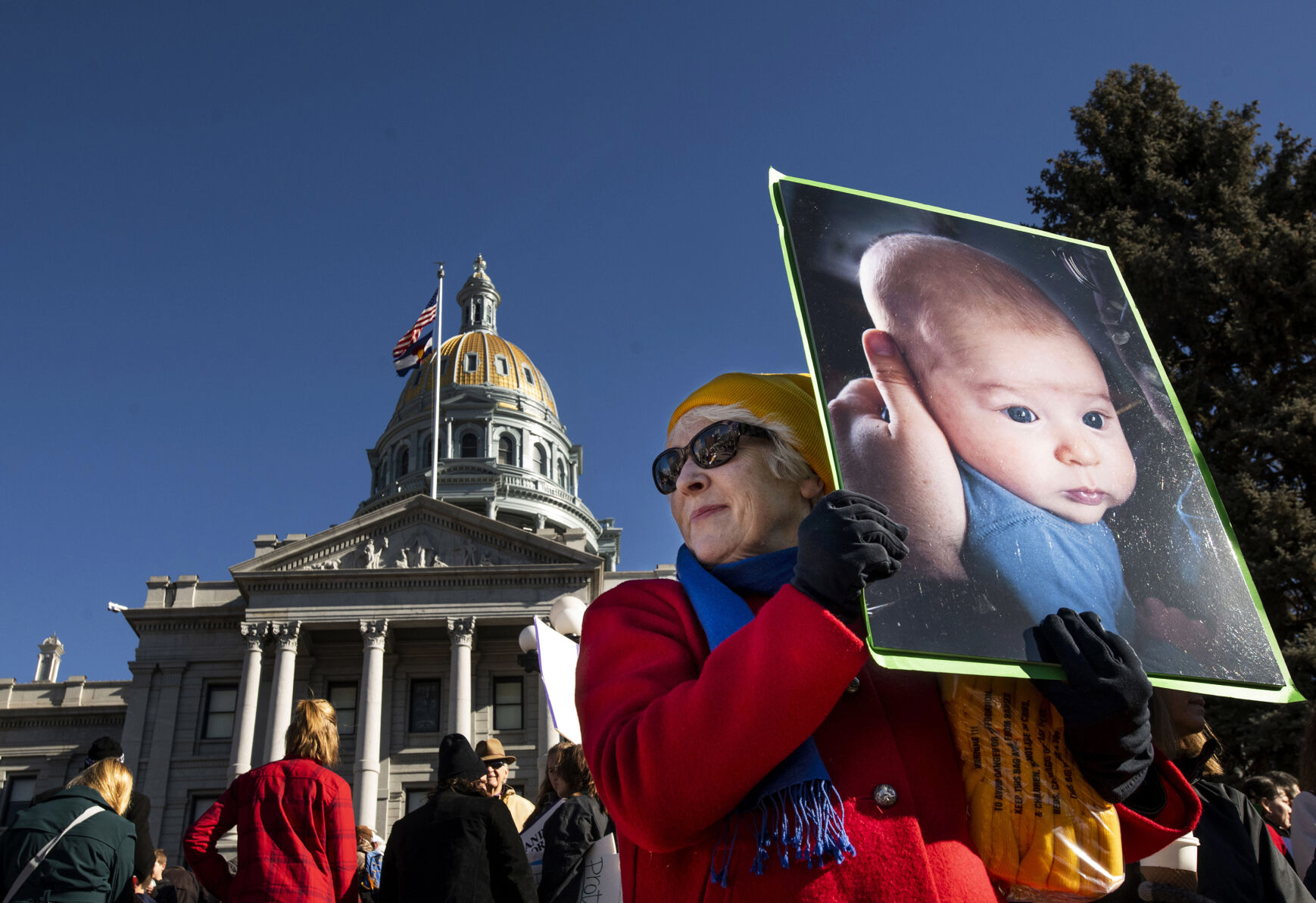
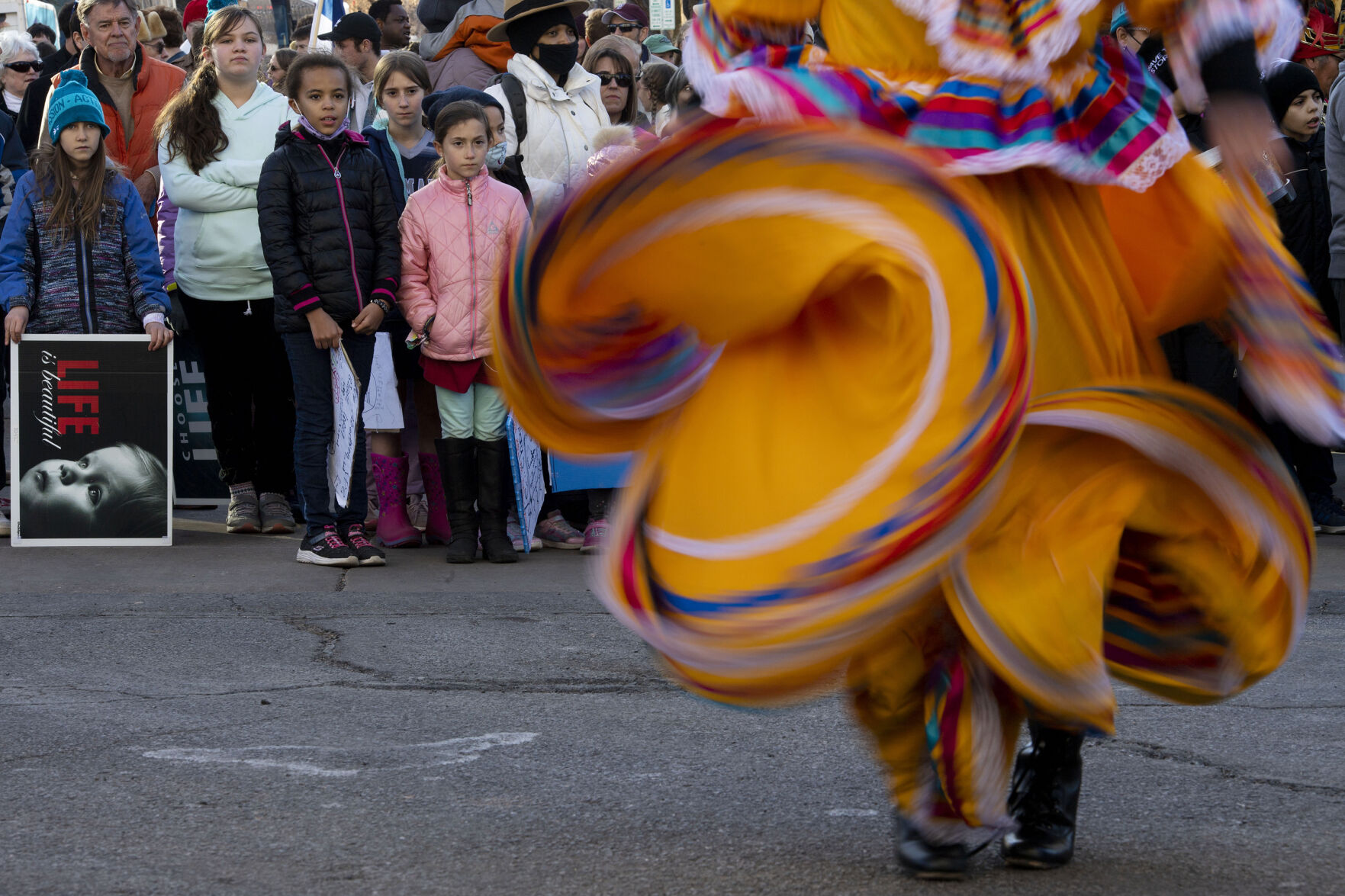
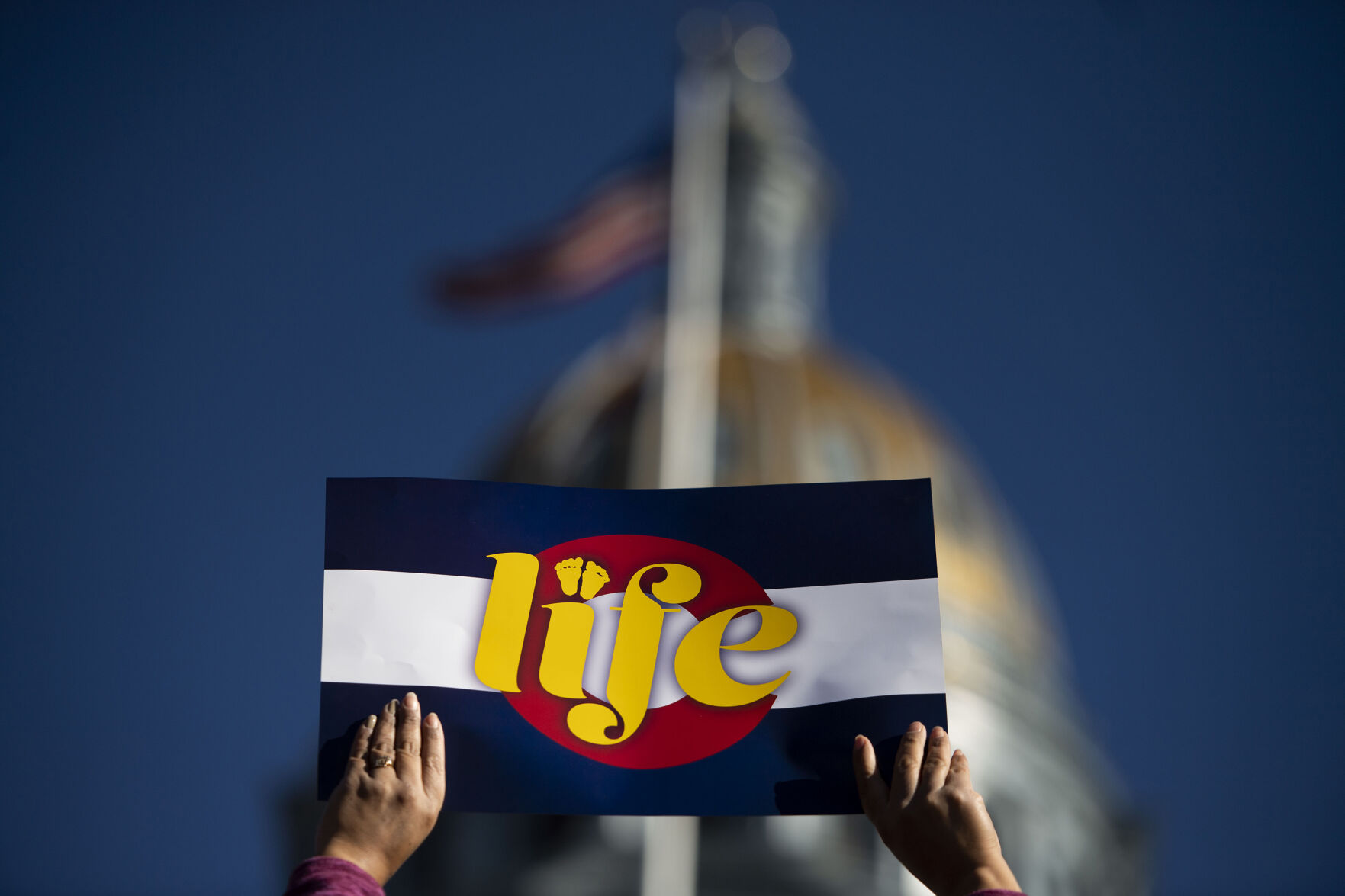
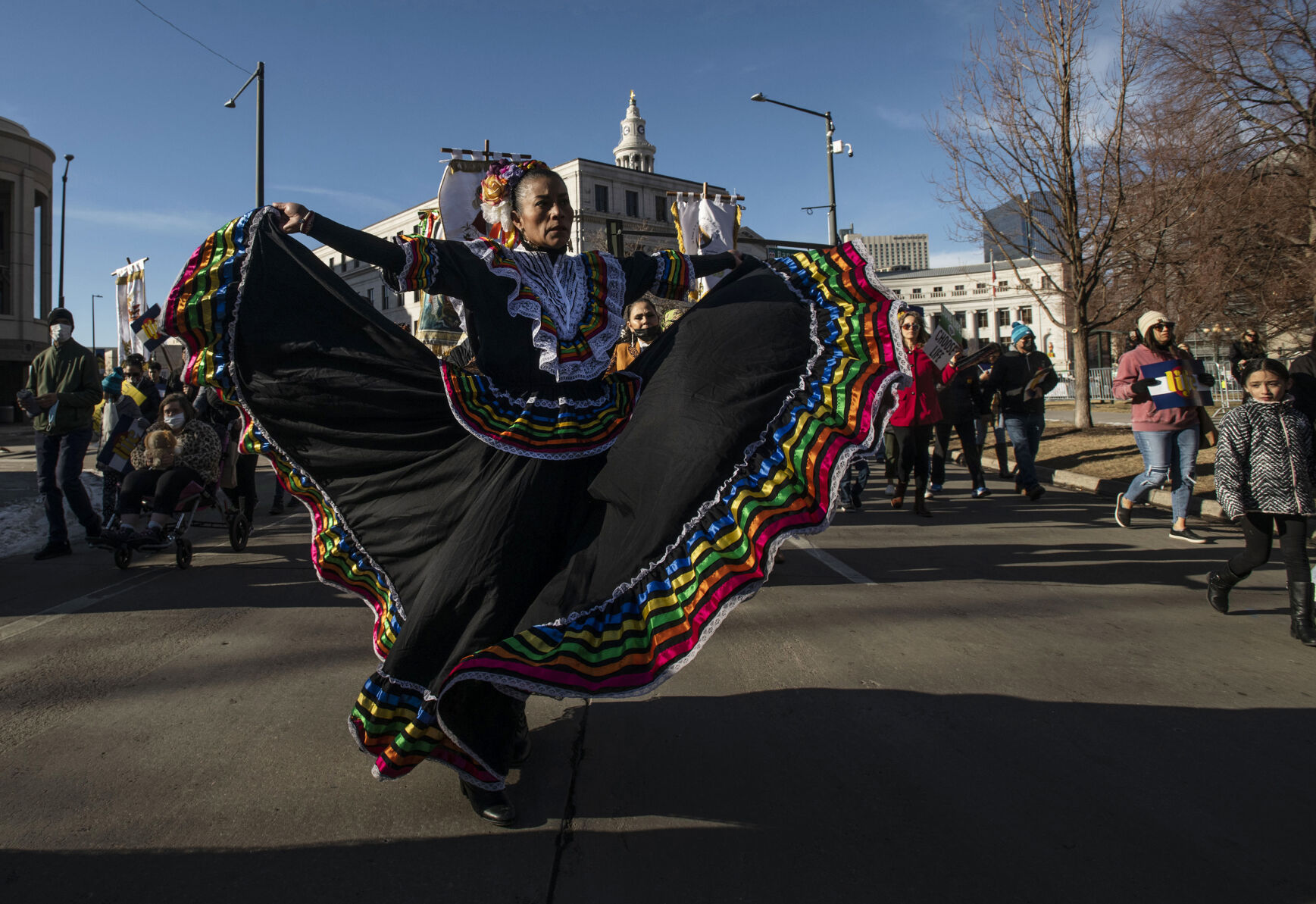
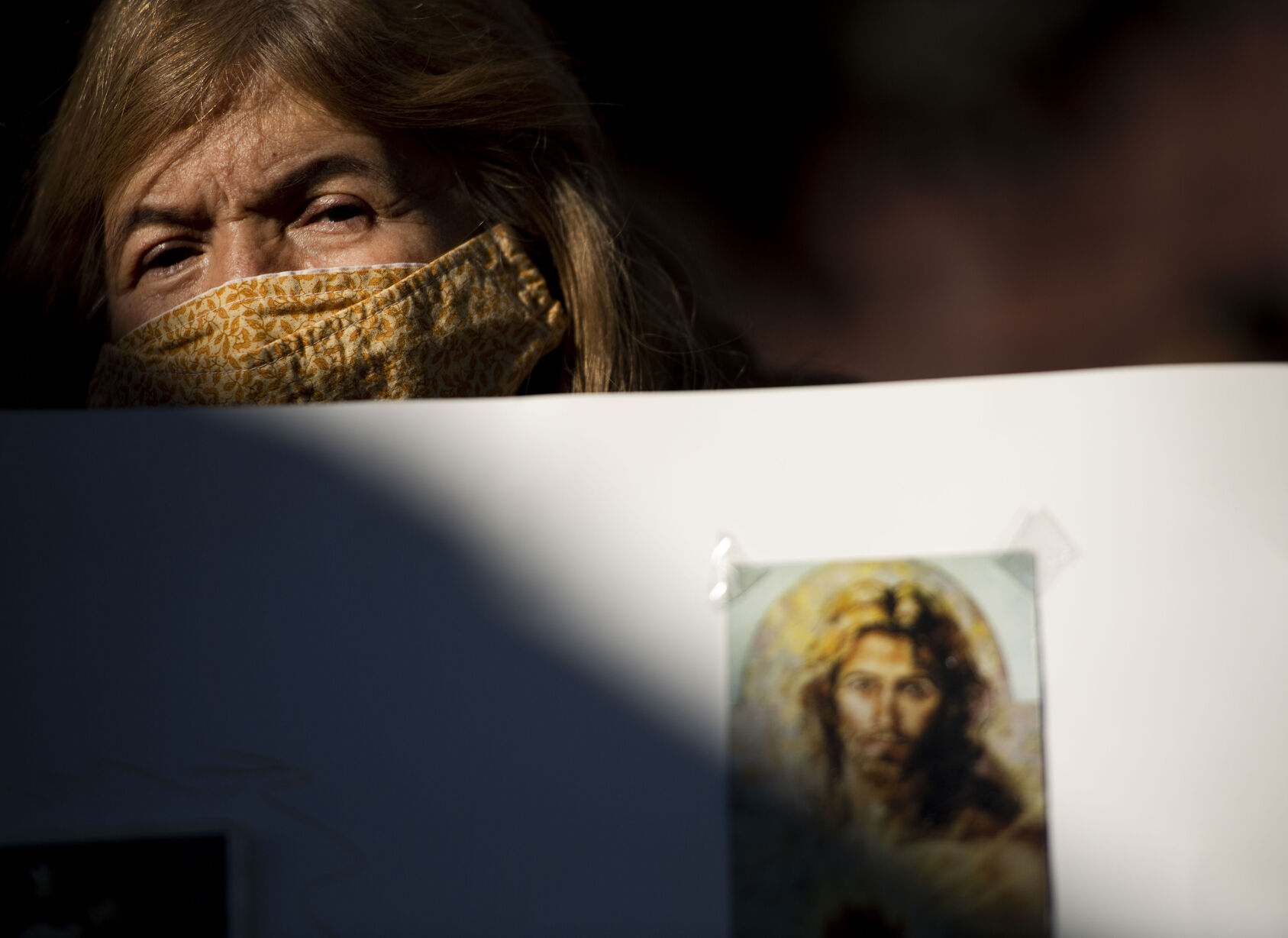
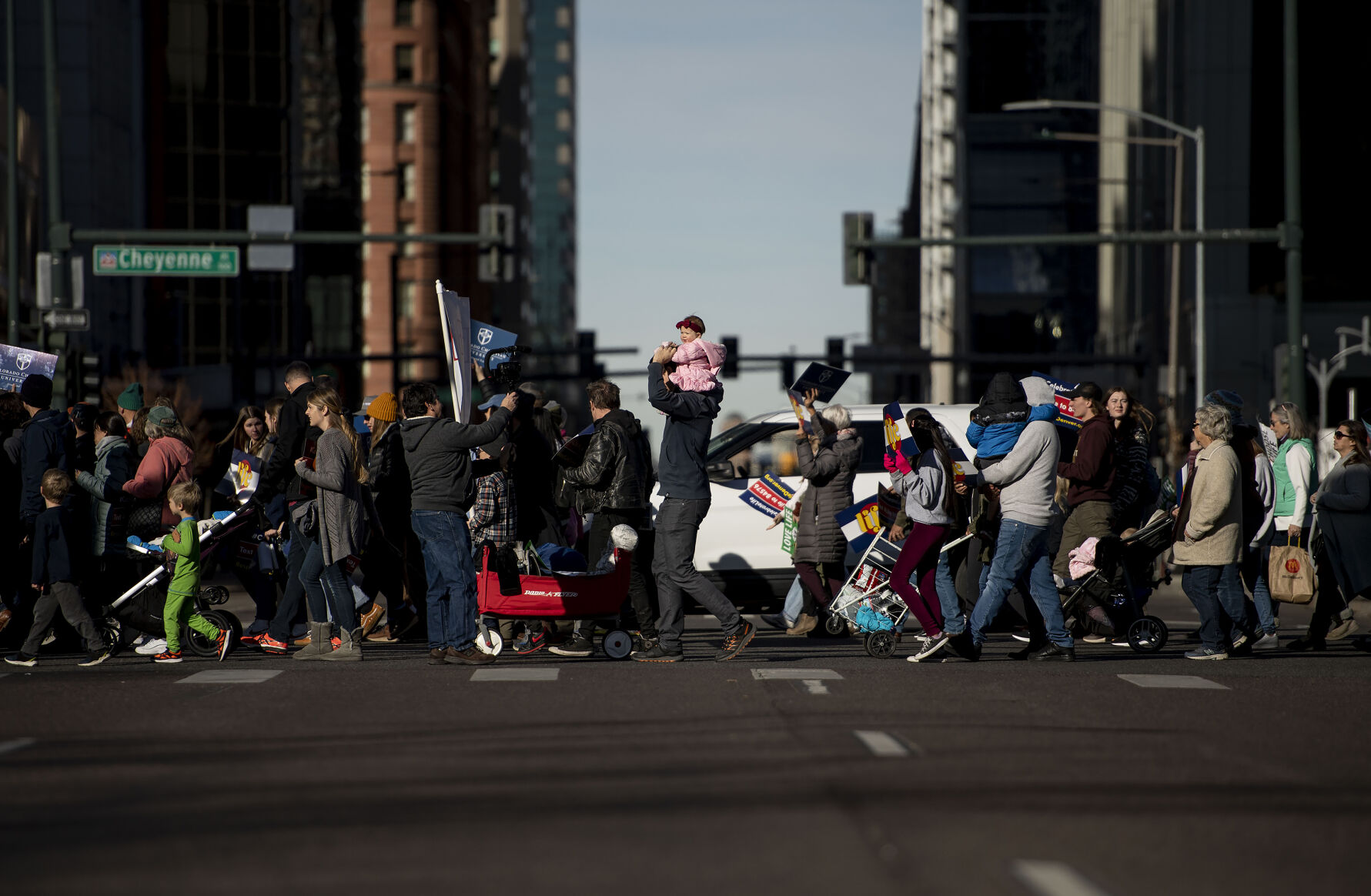
Thousands of anti-abortion activists gather for ‘Celebrate Life Rally’ at Colorado State Capitol
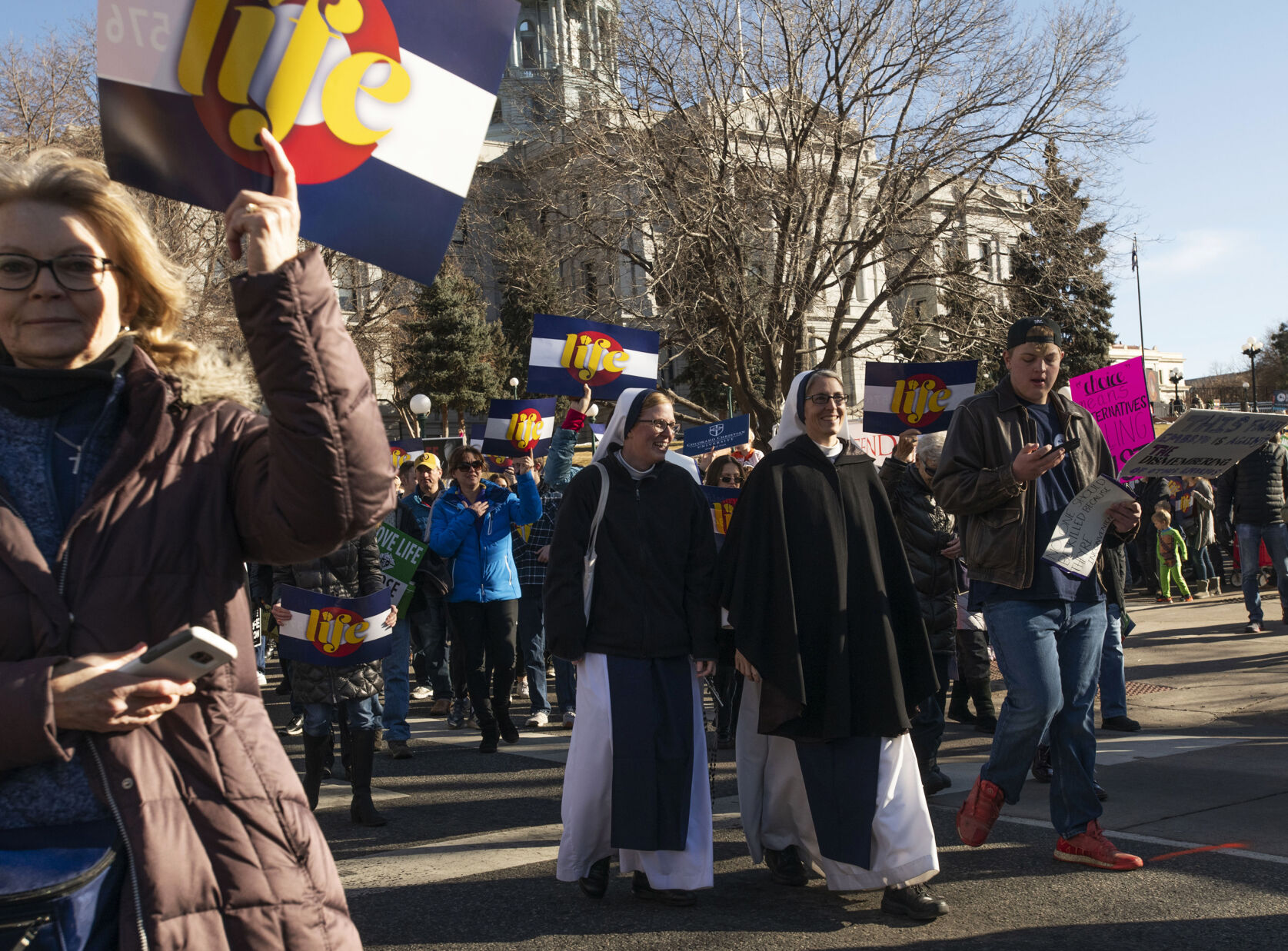
The Christopher family of Littleton regularly prays that God will change the hearts of women who are considering having an abortion.
“We’re here to spread the message of life and that abortion is wrong, and we need to stop it,” 12-year-old Noah Christopher said before Saturday’s annual “Celebrate Life Rally.”
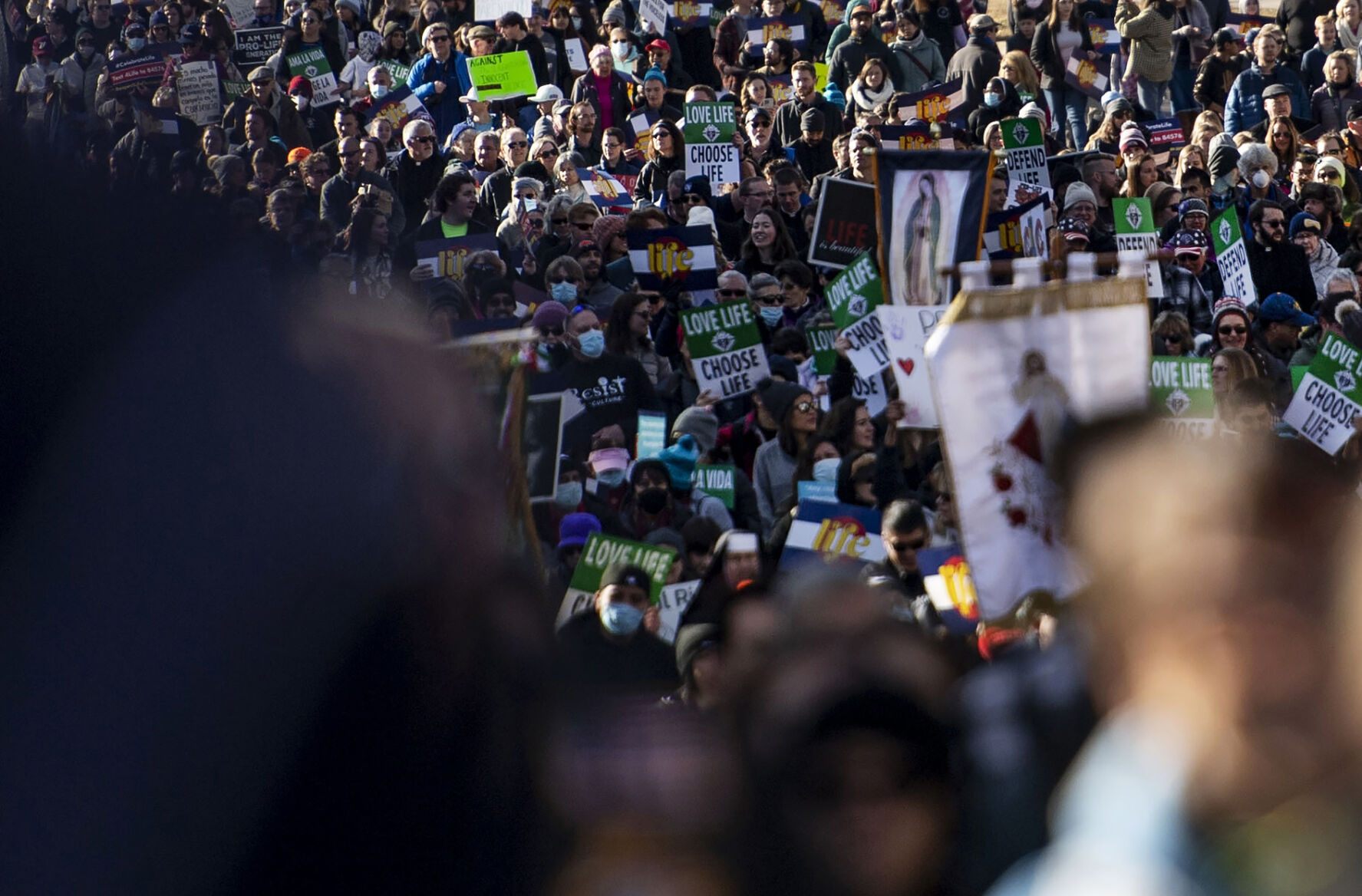
Noah, his parents and three siblings were among some 5,000 anti-abortion activists who gathered at the Denver Capitol building Saturday to mark the Jan. 22, 1973 U.S. Supreme Court decision that allowed for legalized abortion in all 50 states.
But optimism is high that won’t be the case for long.
The conservative-majority Supreme Court is poised to possibly overturn Roe v. Wade this year, which would revert abortion availability to state control.
“It certainly gives us more hope,” said event-goer Eric Golesh of Arvada, who attended with his wife and four children.
‘I think it’ll bring more division among states, but it has to happen,” he said. “The protection of life is extremely important.”
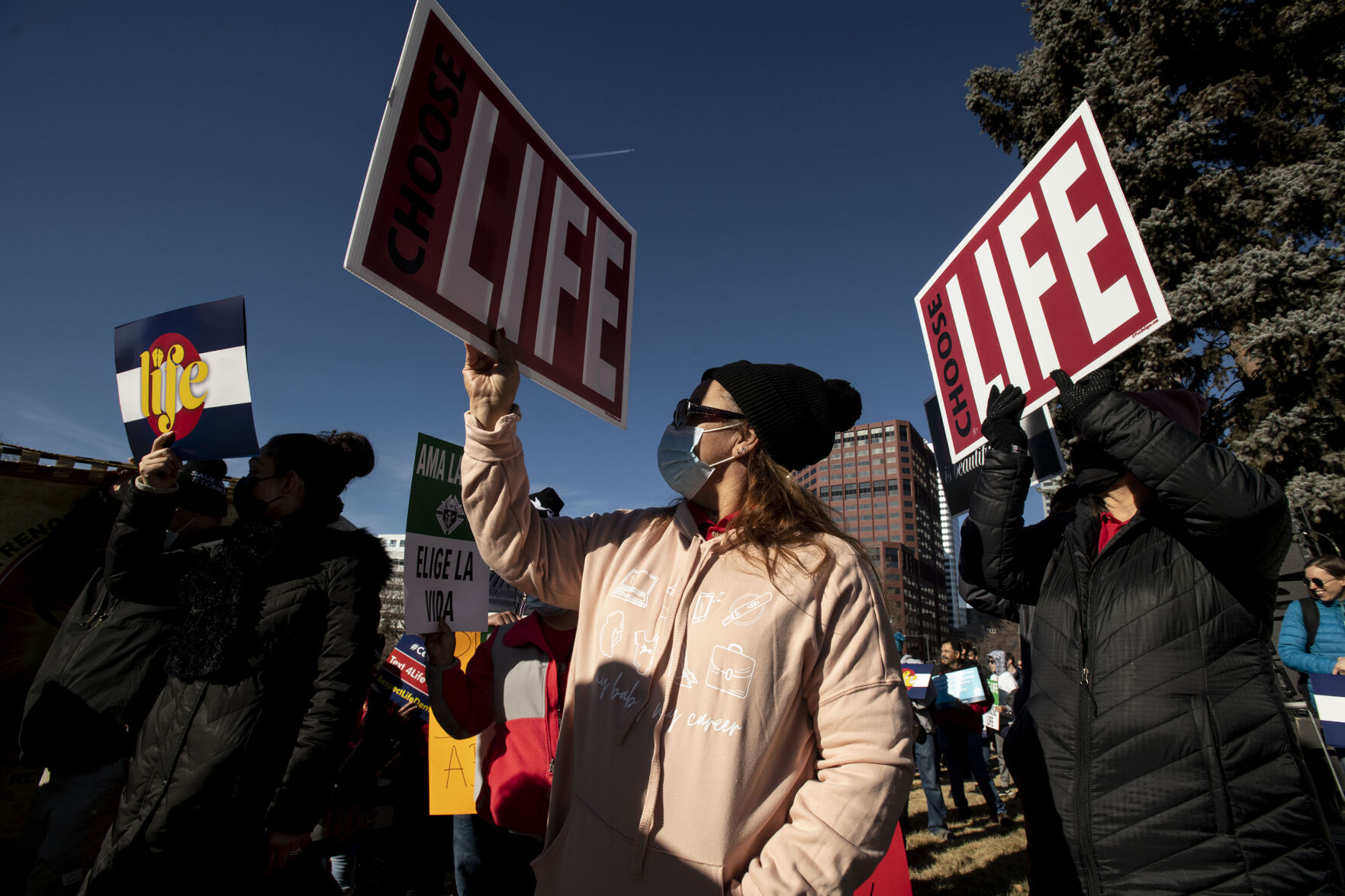
Abortion opponents argue that an unborn baby is a person and should have the same rights to life as other human beings.
Abortion supporters say a fetus is not the same as a person and women should have the right to make choices about their bodies relating to pregnancy without government interference.
A total of 629,898 legal induced abortions were voluntarily reported to the Centers for Disease Control and Prevention in 2019, down from the agency’s highest tracking of 1.4 million abortions in 1990, but an increase over 619,591 in 2018.
“None of us know whether Roe is going to be completely overturned or scaled back dramatically, but one way or another, Roe is dead — so give yourselves some credit,” said Denver conservative talk show host Dan Caplis, who emceed the rally.
Carrying signs with messages that included “Honk if your mom chose life,” “I used to be a fetus,” “Let God plan parenthood,” “I was adopted not aborted,” and “Voices for the voiceless,” among others, attendees listened to ecumenical speakers before they marched around the state’s government seat.
A few passers-by yelled pro-abortion views, but no formal counter-protesters demonstrated in the area.
A spokeswoman for Planned Parenthood of the Rocky Mountains said the organization doesn’t “condone or encourage counter-protesting,” particularly at its 24 health centers in the region, “as it only adds to the chaos and disruption.”
While rescinding Roe v. Wade would mean “conquering the highest mountain,” it would create other peaks for anti-abortion advocates to scale, Caplis said.
The prospect of a change in federal abortion law is pushing some Colorado Democratic women legislators to propose a Reproductive Health Equity Act in the session that began last week.
The bill would “ensure access to abortion and contraceptives,” sponsors have said.
Such a proposal, “quite frankly, scares the heck out of me,” state Sen. Barbara Kirkmeyer, a Republican from Weld County, said while addressing Saturday’s crowd.
The measure would “codify abortion all the way up until birth in state law,” she said.
“We don’t want to be the most radical abortion state in the nation, which we would be if it passes,” Kirkmeyer said. “Taking the lives of children never will be a tenet of a just and moral society.”
Colorado became the first state in the nation in 1967 to decriminalize abortion in cases of rape or incest or when the mother’s life is in jeopardy. The state began allocating Medicaid funding for abortions in 1978.
“Major challenges” are ahead if Roe v. Wade is overturned, Colorado Christian University President Donald Sweeting told event attendees, as “policy battles will be local.”
Colorado is among the states, which also include California and Oregon, that probably “will become a travel destination” for women seeking abortion, he said.
Twenty-six states potentially are poised to ban abortion if that becomes allowed, pro-abortion groups have said.
The job of people who object to abortion will be the same, Sweeting said: “To speak to truth and love and point to alternatives,” and support the work of pregnancy centers, which help women who choose to carry their babies to term.
“To defend the life of the unborn in a culture of death will require heroism, courage and suffering,” said Catholic Archdiocese of Denver Auxiliary Bishop Jorge Rodriguez.
“It demands boldness and action,” he said. “It is a matter of life and death.”