No punches pulled in Denver Klan exhibit

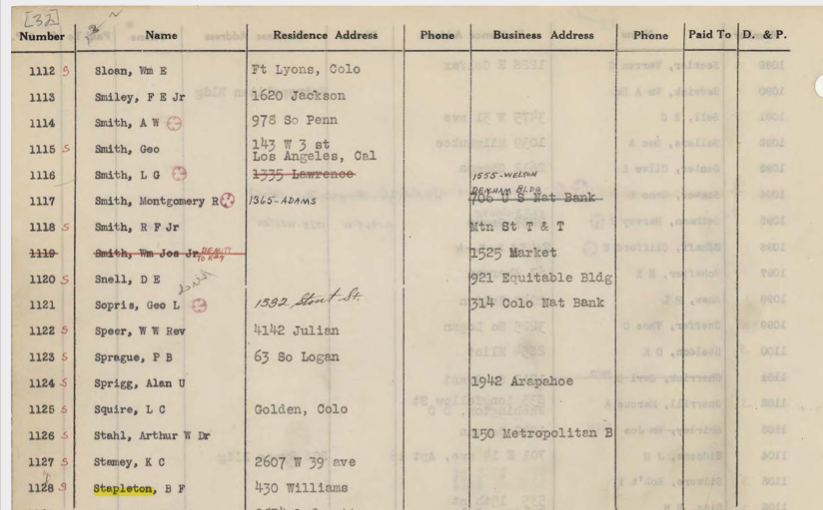
When History Colorado recently published its long-sealed registry of local Ku Klux Klan membership from the 1920s, it blood-tied two longtime Denver cultural institutions to the most vile supremacy group in American history. And they did not duck, cover, spin or pivot.
Instead, they chose radical transparency.
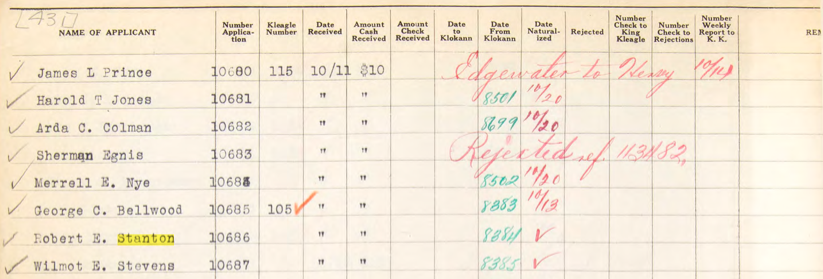
The 1,300-page roster included George Figgis, the first director of the Denver Museum of Nature and Science, who was a dues-paying member of the KKK while running the museum from 1910 to 1935. It also included Robert Stanton, brother of eventual Bonfils-Stanton Foundation founder Charles Stanton and himself president and treasurer of the charitable organization from 1987 until his death in 2000.
“This news,” said Bonfils-Stanton Foundation President and CEO Gary Steuer, “was a real kick in the teeth.”
Turns out many of the so-called “Beautiful People of Denver” were, in fact, card-carrying, robe-wearing members of an organized terrorist movement that used fear, intimidation and vigilante justice to exert racial and economic superiority over Blacks, Catholics, Jews, liberals and progressives. By 1925, active Klansmen included both Denver’s sitting mayor, Benjamin Stapleton, and Colorado’s governor, Clarence Morley (who later served five years in the Leavenworth Penitentiary for federal mail fraud).
Historian Robert Goldberg estimates 1925 membership at about 17,000. That was nearly one-quarter of every white man living in Denver — including the police chief, fire officials, business leaders, and a majority of both City Council and the Colorado House of Representatives.
As historian Phil Goodstein put it: “Denver was enveloped in a white sheet in the mid-1920s.”
The museum was first to respond to History Colorado’s unsettling revelation, issuing a remarkable public statement from President & CEO George Sparks that read, in part: “We want to publicly acknowledge this abhorrent history as a part of our past that influenced the operations of the early Museum. … For many years, we have been actively working to change systems and practices to make the Museum a more equitable organization.”
Charles Stanton established the Bonfils-Stanton Foundation in 1962 following the death of his wife, May Bonfils, heiress daughter of longtime Denver Post publisher Fredrick Bonfils. The foundation has since distributed more than $72 million to elevate arts and culture in Colorado. The foundation’s statement, attributed to Steuer and Board Chair Elaine Torres of CBS4, said the staff was horrified to see not only Robert Stanton’s name on the list, but also that of his father, Walter.
“We are resolved to not only continue to acknowledge our history rooted in White privilege and White supremacy, but to take the necessary steps to directly confront our harmful legacy of racism and exclusion and take intentional steps to address it,” the statement read. “Action is required, and we are committed to that work now and into the future.”
Goldberg, an emeritus Professor at the University of Utah and author of “Hooded Empire: The Ku Klux Klan in Colorado,” considers it “a very profound statement that these organizations wanted to directly confront these reckonings with their racist pasts.”
Many people associate the Klan with post-Civil War lynchings and cross burnings throughout the American southeast. But Goldberg describes Klan history as taking place over four distinct periods. The second, spanning roughly 1915-25, was a national political and economic movement fueled primarily by a perceived breakdown in law and order.
“At the time, there were more Klan members in Maine than there were in the South,” Goldberg said. “But the largest chapters were in the Midwest: Chicago, Dallas and Denver. And at that time it was, in order: Anti-Catholic, anti-Semitic, anti-immigrant and then anti-African-American.”
The first Colorado chapter of the KKK formed in 1915, and it flourished once Stapleton was elected mayor for the first of five terms in 1923, when he installed Klansmen at every level of city government. When Stapleton faced a recall effort in 1924, a massive KKK recruitment campaign was launched through advertising in the Denver Times and other daily newspapers. Those who joined paid $5-$15 in annual membership dues. The KKK was an almost exclusively white Protestant organization that exploited local ethnic divisions and prejudice with its message of “100 percent Christian Americanism.”
According to author Elenie Louvaris, Grand Junction, Pueblo and Cañon City also were Colorado hotbeds of Klan activity. The KKK thrived not only for its racist ideologies, she said, but also as a social organization. Some Denver Klan events, including auto races and picnics, reportedly drew up to 10,000 people.
The white middle class joined economic forces by boycotting non-member local merchants. “If you were a merchant, you would post a sign that said ‘KIGY’ in your window,” Goldberg said. That stood for “Klansman, I Greet You.”
And yet, Goldberg said, this was a less violent era of Klan activity than those that both preceded and followed it. “This was primarily a political and economic machine that used fear to keep minorities in place,” he said, “and they did it by controlling every level of government.” But the rank and file, he added, were middle-class white men with families. “This was not a movement of radicals. It was a movement of ordinary individuals who didn’t know what else to do because they felt the city was caving under crime.”
And that doesn’t lessen the sickening feeling in Steuer’s gut one bit. “Because these people were still walking down the street wearing robes and hoods and carrying fire and absolutely terrifying people,” he said.
History Colorado acquired the two ledger books in 1946 but chose to restrict them from public access until April. “In a spirit of more actively naming and confronting systems of inequality, History Colorado aims to make these items available as freely and widely as possible,” it said in making its announcement.
At the time, Steuer said, Bonfils-Stanton already was a few years into its own journey to advance equity and anti-racism in its work. Toward that end, Steuer commissioned historian Tom Noel to take a deep dive into the foundation’s history and its prominent founding families. “And this sobering new revelation,” Steuer said, ”makes that mission very visceral and very real.”
One takeaway, Steuer said, was that by historically focusing on big ideas and large institutions, the foundation has been ignoring the very organizations that could benefit from it the most — smaller groups representing underserved communities of color. The foundation has since launched its Inclusive Communities Grants Initiative, which will award 20 annual grants of $5,000 each to organizations that are led by and serve historically marginalized communities, including the Colorado Korean Chorus, Black American West Museum, Chicano Humanities & Arts Council, Colorado Dragon Boat Festival and more.
“And that is just a first step,” Steuer said.
Another sign of progress at the foundation is that there are now people of color working at every level of the organization, Steuer said, whereas 10 years ago, there were essentially none. And they were among those who were forced to reconcile the life-changing philanthropy that constitutes their daily work with what they now know to be true about their organization’s beginnings.
“Our staff was justifiably hurt by this revelation,” Steuer said. “And that only motivates us to continue to interrogate the racist origins of our systems and institutions and consider its lasting impacts on the community Bonfils-Stanton Foundation exists to serve.”
Denver Gazette contributing arts columnist John Moore is an award-winning journalist who was named one of the 10 most influential theatre critics by American Theatre Magazine. He is now producing independent journalism as part of his own company, Moore Media.