







In a marginalized neighborhood of Denver, a stronghold of sweets and comfort
GLOBEVILLE • The kids need to know their elders, need to know their roots. They need to know this place that families have called home for generations, this place at a crossroads of Denver highways, tucked below Interstate 70, so often passed and overlooked by outsiders but deeply loved within.
This is what Angela Garcia was expressing one recent afternoon at a table in Emmanuel’s Bakery.
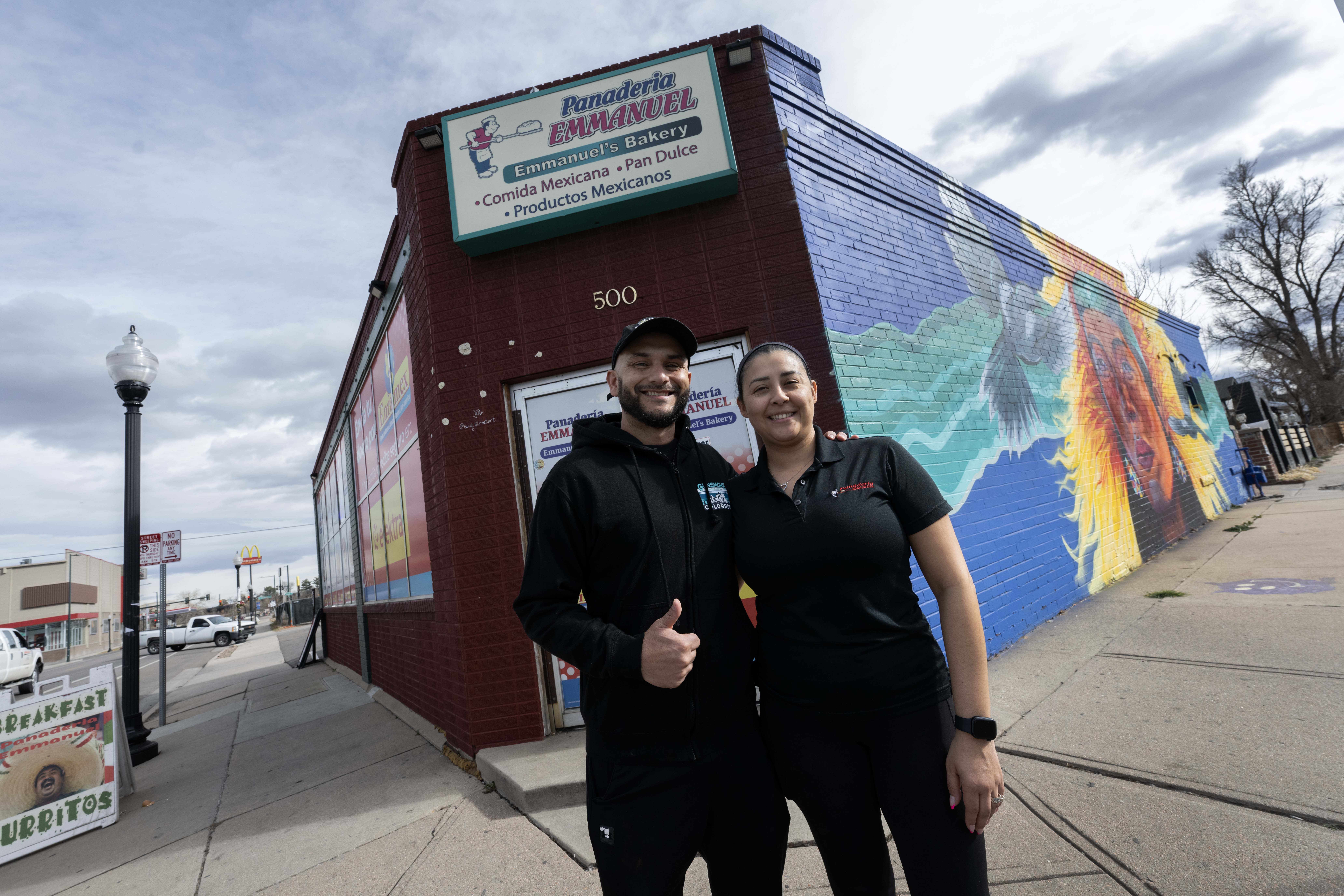
Better known as Panadería Emmanuel to Garcia and fellow residents, the little brick building serves as a welcome to the neighborhood at this corner of East 45th Avenue. It serves as a bright welcome; the exterior mural was done by a civic-minded artist born and raised here in Globeville.
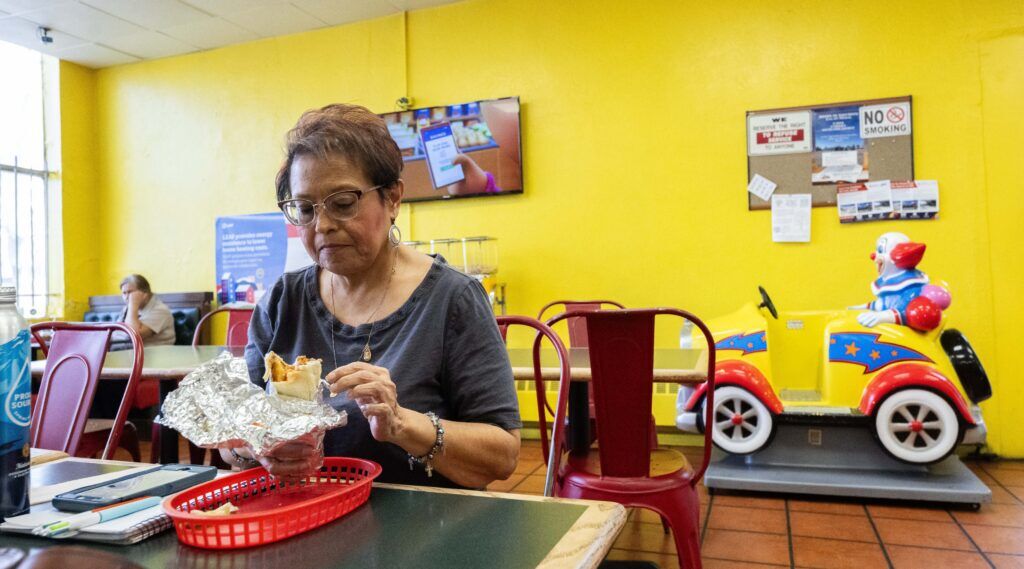
Also, Emmanuel’s serves as a meeting place “to talk about the issues we experience,” Garcia said after meeting with a leader of Sidewalk Poets. The nonprofit’s mission is aimed at “writers from underserved and underrepresented backgrounds” who “gain resources and opportunities to share their voices, activate self-confidence, process the past and receive support to enrich and empower their communities.”
Perfect for Globeville, Garcia thought. Perfect to connect youth and elders ー “so people will know their history,” the local activist said, “and this scrappy little community will continue to exist because we have those family connections.”
And they’ll have Panadería Emmanuel.
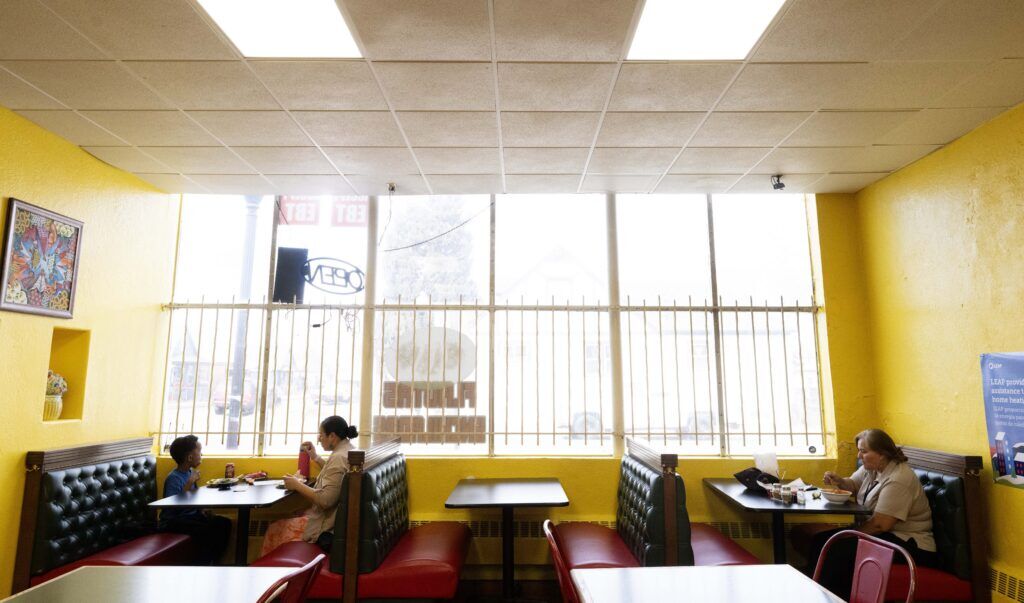
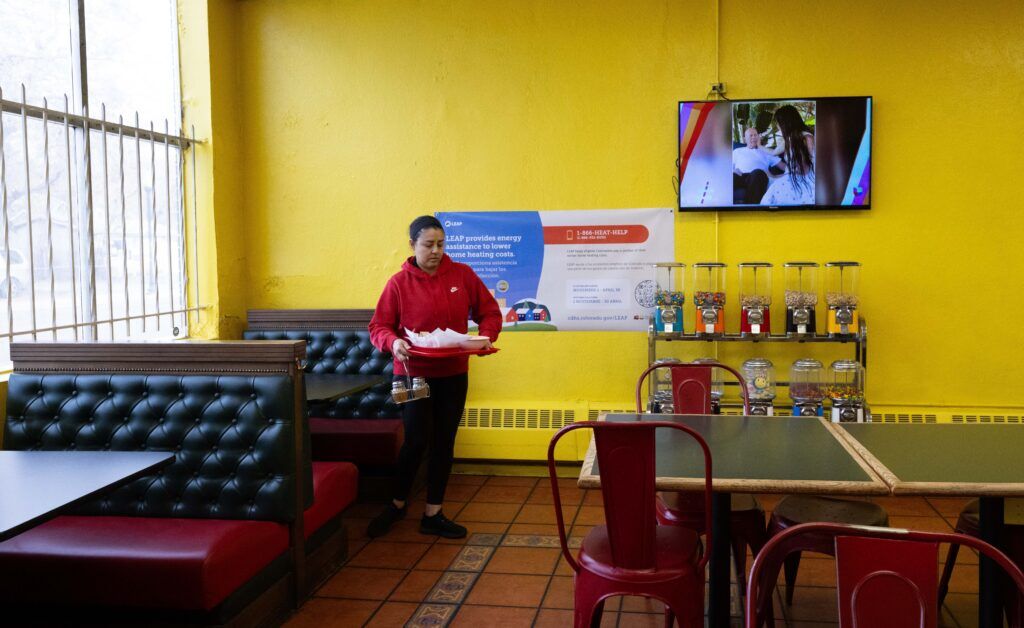
While serving as a bright welcome to the neighborhood and a meeting place for more than 30 years, the bakery serves an even greater purpose.
Owner Daniel Casillas hears it often from neighbors: “This reminds me of home.”
And Emmanuel’s serves more than conchas, orejas, fruit empanadas and flautas and cakes and cookies that send a sweet scent out the door.
In the darkness before sunrise, Daniel bakes like his father and grandfather before him. His grandmother, meanwhile, prepares menudo every weekend ー the traditional soup that packs Emmanuel’s with neighbors who feel transported to Mexico.
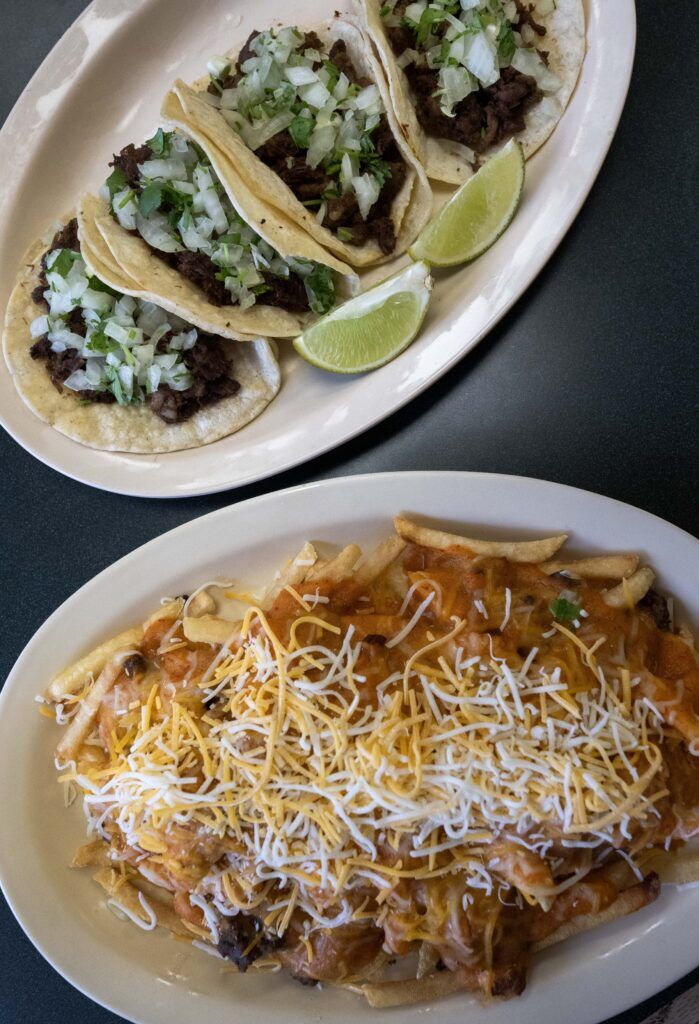
Other foods take them back: the tacos, burritos and platillos, all made just as they were made by Daniel’s family, who immigrated ahead of his birth in 1982.
“It’s authentic. It’s real,” said Daniel’s wife, Julia. “My grandma in Mexico will eat it.”
Everyone will eat it, including newcomers to Globeville. Their presence is easy to see: Around the old, modest homes and the little church and school, apartments rise between former sites of industry and vacant lots with “for sale” signs.
Yes, it’s easy to see more change coming to this side of Denver, this north side that has been a center of change. Some call it change, while others call it gentrification.
Says Garcia, who grew up in the neighborhood: “I don’t call it gentrification. I call it colonization. And that is my fear ー that we will not be able to live here.”
She and fellow activists see a proposed data center underscoring a history of harm that includes I-70, which separated Globeville from neighbors in Elyria and Swansea. It’s a history including the Purina and Suncor plants that have contributed to this ZIP code becoming known as one of the most polluted in the nation.
Why stay? Garcia has heard the question all her life. And she has often responded with a popular quote from Mexican culture: “They tried to bury us, but they didn’t know we were seeds.”
Immigrant families are deeply rooted in Globeville, where Eastern Europeans settled around the Globe Smelter in the 1880s. Following World War II, an influx of Hispanic people came for other hard, industrial work and stayed for the tight-knit community they formed.
Why stay? “Why should we have to leave?” Garcia has often responded. “We stay here because we shovel each other’s sidewalks. We share flowers from our gardens, we share our vegetables.”
She added: “We stay here because of the Julias and Daniels.”
They have been the smiling faces at Emmanuel’s since 2018. That’s when Daniel’s parents retired from the bakery they opened in 1994, naming it for their faith: Emmanuel, meaning “God with us.”
Faith and family ー those were most important to them. And for the family, they thought it best to not pass on the constant work and stress of the bakery.
“They were gonna rent the place, and that was gonna completely change everything,” Daniel said. “I was like, ‘Man, I can’t see that happening.'”
His childhood memories are of strangers becoming like family here. He remembers business “booming.” That was no doubt thanks to the baker his father was, like bakers of the family before him back in Juárez. And it was no doubt thanks to the tight-knit community that always remained here in Globeville, a community that was further fostered by Emmanuel’s, where neighbors could gather and find a taste of home.
And they could find help, as they still do. Daniel keeps tabs for people in need of milk, rice, beans, tortillas and other provisions stocked here, the closest grocery to the neighborhood that’s been described as a food desert.
“They come back and they do pay,” Daniel said. “Maybe there’s one or two people I never see again. But that’s not gonna stop me from trying to help in a little way.”
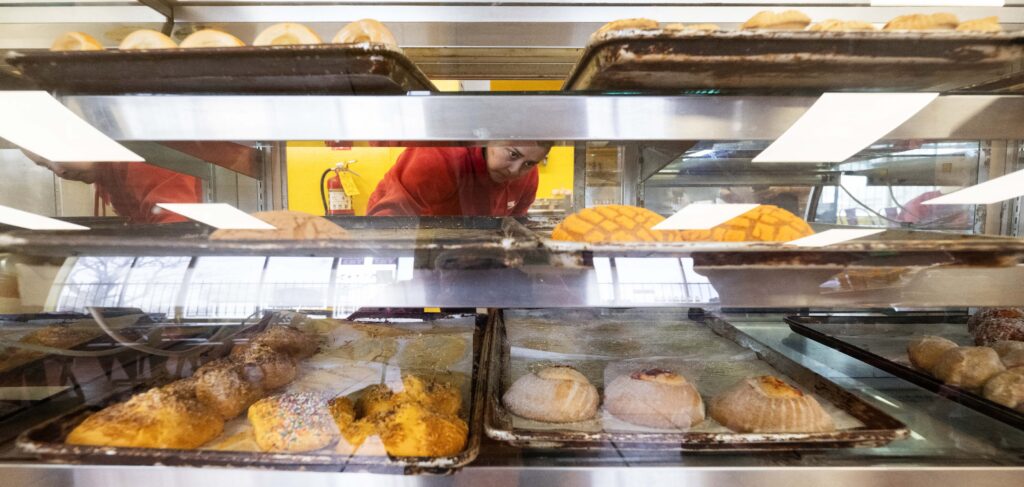
Emmanuel’s has always been helped in return, especially during the COVID-19 pandemic. The effects were felt everywhere, but they were known to be harsher in underserved communities like Globeville. Daniel’s grandfather was among lives mourned by fellow neighbors, the man who would always meet over menudo here on weekends.
Neighbors could not meet during the pandemic. But “they never stopped coming and supporting us,” Julia said.
Support came in the form of air conditioning installed a couple of years ago. Finally, the hot bakery would be cooled off thanks to the Globeville, Elyria, Swansea Community Investment Fund. The intergovernmental fund was set up in 2021, recognizing “communities that have been affected by policies and decision making that systemically harm people economically, educationally, environmentally and/or sociologically.”
The forces have not been enough to uproot the people here.
Elsewhere around Denver, Julia has known homeowners to take offers and leave. “This neighborhood is not doing that,” she says.
She says she’s seen offers, too. “We get letters all the time. I throw them away.”
And she’s seen the next generation take an interest.
Daniel and Julia have teenage twins, a boy and a girl. “My son loves, loves to clean,” Julia says ー one essential job at the bakery. “And my daughter really is interested in the baking part.”
Yes, it seems Emmanuel’s is here to stay, too.
If you go
Emmanuel’s Bakery, 500 E. 45th Ave., Denver. Open 7 a.m.-5 p.m. daily