







Supreme Court rules rejects Colorado’s ban on ‘conversion therapy’ for children
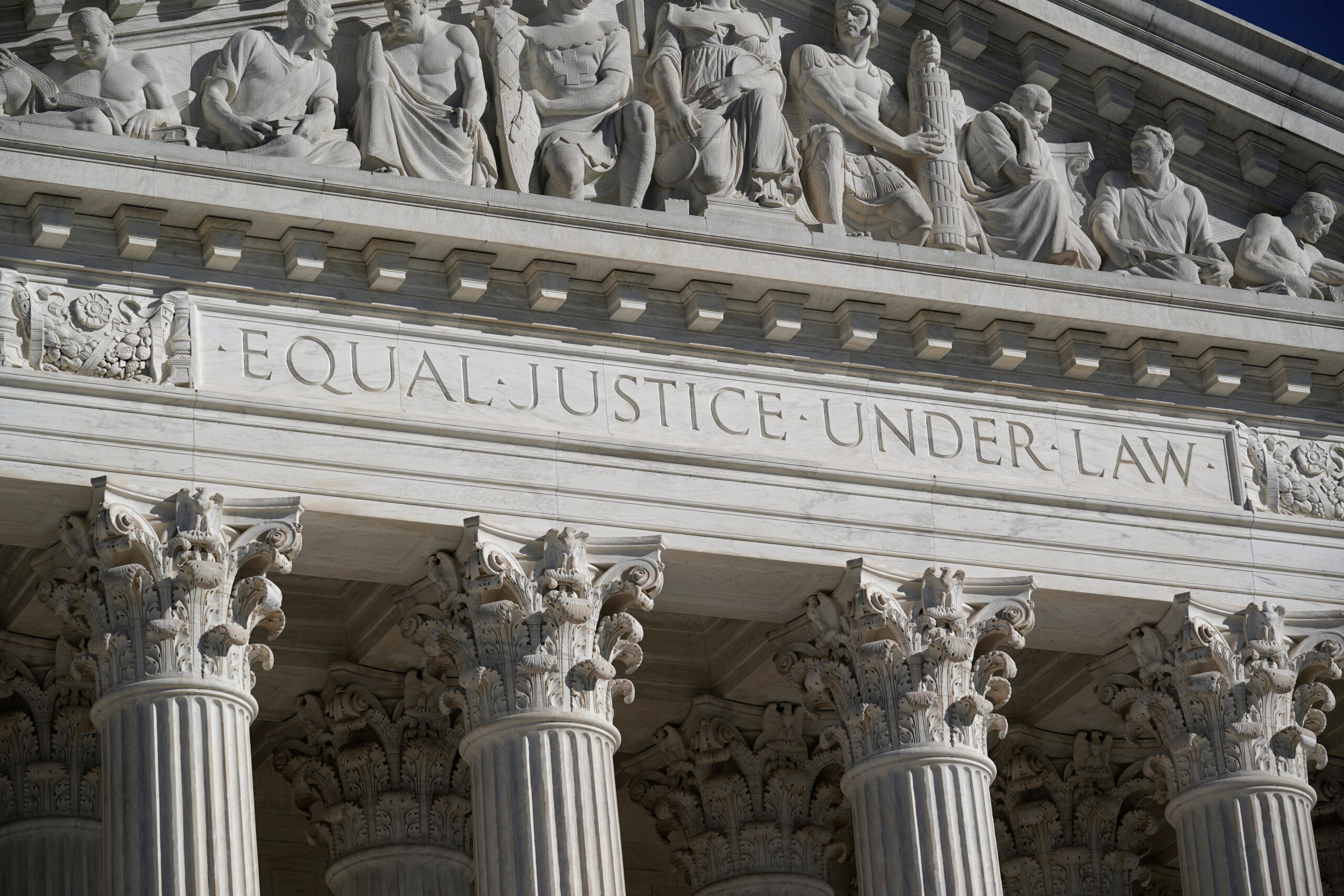
The U.S. Supreme Court on Tuesday handed a Colorado counselor a victory over the state’s “conversion therapy” ban on minors, concluding that the law represents an “egregious form of content discrimination.”
The justices ruled 8-1 that Colorado’s conversion therapy law regulates speech based on viewpoints by permitting the counselor to “express acceptance and support for clients exploring their identity or undergoing gender transition” but forbidding her from “saying anything that attempts to change” a client’s sexual orientation or gender identity.
As such, the state law “(prescribes) what views she may and may not express,” according to Justice Neil Gorsuch, writing for the majority.
“The First Amendment stands as a shield against any effort to enforce orthodoxy in thought or speech in this country,” Gorsuch wrote. “It reflects instead a judgment that every American possesses an inalienable right to think and speak freely, and a faith in the free marketplace of ideas as the best means for discovering truth. However well-intentioned, any law that suppresses speech based on viewpoint represents an ‘egregious’ assault on both of those commitments.”
Justice Ketanji Brown Jackson dissented, arguing that the decision “ultimately risks grave harm to Americans’ health and wellbeing.”
The dispute in Chiles v. Salazar centers on Kaley Chiles, a licensed counselor based in Colorado Springs, who argued that the state law banning “conversion therapy” unlawfully censors her ability to speak with the children and families who seek her out.
Chiles told the court the law has valid applications — she does not take issue with banning “long-abandoned, aversive” physical interventions — but she specifically objected to how it applies to her “talk therapy,” which does not involve such interventions or medications.
Gorsuch wrote that the law should have been viewed as a First Amendment challenge attempting to regulate certain viewpoints, rather than as a statute regulating professional conduct for health care providers that only incidentally regulates speech. He took issue with Colorado’s position, noting the Supreme Court has previously rejected the idea that professional speech is “subject to diminished constitutional protection.”
“They may believe that state-imposed orthodoxies in speech pose few dangers and many benefits in this field (and who knows what others),” Gorsuch wrote of Colorado’s argument. “But their policy is not the First Amendment’s. The Constitution does not protect the right of some to speak freely; it protects the right of all. It safeguards not only popular ideas; it secures, even and especially, the right to voice dissenting views.”
The majority opinion acknowledged the complexity of the topic that Chiles wants to discuss and that Colorado seeks to regulate.
The question of “how best to help minors” struggling with issues of gender identity or sexual orientation is the subject of a fierce public debate, the majority noted.
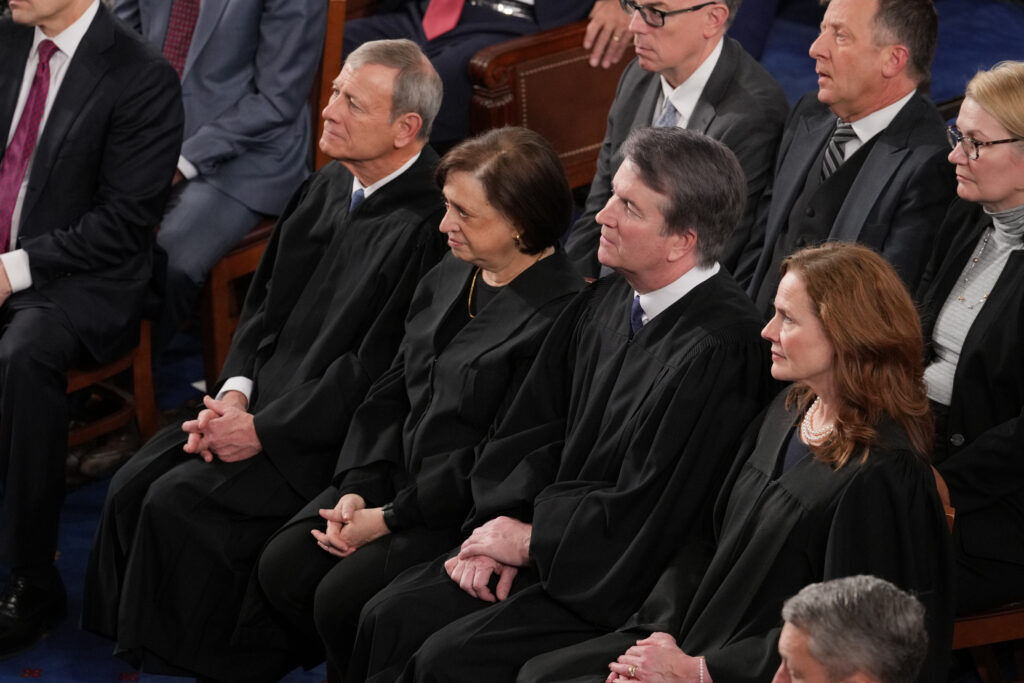
Gorsuch was joined by Chief Justice John Roberts, along with Justices Clarence Thomas, Samuel Alito, Sonia Sotomayor, Elena Kagan, Brett Kavanaugh, and Amy Coney Barrett. Kagan also penned a concurring opinion, joined by Sotomayor, asserting that, if Colorado had adopted a viewpoint-neutral law, rather than one that picks sides in a speech debate, “it would raise a different and more difficult question.”
“A law drawing a line based on the ‘ideology’ of the speaker — disadvantaging one view and advantaging another — skews the marketplace of ideas our society depends on to discover truth,” Kagan wrote. “And such a law suggests an impermissible motive — that the government is regulating speech because of its own ‘hostility’ toward the targeted messages. If the First Amendment prohibits anything, it is the ‘official suppression of ideas.’”
Jackson took issue with the majority’s categorization of the dispute as a free speech issue, writing in her solo dissent that it is, instead, about the state’s lawful attempt to regulate healthcare.
“Stated simply, the majority has failed to appreciate the crucial context in which Chiles’s constitutional claims have arisen. Chiles is not speaking in the ether; she is providing therapy to minors as a licensed healthcare professional,” Jackson said, praising the lower court for arguing there is “a long-established history of states regulating the healthcare professions.”
“Until today, the First Amendment has not blocked their way,” Jackson wrote. “For good reason: Under our precedents, bedrock First Amendment principles have far less salience when the speakers are medical professionals and their treatment-related speech is being restricted incidentally to the State’s regulation of the provision of medical care.”
As defined in a 2019 Colorado law, conversion therapy is a practice or treatment by a licensed physician aimed at changing a person’s sexual orientation or their gender identity, or to otherwise eliminate feelings of attraction toward members of the same sex.
In late 2022, a trial judge declined to grant a preliminary injunction blocking the law. U.S. District Court Judge Charlotte N. Sweeney found the state was within its rights to prohibit specific treatment by those who obtain a professional license.
Then in 2024, by 2-1, the U.S. Court of Appeals for the 10th Circuit agreed the law is a regulation on professional conduct that only “incidentally” affected speech. The dissenting judge, Harris L Hartz, believed the state is effectively regulating Chiles’ speech and he cast doubt on the scientific consensus against conversion therapy.
The Supreme Court reversed the appellate court’s opinion and sent the case back.
It’s the latest litigation dealing with sex, gender identity and religion stemming from Colorado that went all the way to the U.S. Supreme Court. One case revolves around a Christian baker’s refusal to make a wedding cake for a same-sex couple. In another case, the question revolved over whether a Christian website designer could decline to create wedding websites for same-sex couples.
In both case, the courts sided with the baker and the website designer, concluding, respectively, that religious objections are also protected forms of expression and Colorado law may not force individuals to create designs conveying a message they disagree with.
On Tuesday, Chiles said she is hopeful that her court victory would “fuel a greater pursuit of truth, both amongst the professionals and in the counseling room.”
“I view my work as an outpouring of my faith,” Chiles said at a news conference shortly after the ruling was released. “I want what’s best for my clients, and they often seek me out because we have a shared faith. It’s crucial that families have counseling options, including options that allow kids to genuinely talk about experiencing discomfort with their bodies, without the state dictating an outcome.”
“Because of today’s ruling, families will have more options and states will not be able to shut those options down,” she added. “I am overjoyed that today’s decisive win for free speech families and common sense will protect counselors like me, and more importantly, I am thrilled that the ruling will help struggling kids and families who are seeking professional guidance consistent with biological reality.”